- Category
- Meat
- State
- Preserved
- Usual unit
- slice
What it is
Cured ham is a pork product made by salting and maturing a cut of meat. It is not the same as cooked ham: curing involves changes to the meat during processing, including moisture loss and biochemical reactions. There are several varieties and styles; serrano and Iberian are examples of cured ham, while prosciutto is another style of cured pork. The name alone does not establish the animal's breed, diet, curing time or any added ingredients, so check the product name and its ingredient information.
When to use it
Use cured ham when you want a savoury, salty note without preparing raw meat from scratch. Thin slices can be served on their own, on a platter or in a sandwich; cubes or strips are convenient in cooked dishes. Products differ in saltiness, fat and texture, so taste the ham before seasoning the rest of the dish. If you heat it, add it as a cured ingredient rather than treating it like a raw cut of meat.
How to use it
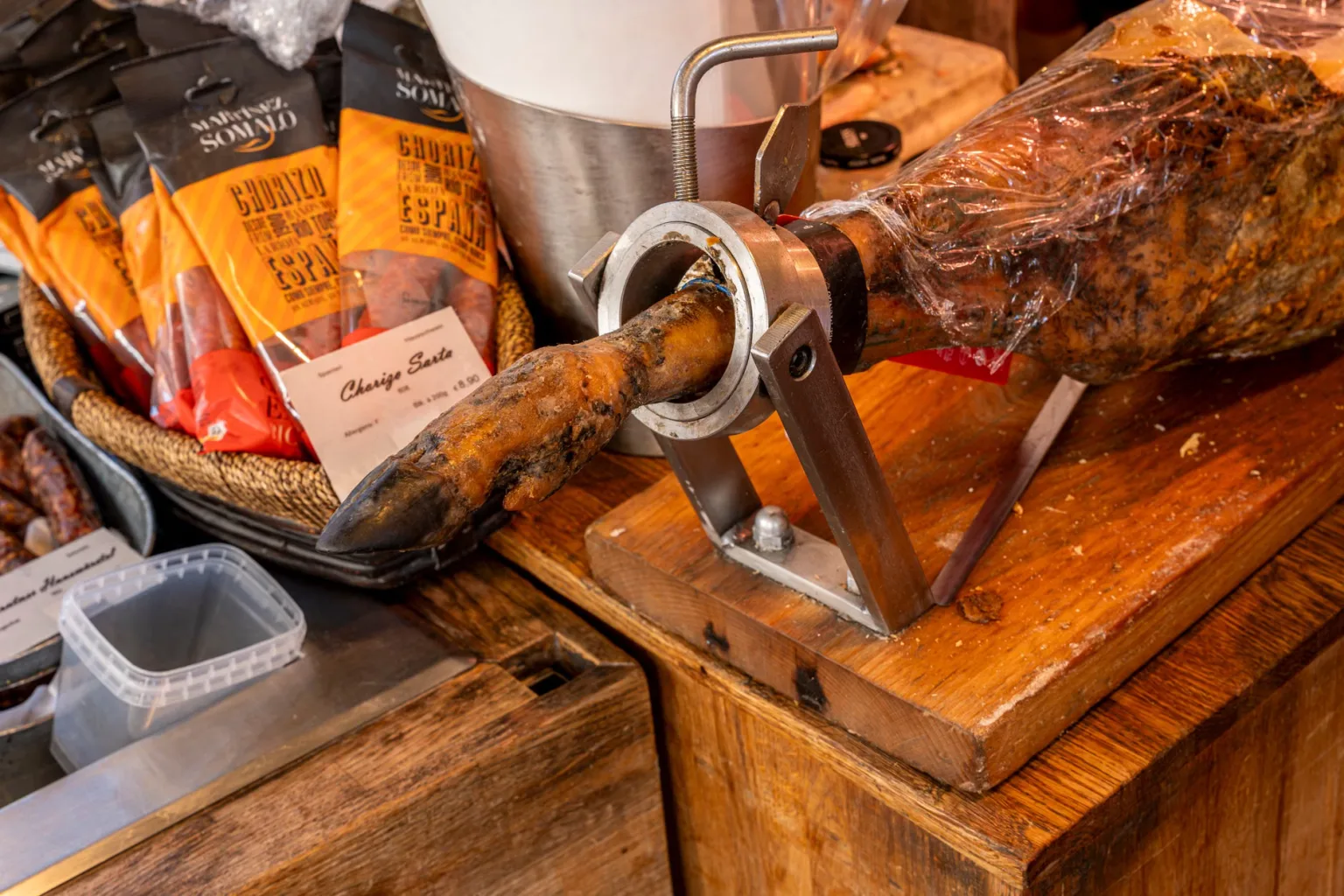
To serve it as it is, separate the slices and arrange them on a plate or on bread. If you have a whole piece, cut it into thin slices using a suitable, stable cutting setup. For cooking, cut it into cubes or strips and use it as a flavourful ingredient; taste the dish before adding salt, since the ham may contribute a pronounced salty flavour. You can also add it to hot dishes, choosing when to add it according to whether you want to retain more of its texture or blend its flavour with the other ingredients. Always follow the product's use instructions.
Flavour and texture
Cured ham is generally savoury and salty, but intensity varies across styles and products. The lean meat can range from pink to deeper red, and fat may be marbled through it or visible at the edge. Texture depends on the cut and curing process: it may be firm and easy to slice, or more tender and yielding. Do not expect every product to taste or feel the same; variety, animal feed and curing influence aroma, flavour and mouthfeel.
How to choose it
Read the food name and ingredient list, especially if you are looking for a particular style or want to check whether other ingredients have been added. For packaged ham, also check the date and storage and use instructions. Appearance and visible fat can vary by product; do not use them alone to infer the pig's breed or the product's quality. If buying sliced ham from a counter, ask for the available product information and storage guidance.
Storage
There is no single storage rule that applies to every format of cured ham. Follow the package directions or the retailer's instructions, and check the date provided. Once opened, use any specific storage and use guidance on the label; do not infer a safe storage period from appearance or smell alone. Keep the product protected and avoid unnecessary exposure. Any special conditions stated on the label take precedence.
Substitutions
Another cured pork ham, such as serrano or prosciutto, can work as a substitute when its style suits the dish. Flavour, texture and saltiness may differ, so start with a smaller amount and taste before adjusting seasoning. Another cured pork product may also work, but it will not necessarily be equivalent. If you need to avoid a particular ingredient, compare the labels of the original product and the substitute.
Common mistakes
A common mistake is seasoning a dish before tasting it with the ham. It is also unwise to assume all cured hams are alike, or that a product name alone tells you the animal's origin, diet or curing time. Do not replace the package's storage instructions with a generic rule, and avoid leaving the product open or exposed unnecessarily.
Safety and allergens
Check the label for ingredients, possible allergens, the date and storage and use instructions. For products sold unpackaged, ask the retailer for the available information. Follow any special directions from the producer, and do not eat the product if there is a concern about its packaging or date.
Culinary uses
- A ready-to-eat sliced ingredient for sandwiches and appetisers
- A savoury ingredient for adding to cooked dishes
Recommended techniques
- Slice thinly for serving
- Dice or cut into strips for cooked dishes
Pairs well with
- Bread
- Wine
Frequently asked questions
Is cured ham the same as cooked ham?
No. They are different products made using different processes. Check the food name on the label to identify the one you are buying.
How should I cut cured ham for serving?
Thin slices work well on their own or on bread. For cooked dishes, cut it into cubes or strips.
How should I store it after opening?
Follow the package's specific storage and use instructions or the retailer's guidance; they can differ by product format.
Ingredient allergens
Allergen listThere are no verified associations for these ingredients yet.
Estimated nutrition
- Fat
- 9.02 g
- Saturates
- 3.12 g
- Carbohydrate
- 0 g
- Sugars
- 0 g
- Fibre
- 0 g
- Protein
- 22.6 g
- Salt
- 3.75 g
Sources and review
Automatically researched, cross-checked and validated content. Sources consulted:
- En el etiquetado alimentario hay algunas menciones que son obligatorias eletiquetadocuentamucho.aesan.gob.es/obligatoria.html
- Determinación de compuestos bioquímicos para el control de calidad en la elaboración de jamón cocido y jamón curado doi.org/10.4995/thesis/10251/7345
- Mejora de la seguridad alimentaria en productos cárnicos ... dugi-doc.udg.edu/bitstream/handle/10256/4484/tbmm.pdf?sequence=5
- Publicaciones de Seguridad alimentaria www.aesan.gob.es/actualidad/publicaciones-seguridad-alimentaria
- Hamon: Creación y diseño de un plan de negocio de ... upcommons.upc.edu/bitstreams/9ffdb37a-cb76-4175-a7e0-ceaec9ec09ff/download
- Ham Safety and Storage - UA Cooperative Extension extension.arizona.edu/sites/extension.arizona.edu/files/pubs/az1089.pdf
- Optimization of instrumental colour analysis in dry-cured ham dadun.unav.edu/bitstreams/2d84af81-3f25-49ff-aed4-ba762334fcfe/download
- Nitrosyl-Heme and Heme Iron Intake from Processed ... diposit.ub.edu/server/api/core/bitstreams/88365c1c-f6bb-4862-b177-4feb29cad605/content
- Jamón curado, un alimento saludable y nutritivo | Consumer www.consumer.es/alimentacion/jamon-curado-un-alimento-saludable-y-nutritivo.html
- Historia del Jamón Curado: Orígenes || Jamones El Gorrilla www.jamoneselgorrilla.com/blog/jamones-6/historia-del-jamon-66
- El jamón curado o serrano, un alimento muy saludable | Naturarla | Arla www.arlafoods.es/alimentacion/jamon-curado-serrano-iberic/