- Category
- Sauces and condiments
- State
- Paste
- Usual unit
- tablespoon
What it is
Doubanjiang is a Chinese paste made with fermented beans and chilli, used especially in Sichuan-style cooking. It is generally thick and concentrated rather than a pourable sauce, and is added to give other ingredients depth and heat. Commercial products are not all alike: some include additional ingredients, and less-hot versions also exist. Check the label and taste the product before deciding how much to use.
When to use it
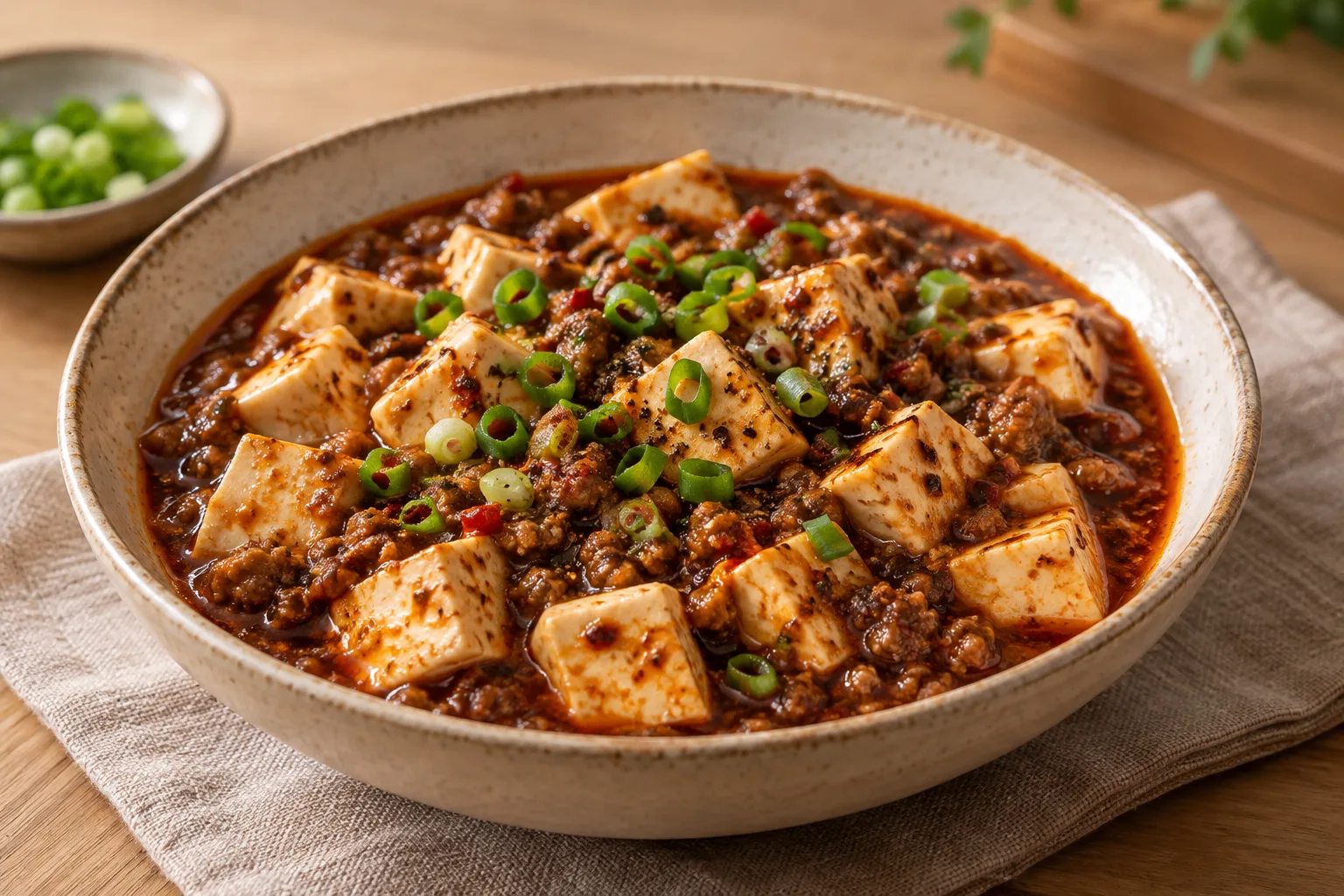
Use doubanjiang when you want to build a savoury, fermented and somewhat spicy base, rather than adding chilli alone. It is particularly useful in stir-fries, dishes with tofu and noodles, and braises where the paste can mingle with the other ingredients. Because its flavour is concentrated, start with a small amount and adjust as you cook. If the dish already contains other salty or spicy seasonings, consider their combined effect before adding more.
How to use it
For a stir-fry, heat oil in a pan or wok and briefly fry a small amount of doubanjiang before adding the other ingredients. This helps disperse the paste in the oil and integrate it into the dish. You can also mix it into liquid ingredients, stock or a sauce, adding it gradually and tasting as you go. Stir thoroughly so the thick paste is evenly distributed. Do not treat it like a mild, pourable sauce: it is a concentrated seasoning, and its saltiness and heat vary from product to product.
Flavour and texture
Its flavour is typically salty, hot and distinctly fermented, with a savoury depth that enriches a dish. The intensity and chilli heat depend on the variety and product. Doubanjiang is thick, pasty and concentrated rather than fluid. Mixing it with oil, stock or other ingredients incorporates it into a larger preparation.
How to choose it
Look for doubanjiang or an equivalent product name and read the ingredient list. Recipes and brands vary: products differ in heat, and some include additional ingredients such as fermented soybeans. The name or appearance alone cannot confirm what is in a particular jar, so check the label, especially if you need to avoid an ingredient.
Storage
Follow the storage directions on the container, since products can differ in composition and packaging. Use a clean utensil to serve the paste and close the container after use. If the label says to refrigerate after opening, keep it refrigerated. Do not assume every doubanjiang product has the same storage requirements or keeps for the same length of time.
Substitutions
Gochujang can work as a culinary substitute when doubanjiang is unavailable, but the flavour will not be identical. Another fermented chilli-and-bean paste may also be used if you have one. Composition, heat and saltiness can differ, so add the substitute gradually and adjust the other seasonings.
Common mistakes
Adding too much at the start can make a dish overwhelmingly salty or hot. Another common mistake is assuming all brands have the same composition or intensity. Start with a small amount, briefly fry it in oil when the recipe allows, and taste before adjusting the seasoning.
Safety and allergens
Check the ingredient list and allergen information on the specific container, as composition can vary between products. If you have a food allergy, do not rely on the ingredient name alone.
Culinary uses
- Savoury, fermented base for Sichuan-style dishes
- Chilli and umami seasoning for stir-fries, noodles, tofu and braises
Recommended techniques
- Fry briefly in oil before adding other ingredients
- Stir into a dish as a concentrated seasoning, adjusting to taste
Pairs well with
- Tofu, garlic and ginger
- Noodles, vegetables and Sichuan pepper
Frequently asked questions
Is doubanjiang a liquid sauce?
Usually not. It is generally a thick, concentrated paste used as a seasoning.
How do I add it to a stir-fry?
A common approach is to briefly fry a small amount in oil before adding the other ingredients, then adjust to taste.
Are all varieties equally spicy?
No. Varieties and products differ in composition and heat, so check the label and taste a small amount.
Ingredient allergens
Allergen listThere are no verified associations for these ingredients yet.
Sources and review
Automatically researched, cross-checked and validated content. Sources consulted:
- Alérgenos alimentarios | EFSA www.efsa.europa.eu/es/safe2eat/food-allergens
- Client Challenge doi.org/10.2307/jj.27939689.16
- Agencia Española de Seguridad Alimentaria y Nutrición www.aesan.gob.es/
- - YouTube www.youtube.com/watch?v=_qX36XGm570
- Gastronomía de Sichuan: descubre una de las variedades más potentes de la cocina china | Gastronosfera www.gastronosfera.com/tendencias/gastronomia-de-sichuan-descubre-una-de-las-variedades-mas-p…
- Food Allergies | FDA www.fda.gov/food/nutrition-food-labeling-and-critical-foods/food-allergies
- Food allergens | Food Safety and Quality | FAO www.fao.org/food-safety/scientific-advice/food-allergens/en
- Centre for Food Safety www.cfs.gov.hk/english/food_leg/food_leg_lgfa.html
- food hypersensitivity assets.publishing.service.gov.uk/media/69c552404a06660f085442d1/fsa-sfbb-chinese-cuisine-cro…
- Técnicas de cocina china | CocinaSinReceta.com www.cocinasinreceta.com/tecnicas/tecnicas-de-cocina-china/
- General Principles for the Labeling of Prepackaged Foods apps.fas.usda.gov/newgainapi/api/Report/DownloadReportByFileName?fileName=China%20Notified%2…
- Qué es la doubanjiang: la pasta de habas y chiles fermentados esencial en la cocina de Sichuan | Gastronomía & Cía www.gastronomiaycia.com/que-es-la-doubanjiang-la-pasta-de-habas-y-chiles-fermentados-esencia…
- Doubanjiang | CreatiVegan.net creativegan.net/archives/doubanjiang/
- Doubanjiang — Open Spice Box openspicebox.com/es/ingredients/doubanjiang
- Doubanjiang - Wikipedia, la enciclopedia libre es.wikipedia.org/wiki/Doubanjiang
- Doubanjiang: presente en 4 platos www.menuella.com/es/food-wiki/ingredients/doubanjiang
- Mapo tofu (tofu picante) | Recetas | Gastronomía | EL PAÍS elpais.com/gastronomia/recetas/2021/10/15/receta/1634279466_854146.html