- Category
- Fruit
- State
- Dry
- Usual unit
- cup
What it is
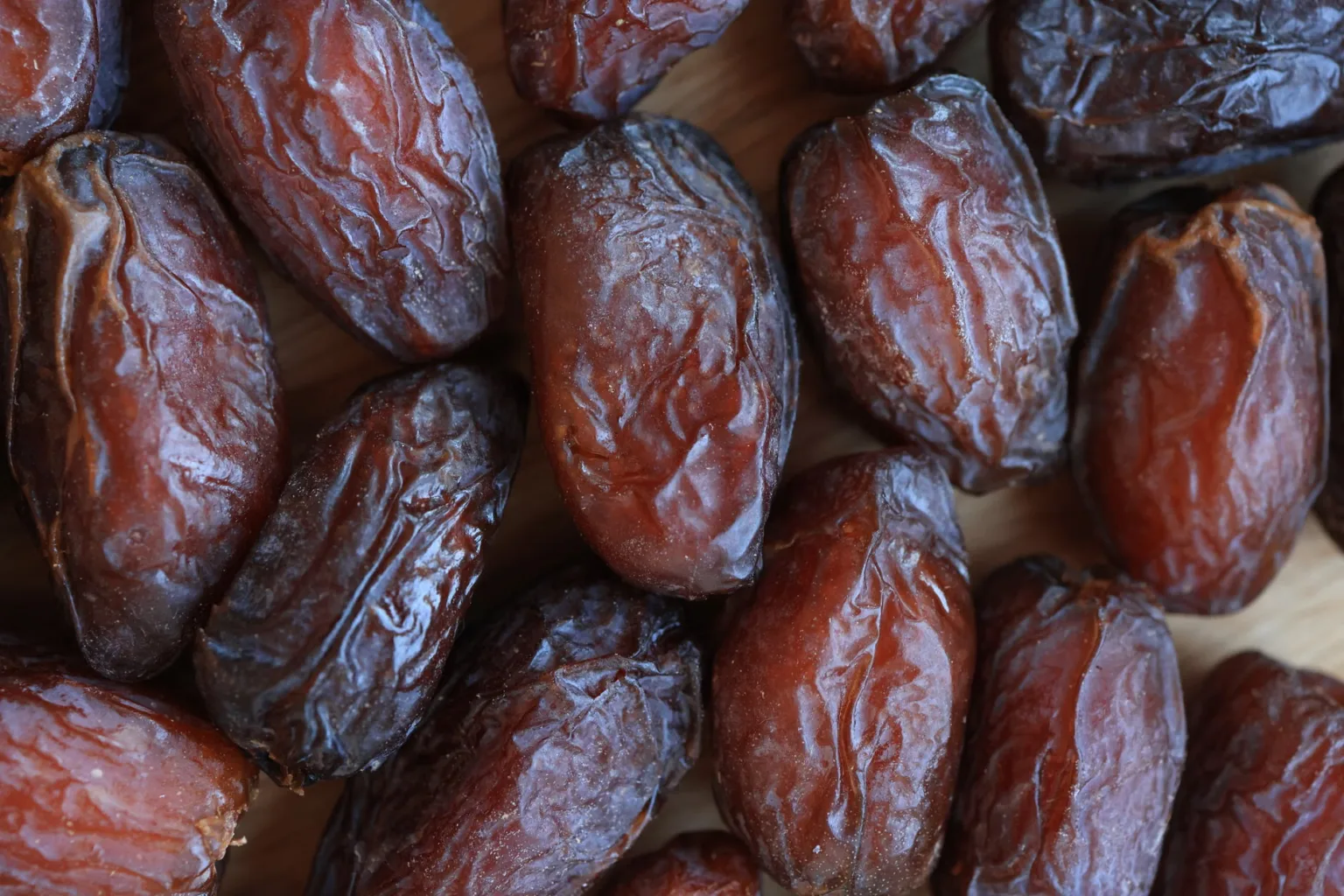
A date is the fruit of the date palm. Dates sold in shops include soft, semi-dry, and dry types, which differ in texture and appearance; varieties also come in different colors. The fruit has a sweet flesh and an elongated pit in the center, so check each piece before serving or cutting it. Here, “dried dates” refers to dates sold in that form, not to one particular variety. Texture can vary from product to product, so choose a type that suits the result you want.
When to use it
Use dates when you want to add a sweet, fruity taste to a dish, or serve the fruit as part of a starter, main dish, or dessert. Choose a texture that fits the use: a softer date will feel different from a dry one when eaten. Available varieties also differ in appearance, so do not assume every date will have the same color or consistency. Remove the pit before serving dates whole or adding them to a recipe.
How to use it
Check the dates and remove the elongated pit before serving or preparing them. You can serve them whole or cut them into pieces to distribute through a dish; choose the cut size to suit how you want them to feel in each bite. Add dates to starters, main dishes, or desserts, keeping in mind that soft, semi-dry, and dry types have different textures. If you switch between types, adjust how you cut them and check the result in the dish. Follow the package directions for the specific product.
Flavour and texture
Dates have a sweet, fruity taste. Their texture is not the same across all products: soft, semi-dry, and dry dates are available, and varieties also differ in color. Each fruit contains an elongated pit.
How to choose it
Choose a texture that fits your preparation: dates are sold as soft, semi-dry, and dry types. Check the product’s appearance and package information; varieties can differ in color and size.
Storage
There is no universal storage period specified for every dried date product. Follow the directions on the package you buy, and check them again if you transfer the dates to another container. Do not assume every format requires identical storage conditions.
Substitutions
You can replace a dry date with a soft or semi-dry one if a softer texture works for your dish. The difference between these types is noticeable, so check the result and do not treat them as identical.
Common mistakes
A common mistake is assuming all dates have the same texture or color. It is also easy to overlook the elongated pit: remove it before serving the fruit or cutting it for a recipe.
Safety and allergens
Dates may contain an elongated pit. Remove it before serving them pitted or cutting them, and check each piece before eating.
Culinary uses
- Sweet ingredient in starters and savory dishes
- Fruit ingredient in desserts
Recommended techniques
- Serve whole after removing the pit
- Chop or dice before adding to a dish
Pairs well with
- Starters
- Main dishes
- Desserts
Frequently asked questions
Do dried dates all have the same texture?
No. Soft, semi-dry, and dry types are sold, so texture varies between products.
Should I remove the pit?
Yes, if serving them pitted or cutting them for a dish. Check each date because the fruit has an elongated pit.
What dishes can I use dates in?
They can be added to starters, main dishes, and desserts, or served whole after the pit has been removed.
Ingredient allergens
Allergen listThere are no verified associations for these ingredients yet.
Sources and review
Automatically researched, cross-checked and validated content. Sources consulted:
- Client Challenge doi.org/10.2307/jj.27939689.16
- Vinagre - Wikipedia, la enciclopedia libre es.wikipedia.org/wiki/Vinagre
- Comité Científico aesan.gob.es/dam/jcr:3c94ae83-1384-420c-96c1-0c2aa6f1544e/comite_cientifico_34.pdf
- Healthy Eating Plan for Weight Management med.uc.edu/docs/default-source/mobility-study/healthy-eating-and-physical-activity-plan-(spa…
- - YouTube www.youtube.com/watch?v=vRRRnHLBLFE
- Evolución del léxico culinario desde 1932 a 1972 | OpenAlex openalex.org/W2291578502
- El dátil producto típico navideño www.directoalpaladar.com/otros/el-datil-producto-tipico-navideno
- Dátil en dados: un ingrediente natural para tus recetas elmonaguillo.com/datil-en-dados-ingrediente-natural-recetas/