- Category
- Pulses
- State
- Dry
- Usual unit
- g
What it is
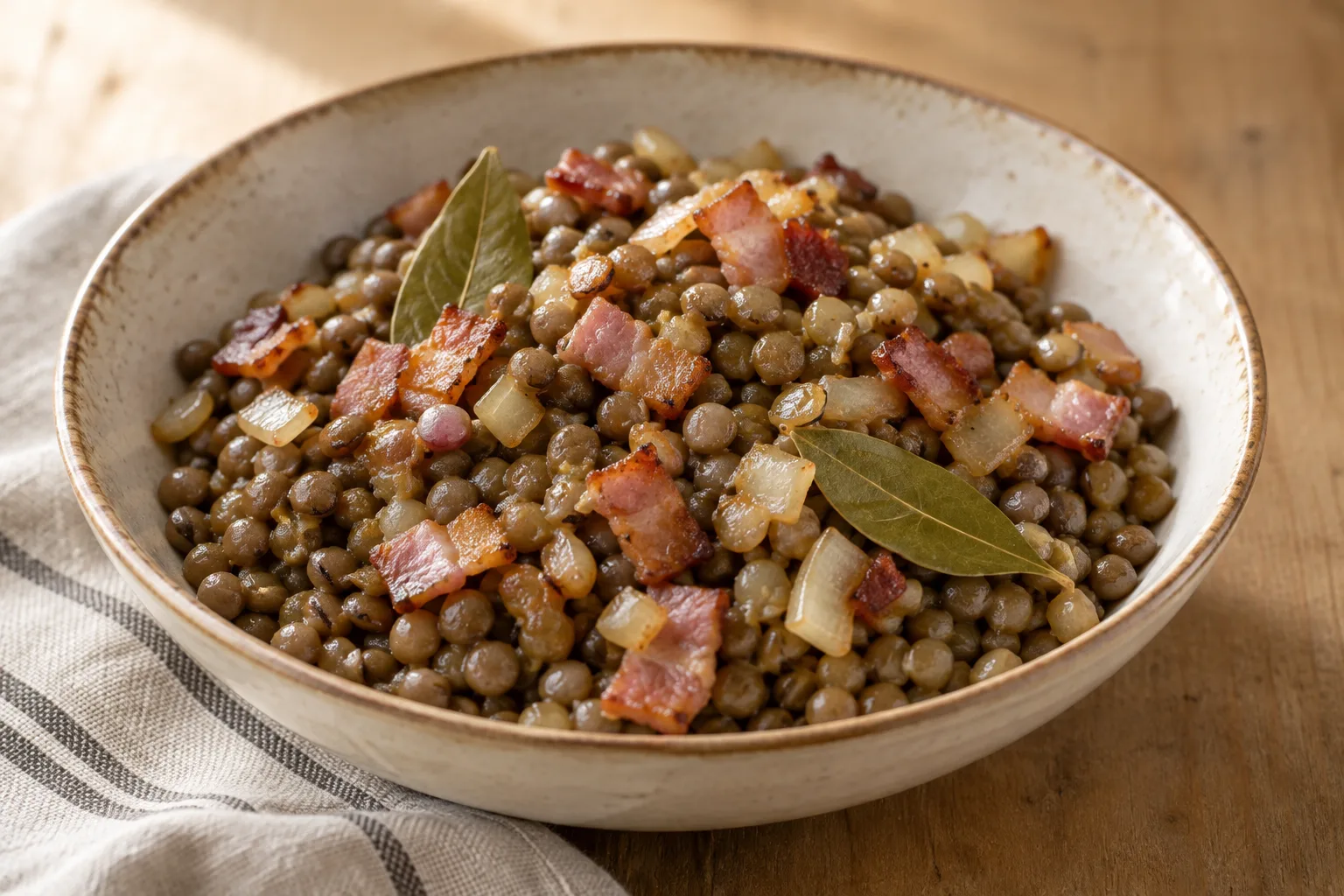
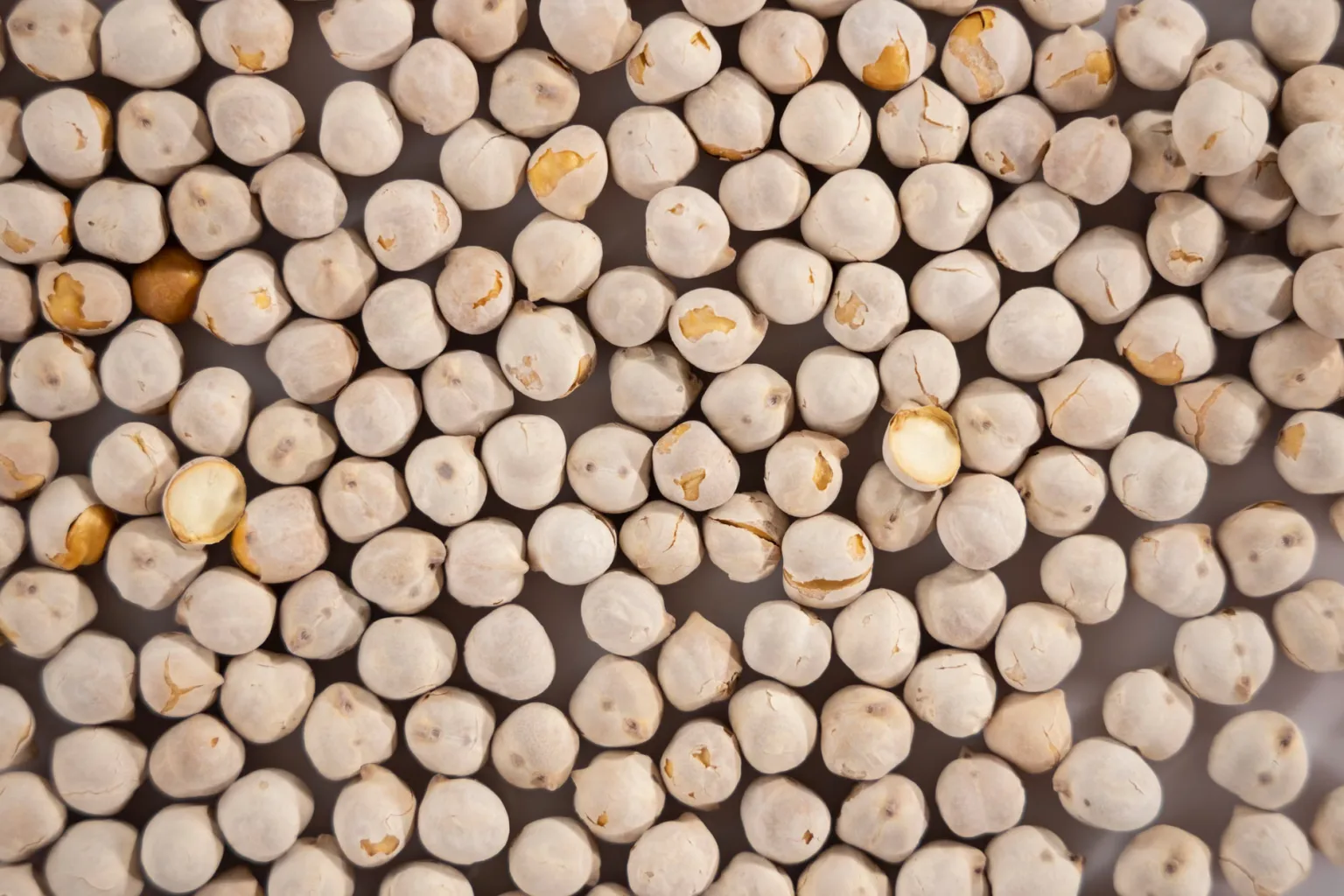
Dried grey peas are mature, dehydrated pea seeds and belong to the pulse family. “Grey” is a commercial description; dried peas can vary in colour, and the available information does not identify a particular variety by that name alone. They may be sold whole, with their skins and round shape intact, or split, sometimes with the skins removed. These forms behave differently during cooking: whole peas are more likely to retain some shape, while split peas tend to break down and thicken their cooking liquid. They are not interchangeable with fresh or frozen green peas, which contain more moisture and are used differently. Check the package description so you know which form you have before deciding whether to soak them and how to use them.
When to use it
Choose dried peas when you want a pantry pulse for cooked dishes, especially soups, stews and blended preparations. Whole peas are useful when you want some of the peas to hold their shape; split peas suit dishes where you want the liquid to thicken or plan to make a smooth purée. They can also be added to dishes with vegetables or grains. Do not substitute them directly for fresh or frozen peas in a quick-cooking recipe: dried peas need rehydration and cooking until tender. Preparation varies by form, so follow the package directions and check the texture as they cook.
How to use it
Before cooking, spread the peas out and remove any stones or damaged seeds, then rinse them. If they are whole, soaking beforehand is often useful for more even cooking; drain and rinse them before adding them to the pot. Split peas can be cooked without soaking in many preparations, but check the product directions because size and processing vary. Cover with water or stock and cook until tender, adding liquid if the mixture thickens. Start a soup or stew with onion, carrot or leek, then add the peas. For a smooth purée, cook until they break down and blend; for a coarser result, mash only some of them. Cooking time depends on the pea, its age and its form, so do not rely on a single fixed time.
Flavour and texture
Drying gives peas a more concentrated flavour than tender fresh green peas. Once cooked, whole peas can become soft while retaining some shape; split peas tend to break down more readily and give the cooking liquid body. The result varies with the type of pea and how long it is cooked. If the peas are still firm, continue cooking with enough liquid rather than blending them before they are tender.
How to choose it
Read the label to distinguish whole peas from split peas and to check preparation instructions. Look for dry peas that appear reasonably uniform, without visible moisture, mould or insect damage. When buying in bulk, inspect the product and use a clean container; colour alone cannot confirm variety or quality.
Storage
Keep dried peas in a clean, tightly closed container in a dry place away from light. Protect them from moisture and insects, and follow the package directions. A single storage period cannot be specified here because it depends on the product and its storage conditions. Once cooked, treat them as prepared food and refrigerate promptly in a covered container.
Substitutions
Split peas can replace whole peas in soups and purées, but the result will be thicker and less distinct in texture. Other dried pulses can play a similar role in a stew, though their texture and soaking or cooking needs differ. Adjust the liquid and check the instructions for the substitute.
Common mistakes
Confusing whole peas with split peas can change both the texture and whether soaking is useful. Do not assume every product needs the same preparation: check the label. Avoid using too little liquid or stopping before the peas are tender; cooking times vary, so check their texture as they cook.
Safety and allergens
Remove foreign objects and peas with visible signs of spoilage, and cook the peas before eating. Keep the dry product protected from moisture and follow the package directions. The available information does not identify a specific safety warning for the product sold as grey peas.
Culinary uses
- Base para sopas y guisos
- Ingrediente para purés y cremas
- Acompañamiento o componente de platos de legumbres
Recommended techniques
- Remojo previo, especialmente para guisantes enteros
- Cocción en líquido hasta que estén tiernos
- Triturado para preparar purés o cremas
Pairs well with
- Cebolla, zanahoria y puerro
- Arroz y otros cereales
- Hierbas y especias suaves, como laurel o comino
Frequently asked questions
Do dried grey peas need soaking?
Soaking is often useful for whole peas. Split peas can be cooked without soaking in many recipes, but check the package: the product’s form and directions should guide you.
What is the difference between whole and split peas?
Whole peas are more likely to keep their shape as they cook. Split peas break down more easily and thicken soups and purées, so they are not always interchangeable when you want distinct whole peas.
How should I store them uncooked?
Keep them dry in a clean, closed container, protected from moisture and light. Follow the package storage directions and discard the product if you notice signs of spoilage.
Ingredient allergens
Allergen listThere are no verified associations for these ingredients yet.
Sources and review
Automatically researched, cross-checked and validated content. Sources consulted:
- Preparación para Emergencias: Almacenamiento de Alimentos a Largo Plazo para Desastres | CAES Field Report fieldreport.caes.uga.edu/publications/C1310-SP/preparacion-para-emergencias-almacenamiento-d…
- ¿Por qué la muerte es origen de miedos y tabúes? doi.org/10.64628/aao.fccyk3qj3
- Client Challenge doi.org/10.2307/jj.27939689.16
- Los guisantes secos | Consumer www.consumer.es/alimentacion/los-guisantes-secos.html
- Comité Científico aesan.gob.es/dam/jcr:3c94ae83-1384-420c-96c1-0c2aa6f1544e/comite_cientifico_34.pdf
- Orientaciones para la elaboración de menús saludables y ... www.aesan.gob.es/dam/jcr:5740aa5f-977f-42b9-ac3e-44253d1885b1/ORIENTACIONES_MAYORES.pdf
- Guisantes: Alegría verde en tu plato - Estudia Hostelería estudiahosteleria.com/blog/gastronomia/guisantes/
- Sweet peas add color and fragrance to Oregon gardens | Servicio de Extensión de OSU extension.oregonstate.edu/es/news/sweet-peas-add-color-fragrance-oregon-gardens
- Guisantes secos: la legumbre olvidada que merece un hueco fijo en tu despensa - Slow Shop granel www.google.com/goto?url=CAESeQHrOzAVYPVpPNY72OGU6kW0i6YiiVrFVI0BNRDpstcKpywL98Npal1ehZTJrwaI…
- Alimento - Wikipedia, la enciclopedia libre es.wikipedia.org/wiki/Alimento
- Guisantes secos: la legumbre olvidada que merece un hueco fijo en tu despensa - Slow Shop granel www.slowshopgranel.es/guisantes-secos-como-cocinarlos/
- - YouTube www.youtube.com/watch?v=1RvQSiS3IxE
- Guisantes frescos: propiedades, cómo se cocinan y recetas para añadir dulzor natural a tus platos www.huleymantel.com/trucos/guisantes-frescos-propiedades-como-se-cocinan_103602_102.html
- BM: Guisantes, por qué ahora saben mejor (y cómo aprovecharlos de verdad) www.google.com/goto?url=CAESoAEB6zswFZG_aFMnvZENQwGjnfH0JsG4YmRZKWEzwFmd_GJwSshf-2yROCThYeZa…