- Category
- Herbs and spices
- State
- Dry
- Usual unit
- teaspoon
What it is
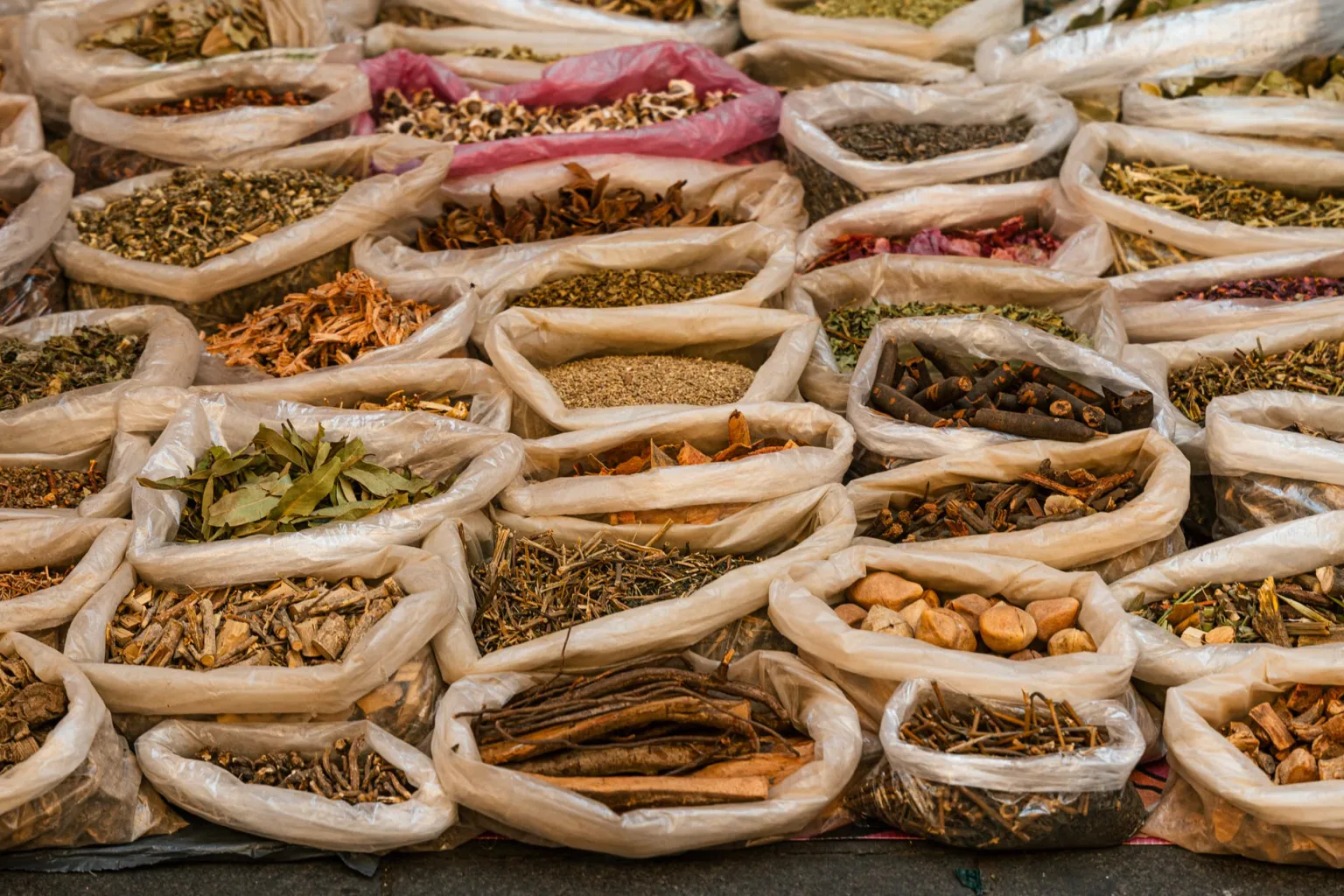
Dried herbs are edible parts of aromatic plants, such as leaves, flowers, or seeds, that have had moisture removed. The term covers many different herbs, so aroma, flavor, and use depend on the particular plant and whether it is sold whole, crumbled, or ground. With less water, the flavor can seem more concentrated than that of the corresponding fresh herb. For that reason, a recipe calling for fresh herbs will generally need a smaller amount when dried herbs are used instead. Dried leaves may be kept whole and crumbled when needed, or stored already crumbled. There is no single exact conversion for every variety, so it is practical to begin with a modest amount and follow the recipe.
When to use it
Use dried herbs when a recipe specifies them or when the fresh version is unavailable. They are useful for seasoning soups and other dishes that already call for herbs, and in recipes where the seasoning is incorporated during preparation. Since dried herbs are generally more concentrated than fresh ones, reduce the quantity when substituting. The proportion can vary by herb and product: start with about one-quarter to one-third of the stated fresh amount, then adjust to suit the recipe and taste. If a recipe names a particular herb, do not assume a blend is an equivalent substitute without checking its ingredients.
How to use it
Check which herb the recipe calls for and measure less if replacing fresh with dried: as a general guide, use about one-quarter to one-third of the stated fresh quantity. If the recipe calls for dried herbs and you only have fresh, approximately three to four times the dried amount in fresh herbs is commonly needed. Strength and flavor vary among herbs, so treat these amounts as a starting point rather than an exact rule for every product. You can keep leaves whole and crumble them just before use to release their aroma, or use herbs that are already crumbled. Add them at the stage specified by the recipe and taste the dish before adding more. Close the container after measuring.
Flavour and texture
Aroma and flavor depend on the particular herb and its aromatic oils; drying can make the flavor seem more concentrated than in the fresh version. Dried leaves may be whole, crumbled, or ground, giving them different textures. Crumbling whole leaves when using them helps release their aroma. Dried herbs are not all interchangeable, so consider the particular flavor required by the recipe.
How to choose it
Choose the specific herb called for in the recipe and check that the package is sealed and the product appears dry, with no obvious signs of moisture or mold. Herbs may be sold whole, crumbled, or ground; select a form suitable for the preparation. Because flavor depends on the herb and drying, do not assume that all dried herbs have the same strength or that a blend is equivalent to a single herb.
Storage
Store dried herbs in airtight containers in a cool, dry, dark place to help protect their color and aroma. Close the container securely after each use and avoid leaving it near sources of moisture. Do not use herbs that have become damp or show mold. Leaves may be kept whole and crumbled during cooking, or stored already crumbled.
Substitutions
To replace fresh herbs with dried, use about one-quarter to one-third of the stated fresh quantity. To replace dried herbs with fresh, use approximately three to four times the dried amount. These are general guides: strength varies by herb, product, and recipe, so adjust cautiously.
Common mistakes
A common substitution mistake is using the same amount of dried herbs as fresh: dried herbs are often more concentrated. Avoid treating every herb as interchangeable, overlooking the form specified in a recipe, or leaving the container open in a damp place. Start with less and adjust after tasting.
Safety and allergens
Use clean utensils and work surfaces when handling herbs. Keep the product dry and protected from moisture; discard herbs that are damp or show mold. If drying herbs at home, make sure they are completely dry before storing.
Culinary uses
- Seasoning
- Substitute for fresh herbs
Recommended techniques
- Crumble or crush before use to release aroma
- Add during cooking or as directed by the recipe
Pairs well with
- Soups and other dishes that call for herbs
- Fresh herbs in recipes that use both fresh and dried forms
Frequently asked questions
How much dried herb replaces fresh?
As a general guide, use one-quarter to one-third of the amount of fresh herb stated in the recipe. Strength varies by herb.
How should dried herbs be stored?
Keep them in an airtight container in a cool, dry, dark place, and prevent the product from becoming damp.
Can I crumble the leaves before storing them?
Yes. You can store them whole and crumble them when needed, or keep them already crumbled. Crumbling just before use helps release their aroma.
Ingredient allergens
Allergen listThere are no verified associations for these ingredients yet.
Sources and review
Automatically researched, cross-checked and validated content. Sources consulted:
- Client Challenge doi.org/10.2307/jj.27939689.16
- Los japonesismos culinarios | OpenAlex openalex.org/W2906636610
- Regionalismo y centralismo culinario en un manuscrito huancaíno del siglo XIX : influencias y sabores | OpenAlex openalex.org/W2981277873
- Gastronomía de la provincia de Valencia - Wikipedia, la enciclopedia libre es.wikipedia.org/wiki/Gastronom%C3%ADa_de_la_provincia_de_Valencia
- Vamos a Conservar Alimentos: El secado de las plantas medicinales y aromáticas extension.psu.edu/vamos-a-conservar-alimentos-el-secado-de-las-plantas-medicinales-y-aromati…
- revista del - Comité Científico www.aesan.gob.es/dam/jcr:c6a76f54-0d6e-43b4-ad26-ac603ba37960/comite_cientifico_38.pdf
- Herbs - National Center for Home Food Preservation nchfp.uga.edu/how/dry/recipes/herbs/
- Guia_RGSEAA.pdf www.aesan.gob.es/dam/jcr:ebc1dca1-078f-400f-a649-6cc68ad1e1ef/Guia_RGSEAA.pdf
- Coriandrum sativum - Wikipedia, la enciclopedia libre es.wikipedia.org/wiki/Coriandrum_sativum
- - YouTube www.youtube.com/watch?v=ITnC5fm9sy8