- Category
- Herbs and spices
- State
- Dry
- Usual unit
- tablespoon
What it is
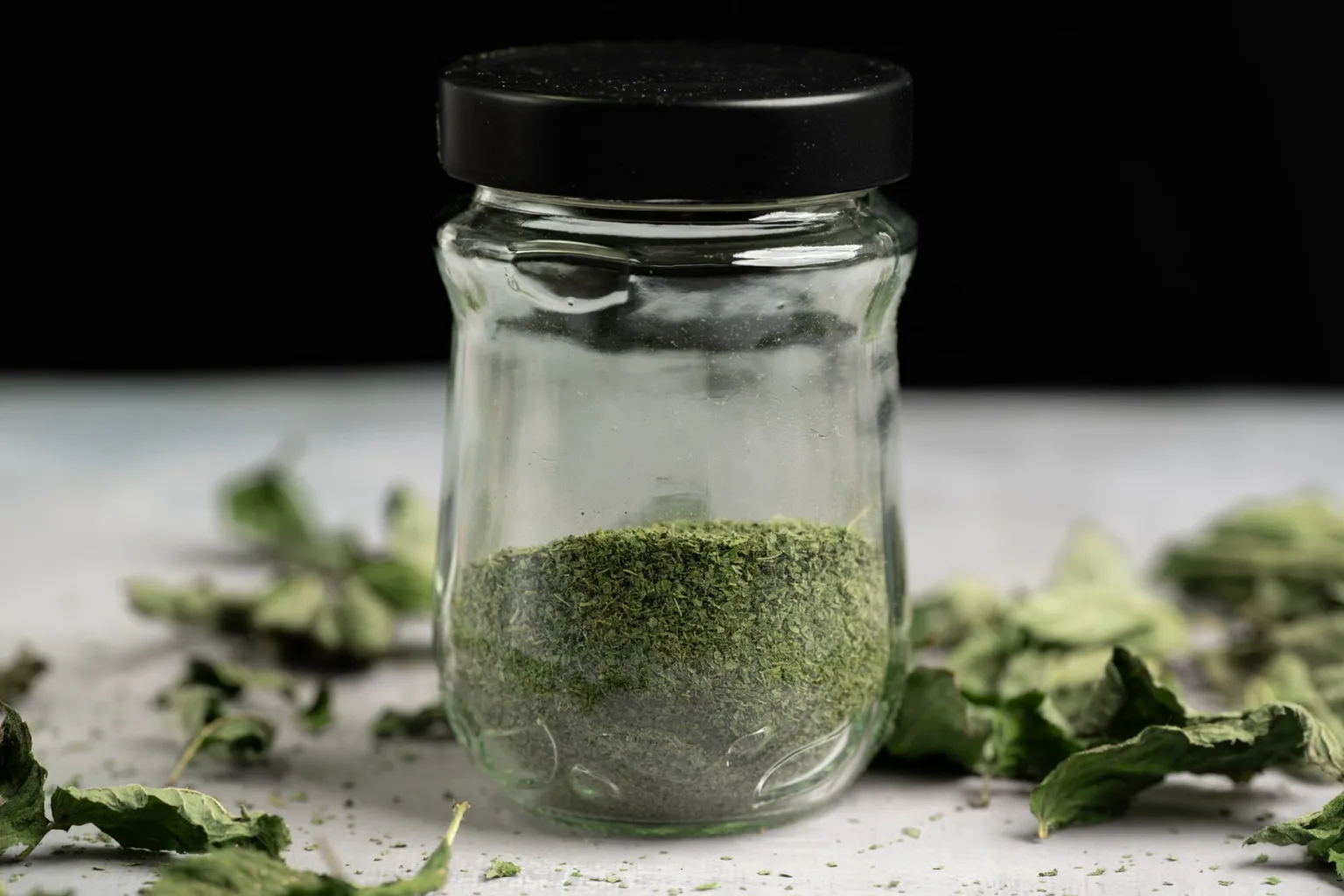
Dried mint consists of leaves from plants in the Mentha genus that have been dried for use as a seasoning. Mint belongs to the Lamiaceae family. There are different culinary varieties, so the flavor may range from mild to strong or peppery. Dried mint can stand in for fresh mint, but it has a different texture and its aroma disperses differently in a dish. The name “mint” covers several culinary varieties; when a package identifies the variety, take that into account when choosing how to use it. It is a seasoning rather than a fresh leafy vegetable, and its intensity can vary from one product to another.
When to use it
Use dried mint when you want a fresh herbal note and do not have fresh leaves available. It can season vegetables such as cucumber, tomato, eggplant, peas, and beans, and is also used with meat, fish, potatoes, sauces, dressings, and drinks. In sweet dishes, it can complement chocolate, fruit, ice cream, or creamy desserts. Since strength depends on the variety and product, begin with a little, taste, and adjust. There is no single amount that suits every mint variety or recipe, so treat the quantity as a matter of taste rather than a fixed conversion.
How to use it
Crumble or gently rub the dried leaves between your fingers before adding them so they distribute more evenly. Stir them into sauces, dressings, vegetables, stews, meat, or fish, mixing well to spread the aroma through the dish. They can also flavor drinks or add a herbal accent to desserts with fruit or chocolate. Start with a pinch or small amount and taste before adding more, because mint can be assertive and varies by variety. When replacing fresh mint with dried, add the dried herb gradually and adjust to taste; do not assume that equal spoonfuls of fresh and dried mint are interchangeable.
Flavour and texture
The aroma is herbal and refreshing. Depending on the variety, the flavor may be mild or pronounced, with sweet, cool, or peppery notes. Drying removes the tender texture of fresh mint, and larger pieces may be noticeable in a dish unless crumbled. Aroma strength and appearance can differ between products, so smell the herb before using it.
How to choose it
Choose a package clearly identified as culinary mint, and check the variety if it is listed. Look for leaves with a recognizable aroma and no visible dampness, clumping, or dirt. Products may be more or less finely crumbled; that alone does not identify the variety. If you cannot see the contents, check that the package is closed and in good condition.
Storage
Keep dried mint in a clean, closed container in a dry place, and do not put a wet spoon into it. Moisture can affect herbs, and tender-leaved mint needs to dry completely to avoid mold problems during drying. Follow the package directions and discard the herb if it becomes damp, moldy, or develops an unusual smell. No single storage duration is established here for every product.
Substitutions
Fresh mint is the closest substitute, but it adds moisture and has a different texture; add it gradually and adjust to taste. You can also replace one dried culinary mint variety with another, though the result may be milder or stronger. Avoid relying on a fixed fresh-to-dried conversion without tasting the dish.
Common mistakes
Adding too much mint at the start can overpower other flavors, especially when the variety is strong. Another common mistake is assuming all mint varieties taste alike or replacing fresh mint with the same spoonful of dried mint without tasting. Avoid putting damp leaves or a wet utensil into the container.
Safety and allergens
Use mint identified as suitable for food. Keep it clean and dry, and do not use leaves with visible moisture, mold, or an unusual smell.
Culinary uses
- Seasoning for savory dishes
- Herbal flavoring for sauces, vegetables, meats, fish, and drinks
Recommended techniques
- Crumble or rub the dried leaves before adding them to distribute their aroma
- Stir into sauces or dressings, or use to flavor beverages
Pairs well with
- Cucumber, tomato, eggplant, peas, and beans
- Meat, fish, potatoes, sauces, chocolate, and fruit
Frequently asked questions
Can I substitute dried mint for fresh mint?
Yes. It gives a related flavor, but the texture and strength may differ. Begin with a small amount of dried mint and adjust after tasting.
What foods pair well with dried mint?
It can season vegetables, meat, fish, potatoes, sauces, and dressings. It is also used to flavor drinks and can complement fruit and chocolate.
How should I store dried mint?
Keep it in a clean, closed, dry container and follow the package directions. Discard it if it becomes damp or moldy, or develops an unusual smell.
Ingredient allergens
Allergen listThere are no verified associations for these ingredients yet.
Sources and review
Automatically researched, cross-checked and validated content. Sources consulted:
- The Essential Glossary of Cooking Terms for the Culinary Arts - Escoffier www.escoffier.edu/blog/culinary-arts/the-essential-glossary-of-cooking-terms-for-the-culinar…
- Qué es la punción seca y para qué la usan los fisioterapeutas doi.org/10.64628/aao.5vsjmghj5
- Gastronomía de México - Wikipedia, la enciclopedia libre es.wikipedia.org/wiki/Gastronom%C3%ADa_de_M%C3%A9xico
- Vamos a Conservar Alimentos: El secado de las plantas medicinales y aromáticas extension.psu.edu/vamos-a-conservar-alimentos-el-secado-de-las-plantas-medicinales-y-aromati…
- Revista del comité científico de la aecosan número 24 aesan.gob.es/dam/jcr:979384c0-5bd9-46d4-a29e-ccf5876c769c/RCC_24.pdf
- Obtención del ajo negro por reacción de Maillard para el desarrollo de productos culinarios y su aplicación en cocina innovadora | OpenAlex openalex.org/W2991569715
- Historical Newspapers of South Carolina historicnewspapers.sc.edu/lccn/sn93067846/1882-01-10/ed-1/seq-4/ocr/
- Menta - EcuRed www.ecured.cu/Menta?oldid=3141476
- Maridajes para menta piperita en Sur de Europa ✓ basmatic.com/maridaje/menta-piperita/sur-de-europa
- - YouTube www.youtube.com/watch?v=zcoL7oNb9hc