- Category
- Vegetables
- State
- Dry
- Usual unit
- g
What it is
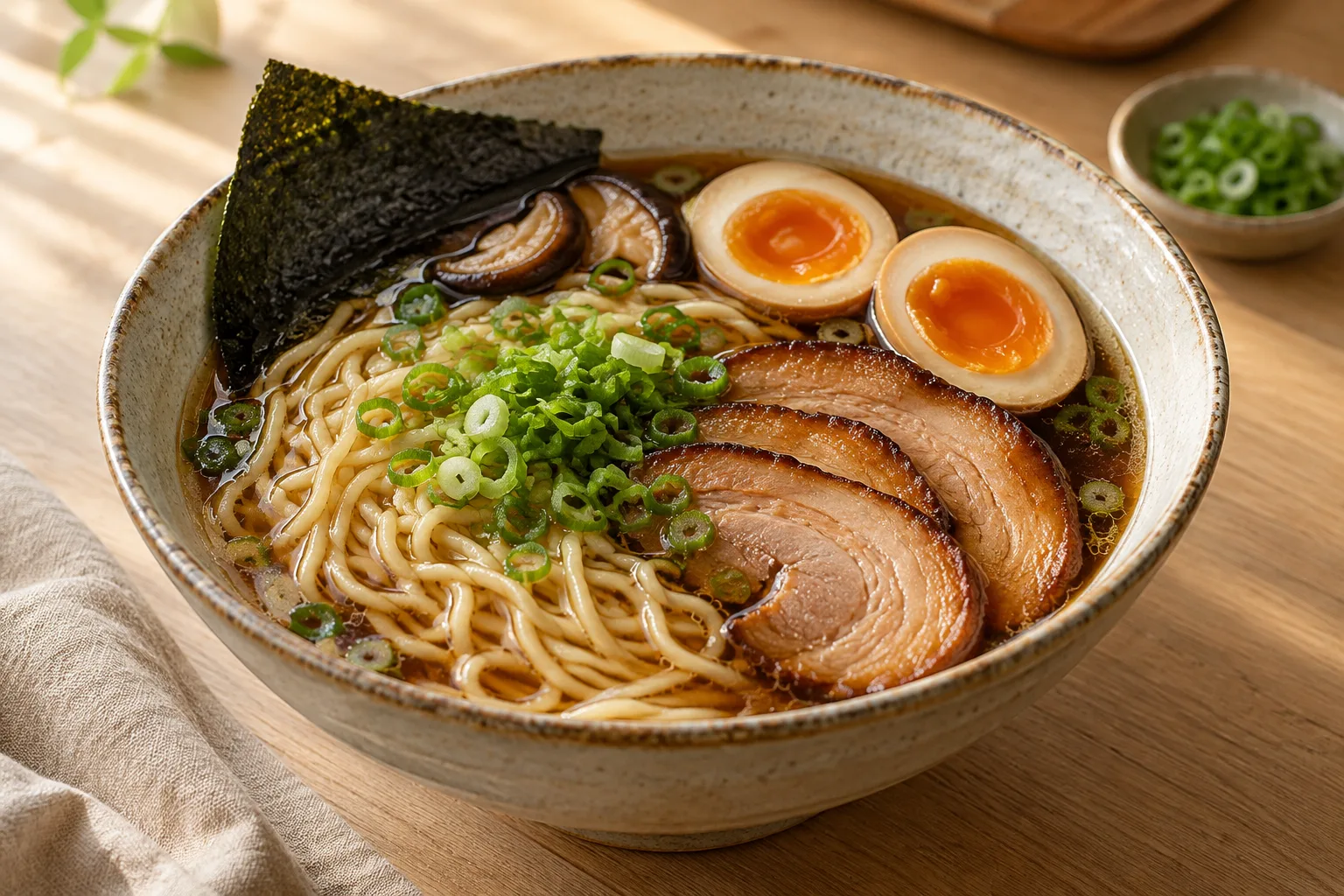
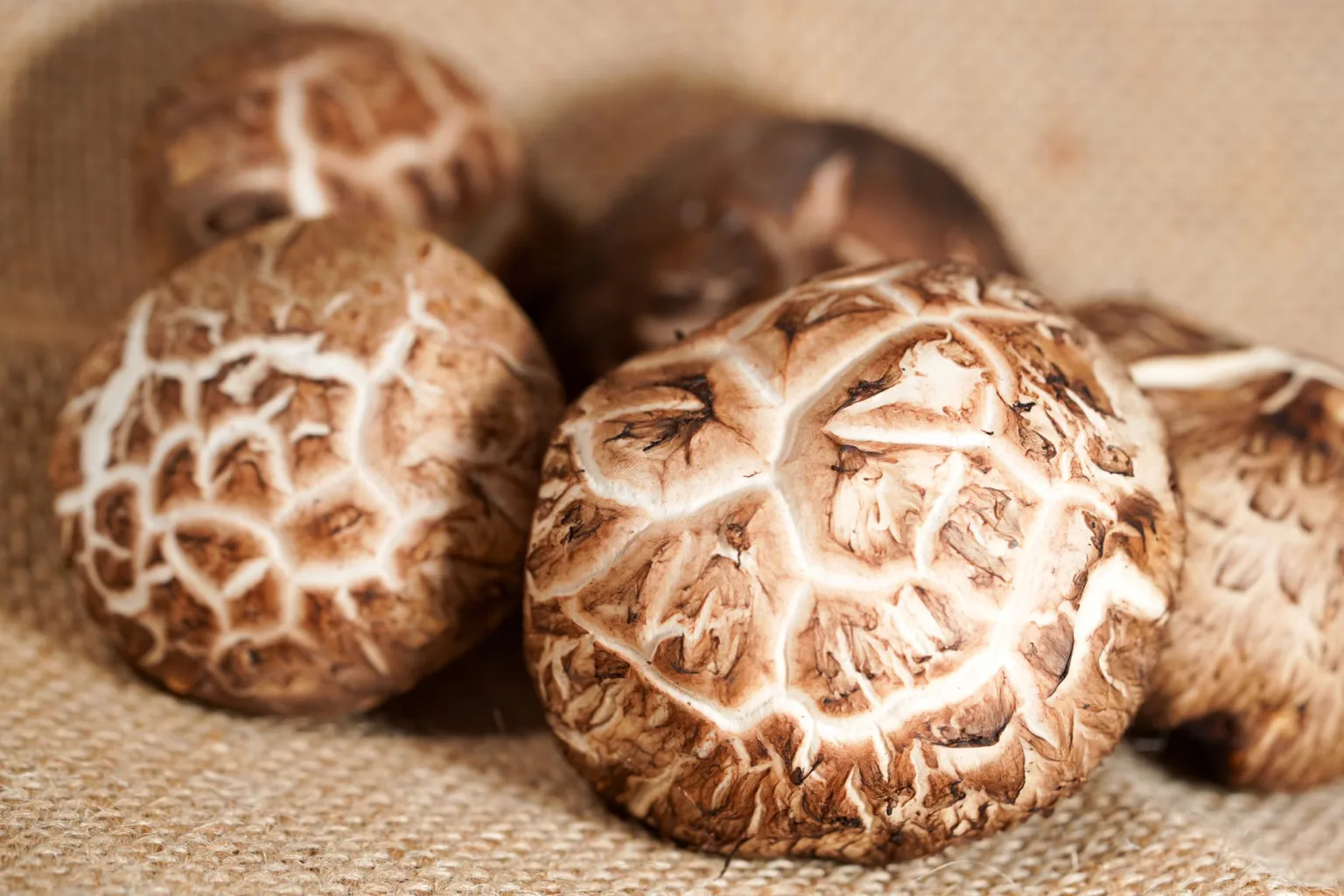
Dried shiitake mushrooms are the dried fruiting bodies of the edible species Lentinula edodes. They are sold whole or cut, and removing much of their moisture gives them a convenient pantry form and a concentrated, distinctive umami flavour. Before cooking them in dishes where a tender texture is wanted, they are usually rehydrated in water and then cut as the recipe requires. Rehydrated mushrooms can be added to soups, broths, rice dishes, pasta, stews, fillings and stir-fries. The soaking liquid can also add flavour: strain it to remove possible particles before adding it to a dish. The stems may be chewier than the caps; trim or remove them if their texture does not suit the dish. Intensity and piece size can vary between products, so adjust the amount to taste and follow the package directions.
When to use it
Choose dried shiitake when you want mushrooms on hand in the pantry or want to add concentrated umami to a dish. They work especially well in soups, broths, sauces, rice dishes, pasta and stews, where their flavour can spread through the liquid or among the other ingredients. Once rehydrated and cut, they can also be used in fillings and stir-fries. If you want the mushroom itself to stand out for its fresh texture, consider fresh shiitake: rehydrated dried mushrooms will not have exactly the same bite. Because dried shiitake have an intense flavour, start with a moderate amount and adjust after tasting.
How to use it
First check the package directions and inspect the mushrooms. To rehydrate them, cover with water and leave them until softened; the time depends on the product and piece size, so check the texture rather than assuming one fixed duration. Drain and cut into strips or pieces if needed. If you plan to use the soaking liquid, strain it and add it gradually to a soup, sauce or broth so you can control the flavour. Add the rehydrated mushrooms to the dish and cook as directed by the recipe. If the stems remain too firm or chewy, trim them or set them aside for a preparation where that texture is less noticeable. You can also grind dried shiitake and use the powder as a seasoning for broths, soups and sauces.
Flavour and texture
Dried shiitake bring pronounced umami flavour and a deep aroma, which may be more concentrated than that of fresh mushrooms. After rehydrating, the caps are generally tender and meaty, although the texture depends on the product and soaking. The stems can be firmer and chewier; remove or cut them if you dislike that mouthfeel. The soaking liquid may carry some of the flavour and can be used, once strained, in dishes with broth or sauce.
How to choose it
Look for a sealed package and check that the product is identified as dried shiitake. Piece size and form vary: whole mushrooms may need different preparation from pre-cut pieces. Read the ingredient list and the maker’s directions, and check the package for damage or visible moisture. Since the flavour can be intense, choose a pack size that suits how often you cook with mushrooms.
Storage
Keep dried mushrooms in a closed package and follow the storage directions printed on the label. After opening, protect them from moisture and reseal the package securely or transfer them to a clean, airtight container. Do not store dried mushrooms beside wet foods or use a product whose package is damaged or shows unusual signs. Treat rehydrated mushrooms as prepared food and follow the relevant food-safety and storage directions for the recipe.
Substitutions
Fresh shiitake can play a similar role in recipes that call for mushrooms, but its moisture, flavour and texture are not identical to those of rehydrated dried shiitake. Other edible mushrooms may also work in dishes that allow for mushrooms, though the result will change. Adjust the amount and preparation to the recipe; do not assume an exact weight-for-weight swap or that every variety will provide the same flavour.
Common mistakes
Avoid adding a large amount before tasting: dried shiitake flavour can be intense. Do not assume every piece rehydrates in the same time; check that it is soft enough for the intended use. Avoid pouring soaking water straight into a dish if it contains particles; strain it first. If the stems are chewy, trim or cut them rather than leaving tough pieces in a dish where a delicate texture matters.
Safety and allergens
Follow the package directions, inspect the product before use and discard any package showing signs of spoilage. Rehydrate only the amount you need, and handle and store prepared mushrooms with the same care as other cooked foods.
Culinary uses
- Aportar umami a sopas, caldos, salsas, arroces y guisos
- Añadir textura carnosa a salteados, rellenos y platos de verduras
Recommended techniques
- Rehidratar en agua antes de cocinar
- Cortar y cocinar en salteados, sopas, arroces o guisos
- Moler las setas secas para usarlas como condimento
Pairs well with
- Arroz, pasta y fideos
- Cebolla, ajo y jengibre
- Brócoli, zanahoria y otras verduras
Frequently asked questions
Do dried shiitake always need rehydrating?
For tender whole or cut mushrooms, rehydrating them first is usual. You can also grind them dry and use the powder as a seasoning in soups, broths or sauces.
Can I use the soaking liquid?
Yes. It can add flavour to soups, broths or sauces. Strain it first to remove possible particles, then add it gradually to control the intensity.
What should I do with the stems?
They can be chewier than the caps. Trim or remove them if that texture does not suit the dish, or save them for another preparation.
What dishes are dried shiitake good in?
After rehydrating, add them to soups, rice dishes, stews, pasta, fillings and stir-fries. Their pronounced flavour also works in sauces and broths.
Ingredient allergens
Allergen listThere are no verified associations for these ingredients yet.
Estimated nutrition
- Fat
- 1.43 g
- Saturates
- 0 g
- Carbohydrate
- 57.1 g
- Sugars
- 0 g
- Fibre
- 28.6 g
- Protein
- 28.6 g
- Salt
- 0.14 g
Sources and review
Automatically researched, cross-checked and validated content. Sources consulted:
- Comer setas puede salvar el planeta: por qué la micología es clave para una alimentación sostenible doi.org/10.64628/aao.gdmqatdhj
- Agencia Española de Seguridad Alimentaria y Nutrición www.aesan.gob.es/
- Setas y hongos deshidratados vs frescos: Todo lo que debes saber clubdelicatessen.com/setas-y-hongos-deshidratados/
- Shiitake: Qué Es, Propiedades y Curiosidades | Resetea resetea.es/setas-shiitake-todo-lo-que-necesitas-saber/
- Setas Shiitake, las indiscutidas protagonistas en los platos asiáticos y vegetarianos: su origen, propiedades y beneficios www.directoalpaladar.com/ingredientes-y-alimentos/setas-shiitake-indiscutidas-protagonistas-…
- Safety Assessment of Pea Protein Fermented by Shiitake (Lentinula Edodes) Mushroom Mycelia as a Novel Food (RP1759) | Published in FSA Research and Evidence science.food.gov.uk/article/154198-safety-assessment-of-pea-protein-fermented-by-shiitake-le…
- GRAS Notice (GRN) 1125, Pea Protein Fermented by ... www.fda.gov/media/174218/download
- Antibacterial Potential and Chemical Composition of Shiitake Mushroom (Lentinus edodes (Berk.) Sing.) Extract Against Pathogenic Bacteria - PMC pmc.ncbi.nlm.nih.gov/articles/PMC12782324/
- Shiitake: tradición, propiedades, beneficios y recetas www.boletsdesoca.com/es/shiitake-tradicion-propiedades-beneficios-para-la-salud-usos-y-culti…
- Setas shiitake: qué son, propiedades y recetas - Oriental Market www.orientalmarket.es/setas-shiitake/?srsltid=AYCX9vJWhc29XffMD8Mi7TJvKtnk8iUGBTVQH-BtGE4Rd0…
- Setas Shiitake. ¿Qué son? Usos y beneficios en la cocina www.abc.es/recetasderechupete/setas-shiitake-que-son-usos-y-beneficios-en-la-cocina/40736/
- Las mejores setas shiitake para sushi y cocina asiática: análisis y comparativa de productos yuanlaosi.es/setas-shiitake/
- SETAS: SHIITAKE - Grupo Gloriamar www.gloriamar.es/seta-shiitake/
- Uso de hongos como fuente proteica: potencialidades y aplicaciones | OpenAlex openalex.org/W7112415452
- Salteado de Shiitake con Verduras y Salsa de Soja ⋆ Fungi natur funginatur.com/salteado-de-shiitake-con-verduras-y-salsa-de-soja/?srsltid=AYCX9vJHoOMe1U1Ad1…
- Rehidratar setas shiitake - Koketo koketo.es/rehidratar-setas-shiitake