- Category
- Pulses
- State
- Dry
- Usual unit
- g
What it is
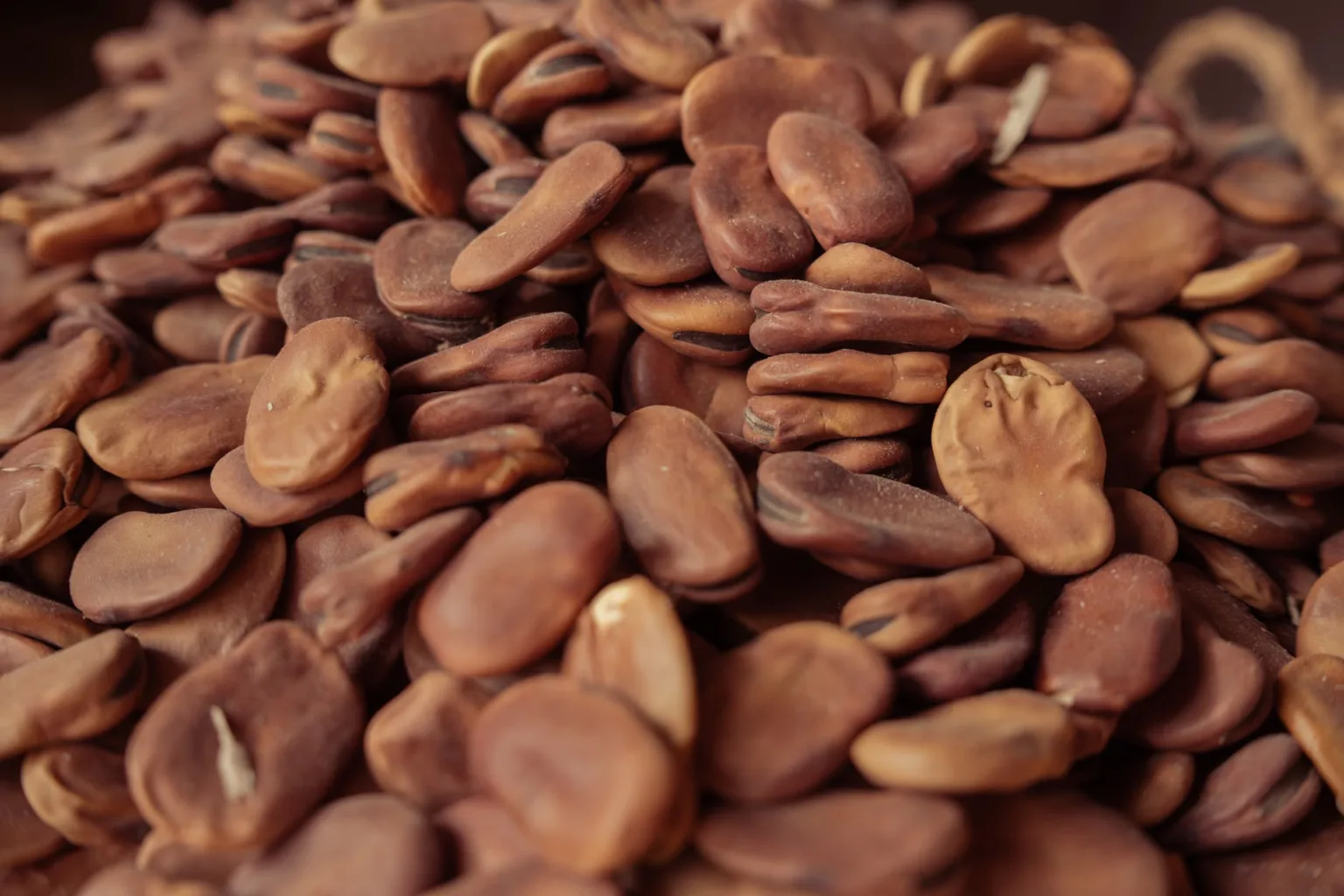
These are dried fava bean seeds sold with their outer skins removed and split into pieces. Unlike fresh fava beans, they are a dry pantry product and must be cooked before eating. Because they are split and peeled, they do not behave exactly like whole, skin-on beans: they may soften and partly break down, adding body to broths and purées. Piece size and package directions affect preparation, so do not assume that they need the same soaking or cooking as whole beans.
When to use it
Choose them when you want a dried legume for a stew, a thick soup, or a cream soup, particularly when a soft texture that blends into the broth is useful. They also work for purées and spreads. Their dried form makes them convenient to keep in the pantry and use outside the fresh fava season. Since split peeled beans may cook differently from whole beans, check the package before deciding whether to soak them or how much liquid to use.
How to use it
Inspect and rinse the beans, then follow the package directions for soaking; culinary instructions for dried fava beans often include soaking, but split peeled beans may need different handling. Drain them if soaked, then simmer in water or broth until tender, checking their texture as they cook. Add liquid gradually: the pieces may partly break down and thicken the cooking liquid naturally. For a cream soup or purée, blend the cooked beans and add liquid until the consistency suits you. In a stew, cook them with vegetables and seasonings, but do not automatically use timings intended for whole beans.
Flavour and texture
When cooked, they have a mild flavor and a tender, creamy, somewhat floury texture that can thicken stew liquid. Because they are peeled, they lack the characteristic outer skin of whole fava beans. Final firmness varies with piece size, soaking, cooking, and product age, so check the texture rather than relying on one fixed cooking time.
How to choose it
Look for a product clearly labeled as dried, peeled, and split fava beans, and check the package for soaking and cooking directions. Make sure the package is intact and the pieces match the form your recipe calls for; whole skin-on beans are not a direct swap without adjusting preparation and liquid. For loose beans, choose a dry product with no visible moisture or unusual smell.
Storage
Keep dried beans in a tightly closed container in a cool, dry place, away from moisture and heat. Avoid leaving them in direct sunlight or near steam. After opening, reseal the package or transfer the beans to an airtight container. Discard them if you notice moisture, insects, or signs of spoilage, and follow any specific storage directions on the package.
Substitutions
Split peeled dried peas can play a similar role in soups and purées, although they change the flavor and may thicken the dish differently. Chickpeas can work in stews or purées, but their size and form affect soaking and cooking. In either case, add liquid gradually and make sure the substitute is tender before finishing the dish.
Common mistakes
Do not treat split peeled beans exactly like whole fava beans: they may cook faster and break down more readily. Avoid adding all the liquid intended for a different form at once; watch how much the beans absorb and how the broth thickens. Do not finish cooking just because the pieces feel soft on the outside; check their texture before serving.
Safety and allergens
Follow the package directions for soaking and cooking, and cook the beans until tender; soaking does not replace cooking. Do not eat dried beans uncooked. Do not use the product if it shows moisture, insects, or visible deterioration.
Culinary uses
- Base para sopas, potajes y guisos
- Ingrediente para purés, cremas y untables
Recommended techniques
- Remojar según las indicaciones del envase y escurrir antes de cocinar
- Hervir a fuego suave hasta que estén tiernas; triturar para obtener puré o crema
Pairs well with
- Cebolla, ajo y aceite de oliva
- Espinacas, cilantro, comino y pimentón
Frequently asked questions
Do dried split peeled fava beans need soaking?
It depends on the product and its package directions. Recipes for dried fava beans often include soaking, but split peeled beans may cook differently from whole beans.
Do they break down as they cook?
They can soften and partly break down, which thickens the cooking liquid. Check their texture and stir gently if you want to keep some pieces intact.
What dishes can I make with them?
Use them in stews, thick soups, purées, and cream soups. Once cooked and blended, they can also be made into a spread.
Ingredient allergens
Allergen listThere are no verified associations for these ingredients yet.
Estimated nutrition
- Fat
- 1.02 g
- Saturates
- 0 g
- Carbohydrate
- 65.9 g
- Sugars
- 0 g
- Fibre
- 8 g
- Protein
- 18.2 g
- Salt
- 0.11 g
Sources and review
Automatically researched, cross-checked and validated content. Sources consulted:
- Client Challenge doi.org/10.2307/jj.27939689.16
- Vicia faba - Wikipedia, la enciclopedia libre es.wikipedia.org/wiki/Vicia_faba
- Habas, origen, historia y creencias sobre esta hortaliza. blog.plantamus.com/habas/
- Qué son las habas secas y cómo aprovechar al máximo esta legumbre típica de Murcia, de sabor delicado y mantecoso www.directoalpaladar.com/ingredientes-y-alimentos/que-habas-secas-como-aprovechar-al-maximo-…
- Diferencias entre las habas secas y las habas tiernas – Botanical-online www.botanical-online.com/alimentos/habas-tiernas-secas-diferencia
- El amaranto, propiedades, usos y aplicación en la gastronomía | OpenAlex openalex.org/W20082531
- Las habas secas | Consumer www.consumer.es/alimentacion/las-habas-secas.html
- habas secas peladas y partidas | CocinaSinReceta.com www.cocinasinreceta.com/ingrediente/habas-secas-peladas-y-partidas/
- Potaje de habas secas almeriense | Sabores Almería saboresalmeria.store/recetas-tradicionales-almeria/potaje-de-habas-secas/
- Haba pelada - Ciudadanía activa - EINAsalut einasalut.caib.es/web/ciudadania-activa/-/haba-pelada
- Habas, en distintas texturas | Hello Chefs www.hellochefs.es/alta-cocina/v/habas-en-distintas-texturas
- Cómo cocinar habas secas: 13 Pasos (con imágenes) es.wikihow.com/cocinar-habas-secas