Egyptian fava bean ta’ameya
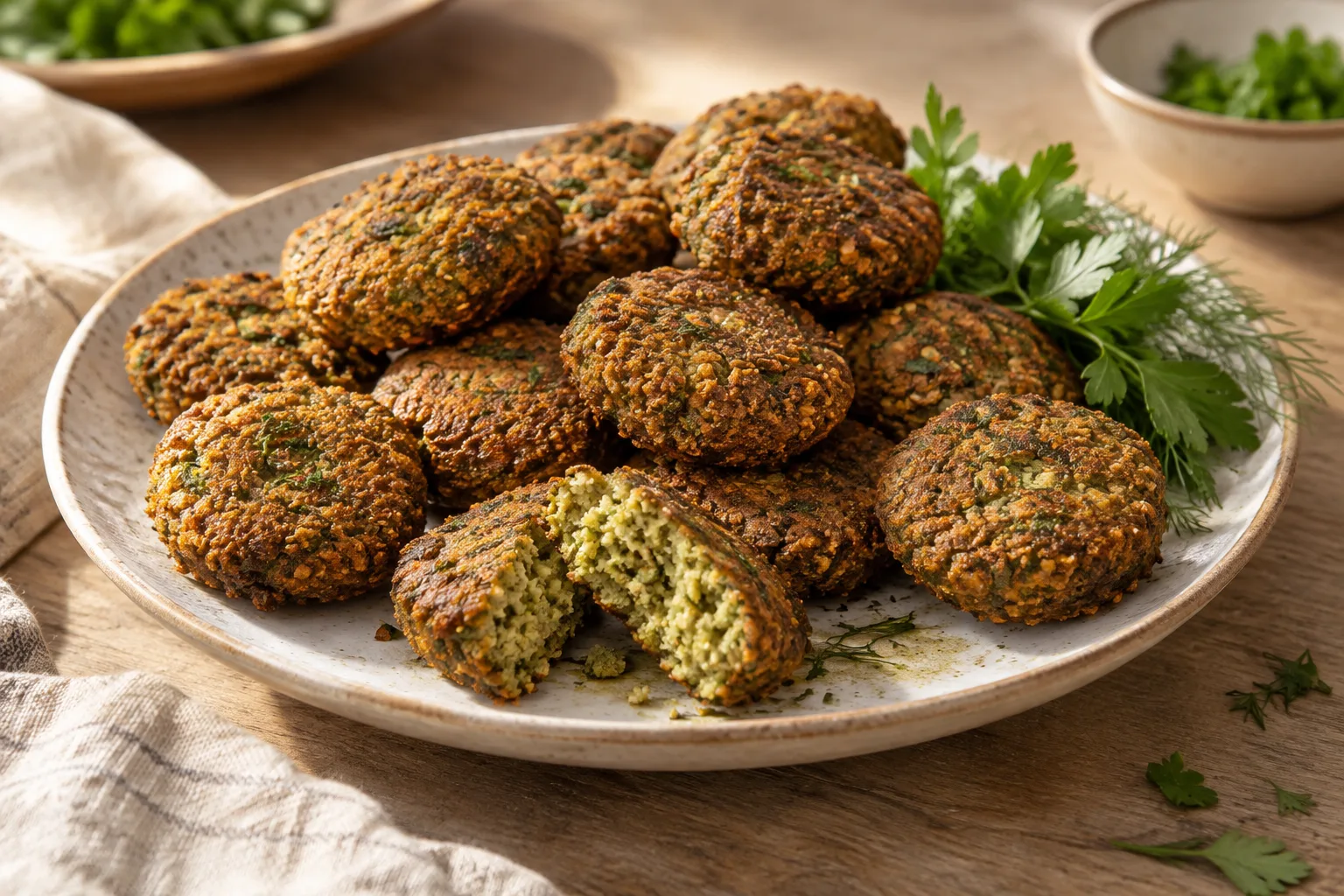
Egyptian fritters made with dried fava beans, fresh herbs and spices, fried until golden. Makes approximately 15–20 pieces; servings and hands-on time are estimates.
This version of ta’ameya uses soaked dried fava beans and a green mixture of leek, spring onions, cilantro, parsley and dill. Allow at least 18 hours for soaking, plus about 30 minutes of preparation and 30 minutes for frying.
Ingredient allergens
Allergen listThere are no verified associations for these ingredients yet.
Method
- 01
Soak the beans
Cover the beans with plenty of water and soak for at least 18 hours. Then drain and rinse them, removing any skins that have come loose.
Ready to continue when: The beans are swollen, and some skins come away easily.
1080 min - 02
Grind the beans
Process the drained beans until you have a fine paste. Transfer it to a bowl.
Ready to continue when: The paste is fine, with no large pieces of bean visible.
5 min - 03
Prepare the herb mixture
Roughly chop the leek, spring onions, fresh cilantro, parsley and dill. Process them with the garlic, ground coriander, cumin and salt until you have a finely chopped green mixture.
Ready to continue when: The herbs and aromatics form a fine green mixture with no large pieces.
10 min - 04
Combine and shape
Add the green mixture to the bean paste and mix until the color is even. Dampen your hands with water and shape small, round or slightly flattened fritters of moderate thickness.
Ready to continue when: The mixture is evenly green, and the fritters hold their shape when set down.
10 min - 05
Fry the ta’ameya
Heat the vegetable oil in a pot. Fry the fritters until golden on one side, then turn them to brown the other; as a guide, they may take about one minute per side, though sometimes they need longer. Drain before serving.
Ready to continue when: The fritters are golden on both sides, with a crisp-looking surface.
30 min
Ingredients
Sources and review
Content researched, cross-checked and automatically validated. Sources consulted:
- LA BIOTECNOLOGÍA PARA LA SEGURIDAD ALIMENTARIA, ECONÓMICA Y LA GEOPOLÍTICA doi.org/10.37885/221211159
- Por qué el Sáhara Occidental es una pieza clave para la seguridad alimentaria mundial doi.org/10.64628/aao.swhdr6qsf
- Tabla de temperaturas de seguridad alimentaria | Alimentia www.alimentiaformacion.com/blog/tabla-temperaturas-seguridad-alimentaria
- Conservación de los alimentos www.afuegolento.com/articulo/conservacion-los-alimentos/10673/
- Ta’ameya: ¿el falafel primigenio? | CocinaSinReceta.com www.cocinasinreceta.com/tecnicas/manual-de-instrucciones/taameya/
- Antes de ir a YouTube www.youtube.com/shorts/qOMK-m5khcE
- FOODOGRAFO foodografo.com/2020/06/07/falafel-egipcio-de-habas-taameya-o-tamiya/
- Falafel taameya | HazteVeg.com www.hazteveg.com/receta/23/falafel-taameya
- Comida Típica de Egipto: Platos Tradicionales que Probar ibisegypttours.com/es/gu%C3%ADa-de-viajes/blog-de-viajes-a-egipto/cocina-tradicional-egipcia
- - YouTube www.youtube.com/watch?v=m8GGXjISW6A
State: Published after documentary validation; no “Tested” label is shown.