- Category
- Vegetables
- State
- Dry
- Usual unit
- g
What it is
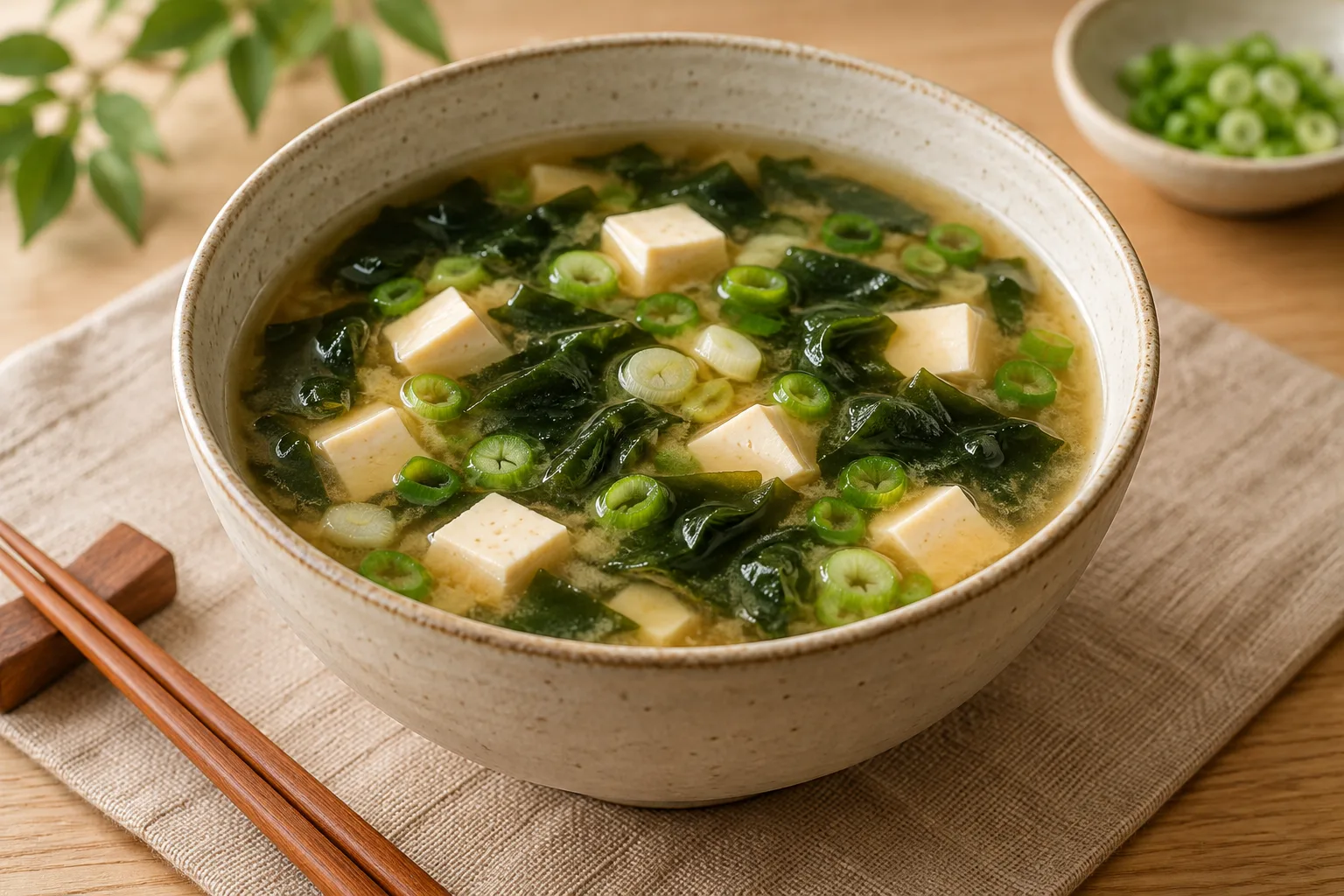
Wakame is an edible marine seaweed commonly sold in dried form, though it is also available in other formats. Dry wakame is light and compact; soaking makes it expand and become flexible and fleshy. It is used in East Asian cooking, including miso soup, salads, and noodle soups. Wakame is not the same as nori, which is commonly used to wrap maki. Because dried wakame grows considerably in volume when rehydrated, start with a small amount and leave room in the bowl. Check the package to see whether the product needs any preparation beyond soaking.
When to use it
Choose dried wakame when you want a convenient seaweed ingredient for soup, broth, salad, or a side dish. It works especially well with tofu, cucumber, rice, and Asian-style dressings. For soup, you can rehydrate it first or let it soften in the broth, depending on the product directions. For salads and cold dishes, soak and drain it before combining it with the other ingredients. Since it expands considerably, use a small amount at first and add more only if needed.
How to use it
Place a small amount of dried wakame in a bowl of water and let it soften until flexible, following the package directions when provided. Drain it well and cut large pieces into manageable lengths. Add it to miso soup, broth, or noodle soup, or combine it with cucumber, tofu, sesame, rice vinegar, and sesame oil for a salad. Taste the dish before adding soy sauce or other salty seasonings. Another option is to toast and grind the seaweed for use as a seasoning on rice dishes. Do not assume every product needs the same soaking or cooking: check its package instructions.
Flavour and texture
Once rehydrated, wakame has a mild, gently sweet sea flavor and a flexible, fleshy texture that can retain a slight crispness. Its size and texture change with soaking and cooking. Dry wakame is brittle and expands substantially in water, so a small quantity can yield more than expected.
How to choose it
Look for a product clearly labeled as edible dried wakame, and check its ingredients and preparation directions. It may be sold as leaves, strips, or chopped pieces; each format can suit a different use. Make sure the package is intact and choose a size you can use while the product remains in good condition.
Storage
Keep dried wakame in a cool, dry place away from moisture, and follow the package directions. After opening, reseal the bag securely or transfer the seaweed to a dry, airtight container. Do not store the dry product alongside wet foods. If the package specifies refrigeration or other conditions, follow those instructions.
Substitutions
Kombu can replace wakame in some broths, but it is thicker and may need different cooking. Nori also brings seaweed flavor, but its shape and texture differ and it is commonly used in other ways. Do not treat these seaweeds as identical; adjust the cut, preparation, and amount to suit the dish.
Common mistakes
A common mistake is using too much dry wakame: it expands considerably when soaked. Start with a small amount and leave room in the bowl. Drain it before adding it to salad, taste before adding more salty seasoning, and check the package rather than assuming every product needs the same preparation.
Safety and allergens
Use wakame sold as food and follow the package directions for preparation and storage. Any product-specific instructions take priority over general preparation advice; do not use a product if its package is damaged or its appearance seems abnormal.
Culinary uses
- Ingredient for soups and broths
- Seaweed for salads and vegetable sides
- Seasoning when toasted and ground
Recommended techniques
- Rehydrate in water and drain before use
- Add to soup or broth
- Toast and grind into a seasoning
Pairs well with
- Miso and tofu
- Cucumber, sesame, rice vinegar, and sesame oil
- Rice and other vegetables
Frequently asked questions
Does dried wakame need to be rehydrated?
It is usually rehydrated before use in salads or as a side. For soups, follow the package directions; some products can be added straight to the liquid.
What dishes can I use wakame in?
It is commonly used in miso soup, noodle soups, salads, and side dishes. It pairs well with tofu, cucumber, sesame, rice, and rice-vinegar dressings.
Can wakame be used to wrap maki?
Wakame is not usually used as a maki wrapper. Nori is commonly used for that purpose, while wakame is more often added to soups, salads, and sides.
Ingredient allergens
Allergen listThere are no verified associations for these ingredients yet.
Estimated nutrition
- Fat
- 0.3 g
- Saturates
- 0.06 g
- Carbohydrate
- 80.9 g
- Sugars
- 2.97 g
- Fibre
- 7.7 g
- Protein
- 6.21 g
- Salt
- 0.26 g
Sources and review
Automatically researched, cross-checked and validated content. Sources consulted:
- ¿Por qué la muerte es origen de miedos y tabúes? doi.org/10.64628/aao.fccyk3qj3
- Client Challenge doi.org/10.2307/jj.27939689.16
- Asian Kelp - Undaria pinnatifida ( Spanish; Castilian ) eol.org/pages/913507/articles?locale_code=es
- Alga Wakame - EcuRed www.ecured.cu/index.php/Alga_Wakame
- Undaria pinnatifida - Wikipedia, la enciclopedia libre es.wikipedia.org/wiki/Alga_wakami
- Qué hacer con algas wakame secas | CocinaSinReceta.com www.cocinasinreceta.com/tecnicas/manual-de-instrucciones/que-hacer-con-algas-wakame-secas/
- Las mejores recetas con alga wakame: comparativa para maridar con quesos y embutidos top laovejaquebala.es/recetas-con-alga-wakame/
- Alga Wakame, conoce el apasionante mundo de las algas comestibles frescoydelmar.com/blog/algas-comestibles-alga-wakame-tesoro-del-mar/
- Alga Wakame Deshidratada: Análisis y Comparativa de las Mejores Opciones para Sushi y Cocina Asiática yuanlaosi.es/alga-wakame-deshidratada/
- Alghe Wakame: análisis y comparativa de las mejores algas asiáticas para sushi y cocina japonesa sukimotril.es/alghe-wakame/
- Perlas Wakame: la nueva forma de comer algas • Boroa Jatetxea www.boroa.com/perlas-wakame-la-nueva-forma-de-comer-algas/