- Category
- Sugar and sweeteners
- State
- Paste
- Usual unit
- g
What it is
Dulce de leche is a sweet, milk-based preparation cooked until it becomes brown and creamy or thick. Recipes and products may use milk and sugar, with some versions also including vanilla or baking soda. Its consistency varies: some versions spread easily, while firmer varieties are made for pastry fillings. Regional names such as arequipe, manjar and cajeta are used for related sweets, but their ingredients can differ. Check the name and ingredient list of the specific product rather than assuming every jar is identical.
When to use it
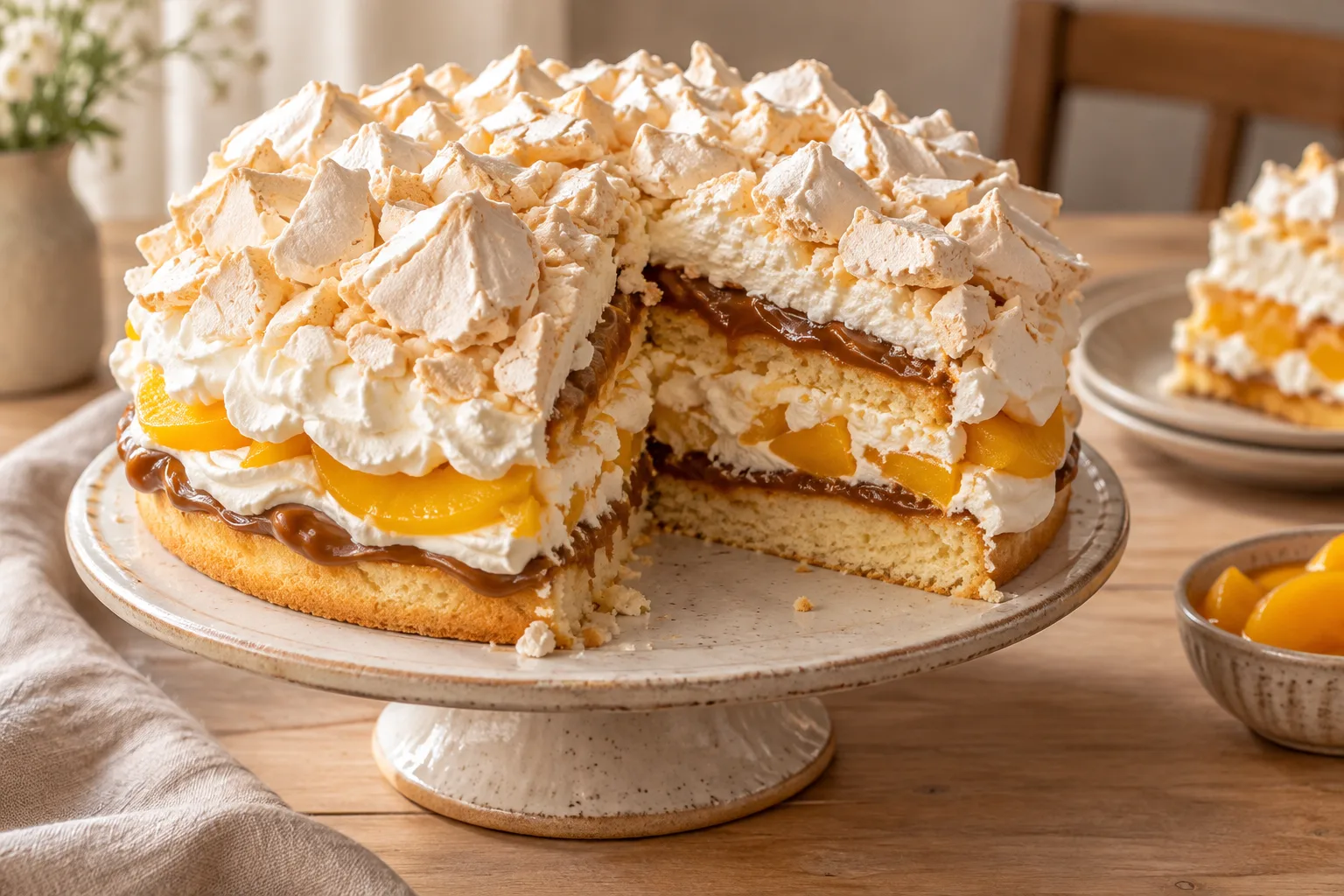
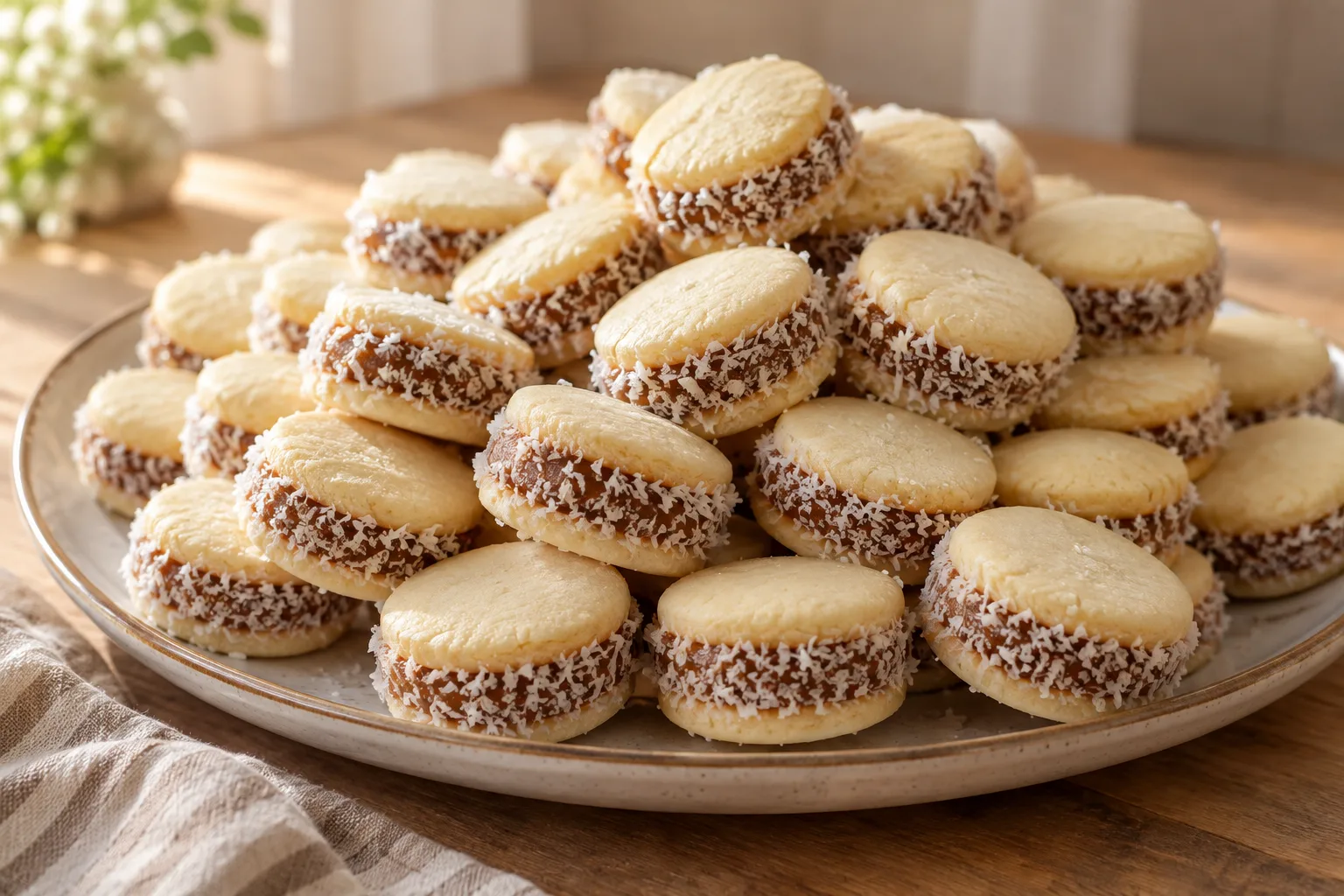
Use dulce de leche when you want a sweet, milky, caramel-like flavor in a dish. A more fluid variety can be spread on toast, bread or biscuits, or spooned over a dessert. A firmer variety is useful for filling alfajores, cakes and other pastries. It can also be swirled into cheesecake batter or combined with butter to make frosting. Choose the consistency to suit the job, and check that it matches the requirements of your recipe.
How to use it
Stir the dulce de leche until evenly smooth, then spread it on bread, toast or biscuits. For alfajores, sandwich cookies or cakes, use it between the layers or pipe it into a cavity; a firm variety is more likely to hold its shape. To marble a cheesecake, dot small spoonfuls over the batter and gently swirl with a knife. You can also blend it with butter for frosting or spoon it over a dessert. If you change brands or styles, check the texture before using it in a recipe where the filling needs to stay in place.
Flavour and texture
Its flavor is sweet, milky and reminiscent of caramel, and it is typically brown. Texture depends on the product: it may be glossy and easy to spread or more concentrated and firm for pastry fillings. Some preparations include vanilla. The name alone does not specify how thick a product will be, so check its consistency before use.
How to choose it
Choose a consistency suited to the task: a spreadable style for bread or toppings and a firmer style for fillings that need to hold their shape. Read the product name and ingredient list because formulations vary and additional ingredients may be used. If you have an allergy or intolerance, check the package’s allergen information; for unpackaged products, ask the seller.
Storage
Follow the storage and use directions on the package, both before and after opening. Requirements can depend on the particular product and how it is sold, so do not assume all varieties are stored in the same way. For a homemade preparation, use a closed container and refrigerate it in line with a reliable recipe; do not apply that method to a commercial product whose label says otherwise.
Substitutions
Caramel sauce can work in some topping applications, but it may be thinner and less suited to a filling that must hold its shape. Arequipe, manjar and cajeta are regional names for related sweets; check the ingredients and firmness before treating one as an equivalent. Adapt the use to the substitute’s actual consistency.
Common mistakes
Do not assume every dulce de leche has the same thickness: a runny variety may escape from an alfajor or cake. Similar names or appearances do not guarantee identical ingredients either. Check the label and select a product that suits the intended use.
Safety and allergens
Dulce de leche is commonly made with milk, so it is not suitable for someone who must avoid milk because of an allergy. Commercial recipes may contain other ingredients; check the allergen declaration. Follow the package directions for storage, duration and use, and ask the seller about allergens if it is sold unpackaged.
Culinary uses
- Sweet spread for bread, toast and biscuits
- Filling or topping for desserts and pastries
- Flavoring for frosting and cheesecake
Recommended techniques
- Spread or pipe as a filling
- Swirl into cheesecake batter
- Blend with butter to make frosting
- Spoon over desserts or use between sandwich cookies
Pairs well with
- Toast and biscuits
- Alfajores and other cookies
- Cheesecake and cake
- Ice cream, pancakes and waffles
- Strawberries or cherries
Frequently asked questions
What ingredients does dulce de leche usually contain?
Its usual base is milk and sugar; some recipes also include vanilla or baking soda. Commercial products can vary, so check the ingredient list.
Can I use it to fill alfajores and cakes?
Yes. A thick or pastry-style variety is better when the filling needs to hold its shape. Check the texture before using it.
How should I store it after opening?
Follow the storage instructions on the package. Directions can differ between products.
Ingredient allergens
Allergen listDocumented presence
-
Milk and milk products
Dulce de leche
Estimated nutrition
- Fat
- 7.35 g
- Saturates
- 4.53 g
- Carbohydrate
- 55.4 g
- Sugars
- 49.7 g
- Fibre
- 0 g
- Protein
- 6.84 g
- Salt
- 0.32 g
Sources and review
Automatically researched, cross-checked and validated content. Sources consulted:
- En el etiquetado alimentario hay algunas menciones que son obligatorias eletiquetadocuentamucho.aesan.gob.es/obligatoria.html
- Agencia Española de Seguridad Alimentaria y Nutrición www.aesan.gob.es/
- Dulce de Leche Cheesecake | Food | Illinois Extension | Illinois extension.illinois.edu/food/recipes/dulce-de-leche-cheesecake
- The Mystery of Dulce de Leche - Escoffier www.escoffier.edu/blog/recipes/the-mystery-of-dulce-de-leche/
- Falvey Library :: Hispanic Heritage Month: Dulce de Leche blog.library.villanova.edu/2015/10/07/hispanic-heritage-month-dulce-de-leche-2/
- Dulce de leche – Confiture de lait | Techniques de l'Ingénieur doi.org/10.51257/a-v1-fpr224
- El dulce de leche, _manjar, arequipe o_ _cajeta es un dulce tradicional de_ repositorio.uta.edu.ec/server/api/core/bitstreams/d99032f5-e41f-4807-b581-0e71b0457f4d/conte…
- mediante un análisis bromatológico y microbiológico dspace.espoch.edu.ec/bitstream/123456789/9718/1/84T00270.pdf
- How to Make Perfectly Crumbly Alfajores with Creamy Dulce de Leche | Institute of Culinary Education www.ice.edu/blog/how-make-perfectly-crumbly-alfajores-with-creamy-dulce-de-leche
- HOURS OF OPERATIONS | Cal State LA www.calstatela.edu/dining-on-campus/hours-services
- Menu Item – Dining dining.ucla.edu/menu-item/?recipe=796
- Food and Beverage Guide | Charles R. Drew University of Medicine and Science www.cdrewu.edu/60th/jazz-at-drew/food-and-beverage-guide/
- Caramel and dulce de leche éclairs | Hôtel de la Marine www.cordonbleu.edu/paris-hoteldelamarine/caramel-dulce-leche-eclairs/en
- Dulce de leche: el postre de Latinoamérica | Recetas Nestlé www.recetasnestle.com.ec/escuela-de-sabor/coccion/dulce-de-leche