- Category
- Dairy and eggs
- State
- Fresh
- Usual unit
- unit
What it is
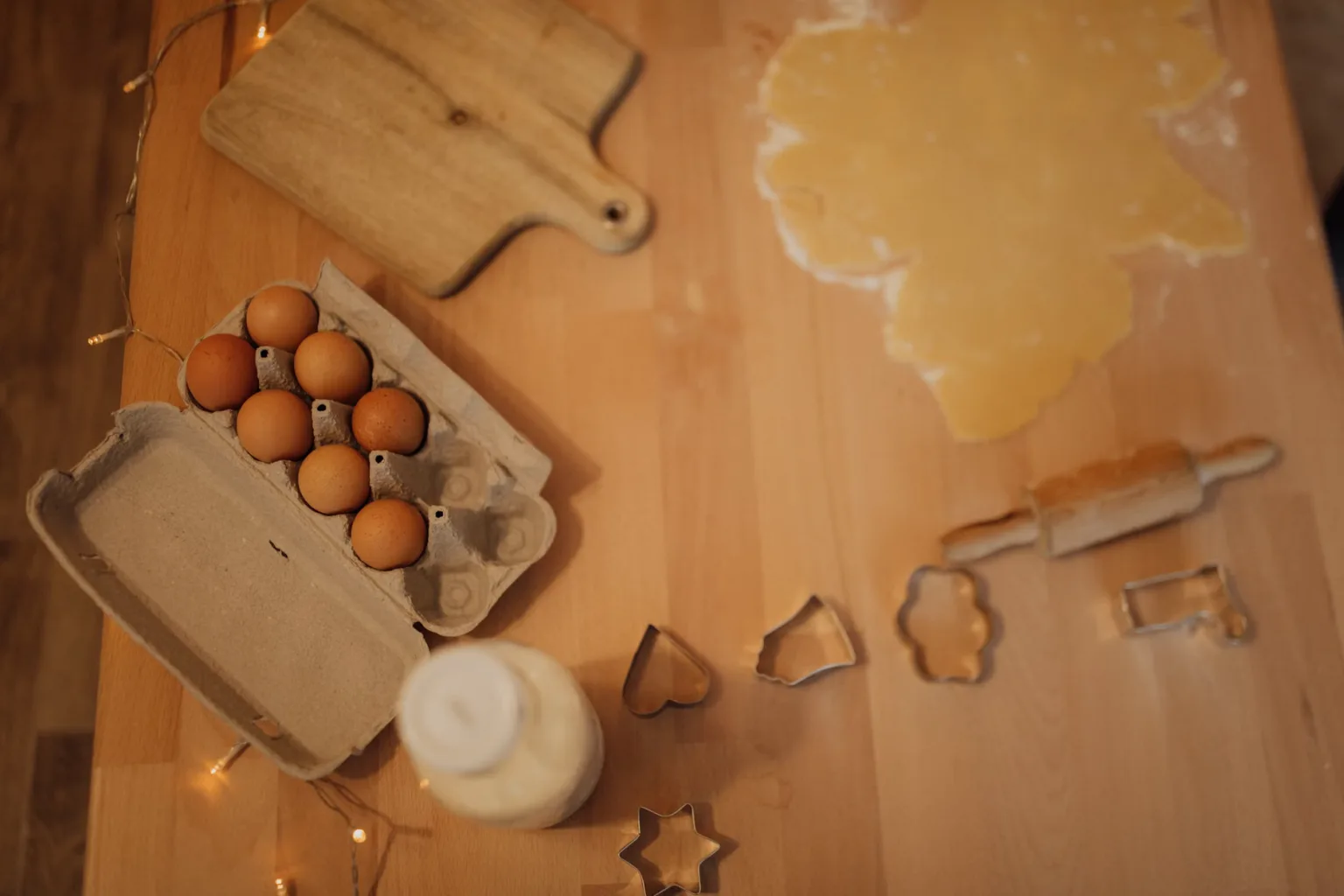
Eggs for dough are eggs added to preparations such as pancakes, cakes, muffins and other sweet or savory batters and doughs. In baking, they can act as a binder and emulsifier and contribute moisture, color and texture to the finished product. Whipped egg white can hold air, while combining an egg with other liquids helps distribute it through a mixture. The exact effect depends on the recipe, whether the whole egg or only part of it is used, and how it is beaten. Chicken eggs are the most commonly used in cooking, but eggs from other birds are also eaten; their size and proportions can differ. For dough, follow the recipe’s specified type and quantity rather than assuming every egg will behave in exactly the same way.
When to use it
Use eggs when a recipe calls for them to help hold a dough together, combine its ingredients or contribute to the structure of a baked item. They are common in pancake batter and baking such as cakes, muffins, custards and puddings. Their role varies: one mixture may need a uniform blend, while another may call for beating eggs with sugar or whipping whites to affect texture. Do not add an egg automatically to a recipe that does not include one, since it changes the balance of liquids and other ingredients. If you need a substitute, choose one suited to that kind of dough and expect possible changes in consistency or flavor; an option that works in pancakes may not behave the same in a cake.
How to use it
Follow the recipe’s order of operations. For pancake batter, one common method is to beat the egg separately, combine it with the liquid ingredients, then add the liquids to the dry ingredients and mix only until incorporated when the recipe calls for that approach. Some baked goods call for beating eggs with sugar to incorporate air; others do not. Measure the specified amount, and do not switch between whole eggs, whites or yolks without adjusting the formula. If using an alternative, remember that applesauce, mashed banana or hydrated seeds may change density, moisture and flavor; the suitable amount depends on the recipe. Cook or bake the batter as directed, and do not assume a substitute will give the same result as an egg.
Flavour and texture
Eggs contribute flavor to dough and can affect its color and cohesion. In baked preparations, they contribute moisture and crumb structure; beating can help incorporate air, depending on the method. Mixtures made with substitutes may differ: some fruit- or seed-based alternatives can produce a denser texture or a noticeable flavor. The final result also depends on the other ingredients and the technique.
How to choose it
Choose eggs with intact shells and no visible cracks, and check the date and handling directions on the package. If a recipe specifies an egg size, follow it: eggs of different sizes can change the amount of liquid in the dough. Chicken eggs are the most commonly used in cooking, but eggs from other birds are also available; do not swap varieties without considering their size and the quantity required.
Storage
Store eggs according to the package directions and local food-safety guidance. Avoid using eggs with cracked shells, and handle them carefully when cracking and adding them to a mixture. If preparing a mixture ahead, follow the recipe’s specific storage directions rather than assuming it can be kept at room temperature.
Substitutions
No single substitute reproduces every function of an egg. Applesauce, mashed banana or ground flax or chia mixed with water are used in some baked preparations, but they can change density, flavor and moisture. A pancake recipe may allow water as an alternative; that does not mean it will work in every dough. Choose a replacement for the particular recipe and expect the result to differ.
Common mistakes
Replacing an egg without considering the type of dough can lead to a different texture. Other common mistakes include ignoring a specified egg size or beating more than needed when the recipe says to mix only until combined. Do not add eggs to hot ingredients unless the method directs you to do so, as this can change the mixture’s consistency.
Safety and allergens
Handle eggs carefully, follow package directions, and cook or bake the preparation as directed. If a dough will be eaten without cooking, do not assume raw egg is safe; check your local official food-safety guidance.
Culinary uses
- Aglutinante que ayuda a unir los ingredientes de una masa
- Emulsionante en mezclas de repostería
- Aporta humedad y contribuye a la estructura y el color de masas horneadas
Recommended techniques
- Batir el huevo antes de incorporarlo a los ingredientes líquidos
- Mezclar con los ingredientes secos solo hasta integrar, cuando la receta lo indique
- Batir con azúcar para incorporar aire en algunas masas de repostería
- Hornear como parte de la masa
Pairs well with
- Harina y polvo de hornear en masas para panqueques
- Leche y aceite en masas batidas
- Azúcar y especias como canela o nuez moscada en masas dulces
Frequently asked questions
What does an egg do in dough?
It can help bind and emulsify ingredients, add moisture and contribute to the structure and color of the preparation.
Can applesauce replace an egg?
It can work in some baked preparations, but the result may be denser and differ in moisture. It is not a universal replacement, so choose according to the recipe.
Should I beat an egg before adding it?
It depends on the recipe. Some batters call for beating it separately and combining it with the liquids; others call for beating it with sugar or adding it another way.
Ingredient allergens
Allergen listThere are no verified associations for these ingredients yet.
Sources and review
Automatically researched, cross-checked and validated content. Sources consulted:
- Almacenamiento Seguro de Alimentos: - El Refrigerador y el Congelador bookstore.ksre.ksu.edu/download/safe-food-storage-the-refrigerator-and-freezer-spanish_MF313…
- The Essential Glossary of Cooking Terms for the Culinary Arts - Escoffier www.escoffier.edu/blog/culinary-arts/the-essential-glossary-of-cooking-terms-for-the-culinar…
- Huevo (alimento) - Wikipedia, la enciclopedia libre es.wikipedia.org/wiki/Huevo_(alimento)
- 3.- Diferentes variedades de huevos chefcampus.com/cursos/fundamentos-de-la-cocina-el-huevo-tecnicas-y-usos/lecciones/3-diferent…
- El huevo en la cocina: usos y secretos | CEAC www.ceac.es/blog/el-huevo-en-la-cocina
- Qué es eso llamado epistemología, para qué sirve, por qué es inexcusable para la universidad y para la paz | Reencuentro. Análisis de problemas universitarios doi.org/10.24275/uamxoc-dcsh/reencuentro/202386-14
- Appendix B: Recipes for Disease Prevention – Culinary Medicine opentextbooks.library.arizona.edu/culinarymedicine/back-matter/appendix-b-recipes/
- Cocinar y Congelar Artículos de la Despensa de Alimentos extension.psu.edu/cocinar-y-congelar-articulos-de-la-despensa-de-alimentos/
- Para la ciudadanía www.aesan.gob.es/para-la-ciudadania
- Panqueques De 3 Ingredientes - Expanded Food and Nutrition Education Program efnep.tamu.edu/panqueques-de-3-ingredientes/
- Panqueques Favoritos (con huevos) | Servicio de Extensión de OSU extension.oregonstate.edu/es/imported-publication/panqueques-favoritos-con-huevos
- Huevos: su función en repostería - Disfrutando sin Gluten www.disfrutandosingluten.es/recetas/cocinar-sin-gluten/huevos-su-funcion-en-reposteria/
- Huevos en la cocina: los tipos más comunes y sus usos esenciales | Club Susazón clubsusazon.com/noticias/huevos-en-la-cocina-los-tipos-mas-comunes-y-sus-usos-esenciales/
- Food allergen labelling and information requirements technical guidance - GOV.UK www.gov.uk/government/publications/food-allergen-labelling-and-information-requirements-tech…