- Category
- Grains, flour and pasta
- State
- Dry
- Usual unit
- cup
What it is
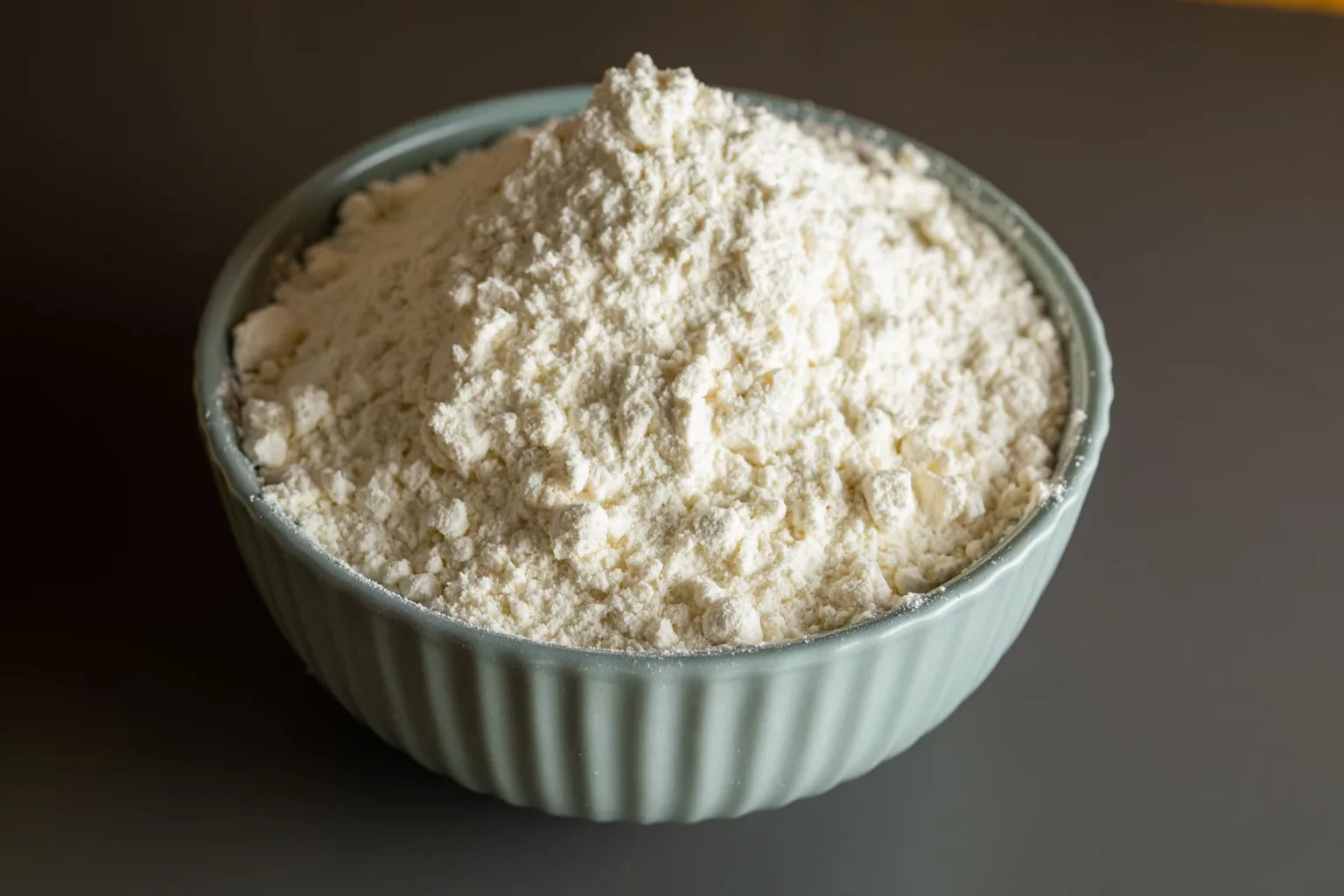
Fine rice flour is made by milling rice into a powder with small particles. It may come from white or brown rice, so its color, texture and flavor can vary. The word “fine” describes particle size; it does not by itself tell you whether the flour is conventional or has been treated in advance. In cooking, rice flour is used to thicken liquids and as an ingredient in coatings, batters and baked goods. Unlike wheat flour, it does not develop an elastic gluten network, so a mixture made with rice flour alone may hold together less well and behave differently. Check the package to identify the product type and follow the recipe, especially when using an instant or pregelatinized product.
When to use it
Choose fine rice flour when you want to thicken a sauce or cream without adding a strong flavor, make a light coating, or use a fine-textured flour in cookies, cakes, pancakes or recipes designed for it. It can also be part of a gluten-free baking blend, but by itself it does not reproduce the elasticity provided by gluten. Do not treat it as an automatic replacement for wheat flour in every recipe: structure, moisture and finished texture may change. If a recipe relies on thickening during heating, check whether your flour is conventional or instant/pregelatinized, since these types may respond differently.
How to use it
To thicken a sauce or cream, first whisk the rice flour with a small amount of cold liquid to make a smooth paste. Stir it into the hot liquid and cook the mixture until it reaches the desired consistency and the flour is thoroughly cooked. For a coating, dust the food with a thin layer or prepare a pourable batter with water; sparkling water may also be used when the recipe calls for a light batter. For baking, measure and combine the flour as directed: rice flour does not form a gluten network and may produce a less elastic or more crumbly mixture when used alone. Choose blends and binding ingredients according to the recipe rather than assuming they are interchangeable. Check whether the product is conventional or pregelatinized, because that can affect how it responds to liquid and heat.
Flavour and texture
Rice flour usually has a mild, unobtrusive flavor that works in sweet or savory dishes where a pronounced cereal taste is not wanted. Fine rice flour feels delicate as a powder and can help produce smooth sauces and creams when mixed in properly. In coatings, it can contribute to a light, crisp finish. In baked goods, the lack of an elastic gluten structure may make the result less cohesive or more crumbly than one made with wheat flour. White and brown rice flours can also differ in color, flavor and texture.
How to choose it
Look for a package that clearly identifies the product as rice flour. If a recipe depends on a particular result, check whether it is made from white or brown rice and whether it is conventional or instant. “Fine” refers to grind size and does not tell you everything about how the flour will cook. Choose a sealed, dry package in good condition, and read the ingredient list and allergen information if you need to manage an allergy or avoid cross-contact. For a particular preparation, choose a product whose description or directions match the intended use.
Storage
Keep the flour tightly closed in a cool, dry place, away from moisture and strong odors. If you transfer it to another container, make sure the container is clean and dry, and do not dip in a wet spoon. Check the package for the maker’s storage directions and inspect the flour’s appearance and smell before use, especially if it has been open for a long time. Brown rice flour may deteriorate sooner than white rice flour, so follow package guidance and avoid unnecessary long storage.
Substitutions
Rice flour can be used in some coatings in place of wheat flour, but the result will not be identical. Cornstarch is also used for thickening, though it may give a different texture; follow a recipe designed for it. In baking, replacing wheat flour with rice flour without adjusting the recipe can produce a fragile or dry result. Do not assume a universal ratio or a direct swap for bread, cakes or sauces.
Common mistakes
A common mistake is replacing all the wheat flour in a recipe with rice flour without adapting it: the mixture may lose elasticity and crumble. It can also become lumpy if tipped straight into hot liquid; first mix it with cold liquid. Do not assume that every fine rice flour is instant, or that every type thickens in the same way: fine grind alone does not identify how its starch has been treated.
Safety and allergens
Dry flour can become airborne when handled; avoid breathing in the dust and keep the package closed when not in use. If you have food allergies, check the ingredients and allergen information on the specific product rather than assuming that all packages have the same composition or manufacturing conditions. Cook preparations according to the recipe and product directions.
Culinary uses
- Thickener for sauces, soups and creams
- Flour for light coatings, batters and baked goods
Recommended techniques
- Whisk into cold liquid before adding to a hot sauce to help prevent lumps
- Use in coatings or batter for a light, crisp finish
- Combine with other flours or binding ingredients when a baked recipe needs more structure
Pairs well with
- Water or sparkling water in a light coating batter
- Other flours or starches in baking blends
Frequently asked questions
Is fine rice flour the same as instant rice flour?
Not necessarily. “Fine” describes particle size, while instant or pregelatinized flour has been treated in a way that can change how quickly it hydrates and thickens. Check the package.
Can I replace wheat flour with rice flour in any recipe?
No. Rice flour does not form the same elastic structure as wheat gluten, so a mixture may be less cohesive or more crumbly. Use a recipe designed for rice flour or follow a specified blend.
How can I prevent lumps when thickening a sauce?
Whisk the flour with a little cold liquid before gradually adding it to the hot sauce, stirring as you combine it.
Ingredient allergens
Allergen listThere are no verified associations for these ingredients yet.
Estimated nutrition
- Fat
- 2.78 g
- Saturates
- 0.56 g
- Carbohydrate
- 76.5 g
- Sugars
- 0.66 g
- Fibre
- 4.6 g
- Protein
- 7.23 g
- Salt
- 0.02 g
Sources and review
Automatically researched, cross-checked and validated content. Sources consulted:
- Los japonesismos culinarios | OpenAlex openalex.org/W2906636610
- Harina - Wikipedia, la enciclopedia libre es.wikipedia.org/wiki/Harina
- Tipos de harina, propiedades y usos | Consumer www.consumer.es/alimentacion/otros-tipos-harina-mas-alla-trigo
- Evaluación de harina de amaranto como ingrediente antioxidante para la preparación de matrices alimentarias funcionales doi.org/10.35537/10915/162211
- Etiquetado de sustancias que causan alergias e intolerancias alimentarias www.aesan.gob.es/seguridad-alimentaria/informacion-alimentaria/etiquetado-sustancias
- Aplicaciones de la harina de arroz www.harinadearrozcliment.com/aplicaciones/
- La harina de arroz, ingrediente clave de la pinsa: todo lo que debes saber - Di Marco www.dimarco.it/es/noticias/harina-de-arroz-2/
- Harinas de Arroz | Ingrediente Ecológico Para Alimentos Sin Gluten www.beneo.com/es/nutricion-humana/productos-nutricion-humana/ingredientes-derivados-arroz/ha…
- Harina de arroz: cómo hacerla en casa fácilmente, beneficios e ideas de uso bonviveur.com/es/recetas/harina-de-arroz
- No toda la harina de arroz es igual margavilan.substack.com/p/no-toda-la-harina-de-arroz-es-igual
- Food allergen labelling and information requirements technical guidance - GOV.UK www.gov.uk/government/publications/food-allergen-labelling-and-information-requirements-tech…
- - YouTube www.youtube.com/watch?v=7BHnDthCxfk
- ▷ Tipos de harina y usos culinarios ✓ Espiga Real www.harinasespigareal.com/tipos-de-harina-y-usos-culinarios/
- La Harina de arroz en la Galletería – The Cookie Concept thecookieconcept.com/la-harina-de-arroz-en-la-galleteria/