- Category
- Grains, flour and pasta
- State
- Dry
- Usual unit
- tablespoon
What it is
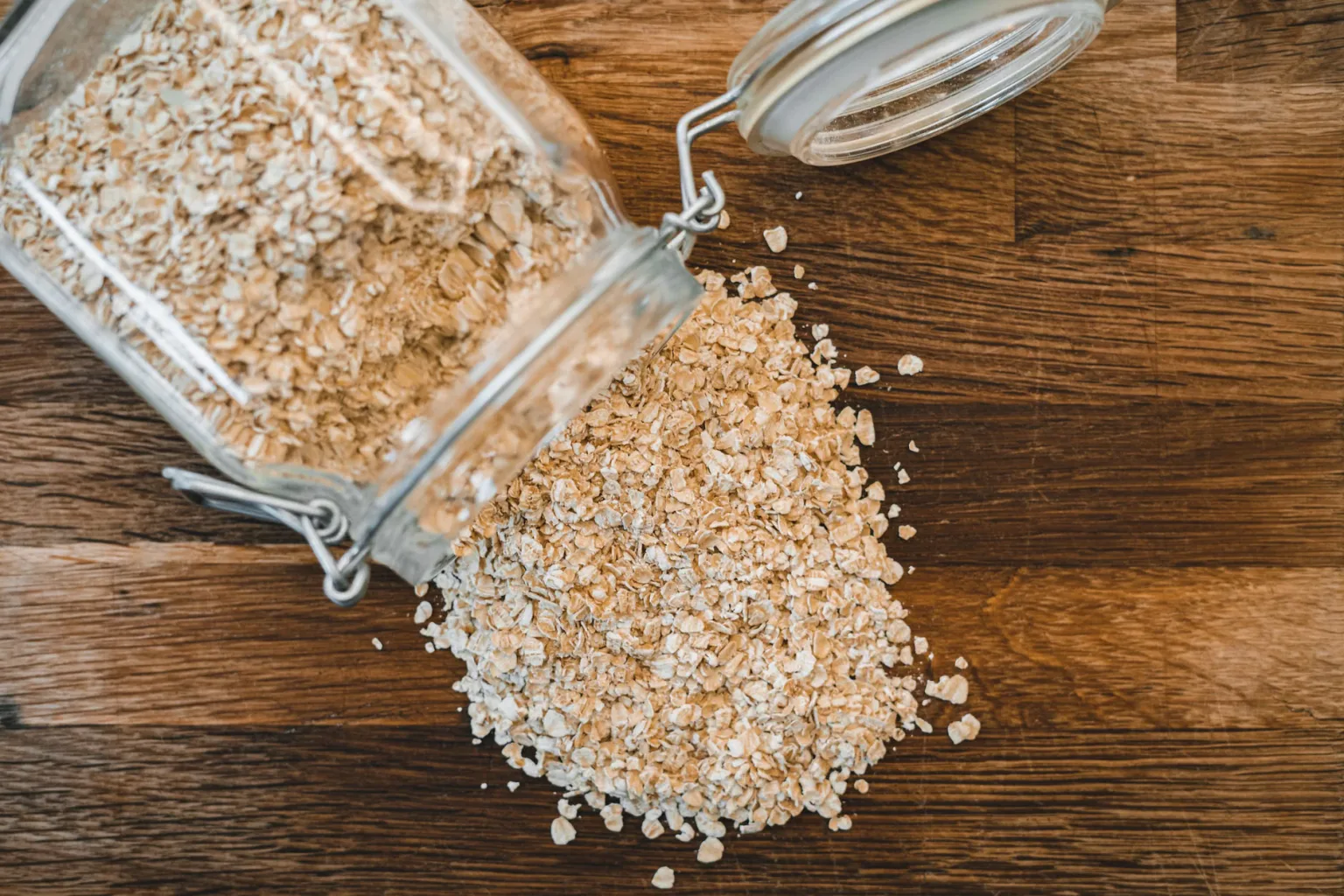
Fine rolled oats are a dry oat product made by processing and flattening oat grains into small flakes. Compared with larger rolled oats, the finer pieces take up liquid and soften more quickly, making them useful for smooth porridge and soaked preparations. They are not the same as oat bran, which is a part of the grain, or oat flour, which is milled. Flake size and processing can vary between products, so use the package directions and adjust liquid and preparation to the texture you want.
When to use it
Choose fine rolled oats when you want oats to soften quickly or blend readily into a dish. They work especially well in creamy porridge, soaked oats, yogurt, and smoothies. They can also go into pancakes, cookies, and other batters when a more substantial texture is welcome. For granola or muesli with a more distinct bite, larger flakes usually retain more shape. Do not treat rolled oats as a direct replacement for oat flour or bran in recipes that specifically require those products: they are different oat forms and can behave differently.
How to use it
For porridge, combine the oats with water, milk, or a plant-based drink and heat, stirring until softened and as thick as you like; fine flakes generally soften sooner than larger ones. For a chilled option, soak them in liquid or stir them into yogurt with fruit. Add a small amount to a smoothie and blend to incorporate. For pancakes or cookies, mix them with the recipe ingredients, bearing in mind that oats absorb liquid and add structure; adjust the mixture gradually rather than assuming they work exactly like flour. To make granola, combine them with the other ingredients and toast, checking the texture so the smaller flakes do not become too dry.
Flavour and texture
Fine rolled oats have a mild, cereal-like flavor with a gentle toasted note that does not overpower other ingredients. When hydrated, they become tender and can give a creamy or thick consistency. In a cold mixture they may retain some texture, but they soften quickly. In batters, they add body and a more substantial feel than fine flour. The final texture depends on the amount of liquid, soaking or cooking time, and the actual flake size, which may differ from one product to another.
How to choose it
Look for a package clearly labelled fine or small rolled oats, rather than oat bran or oat flour. Check that the packaging is intact and read the ingredient list if you want plain oats without additions. Flake size and processing can differ between brands; check the label to see whether the product is fine, instant, or another type. When a recipe depends on a particular texture, choose a format suited to it instead of assuming all oat flakes behave alike.
Storage
Keep the oats dry in a clean, tightly closed container and follow any storage directions on the package. Protect them from moisture and check them before use if the package has been damaged or left open. Do not use oats with unusual dampness, insects, or an off smell. There is no single storage period that applies to every package, so check its date and the manufacturer's instructions.
Substitutions
For smoother, quicker-softening porridge, use instant oats instead, knowing the texture will be less distinct. For more bite, use larger rolled oats; they take longer to soften. These swaps are most suitable for porridge and similar mixtures. They are not automatic replacements for oat flour or oat bran, which are different forms and may change the structure of a recipe.
Common mistakes
A common mistake is using the same amount of liquid and the same preparation time as for larger flakes: fine oats hydrate sooner and can become too soft or thick. Add liquid gradually and adjust to the texture you want. Do not confuse rolled oats with bran or flour, or expect a change of oat format to produce exactly the same result in baking. Also check that the package is intact and the oats have stayed dry.
Safety and allergens
Keep the product dry and follow the package instructions. Do not use oats with unusual dampness, insects, or an off smell. If you have a food allergy or intolerance, check the package information and any cross-contact warnings.
Culinary uses
- Breakfast cereal and porridge base
- Baking ingredient and texture element
- Thickener or binder in selected recipes
Recommended techniques
- Simmering in water, milk, or a plant-based drink
- Soaking in liquid before serving
- Mixing into batters and doughs
- Toasting for granola
Pairs well with
- Milk, yogurt, or plant-based drinks
- Banana, berries, coconut, or other fruit
- Honey or jam
- Nuts and seeds
Frequently asked questions
Can I use fine rolled oats for porridge?
Yes. They soften quickly when heated with water, milk, or a plant-based drink and work well for a creamy texture. Stir and adjust the liquid to suit your preference.
Are fine rolled oats the same as oat bran?
No. Rolled oats are flattened oats; bran is a part of the grain, while flour is milled. Substituting one for another can change a recipe's texture.
Can I add them to yogurt or smoothies?
Yes. Stir them into yogurt or blend them into a smoothie. Letting them sit in liquid softens the flakes and makes the mixture more uniform.
Ingredient allergens
Allergen listThere are no verified associations for these ingredients yet.
Sources and review
Automatically researched, cross-checked and validated content. Sources consulted:
- Romanica Olomucensia : «¿Qué pinga es esto?». Usos disfemísticos en el español de Cuba doi.org/10.5507/ro.2021.007
- The Essential Glossary of Cooking Terms for the Culinary Arts - Escoffier www.escoffier.edu/blog/culinary-arts/the-essential-glossary-of-cooking-terms-for-the-culinar…
- Guía nutricional para universidades saludables | OpenAlex openalex.org/W4244696474
- Tipos de avena: ¿qué usos tiene cada uno de ellos? -canalHOGAR www.hogar.mapfre.es/cocina/articulos/tipos-avena/
- Copos de avena: 5 formas deliciosas de disfrutar en tu desayuno www.distribucionesballester.es/blog/copos-de-avena-recetas-faciles-y-deliciosas/
- Gastronomía de México - Wikipedia, la enciclopedia libre es.wikipedia.org/wiki/Gastronom%C3%ADa_de_M%C3%A9xico
- pentagrams people.sc.fsu.edu/~jburkardt/fun/wordplay/pentagram.html
- Tipos de avena: propiedades, diferencias y recetas | IFEMA MADRID www.ifema.es/noticias/alimentacion-bebidas/tipos-de-avena-propiedades-recetas
- La avena - Formacion en Gastronomia www.formacionengastronomia.com/cocina-latina/la-avena-un-producto-con-gran-potencial-que-pas…
- Qué tan saludables son los copos de avena: depende de un ingrediente - SECIP secip.info/noticias/que-tan-saludables-son-los-copos-de-avena-depende-de-un-ingrediente-3/
- - YouTube www.youtube.com/watch?v=a7E3ShlMvGw
- Como se comen los copos de avena meditts.com/como-se-comen-los-copos-de-avena/?srsltid=AYCX9vKJOIS9GuB0L8FUVkRwUgChezr1sHabm-…
- Avena - Conoce las Propiedades, Beneficios y Tipos www.hsnstore.com/blog/nutricion/carbohidratos/avena/?srsltid=AYCX9vJ0xMbyVfKeX4BVzSfbzDVXqC0…
- Copos De Avena: Beneficios, Propiedades Y Usos Guía 2024 campograndeperu.com/copos-de-avena/?srsltid=AYCX9vLJCM6rwKidQyu8fOnKg7GFQNR36rxlvWXMPIOGx67c…
- Food allergen labelling and information requirements technical guidance - GOV.UK www.gov.uk/government/publications/food-allergen-labelling-and-information-requirements-tech…