- Category
- Herbs and spices
- State
- Dry
- Usual unit
- pinch
What it is
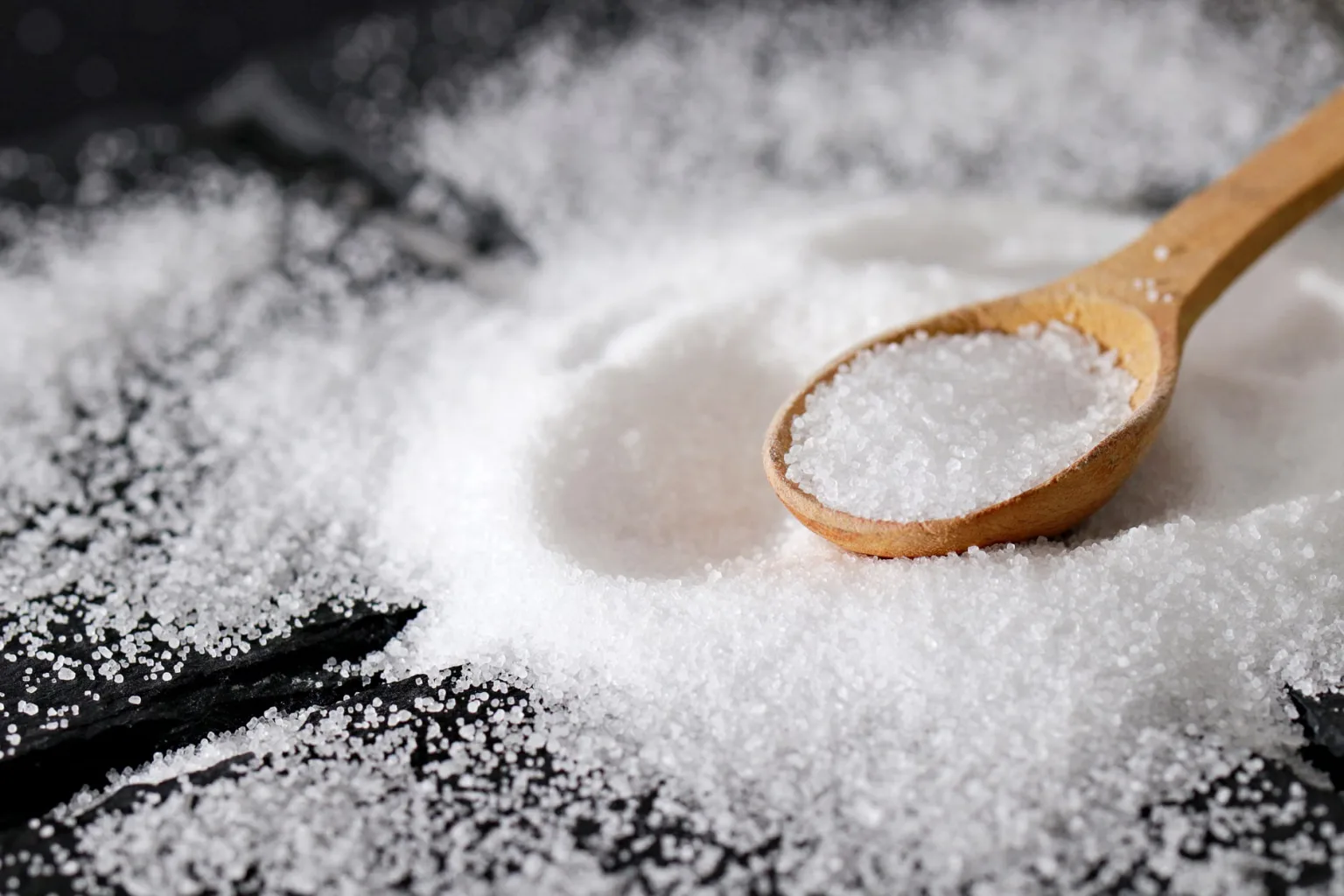
Fine salt for eggplant is small-grained salt sprinkled over cut surfaces before cooking. Its basic role is seasoning; while it rests on the eggplant, it can also encourage some moisture to move to the surface. The effect varies with the individual eggplant, its maturity, and the preparation. Salting does not automatically make a bitter eggplant sweet, and it is not required for every recipe. This profile describes ordinary fine salt used as a seasoning for eggplant, not a special salt variety.
When to use it
Use it when you want to season eggplant evenly or reduce some surface moisture before a preparation where that moisture matters, such as frying, browning, or layering. It may also help if a particular eggplant tastes more bitter than you prefer or if a recipe specifically calls for a salted rest. With a fresh, mild-tasting eggplant, or when roasting, briefly cooking, or mashing it, you can often skip the step. Pre-salting is a choice based on the ingredient and the result you want, not a universal rule.
How to use it
Cut the eggplant as the recipe requires and distribute a moderate amount of fine salt over the exposed surfaces; do not bury the pieces in salt. Set them in a colander or on a rack so released liquid can drain away. After the rest, remove excess salt and pat the surfaces dry before cooking. If you have added too much salt, a brief rinse is an option; dry the pieces thoroughly afterward, especially before frying. Do not expect every eggplant to respond in the same way: salting can reduce some surface moisture and affect texture, but it does not guarantee less oil absorption or remove bitterness completely.
Flavour and texture
Salt adds a salty taste that brings out eggplant's vegetal character. During the rest, droplets may form on the surface and the flesh may become a little more flexible. The effect on browning and texture during cooking depends on the recipe and the eggplant; salting alone does not guarantee a crispier or less oily result.
How to choose it
Choose dry, free-flowing fine salt that is easy to distribute over slices, cubes, or strips. Check the package and keep the salt in its original container or another food-safe one. There is no need to buy a special salt for eggplant: small grains make it easier to spread evenly and season the surface in modest amounts.
Storage
Keep fine salt tightly closed in a dry place, away from steam and moisture, so it stays free-flowing and easy to sprinkle. Use a clean, dry utensil when taking some out. This guidance is for the salt; once cut or salted, eggplant is fresh produce and should be handled using ordinary food-handling practices.
Substitutions
Coarse or flaky salt can replace fine salt, but distribute it evenly and adjust gradually because crystal size affects how salt spreads and tastes. If you do not want to draw out moisture and the recipe does not require pre-salting, you can omit the step and cook the eggplant directly.
Common mistakes
Do not salt eggplant automatically when it already tastes mild and the recipe does not need a rest. Avoid using so much salt that the finished dish becomes overly salty. If you rinse the pieces, dry them well before cooking, especially before frying. Do not assume salting removes all bitterness or always reduces oil absorption.
Safety and allergens
Use clean salt and clean, dry utensils. Avoid adding excess salt, and taste the dish before adjusting its seasoning, particularly when the recipe already includes other salty ingredients.
Culinary uses
- Seasoning sliced eggplant
- Drawing some moisture from cut eggplant and affecting its surface texture
Recommended techniques
- Sprinkle a moderate amount over the cut surfaces and leave the pieces to rest before cooking when the recipe or the eggplant calls for it.
- Remove excess salt and pat the pieces dry; rinse briefly only if needed to prevent an overly salty result.
Pairs well with
- Eggplant
- Olive oil
- Tomato
- Garlic
Frequently asked questions
Does eggplant always need to be salted before cooking?
No. Many mild-tasting eggplants can be cooked directly. Salt them first only if you want seasoning, some reduction in surface moisture, or the recipe calls for it.
Does fine salt remove eggplant bitterness?
It may reduce the perception of bitterness in some eggplants, but it does not remove it completely and the effect is not the same for every piece.
Should I rinse eggplant after salting it?
Not necessarily. Remove excess salt; if you used too much, a quick rinse may help. Dry the surface thoroughly before cooking.
Ingredient allergens
Allergen listThere are no verified associations for these ingredients yet.
Sources and review
Automatically researched, cross-checked and validated content. Sources consulted:
- The Essential Glossary of Cooking Terms for the Culinary Arts - Escoffier www.escoffier.edu/blog/culinary-arts/the-essential-glossary-of-cooking-terms-for-the-culinar…
- Gastronomía de Menorca - Wikipedia, la enciclopedia libre es.wikipedia.org/wiki/Gastronom%C3%ADa_de_Menorca
- Qué es eso llamado epistemología, para qué sirve, por qué es inexcusable para la universidad y para la paz | Reencuentro. Análisis de problemas universitarios doi.org/10.24275/uamxoc-dcsh/reencuentro/202386-14
- ¡Asegurándonos de que no eres un robot! dmsrum.uprm.edu/bitstreams/7b196f39-d6d6-4503-9831-0c76f0ef2116/download
- GastroWiki - Blog sobre Gastronomía gastroalianza.es/gastrowiki/articulo/la-berenjena-los-mitos-sobre-este-huevo-vegano-a-lo-lar…
- Evolución del léxico culinario desde 1932 a 1972 | OpenAlex openalex.org/W2291578502
- Late Capitalism and the (Mis)Productions of Indie Music in ... academiccommons.columbia.edu/doi/10.7916/D8RB7C5R/download
- Dos razones por las que echar sal marina a la berenjena antes de cocinarla - SALIMAR asosalimar.com/dos-razones-por-las-que-echar-sal-marina-a-la-berenjena-antes-de-cocinarla/
- ¿Hay que salar la berenjena para quitarle el amargor? Cuándo sirve y cuándo no - El Mercado de Origen www.elmercadodeorigen.com/hay-que-salar-berenjena-quitar-amargor-cuando-sirve/
- La razón por la que casi siempre es buena idea echar sal a la berenjena antes de cocinarla www.directoalpaladar.com/ingredientes-y-alimentos/razon-que-casi-siempre-buena-idea-echar-sa…
- Preparación de la berenjena - Scoolinary www.scoolinary.com/es/forums/discussion/preparacion-de-la-berenjena
- ¿Hay que ponerlas en sal? Cómo elegir y preparar las berenjenas para que no queden amargas - Foodit foodit.lanacion.com.ar/ingredientes/hay-que-ponerlas-en-sal-como-elegir-y-preparar-las-beren…
- Tipos de sal en la cocina | Yolanda www.yolanda.es/blog/tipos-de-sal-en-la-cocina/
- Antes de ir a YouTube www.youtube.com/shorts/uUdU6Kd82n0