- Category
- Herbs and spices
- State
- Dry
- Usual unit
- teaspoon
What it is
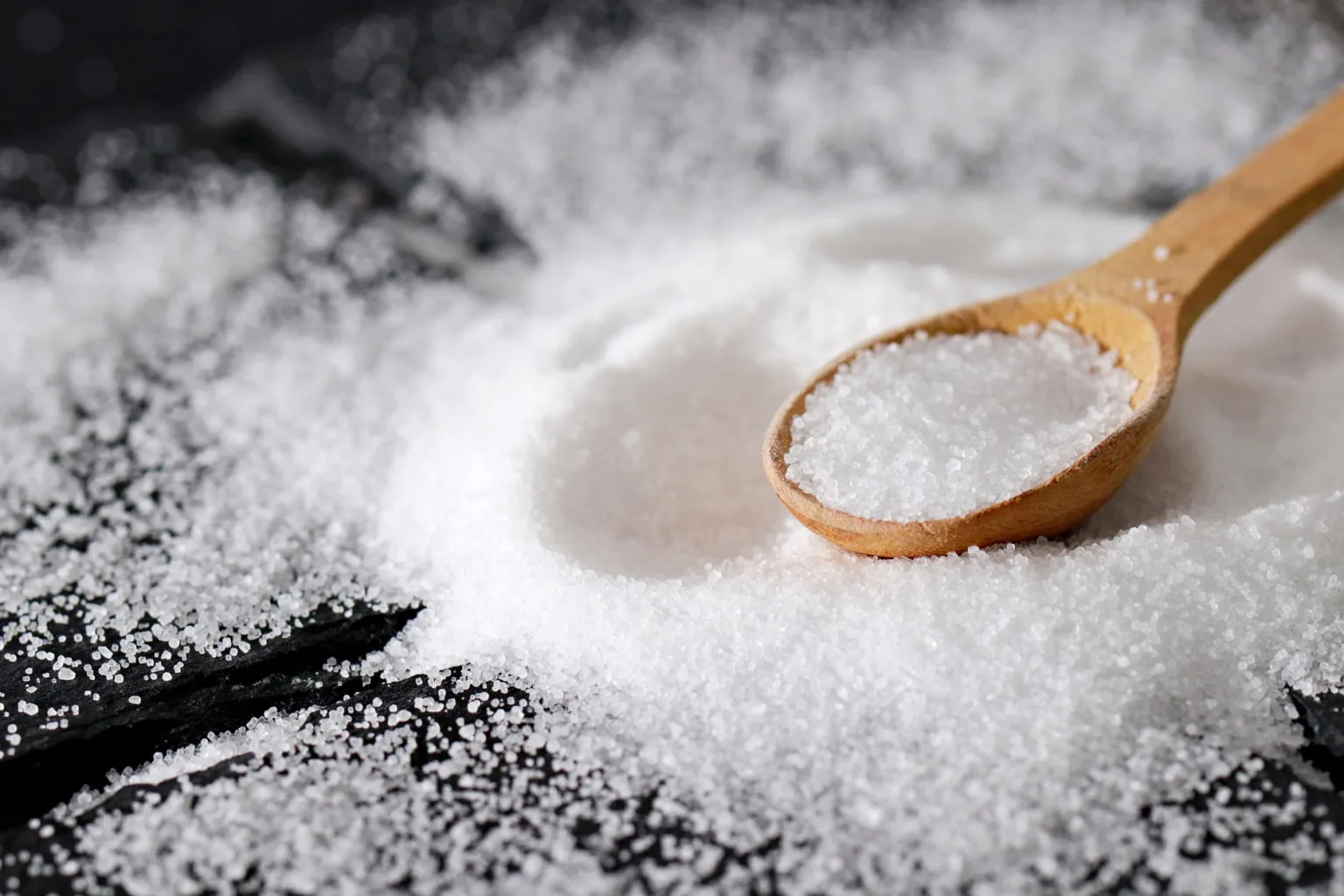
Fine salt is food-grade salt with small grains, used as a seasoning. In walnut paste, it adjusts the salty taste and can bring the overall mixture into balance without noticeably changing its texture when thoroughly mixed. Salt contributes a salty taste; grain size and refinement vary between products. Commercial names are not always consistent, so check that the package identifies the product as suitable for food use. Here, “fine” refers to the grain size: it does not mean a special walnut seasoning or a salt with particular properties.
When to use it
Use it when walnut paste needs seasoning or when you want salt to disperse readily through ground ingredients. It is convenient in savory spreads, sauces and doughs, where small grains mix easily with other components. Add it while processing or at the end, depending on the recipe and how closely you want to control the seasoning. If the paste contains ingredients that are already salty, start with less and taste before adding more; the mixture does not require a fixed amount of salt to work.
How to use it
Add a pinch or a small amount to the ground walnuts and mix or process until evenly distributed. Taste the paste and adjust gradually: adding more is easier than correcting an overly salty mixture. If you are adding liquids or other ingredients, blend or dissolve the salt evenly to avoid concentrated salty spots. Consider the seasoning of the other ingredients, especially anything already salty. For a larger batch, season near the end and mix again before tasting, since a spoonful from one part may not represent the whole mixture.
Flavour and texture
Fine salt tastes salty, and its small grains blend readily into a processed paste. It does not provide a walnut flavor or creamy texture by itself; those qualities come from the walnuts and the rest of the preparation. The degree of fineness can vary by product.
How to choose it
Choose a product whose package identifies it as salt for food use, and check that it is actually fine-grained. Salts may be sold under different names and can differ in texture; small grains make an even mix convenient when seasoning a paste. There is no need to buy decorative or finishing salt for blending into a processed preparation.
Storage
Keep salt dry in a tightly closed package or a clean, dry container protected from moisture. Use a dry utensil and avoid introducing moisture into the package, which can cause clumping. Follow any storage directions printed on the label.
Substitutions
You can replace it with another fine food-grade salt, such as fine table salt or fine sea salt. Change the amount cautiously and taste, as texture and perceived saltiness may differ. Coarse salt does not blend as quickly; if using it, grind or dissolve it before mixing it in.
Common mistakes
A common mistake is adding all the salt at once and only then discovering that the paste is too salty. Avoid measuring without considering salt already present in other ingredients, and do not leave coarse crystals undissolved if you want evenly seasoned paste.
Safety and allergens
Use salt labeled for food use and avoid adding more than needed; include salt from all the other ingredients in your calculation. If you need to limit sodium, adapt the preparation to your dietary guidance.
Culinary uses
- Seasoning for walnut paste and savory dishes
- Flavor enhancer in doughs, sauces and mixtures
Recommended techniques
- Stir into ground walnuts a little at a time
- Dissolve or distribute evenly through a mixture
Pairs well with
- Ground walnuts and walnut paste
- Savory doughs, sauces and vegetable dishes
Frequently asked questions
When should I add salt to walnut paste?
You can mix it in while processing the walnuts or add it at the end. For better control, begin with a small amount, mix, and taste before adjusting.
Can I use coarse salt instead of fine salt?
Yes, but it may take longer to blend and can leave the seasoning uneven. Grind or dissolve it first, or use another fine salt.
Is fine salt different from table salt?
“Fine” describes the grain size. Product names can vary, so check the package to confirm that it is food-grade salt and that its texture suits your use.
Ingredient allergens
Allergen listThere are no verified associations for these ingredients yet.
Sources and review
Automatically researched, cross-checked and validated content. Sources consulted:
- 15 tipos de sal para dar variedad a nuestros platos: cómo elegirlas y usarlas en la cocina www.directoalpaladar.com/ingredientes-y-alimentos/15-tipos-sal-para-dar-variedad-a-nuestros-…
- Nueces: qué son, beneficios y usos culinarios bonviveur.com/es/noticias/nueces
- Comité Científico www.aesan.gob.es/dam/jcr:ed009337-0085-4c40-8a9d-4941400ca954/comite_cientifico_35.pdf
- Qué es eso llamado epistemología, para qué sirve, por qué es inexcusable para la universidad y para la paz | Reencuentro. Análisis de problemas universitarios doi.org/10.24275/uamxoc-dcsh/reencuentro/202386-14
- Healthy Eating Plan for Weight Management med.uc.edu/docs/default-source/mobility-study/healthy-eating-and-physical-activity-plan-(spa…
- Development of the Spanish Healthy Food Reference Budget for ... dau.url.edu/bitstream/handle/20.500.14342/795/2016_Carrillo%20et%20al_Development%20of%20the…
- Recetas en 1 minuto www.cordonbleu.edu/madrid/recetas-en-1-minuto/es
- Fabián León y los usos de las nueces en la cocina - Nueces de California nuecesdecalifornia.com/sobre-nueces/como-cocinar-y-conservar-las-nueces/nueces-en-la-cocina/
- ¿Por qué la sal fina de mesa es esencial en la cocina? | Jumsal jumsal.com/2025/10/21/por-que-la-sal-fina-de-mesa-es-esencial-en-la-cocina/