- Category
- Vegetables
- State
- Fresh
- Usual unit
- g
What it is
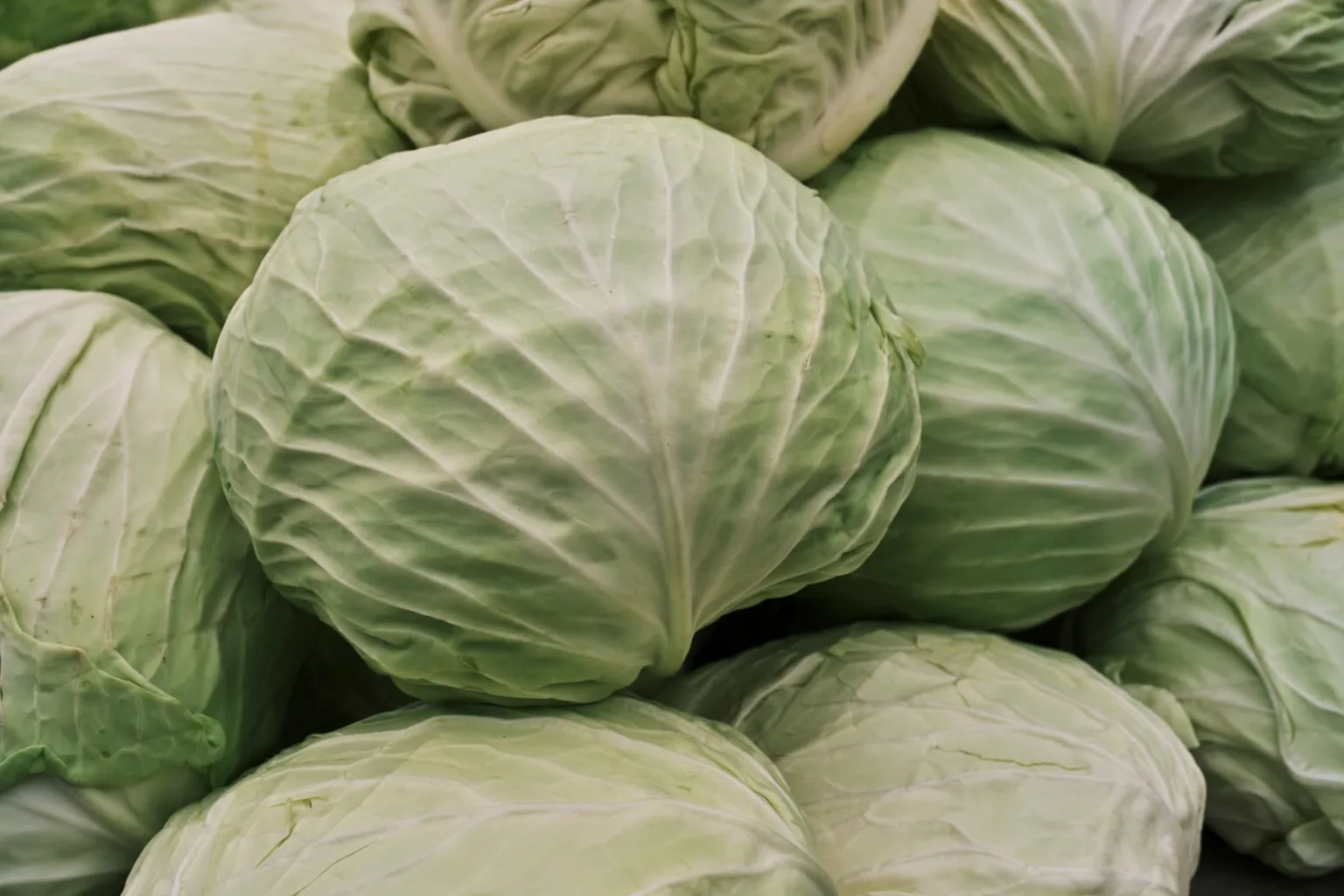
Fresh cabbage refers to the edible leaves of several cabbage varieties, vegetables in the Brassicaceae family. The name can describe compact-headed green or red cabbage and other related forms with different shapes and uses, so it helps to identify the variety before choosing a preparation. Green or white head cabbage can be sliced for salads and cooked dishes; red cabbage adds a strong purple colour and is suitable for salads and sautés. Some varieties have looser or more ruffled leaves. Fresh cabbage can be eaten raw or cooked, and it can also be fermented to make sauerkraut. It is not the same product as cabbage that has already been fermented or preserved: this profile is about the fresh vegetable.
When to use it
Use fresh cabbage when you want crisp leaves in a salad or a softer texture in a cooked dish. Green or white cabbage works in soups, stews and dishes with potatoes; red cabbage can be served in winter salads or sautéed with apples and nuts. Slice the leaves finely for a raw preparation, or cook them briefly if you want them to retain some bite. Cabbage is also a starting ingredient for sauerkraut, but fermentation should not be improvised: use a tested recipe and follow its proportions and conditions. Choose a variety to suit the colour, leaf shape and texture you want in the finished dish.
How to use it
Remove the outer leaves and rinse the cabbage with cold water before preparing it. Cut away damaged areas; quarter the head and remove the firm core if your recipe calls for leaves or strips. For a salad, slice the leaves thinly and combine them with the other ingredients. For a hot dish, sauté the cabbage or add it to a soup or stew; some recipes briefly blanch it first. Cabbage is paired in traditional dishes with potatoes and pork, while red cabbage can be sautéed with apples and nuts. If you are fermenting it, use a reliable cabbage-fermentation recipe and clean utensils and work surfaces. During fermentation, keep the cabbage submerged in liquid and do not change the recipe’s stated salt proportions.
Flavour and texture
Flavour and texture vary with the cabbage variety and preparation. Finely sliced raw cabbage generally gives a firm, crisp bite; cooking makes it softer. Cabbages are not all alike: varieties include green, white, purple and ruffled-leaf types, with visible differences in shape, colour and texture. Red cabbage stands out for its purple colour and can be paired with apples and nuts. Brief blanching, sautéing or adding cabbage to soup lets you choose a firmer or softer result.
How to choose it
Choose a head with leaves that look sound and firm, and select the variety for the dish: green or white cabbage for soups and stews, or red cabbage when you want colour in a salad or sauté. Check for visibly damaged areas and do not assume every cabbage cooks the same way: ruffled-leaf varieties, small cabbages and headed types differ in form and use. For sauerkraut, begin with sound, firm, mature cabbage, as specified in fermentation guidance.
Storage
The available guidance does not specify a general household storage duration or conditions for fresh cabbage, so a precise keeping-time claim would be unreliable. Rinse fresh produce before eating or preserving it and remove damaged parts. If using cabbage for sauerkraut, fermentation guidance says to begin one or two days after harvest and follow the tested recipe, including its proportions and conditions; this is not a general storage period for fresh cabbage.
Substitutions
In many recipes, one cabbage variety can replace another, but colour, leaf shape and texture may differ. Red cabbage changes the appearance of the dish, and ruffled leaves do not behave exactly like a compact head. Kale or Brussels sprouts may work in some cooked dishes, but they will not necessarily give the same texture or result; adjust the cut and preparation.
Common mistakes
Do not assume every cabbage variety is interchangeable without a change in the result: colour and texture can differ. Avoid prolonged cooking if you want the leaves to retain some firmness. When making sauerkraut, do not guess at salt quantities or fermentation conditions; follow a tested recipe and keep the cabbage submerged in liquid throughout the process.
Safety and allergens
Wash your hands and use clean utensils and work surfaces when preparing cabbage. Rinse fresh produce before eating or preserving it and discard damaged parts. For fermentation, follow a tested recipe without changing its stated proportions, use food-safe equipment, and keep the cabbage submerged in liquid throughout the process.
Culinary uses
- Salad and slaw vegetable
- Cooked vegetable for soups, stews and one-pot dishes
- Fermentation ingredient for sauerkraut
Recommended techniques
- Slice finely and serve raw
- Blanch briefly
- Sauté
- Simmer in soups or stews
- Ferment using a tested recipe and controlled conditions
Pairs well with
- Potatoes and pork
- Apples and nuts
- Cooked legumes
- Meat and vegetable soups
Frequently asked questions
Can fresh cabbage be eaten raw?
Yes. Slice it finely for salads or coleslaw-style dishes. Rinse it before preparation.
What is the difference between green cabbage and red cabbage?
They are varieties with visible differences in colour and characteristics. Red cabbage is purple and is used in salads or sautés; green cabbage is useful in soups and stews. The result changes if you substitute one for the other.
Can I make sauerkraut with fresh cabbage?
Yes. Fresh cabbage is used to make sauerkraut. Follow a tested fermentation recipe, keep work surfaces and utensils clean, respect its proportions, and keep the cabbage covered by liquid.
Ingredient allergens
Allergen listThere are no verified associations for these ingredients yet.
Estimated nutrition
- Fat
- 0.1 g
- Saturates
- 0.01 g
- Carbohydrate
- 5.67 g
- Sugars
- 1.3 g
- Fibre
- 3.1 g
- Protein
- 1.6 g
- Salt
- 0.69 g
Sources and review
Automatically researched, cross-checked and validated content. Sources consulted:
- Client Challenge doi.org/10.2307/jj.27939689.16
- Tipos de coles y cómo cocinar esta gran verdura del invierno (con receta de 'trinxat' incluida) www.huleymantel.com/despensa/tipos-coles-como-cocinar-esta-gran-verdura-invierno-con-receta-…
- Nutrition After Your Transplant - Health Online healthonline.washington.edu/sites/default/files/record_pdfs/Nutrition-After-Your-Transplant-…
- Celebrating the Food of Oaxaca with Chef Ivy Stark | Institute of Culinary Education www.ice.edu/blog/celebrating-food-oaxaca-with-chef-ivy-stark
- Choice Salsa - National Center for Home Food Preservation nchfp.uga.edu/how/can/canning-salsa/choice-salsa/
- Para la ciudadanía www.aesan.gob.es/para-la-ciudadania
- Vamos a Conservar Alimentos: Fermentación— Col Fermentada (Chucrut) y Pepinillos extension.psu.edu/vamos-a-conservar-alimentos-fermentacion-col-fermentada-chucrut-y-pepinill…
- Rendezvous – Dining dining.ucla.edu/rendezvous/
- Nuevo folleto de ofertas para celebrar la Semana Santa spartenerife.es/la-col-verdura-saludable/
- The Low Down on Diet Drinks - How Much is Okay? - Kendall Reagan Nutrition Center www.chhs.colostate.edu/krnc/monthly-blog/the-low-down-on-diet-drinks-how-much-is-okay/
- Evaluation of Commercial Protective Cultures for the ... digitalcommons.lib.uconn.edu/cgi/viewcontent.cgi?article=2553&context=gs_theses
- Natural Selection: 2006 E. coli Recall of Fresh Spinach A ... ageconsearch.umn.edu/record/54784/files/Natural%20Selection.pdf
- La col como alimento – Botanical-online www.botanical-online.com/alimentos/col-repollo-caracteristicas
- Todo lo que debes saber sobre la col | Grupo Lucas www.grupolucas.com/news/todo-lo-que-debes-saber-de-la-col/