- Category
- Fruit
- State
- Fresh
- Usual unit
- tablespoon
What it is
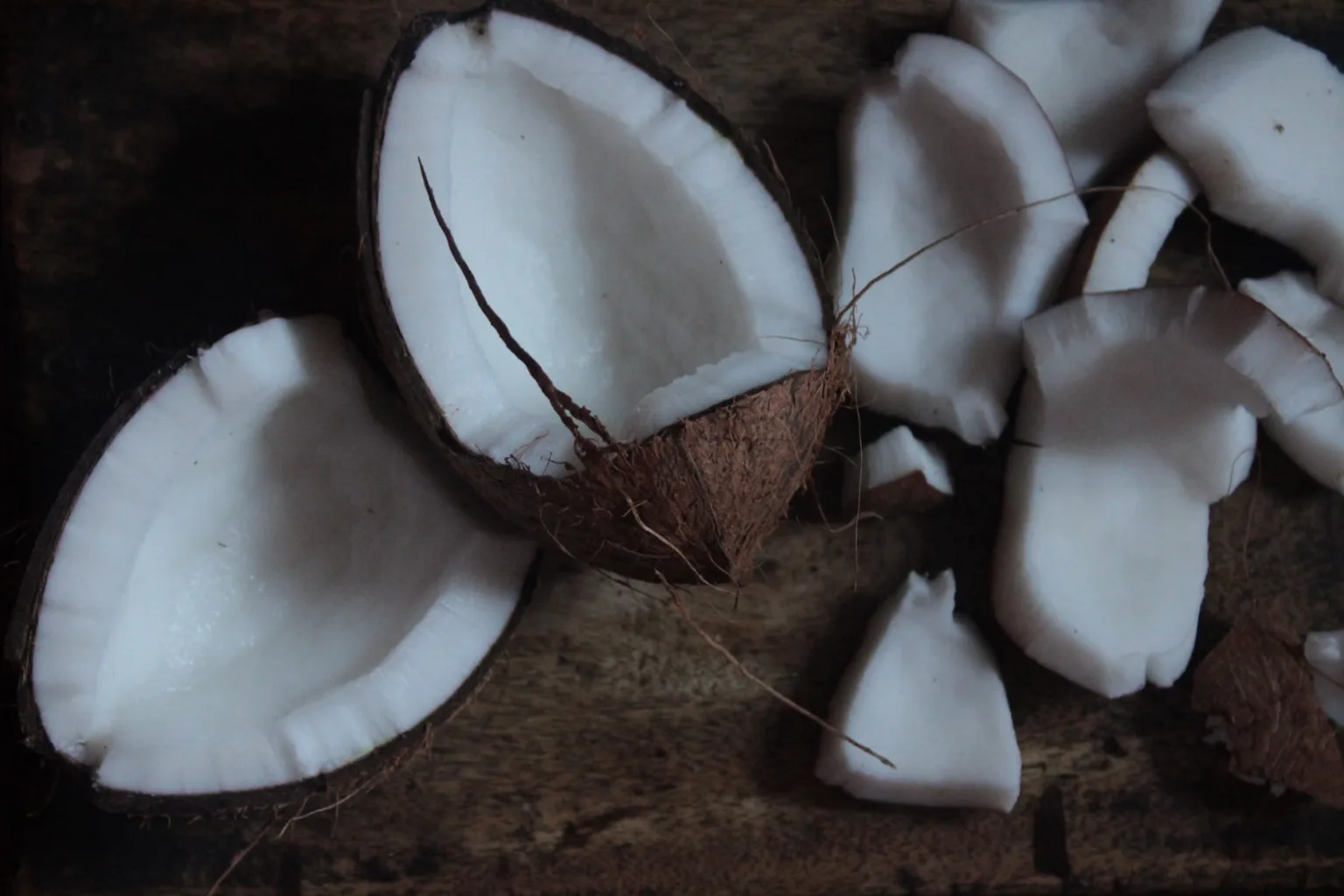
Fresh coconut is the fruit of the coconut palm, used before its flesh is dried or processed. Opening it reveals water in the inner cavity and white flesh attached to the hard shell. These are not interchangeable: coconut water is the liquid naturally inside the fruit, while coconut milk is made by grinding or squeezing the flesh, usually with added water. Mature flesh can be eaten in pieces or grated to bring flavour and texture to a dish. The amount of water and flesh varies with the fruit’s size and maturity, so one coconut may not yield the same amount as another.
When to use it
Choose fresh coconut when you want firm, distinctive flesh rather than a dried product or a processed liquid. Grate or cut the flesh for desserts, cakes, biscuits, smoothies and fruit salads; it can also be added to curries, rice dishes, sauces or some fish preparations. The water can be served as a drink or used in mixtures and recipes that suit a mild liquid. Fresh coconut does not automatically replace coconut milk: flesh adds body and chew, while coconut milk contributes a liquid or creamy texture.
How to use it
Before opening the fruit, shake it and listen for liquid moving inside; this can help you judge whether it still contains water. Open the coconut carefully, collect the water if you want to use it, and separate the flesh from the hard shell. Eat the flesh in pieces, cut it or grate it to suit the recipe. Add it near the end if you want to retain noticeable texture, or include it during cooking if you want it to blend into the dish. Use it in desserts, drinks, curries, rice dishes and some savoury preparations. Do not confuse the water inside the fruit with coconut milk, which is made from ground or squeezed flesh and water.
Flavour and texture
Fresh coconut flesh has a mild, gently sweet flavour, a distinctive aroma and a firm, slightly crisp texture that changes with maturity. The water is a light, clear liquid; it is not as thick as coconut milk. Grated flesh spreads through a dish in small pieces, while cubes or slices give a more pronounced bite.
How to choose it
Choose a coconut with no obvious damage to its shell. Shake it near your ear to check whether liquid can be heard moving inside. The amount of water and flesh varies with size and maturity, so this sign cannot guarantee a particular yield. If buying it opened or prepared, check its appearance and follow the seller’s product information.
Storage
The available evidence does not establish one reliable storage duration for every fresh coconut, since condition and form of sale vary. Follow the seller’s or package’s storage directions. If the coconut is opened or cut, handle it with clean utensils, cover it and refrigerate it; do not leave the pieces exposed for extended periods.
Substitutions
Dried grated coconut can stand in for grated fresh flesh when a drier texture suits the recipe; adjust the liquid to the preparation rather than assuming an exact equivalent. Coconut milk can provide coconut flavour and a liquid consistency in some sauces, but it does not replace flesh where pieces or fibre are needed.
Common mistakes
Do not confuse coconut water with coconut milk, which is made from the flesh. Do not expect every coconut to contain the same amount of water or flesh. If a recipe calls for grated flesh, using only coconut water will not provide the same texture or function.
Safety and allergens
Open the hard shell carefully and use clean tools. If you have food allergies, check the ingredient and allergen information for the specific packaged or prepared product; allergen information needs to be checked for the food in question.
Culinary uses
- Pulpa fresca para comer o rallar
- Agua de coco para bebidas y preparaciones
Recommended techniques
- Abrir y extraer la pulpa
- Rallar o trocear la pulpa fresca
Pairs well with
- Curris y platos salados
- Frutas, batidos y postres
Frequently asked questions
Is coconut water the same as coconut milk?
No. Coconut water is the liquid inside the fruit. Coconut milk is made by grinding or squeezing the flesh, usually with water.
How can I use fresh coconut flesh?
Eat it in pieces or cut or grate it for desserts, smoothies, curries, rice dishes and other recipes.
How can I tell whether a coconut contains water?
Shake it near your ear and listen for liquid moving inside. The amount can vary with the fruit’s size and maturity.
Ingredient allergens
Allergen listThere are no verified associations for these ingredients yet.
Estimated nutrition
- Fat
- 33.49 g
- Saturates
- 29.7 g
- Carbohydrate
- 15.23 g
- Sugars
- 6.23 g
- Fibre
- 9 g
- Protein
- 3.33 g
- Salt
- 0.05 g
Sources and review
Automatically researched, cross-checked and validated content. Sources consulted:
- El coco rallado: Historia, Curiosidades y Usos ruca.es/el-coco-rallado-historia-curiosidades-y-usos/
- Coco - Wikipedia, la enciclopedia libre es.wikipedia.org/wiki/Coco
- Agencia Española de Seguridad Alimentaria y Nutrición www.aesan.gob.es/
- El coco: de fruta tropical a producto estrella del bienestar www.plataformatierra.es/actualidad/el-coco-producto-estrella-del-bienestar
- Aprende todo sobre el coco en la enciclopedia Cocinista www.cocinista.es/web/es/enciclopedia-cocinista/ingredientes-del-mundo/coco.html
- Aceite de coco y otros derivados | Recetas Nestlé www.recetasnestle.com.ec/escuela-sabor/trucos-caseros/derivados-del-coco
- - YouTube www.youtube.com/watch?v=hYw-YVGXatQ
- Coco- Gastronomía - Región de Murcia Digital www.regmurcia.com/servlet/s.Sl?r=ReP-23705-DETALLE_REPORTAJESPADRE&sit=c%2C543%2Cm%2C2715
- Allergies - Food Safety - European Commission food.ec.europa.eu/food-safety/campaign-2026/allergies_en
- Frequently Asked Questions: Food Allergen Labeling Guidance for Industry | FDA www.fda.gov/food/food-allergensgluten-free-guidance-documents-regulatory-information/frequen…
- Food allergen labelling and information requirements technical guidance - GOV.UK www.gov.uk/government/publications/food-allergen-labelling-and-information-requirements-tech…
- Homepage | Food Standards Australia New Zealand www.foodstandards.gov.au/
- Ingredientes locales: el poder del coco | Recetas Nestlé www.recetasnestle.com.do/escuela-de-sabor/ingredientes-locales
- ¿Qué es el Coco? Beneficios para la salud y propiedades - FarmaZara Blog - Salud, Belleza, Dieta y Nutrición farmazara.es/blog/dietetica/alimentos/coco/?srsltid=AYCX9vKFy8bz7MIeteNOA7qiU3zwkWqACSKzSzGd…