- Category
- Vegetables
- State
- Fresh
- Usual unit
- unit
What it is
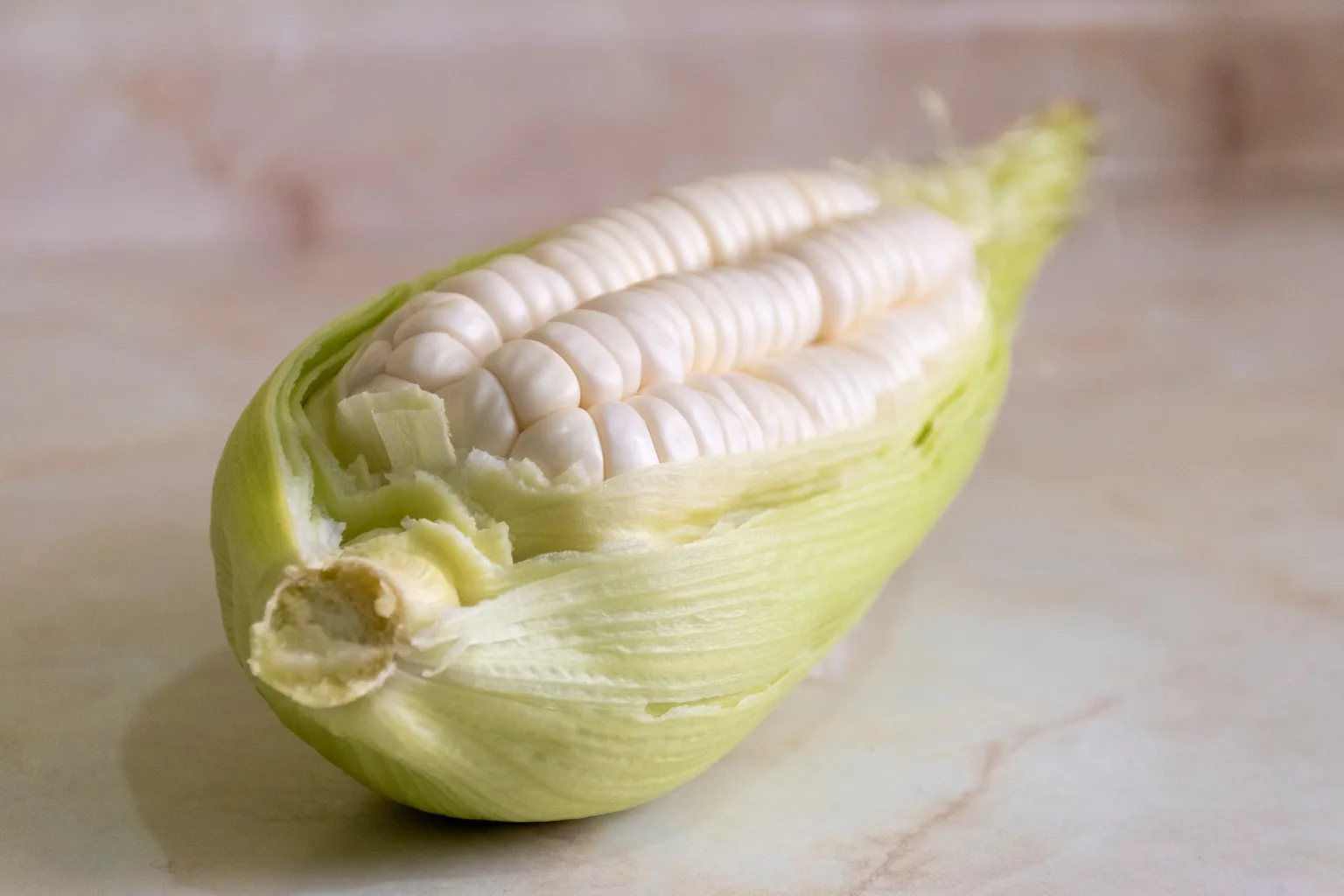
Fresh corn on the cob is the tender ear of sweet corn, with its kernels still attached to the central cob. It is also known by regional names such as choclo and elote. In several South American countries, “choclo” is a common name for the tender ear. The kernels may be white or yellow, and their sweetness and firmness can vary with the type of corn and its maturity. Cook the ear whole or remove the kernels for use on their own. This fresh, tender form is different from dried maize or corn flour, and it can be used in both savory dishes and sweet preparations.
When to use it
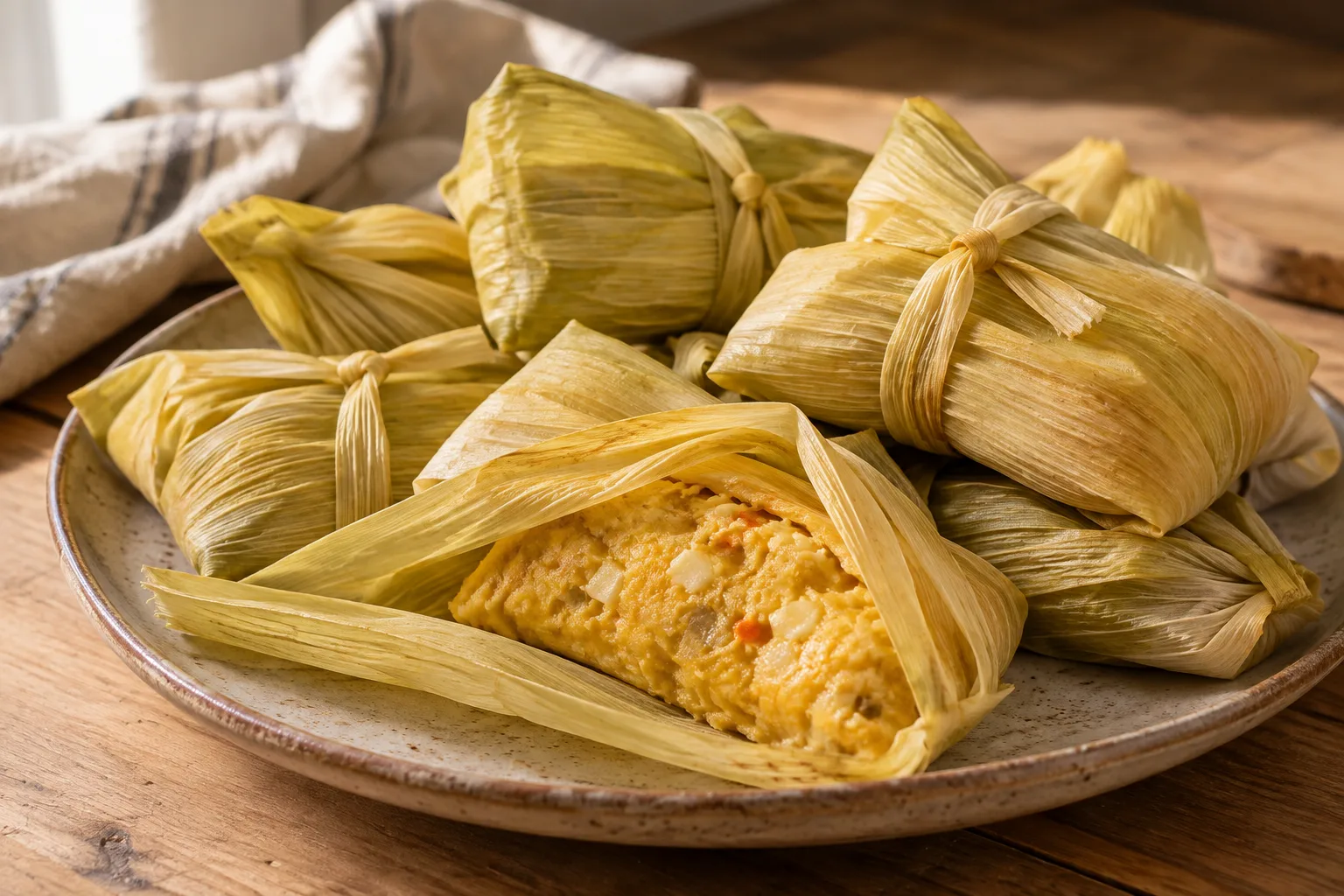
Use fresh corn when you want tender kernels to remain noticeable in a dish, or when you want to cook and serve the ear whole. It is used in empanadas, savory pies, and traditional dishes such as carbonada, humita, locro, and pasteles. Once cooked and removed from the cob, the kernels can go into cold or warm salads. Corn is also used in sweet preparations with milk. Choose whole ears or loose kernels according to the presentation and texture you want; creamed corn is a different format for recipes that call for a creamy consistency.
How to use it
Remove the husks and silk before preparing the ears. For a simple serving, boil the corn until the kernels are tender and serve it on the cob, or let it cool enough to handle and remove the kernels. To cut them off, hold the ear securely and slice lengthwise close to the cob, taking care not to press too hard. Add cooked kernels to cold or warm salads, or use them in the filling for empanadas and savory pies. They are also used in traditional dishes such as humita, carbonada, locro, and pasteles, as well as sweet preparations with milk. Match the cut and texture to the recipe: whole kernels stay distinct, while creamed corn gives a softer, creamier result.
Flavour and texture
Fresh corn kernels are tender and juicy, with sweetness and firmness that can vary according to the type of corn and its maturity. On the ear, the kernels remain attached to the central cob; they can be eaten from the ear or removed after cooking. Loose kernels have a more defined texture, while creamed corn is smoother. Corn may be white or yellow, and color alone does not determine how it should be used. Consider the texture your dish needs.
How to choose it
Choose ears sold as fresh, with kernels attached to the central cob, and check for obvious signs of deterioration. Buy whole ears if you plan to serve them intact or remove the kernels yourself. Corn may have white or yellow kernels, and both colors are used in cooking. If you need kernels already separated or a creamy consistency, look for those formats and check the product form before buying.
Storage
Keep fresh ears in good condition until you are ready to prepare them, and avoid leaving them exposed to heat unnecessarily. The available information does not establish a specific storage duration or preservation method for fresh corn, so follow the guidance where you purchase it and use it before it shows signs of spoilage. For canned corn, follow the package directions after opening.
Substitutions
If a recipe calls for whole ears, fresh kernels removed from the cob can work when the whole-ear presentation is not important. Canned corn is another option when a recipe needs separate kernels. Creamed corn is not a direct replacement for whole kernels because it has a creamier texture. Adjust the amount and consistency to suit the recipe; these forms are not identical.
Common mistakes
Do not treat a fresh ear, dried maize, corn flour, and creamed corn as interchangeable: they have different forms and textures. When removing kernels, cut lengthwise close to the cob rather than crushing them. Do not assume every ear has the same color, sweetness, or firmness; these qualities can vary.
Safety and allergens
Handle fresh corn as a fresh food, using clean utensils, and cook it as required by your preparation. Do not use ears that show obvious deterioration. No ingredient-specific safety warning is available here.
Culinary uses
- Mazorca tierna para servir entera
- Granos para ensaladas y preparaciones saladas o dulces
Recommended techniques
- Hervir la mazorca
- Cocer y desgranar para incorporar los granos a otros platos
Pairs well with
- Empanadas y tartas
- Carbonada, humita, locro y pasteles
- Ensaladas frías o calientes
- Preparaciones dulces con leche
Frequently asked questions
What is fresh corn on the cob?
It is the tender ear of sweet corn, with kernels that may be white or yellow. Cook it whole or remove the kernels for other dishes.
How can I cook a fresh ear of corn?
Boiling the ear and serving it whole is one option. You can also cook it, remove the kernels, and add them to another preparation.
What dishes can I make with fresh corn?
Use it in empanadas, savory pies, carbonada, humita, locro, and pasteles. Cooked kernels also work in cold or warm salads and sweet preparations with milk.
Ingredient allergens
Allergen listThere are no verified associations for these ingredients yet.
Sources and review
Automatically researched, cross-checked and validated content. Sources consulted:
- Client Challenge doi.org/10.2307/jj.27939689.16
- Gastronomy Blog | Page 10 sites.bu.edu/gastronomyblog/page/10/
- Foods and Flavors to Savor in South America - UCEAP News and Features blog.uceap.universityofcalifornia.edu/foods-study-abroad-south-america/
- Métodos de cocción: los tipos secos, húmedos y mixtos www.igi-la.com/blog/metodos-de-coccion-guia/
- Zea mays - Wikipedia, la enciclopedia libre es.wikipedia.org/wiki/Zea_mays
- Léxico culinario autorizado en el primer diccionario académico | OpenAlex openalex.org/W2285293455
- Programa 365 Tentaciones: choclo, alimento milenario : Prensa Gobierno de Mendoza www.mendoza.gov.ar/prensa/programa-365-tentaciones-choclo-alimento-milenario/
- Students | Institute of Culinary Education www.ice.edu/blog/all/students
- Dining Services | Georgia Gwinnett College www.ggc.edu/student-life/student-services/dining-services
- The Science of Cooking: What Every Chef Should Understand about Chemistry - Escoffier www.escoffier.edu/blog/culinary-arts/the-science-of-cooking/
- Make Your Own MIX www.uaf.edu/ces/publications/database/food/files/pdfs/FNH-00060_Make_Your_Own_Mix_small.pdf
- Keep it Safe: Cooking and Handling Frozen Vegetables - Cooperative Extension: Food & Health - University of Maine Cooperative Extension extension.umaine.edu/food-health/2025/07/17/keep-it-safe-cooking-and-handling-frozen-vegetab…
- - YouTube www.youtube.com/watch?v=3a_3jgTed6M