- Category
- Vegetables
- State
- Fresh
- Usual unit
- unit
What it is
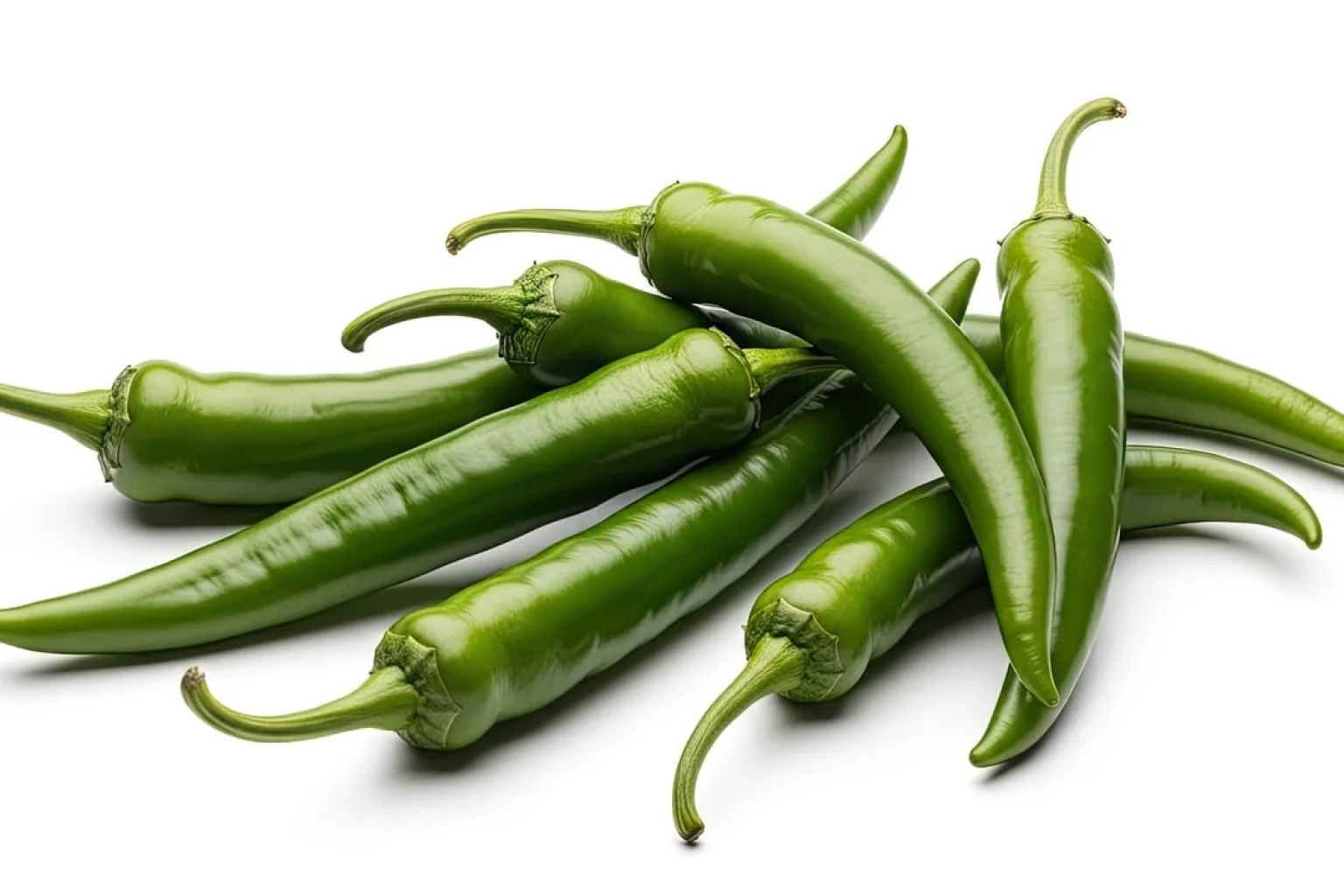
Fresh green chili is the fruit of a Capsicum plant harvested while green; depending on the variety and harvest stage, it can be mild or very hot. The term does not identify just one chili: green chilies vary in size, shape, and heat. In cooking, they can be used whole, chopped, or sliced, and eaten raw or cooked. Their flavor is often perceived as fresher and more vegetal than that of dried chilies, although both flavor and intensity depend on variety and preparation. The flesh contributes flavor and texture, while the seeds and inner white membranes may intensify the sensation of heat. If you do not know the variety, taste a small amount before adding it to a dish.
When to use it
Use fresh green chili when you want fresh heat and a vegetal note in a salsa, stew, stir-fry, or uncooked dish. Green chilies do not have a uniform heat level: a small variety may be far hotter than a large, mild one. For a moderate result, start with a little and taste before adding more. For a fresh-tasting salsa, chop it raw; for a more roasted flavor or a preparation where you want to remove the skin, roast or blister it. You can also combine it with dried chilies when you want both freshness and a deeper flavor, while keeping in mind that the two forms do not taste the same.
How to use it
Choose a firm, crisp chili with smooth skin and no soft spots, bruises, shriveling, or mold. Rinse and dry it before cutting. To use it raw, remove the stem and chop or slice it; add a small amount, mix, and taste. To reduce the heat, remove the seeds and inner white membranes, remembering that the variety also affects the result. To roast or blister it, turn it during cooking so the skin marks evenly; peel it afterward if your recipe calls for it. You can also cook it directly into a sauce, stew, or stir-fry. When handling hot chilies, wear gloves and keep your hands away from your eyes. If you want to freeze them, Utah State University Extension provides methods for freezing chilies; do not improvise home canning, which requires a validated pressure-canning process.
Flavour and texture
Fresh green chili usually brings a vegetal, pungent, lively flavor and heat that can range from mild to intense. The variety determines the heat, so the general name alone cannot predict how hot an individual chili will be. Raw, it remains firm and crisp; cooking softens it and changes its flavor. Roasting or blistering the skin adds toasted notes, and peeling can be useful when a more delicate texture is wanted. The seeds and inner white membranes can contribute to a stronger sensation of heat.
How to choose it
Look for fresh, firm, crisp chilies with smooth skin and an even appearance. Avoid chilies that are shriveled, soft, bruised, misshapen, or moldy. Size, green color, and appearance alone do not guarantee a particular heat level: varieties differ considerably. If you do not know the chili, buy a small amount and taste it before using it generously. Choose a shape and size suited to your recipe, and handle it carefully if you expect it to be hot.
Storage
The available information supports selecting fresh chilies and provides methods for freezing them, but it does not establish a universal fresh-storage time. Keep the chili in good condition and use it before it becomes shriveled, soft, or moldy. To freeze it, you can pack it whole or cut for the freezer; freezing does not remove its heat. If you want to preserve chilies in jars, use a tested pressure-canning recipe adjusted for altitude: home canning chilies requires this process to be safe.
Substitutions
You can substitute another fresh green chili, such as jalapeño or serrano, but the heat and flavor will differ; start with less and adjust after tasting. For a milder result, poblano can add flavor and volume with less heat, though it will not exactly reproduce the original chili’s intensity or texture. Dried chili is not an identical substitute either: it changes the flavor profile and how the ingredient blends into a dish.
Common mistakes
Do not assume all green chilies have the same heat: variety makes a substantial difference. Avoid adding a large amount without tasting first, especially when the chili is unfamiliar. Do not touch your eyes while handling hot chilies. When roasting, turn them so the skin blisters evenly and avoid burning the flesh. Do not improvise a home-canning method: chilies require a validated pressure-canning process.
Safety and allergens
Hot chilies can irritate or burn skin and eyes during handling. Wear gloves and keep your hands away from your eyes while preparing them. For home canning chilies in jars, use only a tested pressure-canning process; covering them with hot liquid is not enough. Do not select produce with mold or soft, damaged areas.
Culinary uses
- Adds fresh heat and a bright, green flavor to dishes
- Provides texture and aroma in sauces, salsas, and cooked dishes
Recommended techniques
- Chop raw for salsas, salads, and garnishes
- Roast or blister, then peel if desired
- Cook in sauces, stews, or sautés
Pairs well with
- Tomato
- Onion
- Garlic
- Coriander leaves
- Lime
Frequently asked questions
How can I reduce the heat of green chili?
Remove the seeds and inner white membranes, and add the chili gradually. The result depends on the variety, so taste a small amount before using more.
Can fresh green chili be eaten raw?
Yes. Chop it into salsa or serve it as part of an uncooked dish. Taste a small amount first because heat varies considerably among varieties.
Can I freeze fresh green chilies?
Yes. They can be frozen whole or cut. Freezing preserves them for later use, but it does not reduce their heat.
Ingredient allergens
Allergen listThere are no verified associations for these ingredients yet.
Estimated nutrition
- Fat
- 0.2 g
- Saturates
- 0.02 g
- Carbohydrate
- 9.46 g
- Sugars
- 5.1 g
- Fibre
- 1.5 g
- Protein
- 2 g
- Salt
- 0.02 g
Sources and review
Automatically researched, cross-checked and validated content. Sources consulted:
- The Essential Glossary of Cooking Terms for the Culinary Arts - Escoffier www.escoffier.edu/blog/culinary-arts/the-essential-glossary-of-cooking-terms-for-the-culinar…
- Agencia Española de Seguridad Alimentaria y Nutrición www.aesan.gob.es/
- ¡Asegurándonos de que no eres un robot! doi.org/10.21678/cechap.2026.jet.dt4
- Vamos a Conservar Alimentos - Home Food Preservation and Safety - Food Safety and Quality extension.psu.edu/food-safety-and-quality/home-food-preservation-and-safety/vamos-a-conserva…
- El chile, ingrediente esencial en la cocina de México - Formacion en Gastronomia www.formacionengastronomia.com/cocina-latina/chile/
- How to Preserve Chiles | USU extension.usu.edu/preserve-the-harvest/research/chiles
- Chiles Verdes Frescos — Open Spice Box openspicebox.com/es/ingredients/green-chilies
- El CHILE como alimento amc.edu.mx/revistaciencia/images/revista/66_3/PDF/Chile.pdf
- Making Corn Tortillas and Salsa coloradosph.cuanschutz.edu/docs/librariesprovider151/default-document-library/inventasalsa--…
- Enchiladas Tapatias 1964 (Tapatia Enchiladas) - lacocina.utsa.edu/mexican-cooking-novice-style-enchiladas-tapatias-and-arroz-norteno-1964/
- Tanzania Food Composition Tables | The Nutrition Source nutritionsource.hsph.harvard.edu/wp-content/uploads/2023/09/Tanzania-Food-Composition-Tables…
- Catering Guide www.wlu.edu/dining-services/catering/catering-guide