- Category
- Fish and seafood
- State
- Fresh
- Usual unit
- g
What it is
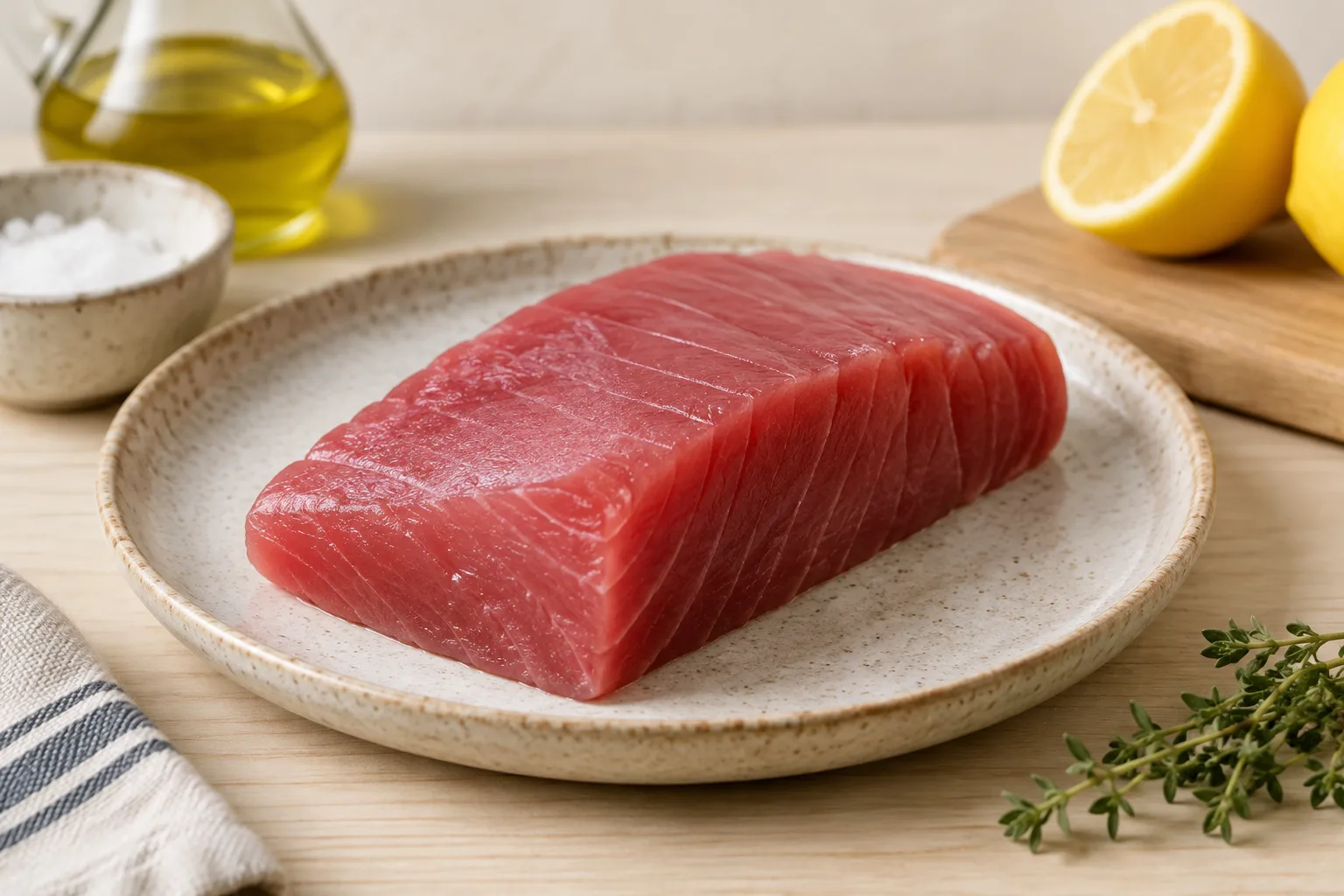
Fresh tuna is the chilled, non-canned flesh of fish in the tuna group. The name covers several species, so it does not describe one single texture or flavor intensity: some varieties have mild-tasting flesh, while others taste more pronounced. The cut also matters; some pieces are firmer, while others can be fattier and more buttery. Tuna is sold as loins, steaks, or chunks and can be used in dishes prepared in different ways. It should not automatically be confused with bluefin tuna: “fresh tuna” is a broader term, and the species and origin depend on the product information. Tuna is perishable and needs careful handling and cold storage. To reduce risk, do not assume that any piece of tuna is suitable to eat raw, and follow official food-safety guidance.
When to use it
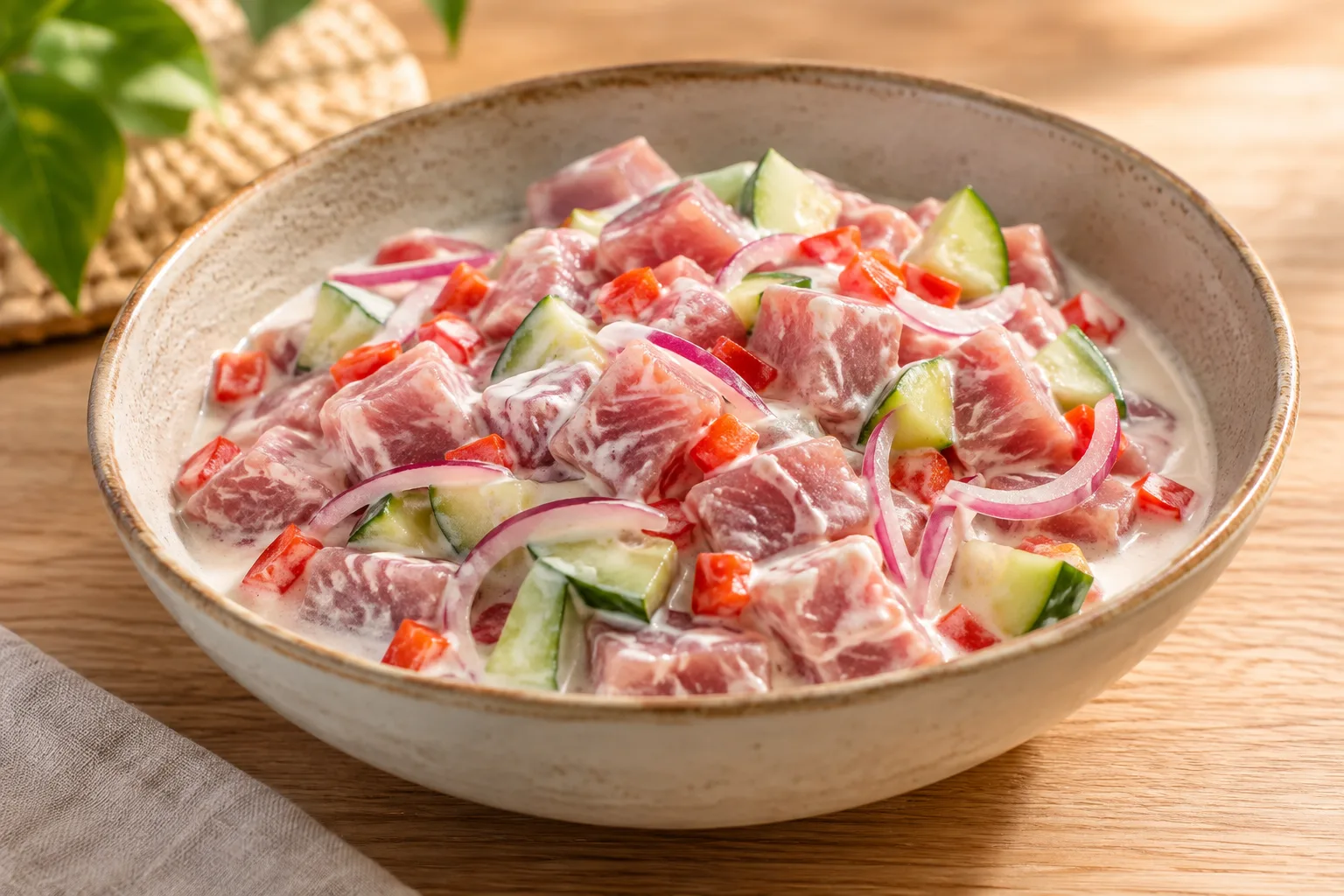
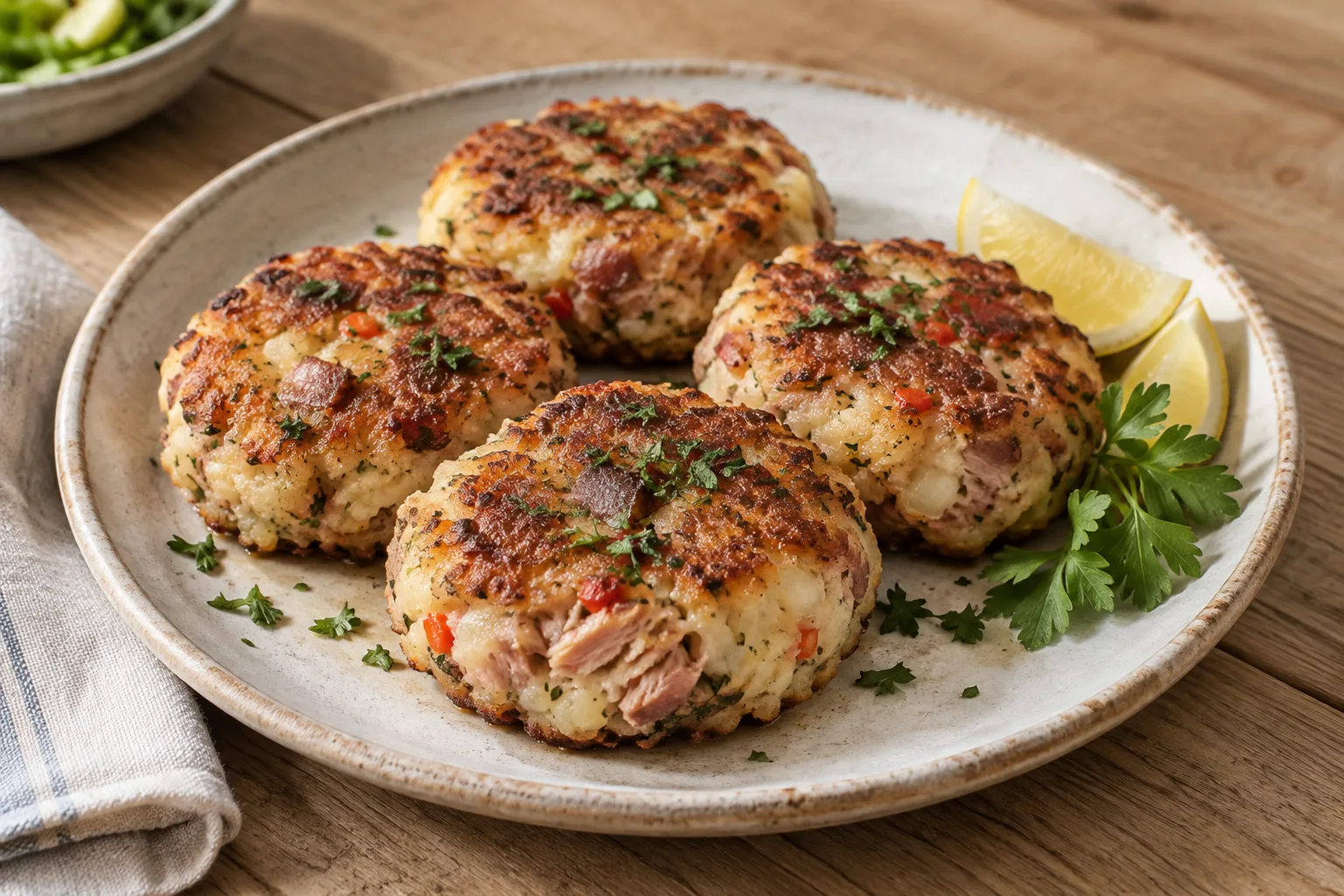
Use fresh tuna when you want a firm-fleshed fish to take the lead in a simple dish, such as a pan-cooked portion, or when you need chunks for a vegetable stew. Once cooked, it can also be added to salads, fillings, and other dishes. Choose a cut to suit the texture you want, and remember that different species are not identical. Tuna works with different cooking methods, although prolonged heat can dry the flesh. If you are considering serving it raw or partly cooked, do not assume the product is suitable: consult local official guidance and choose thorough cooking if you cannot confirm its suitability.
How to use it
Keep tuna refrigerated until you are ready to prepare it, and handle it with clean utensils and surfaces. Cut it into evenly sized portions so it cooks more evenly. For a simple preparation, season a loin and cook it in a pan; if using chunks, add them to a vegetable stew. It can also be used cooked in salads and fillings. Cook fish thoroughly; the cited food-safety guidance specifies 145°F (63°C). Avoid unnecessarily long cooking, which can dry the flesh. Keep raw fish separate from ready-to-eat foods, clean surfaces and utensils after handling it, and refrigerate leftovers promptly.
Flavour and texture
Flavor can range from mild to pronounced, and the flesh’s color varies with the variety and cut. The texture is generally firm and meaty, though some cuts are fattier and more buttery. Long cooking can dry it out and make it less juicy, so match the method to the cut and the result you want. Do not expect every variety to have the same texture.
How to choose it
Choose tuna kept refrigerated or displayed on ice, and buy from a reliable seller. Look for a mild smell, not a sour, strong, or ammonia-like odor, and avoid fish with obvious signs of deterioration. Ask which species and cut you are buying. If you plan to serve it raw or partly cooked, do not assume every piece is suitable: ask about its suitability and consult local official guidance. Keep the fish cold on the way home and take it home promptly.
Storage
Tuna is perishable: take it home promptly and refrigerate it without delay. Keep it covered and separate from ready-to-eat foods, preventing its juices from contacting other items. Follow the label or seller’s storage instructions, since the appropriate time depends on the product and how it has been handled. Do not leave fish at room temperature longer than necessary. If you will not use it soon, check the product’s freezing instructions.
Substitutions
Bonito del Norte can be an alternative when you want a milder-tasting fish. Yellowfin tuna may also work; its flesh is described as mild. Species and cuts can differ in flavor and texture, so adjust the preparation and cooking rather than assuming they are interchangeable in every dish. Use the same careful handling and cooking practices for any fish you substitute.
Common mistakes
Do not assume all fresh tuna is bluefin or that every variety has the same flavor and texture. Another common mistake is cooking it for too long, which can dry the flesh. Do not leave perishable fish at room temperature during preparation, and do not treat appearance or smell as a guarantee of safety. If you cannot confirm that a product is appropriate for a raw preparation, cook it thoroughly.
Safety and allergens
Keep fish cold, wash your hands, and clean surfaces and utensils after handling it. Prevent raw fish from contacting ready-to-eat foods. Fish can cause allergic reactions. Cook fish thoroughly; the cited guidance specifies 145°F (63°C). Raw or partly cooked preparations carry additional risks: consult local official guidance and do not assume they are safe by default.
Culinary uses
- Plato principal
- Ingrediente para ensaladas, guisos y preparaciones de pescado
Recommended techniques
- Sellar o cocinar a la plancha
- Guisar o estofar
- Marinar antes de cocinar
- Cocinar completamente
Pairs well with
- Tomate y cebolla
- Aceite de oliva y vinagre
- Arroz y algas
- Hortalizas
Frequently asked questions
Does fresh tuna always mean bluefin tuna?
No. The term can refer to several tuna species. Check the species on the label or ask the seller.
What is a good way to cook fresh tuna?
You can cook it in a pan or add chunks to a stew. Cook the fish thoroughly and avoid cooking it longer than needed, since the flesh can dry out.
Can fresh tuna be eaten raw?
Some preparations serve it raw, but not every fish product is suitable for that use. Consult local official guidance and, if you cannot confirm suitability, cook it thoroughly.
Ingredient allergens
Allergen listDocumented presence
-
Fish
Fresh tuna
Estimated nutrition
- Fat
- 14.92 g
- Saturates
- 2.45 g
- Carbohydrate
- 2.65 g
- Sugars
- 0.49 g
- Fibre
- 0.2 g
- Protein
- 15.33 g
- Salt
- 0.93 g
Sources and review
Automatically researched, cross-checked and validated content. Sources consulted:
- Client Challenge doi.org/10.2307/jj.27939689.16
- Food Selection & Storage | Home & Garden Information Center hgic.clemson.edu/factsheet/food-selection-storage/
- Food Storage for Safety and Quality - El Paso County Extension elpaso.extension.colostate.edu/wp-content/uploads/sites/44/2020/03/Food-Storage-and-Quality.…
- Kitchen Companion: Your Safe Food Handbook ucanr.edu/sites/default/files/2020-09/336322.pdf
- USDA FoodData Central libguides.marist.edu/fdc
- El atún, ese gran ingrediente de nuestras cocinas - EN LA COCINA Magazine enlacocina.telemesa.es/cocina/el-atun-ese-gran-ingrediente-de-nuestras-cocinas/
- Atún- Gastronomía - Región de Murcia Digital www.regmurcia.com/servlet/s.Sl?r=ReP-20389-DETALLE_REPORTAJESPADRE&sit=c%2C543%2Cm%2C2716
- Bulletin 3110, Guidelines for Safe Seafood Consumption: Buying, Storing, Cooking and Seafood Allergies - Cooperative Extension Publications - University of Maine Cooperative Extension extension.umaine.edu/publications/3110e/
- Storing Food for Safety and Quality wpcdn.web.wsu.edu/extension/uploads/sites/45/2017/03/PNW0612-Storing-Food-for-Safety-and-Qua…
- Para la ciudadanía www.aesan.gob.es/para-la-ciudadania
- Todo lo que tienes que saber para comprar buen atún fresco | Grupo Animal grupoanimal.mx/gastronomia/atun-fresco
- FSHN14-05/FS247: Shopping for Health: Seafood ask.ifas.ufl.edu/publication/FS247
- Seafood at it's Best | University of Idaho www.uidaho.edu/extension/health/curriculum/seafood
- Atún fresco, calidad premium friolisa.es/es/blog/atun-fresco-calidad-premium.html
- Atún Rojo Fresco: Guía de Compra y Temporada | Blog Gadira productosdealmadraba.com/blog/sin-categoria/atun-rojo-fresco-que-es-cuando-comprarlo-y-como-…