- Category
- Vegetables
- State
- Frozen
- Usual unit
- g
What it is
Frozen corn is sweet corn sold frozen, either as loose kernels or sometimes as whole ears, so it is available beyond the harvest period. Loose kernels are especially convenient for measuring and stirring into a dish. It is different from cornmeal, corn flour, and popcorn: these are distinct corn products with different formats and uses. Sweetness, kernel size, and firmness can vary with the variety and processing, so packages do not always cook up identically. Frozen corn is commonly used in soups, stews, salads, rice dishes, sautés, and fillings. Check the package to find out whether it needs cooking before serving and which preparation method the product requires.
When to use it
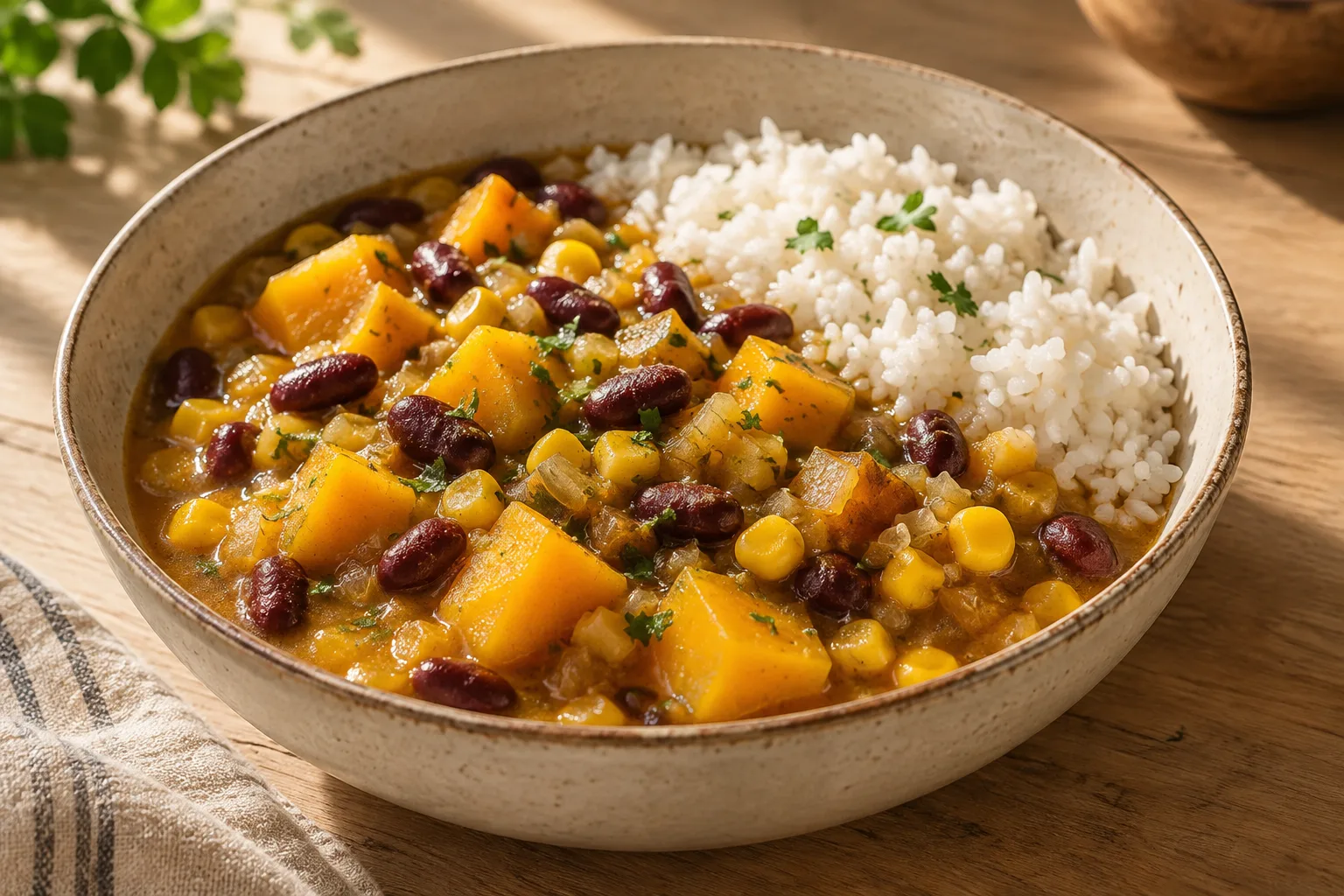
Use frozen corn when you want to add kernels to a meal without preparing a fresh ear. It can be stirred into soup, stew, a sauté, or a rice dish, and it also works in salads when prepared according to the package directions. For a cold salad, cook it if required and let it cool before mixing it with the other ingredients. It fits naturally into dishes with beans, squash, tomatoes, or broth, as well as rice with cucumber, onion, and herbs. Sweetness and firmness differ between products, so taste the corn and adjust the seasoning to suit the dish. Because it is frozen, it is a convenient option at any time of year rather than an ingredient limited to fresh-corn season.
How to use it
Start by reading the package directions, since preparation requirements can differ. Measure the amount you need and add it to soup or stew so it heats with the other ingredients. For a sauté, stir it in during cooking and heat until it is hot and reaches the texture you want. In rice dishes, add it during cooking or heat it separately and fold it in near the end. For a cold salad, prepare the corn as directed and let it cool before combining it with the other ingredients. It pairs well with beans, squash, tomatoes, rice, cucumber, onion, cilantro, lime, and cumin. Do not assume every frozen product is ready to eat without preparation; follow the instructions for the specific package.
Flavour and texture
Sweet corn typically has a mild, sweet flavor and kernels that can be tender or slightly firm. The degree of sweetness and the texture depend on the variety and processing, so products can differ from one another. Frozen corn may seem less sweet than some canned corn, but that is not true of every product. In soups and stews, the kernels take on the flavors of the broth and seasonings; in salads, they add color and contrast. Taste the corn after heating, then decide whether the dish needs more salt, acidity, or spice.
How to choose it
Choose an intact package and check its ingredient list, weight, and preparation directions. For soups, salads, or sautés, confirm that it is sweet corn kernels rather than creamed corn or another corn product. Kernel size, texture, and sweetness can vary by variety and brand; read the package description and select the format suited to your planned dish. Check the storage information and date shown on the package as well.
Storage
Keep the product frozen and follow the storage directions printed on the package. After opening, reseal it securely or transfer it to a freezer-safe container, following the manufacturer's directions. Avoid leaving thawed corn at room temperature longer than necessary, and do not assume a storage period that the package does not provide. If the package gives specific instructions for thawing or using the product after opening, use those as your guide.
Substitutions
Canned sweet corn, drained, or cooked fresh kernels can replace frozen corn. Canned corn may have a different texture and sweetness, so taste it and adjust the seasoning. For a similar amount, measure the drained or cooked kernels rather than comparing the weight of a product that includes liquid. Kernels cut from a cooked ear also work in soups, stews, and salads; the substitution is appropriate when the recipe calls for kernels, not corn flour or meal.
Common mistakes
Do not assume all frozen corn is ready to eat straight from the package: check the directions and cook it if instructed. Avoid adding it far too early to a dish that only needs it heated, since it may lose firmness. Do not expect every variety to have the same sweetness or texture. For a cold salad, let cooked kernels cool before mixing them in, rather than adding them hot without considering the result you want.
Safety and allergens
Wash your hands and use clean utensils and surfaces when preparing food. Follow the package's cooking and storage directions; appearance alone cannot tell you whether the corn needs cooking.
Culinary uses
- Vegetable addition for soups and stews
- Colorful, sweet addition to salads and rice dishes
- Filling for tortillas and other savory dishes
Recommended techniques
- Cook briefly in a soup, stew, or sauté
- Heat according to the package directions before serving
- Add to a salad after cooking and cooling, if required by the package
Pairs well with
- Beans, squash, tomatoes, and broth
- Rice, cucumber, red onion, cilantro, lime, and cumin
- Chili, herbs, and savory seasonings
Frequently asked questions
Do I need to thaw frozen corn before cooking it?
That depends on the product and recipe. Check the package: some dishes allow the corn to go straight into a hot preparation, while others may call for thawing or a particular method.
Can I use frozen corn in a salad?
Yes. Follow the package directions for preparation and let the kernels cool before adding them if you are serving the salad cold.
What can I use instead of frozen corn?
Drained canned sweet corn or cooked fresh kernels are practical alternatives. Their sweetness and texture may differ, so taste and adjust the seasoning.
Ingredient allergens
Allergen listThere are no verified associations for these ingredients yet.
Estimated nutrition
- Fat
- 0.78 g
- Saturates
- 0.12 g
- Carbohydrate
- 23.5 g
- Sugars
- 3.78 g
- Fibre
- 2.8 g
- Protein
- 3.28 g
- Salt
- 0.01 g
Sources and review
Automatically researched, cross-checked and validated content. Sources consulted:
- Client Challenge doi.org/10.2307/jj.27939689.16
- The Essential Glossary of Cooking Terms for the Culinary Arts - Escoffier www.escoffier.edu/blog/culinary-arts/the-essential-glossary-of-cooking-terms-for-the-culinar…
- Sabores de nuestras tierras/recetas - 2024 | Agricultura y Recursos Naturales ucanr.edu/site/agricultura-y-recursos-naturales/sabores-de-nuestras-tierras-recetas-2024
- Agencia Española de Seguridad Alimentaria y Nutrición www.aesan.gob.es/
- Maíz: qué es, tipos y beneficios bonviveur.com/es/noticias/maiz
- Recipe Pamphlets in the Chef Louis Szathmáry Collection of Culinary Arts A-D - Special Collections and Archives - University of Iowa Libraries www.lib.uiowa.edu/sc/louis/
- Maíz dulce: propiedades, calorías, tipos y cómo utilizarlo en la cocina | Gastronomía & Cía www.gastronomiaycia.com/maiz-dulce/
- Vamos a Conservar Alimentos: Maíz dulce extension.psu.edu/vamos-a-conservar-alimentos-maiz-dulce/
- Maíz dulce (Spanish) - National Center for Home Food Preservation nchfp.uga.edu/how/can/canning-vegetables-and-vegetable-products/maiz-dulce-spanish/
- Zea mays - Wikipedia, la enciclopedia libre es.wikipedia.org/wiki/Zea_mays
- How to Preserve Corn | USU extension.usu.edu/preserve-the-harvest/research/corn
- sweet corn - FoodLink - Purdue Extension extension.purdue.edu/foodlink/food.php?food=sweet%20corn