- Category
- Vegetables
- State
- Fresh
- Usual unit
- leaf
What it is
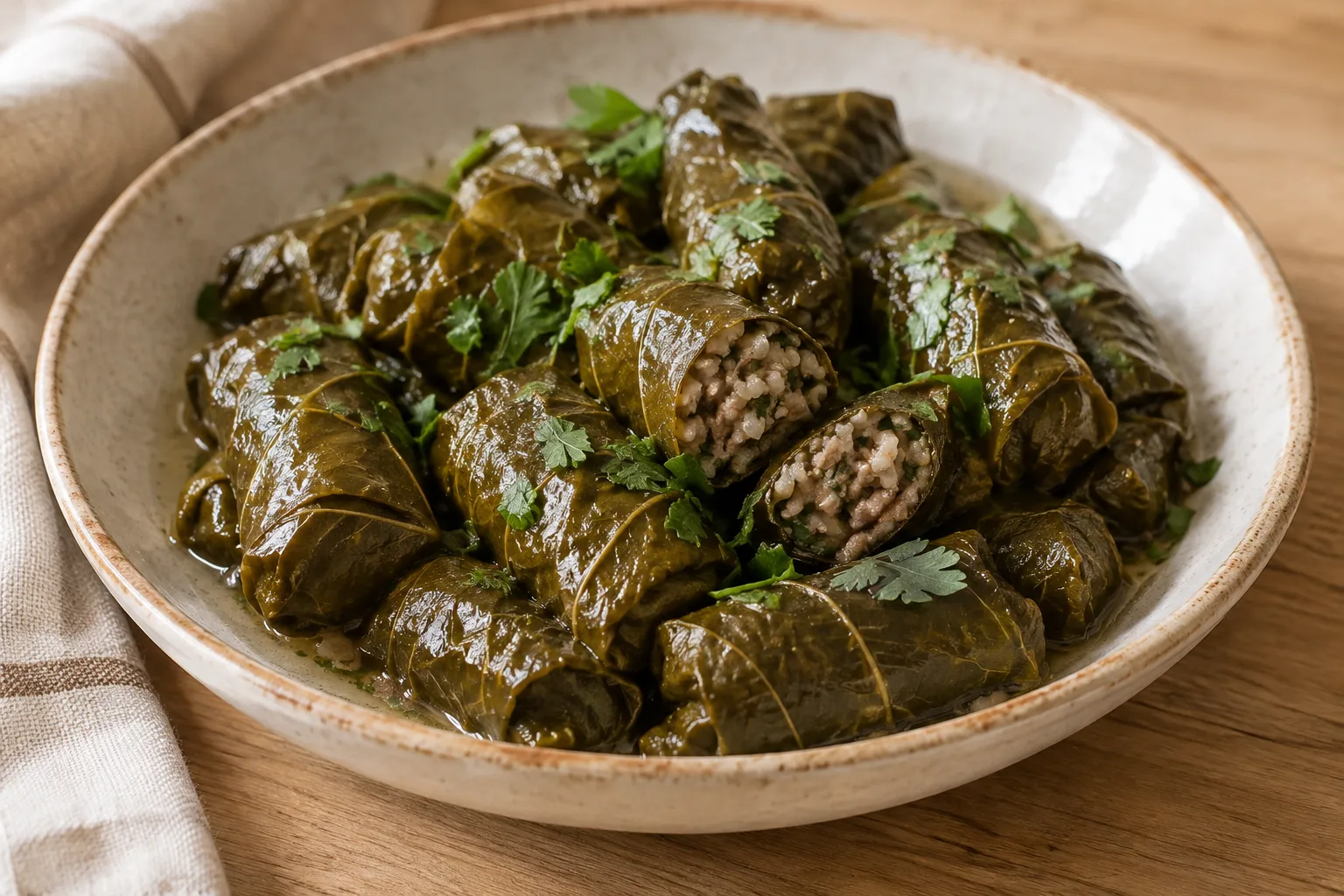
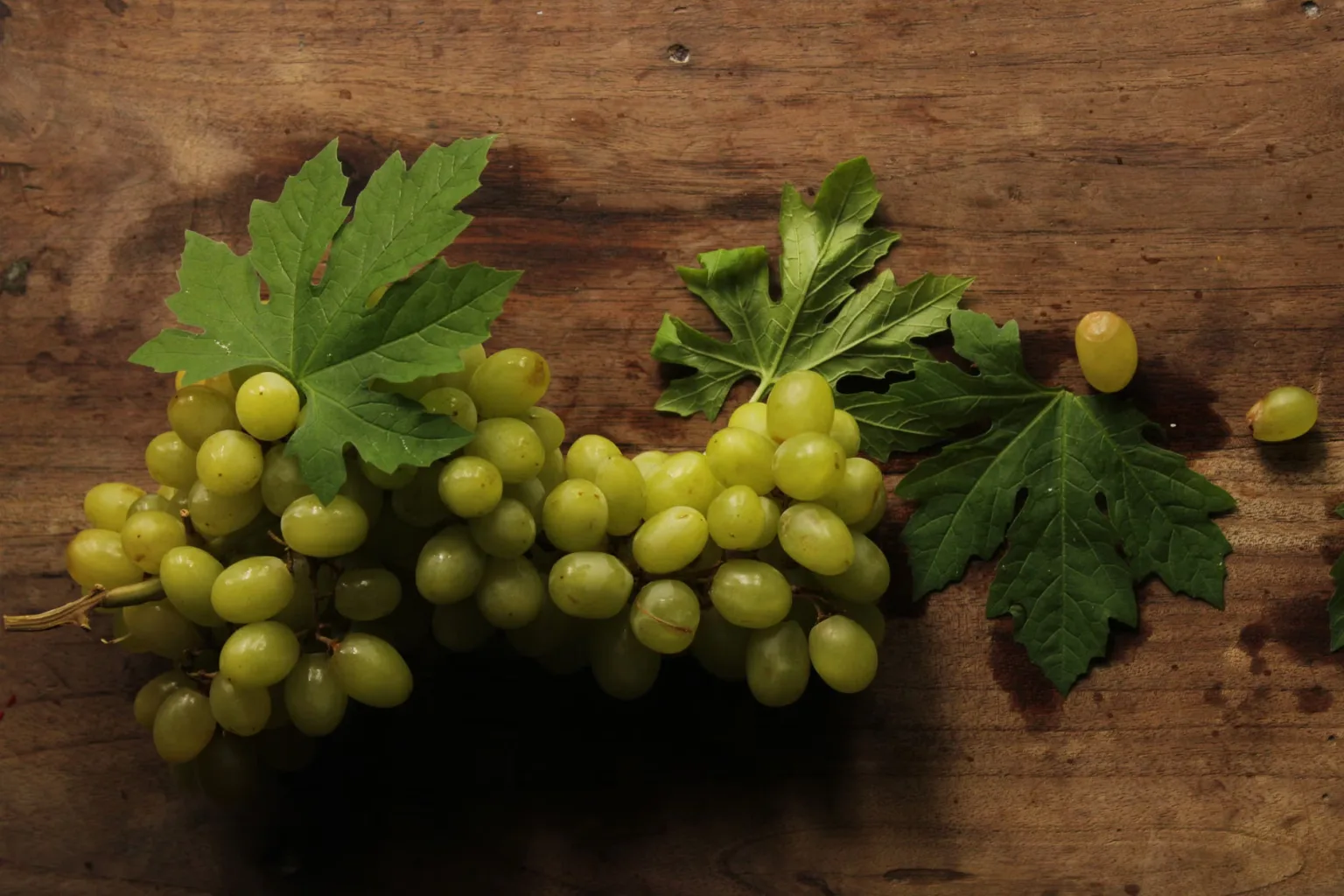
Grape leaves are the edible leaves of grapevines in the genus Vitis. In cooking, they are most often used as a flexible wrapper for small filled rolls known in different food traditions as dolma or sarma. Rice is a common filling; some preparations also include meat and spices, while others combine rice with herbs and vegetables. Fresh leaves should be washed and have their stems removed before use. Brief blanching can soften them and make folding easier. Grape leaves are also sold preserved in brine; these are different from fresh leaves and are best rinsed before cooking. The finished dish’s flavor and texture depend on the leaf, the filling and the cooking method, so there is no single required recipe or filling.
When to use it
Choose grape leaves when you want to wrap a filling in individual portions and cook it as a roll rather than serve the filling on its own. They suit dolma- or sarma-style dishes made with rice, herbs and spices, or with a mixture that includes meat. Fresh leaves work when you can wash them, remove the stems and prepare them before filling. Brined leaves offer another option: rinse them well and follow the recipe. Pick leaves that can fold around the filling without being forced; a brief blanch may help if they are difficult to handle. Choose the filling to suit the dish you want to make, since no single combination is required.
How to use it
Wash fresh leaves and remove their stems. To make them easier to roll, briefly blanch them in hot water, then cool and drain them. Lay a leaf shiny side down, place a small amount of filling near the stem end, fold the sides over the filling and roll without packing it too tightly. Rice with herbs and spices is one option; some preparations also use meat. Arrange the rolls close together in a pot so they keep their shape, and cook them in water or by steaming, according to your recipe. If using brined leaves, rinse them well before filling. Follow the recipe for the particular filling and cooking method: cooking time can vary, so there is no single time that applies to every batch or preparation.
Flavour and texture
The leaf provides a flexible, leafy wrapper around the filling, and its final texture depends on preparation and cooking. A brief blanch can make folding and rolling easier, while longer cooking can change the leaf’s firmness. Brined leaves may contribute more salt than fresh ones, so rinse them and take that into account when seasoning the filling. The flavor of the finished dish also comes from ingredients inside, such as rice, herbs, spices or meat; grape leaves do not have one fixed flavor profile across all recipes.
How to choose it
When buying fresh leaves, look for whole, manageable leaves that can fold around a filling, and avoid leaves that are clearly wilted or damaged. Size and color can vary. Grape leaves are also sold in jars or packs in brine; check the packaging and condition, and make sure the format suits your recipe. Do not assume fresh and brined leaves have the same salt level or need exactly the same handling: rinse brined leaves before use.
Storage
Fresh grape leaves and leaves preserved in brine are different products and should be stored according to their condition and package directions. The information available here does not establish a universal storage period, a specific temperature or a storage method for fresh leaves. For packaged leaves, follow the label’s storage instructions and consult the manufacturer’s guidance after opening. Discard leaves that are deteriorated or whose condition gives you reason to doubt their quality.
Substitutions
To change the style of a dish, replace a rice-and-herb filling with one that includes meat, or do the reverse; this changes the filling, not the leaf. If fresh leaves are unavailable, brined grape leaves can be used for the same kind of preparation: rinse them well before filling and follow your recipe. No equivalent replacement using a different kind of leaf is established here.
Common mistakes
Do not skip washing and removing the stems from fresh leaves. Overfilling or rolling too tightly can make the rolls difficult to close and cook evenly. Do not treat brined leaves as identical to fresh ones: rinse them before use and account for their possible salt contribution when seasoning. Follow the recipe for the particular filling and cooking method instead of assuming that one cooking time works for every leaf and batch.
Safety and allergens
Wash fresh leaves before preparation, and follow the package’s storage and use directions for commercially packed leaves. The official food-safety information available here does not establish an ingredient-specific warning for grape leaves.
Culinary uses
- Edible wrapper for stuffed leaf rolls such as dolma and sarma
- Leafy vegetable used as the outer layer in rice- or meat-filled dishes
Recommended techniques
- Wash and remove the stem before cooking
- Briefly blanch fresh leaves, then cool and drain them before filling
- Fill, fold and roll leaves, then cook them in water or steam
Pairs well with
- Rice with herbs and spices
- Minced meat with rice
- Parsley, mint, tomato, onion and lemon in a vegetable-based filling
Frequently asked questions
Do fresh grape leaves need blanching?
A brief blanch can soften them and make filling and rolling easier. Follow the recipe you are using, since preparation can vary.
Can I use grape leaves packed in brine?
Yes. Rinse them well before filling and continue according to your recipe.
What fillings are used in grape leaves?
Common options include rice with herbs and spices; some versions also include meat. The combination depends on the style of dish.
Ingredient allergens
Allergen listThere are no verified associations for these ingredients yet.
Estimated nutrition
- Fat
- 0 g
- Saturates
- 0 g
- Carbohydrate
- 0 g
- Sugars
- 0 g
- Fibre
- 0 g
- Protein
- 0 g
- Salt
- 3 g
Sources and review
Automatically researched, cross-checked and validated content. Sources consulted:
- ¿Por qué la muerte es origen de miedos y tabúes? doi.org/10.64628/aao.fccyk3qj3
- Vegetative plant parts | Servicio de Extensión de OSU extension.oregonstate.edu/es/catalog/em-9904-vegetative-plant-parts
- Publicaciones de Seguridad alimentaria www.aesan.gob.es/actualidad/publicaciones-seguridad-alimentaria
- Quelites—Agrobiodiversity beyond our crops online.ucpress.edu/elementa/article/12/1/00141/200460/Quelites-Agrobiodiversity-beyond-our-c…
- View of Tanteando los límites de la censura: Hojas ... journals.ku.edu/latr/article/view/7173/6520
- Nicanor Parra www.utrgv.edu/hipertexto/_files/documents/articles/hipertexto-19/delilah-dotremon-ruben-gonz…
- DIANA C. PARRA PEREZ, PT, MPH, PHD Curriculum Vitae ... brownschool.washu.edu/app/uploads/2023/02/CV_DIANA_C_PARRA_UpdatedNov1.24.pdf
- Grapevine Leafroll Disease (Spanish) | WSU Extension Publications | Washington State University pubs.extension.wsu.edu/product/grapevine-leafroll-disease-spanish/
- [BCLB] The Inside Story of Puerto Rico's Debt Crisis: A Conversation with Author David Skeel - UC Berkeley Law www.law.berkeley.edu/event/bclb-the-inside-story-of-puerto-ricos-debt-crisis-a-conversation-…
- Repository: El Centro Cultural Tallersol - UCLA Library Digital Collections Search Results digital.library.ucla.edu/catalog?f%5Brepository_sim%5D%5B0%5D=El%20Centro%20Cultural%20Talle…
- Hoja de parra - Wikipedia, la enciclopedia libre es.wikipedia.org/wiki/Hoja_de_parra
- ¡Descubre los secretos de las hojas de parra! | Bodegas Olabarri bodegasolabarri.com/blog/descubre-los-secretos-de-las-hojas-de-parra/
- La historia de las hojas de parra en la cocina judía aishlatino.com/la-historia-de-las-hojas-de-parra-en-la-cocina-judia/
- Hojas de parra rellenas a la libanesa – Receta vegana – Tasty Mediterraneo www.tastymediterraneo.com/es/hojas-de-parra-rellenas-a-la-libanesa/