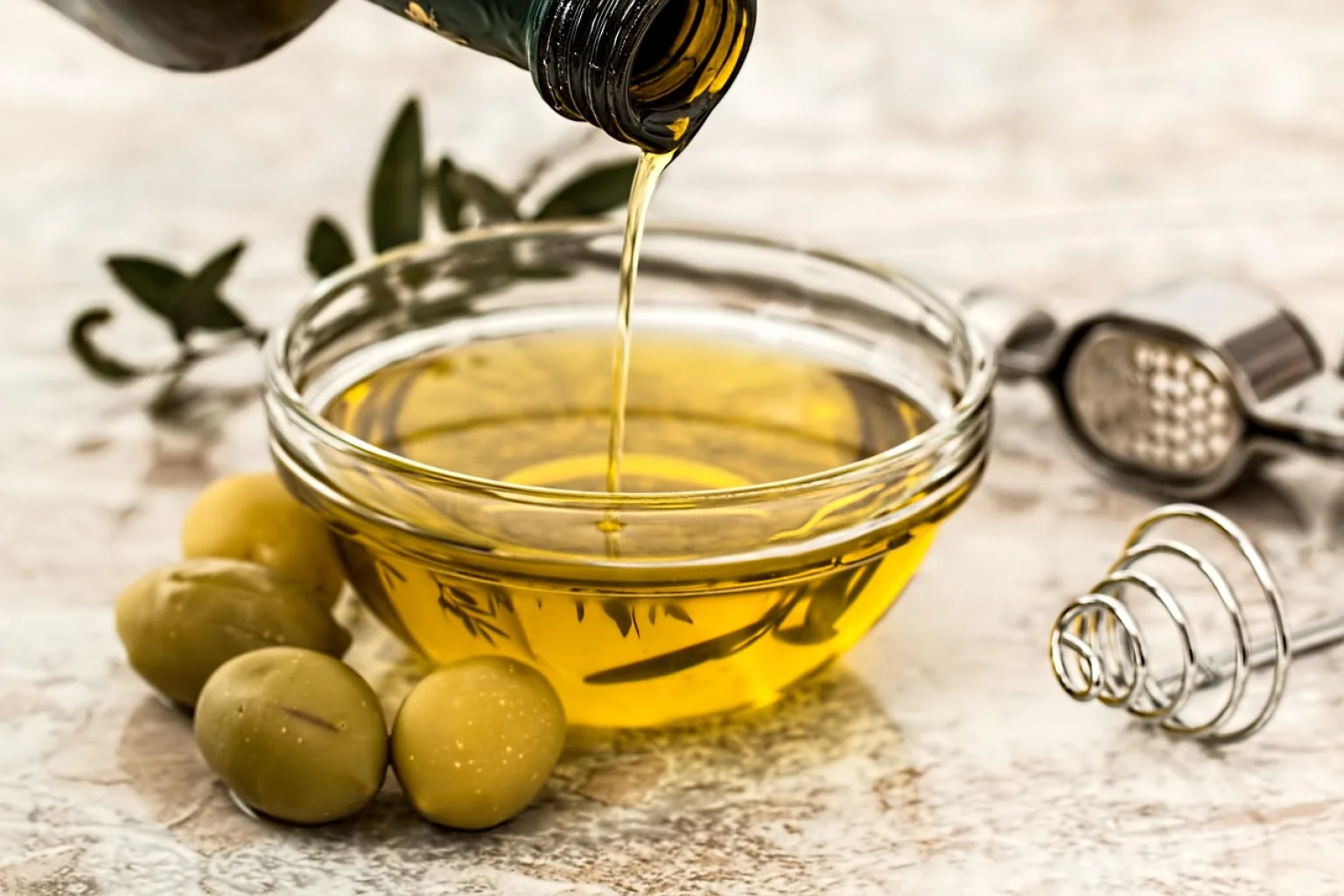
- Category
- Oils and fats
- State
- Liquid
- Usual unit
- tablespoon
What it is
Grapeseed oil, also called grape-seed oil, is a vegetable oil obtained from grape seeds. It is sold as a liquid cooking oil. Its mild profile can add fat to a dish without strongly competing with the other ingredients. Culinary descriptions range from neutral to lightly fruity. It is used in cold preparations such as vinaigrettes and dressings, as well as cooked dishes such as sautés and fried foods. The name alone does not tell you how a particular oil was processed: check the label to confirm that it is intended for food use and to see the product-specific directions.
When to use it
Choose grapeseed oil when you want a discreet-tasting fat for a vinaigrette, dressing, mayonnaise or marinade. It can also be used for sautéing, frying or roasting when a recipe calls for a mild-tasting oil. It works well in dishes where you want spices, vegetables or other ingredients to remain prominent rather than be overshadowed by a strongly flavoured oil. If you want a distinctly toasted or pronounced oil flavour, choose one with a more assertive taste. Confirm that the product is labelled for food use and follow its directions.
How to use it
For a cold preparation, whisk the oil with vinegar or other dressing ingredients and taste before serving; its mild flavour leaves room for the other components. It can also be used in dressings, mayonnaise and marinades. For cooking, use the amount specified in your recipe to sauté or stir-fry vegetables and other ingredients, or to fry and roast. There is no need to add it solely because of a claim about its smoke point: follow the recipe’s method and avoid heating any oil until it smokes. Oil that has already been used for cooking should not be reused. Check the container label for instructions specific to that product.
Flavour and texture
Grapeseed oil is often described as mild, light and unobtrusive, with a faint fruity note in some versions. This makes it suitable for dressings and sauces where you do not want the oil to mask the main flavours. As a liquid oil, it adds a flowing, fatty texture to food. Flavour and aroma can vary with the product and its processing; if you want the oil to be noticeable, taste a little before adding it to the whole dish.
How to choose it
Look for grapeseed or grape-seed oil on the label and confirm that the product is intended for food use. Check its directions and any description of flavour or processing. Do not infer extraction method, degree of refining or suitability for cooking from the name or appearance alone. If the oil will be prominent in a dish, choose a product whose described flavour fits the result you want.
Storage
Follow the storage directions printed on the container, since these may depend on the product and its packaging. Keep the container closed between uses and avoid leaving it open unnecessarily. Vegetable oils can deteriorate through oxidation, so do not store the oil in an open container or keep it beyond the date given on the label. If the product changes in an unexpected way, check the maker’s directions and do not use it if the label says to discard it.
Substitutions
Canola oil can replace grapeseed oil in some mild-flavoured preparations, such as a sauté, although the taste and cooking behaviour may not be identical. Another mild vegetable oil may work in a dressing or for cooking, but choose one suited to the recipe’s method. Replacing it with a strongly flavoured oil will change the finished dish. There is no universal equivalent: adjust the amount to the recipe and the result you want.
Common mistakes
Do not assume that every grapeseed oil has exactly the same flavour or processing. Do not choose it when you want the oil itself to contribute a strong flavour, and do not expect a different oil to give an identical result. Avoid heating oil until it smokes, and do not reuse cooking oil. Always check the label of the particular product for its directions for use and storage.
Safety and allergens
Use only a product labelled for food use. Follow the package directions, avoid heating the oil until it smokes, and do not reuse oil after cooking.
Culinary uses
- Cooking fat for sautéing, frying and roasting
- Mild-flavoured oil for dressings, sauces and marinades
Recommended techniques
- Whisk into vinaigrettes and dressings
- Use for sautéing, frying or roasting; avoid reusing oil after cooking
Pairs well with
- Salad vegetables and vinaigrette ingredients
- Meat, fish and vegetables in marinades
Frequently asked questions
What is grapeseed oil used for?
It is used in vinaigrettes, dressings, mayonnaise and marinades, and for sautéing, frying or roasting when the product is labelled for culinary use.
Does grapeseed oil have a strong flavour?
It is generally described as mild or nearly neutral, though some products may have a light fruity note. Taste it before using it in a delicate dish.
Can I reuse grapeseed oil after frying?
Reusing oil that has already been used for cooking is not recommended. Also follow the directions on the product label.
Ingredient allergens
Allergen listThere are no verified associations for these ingredients yet.
Estimated nutrition
- Fat
- 93.3 g
- Saturates
- 13.3 g
- Carbohydrate
- 0 g
- Sugars
- 0 g
- Fibre
- 0 g
- Protein
- 0 g
- Salt
- 0 g
Sources and review
Automatically researched, cross-checked and validated content. Sources consulted:
- Aceite vegetal - Wikipedia, la enciclopedia libre es.wikipedia.org/wiki/Aceite_vegetal
- Agencia Española de Seguridad Alimentaria y Nutrición www.aesan.gob.es/
- Aceite de semillas de uva - Alvinesa www.alvinesa.com/aceite-de-semillas-de-uva/
- Aceite de Semilla de Uva | Cook for Your Life www.cookforyourlife.org/es/nuestro-blog-de-cocina/aceite-de-semilla-de-uva/
- Complementación económica y transferencia de know how, cadenas de valor aceiteras : los casos aceite de palma en Chiriquí, Panamá y aceite de oliva en San Juan, Argentina. | OpenAlex openalex.org/W7219462518
- reporto a 1,475 mientras que los de semilla de _Vitis vinifera L core.ac.uk/download/71396943.pdf
- Aceite de Semilla de Chía doi.org/10.31003/uspnf_m9274_01_02
- Antes de ir a YouTube www.youtube.com/shorts/2AypYTPmNNQ
- Caracterización y mejora del aceite de semilla de uva procedente de distintas variedades | Documentos - Universidad de La Rioja investigacion.unirioja.es/documentos/5c13b1acc8914b6ed37771fe
- Cómo usar el aceite de uva para cocinar – El mejor aceite para cocinar ines.com.mx/como-usar-el-aceite-de-uva-para-cocinar/
- Aceite de Semillas de Uva: beneficios comprobados y cómo formularlo en cosmética natural - Mi Tienda Quimica mitiendaquimica.com/aceite-de-semillas-de-uva-beneficios-comprobados-y-como-formularlo-en-co…
- Aceite de semillas: 8 tipos y sus usos en la cocina | Cocinatis www.cocinatis.com/como-cocinar/consejos-trucos/aceite-de-semillas.html
- BOE-A-2025-9738 Real Decreto 351/2025, de 30 de abril, por el que se aprueba la norma de calidad de los aceites vegetales comestibles. www.boe.es/buscar/act.php?id=BOE-A-2025-9738
- Caracterización del aceite y harina obtenido de la semilla de uva silvestre (Vitis tiliifolia) www.scielo.org.mx/scielo.php?pid=S2007-09342017000501113&script=sci_arttext