- Category
- Dairy and eggs
- State
- Fresh
- Usual unit
- cup
What it is
Queso costeño is a cheese associated with Colombia’s Caribbean region. It is commonly described as a fresh, white, salty cheese; its texture can range from soft to firmer, and some varieties are drier. The amount of salt and moisture helps explain these differences. In grated form, it is ready to mix into dough or distribute over other ingredients. It is usually made with cow’s milk, although versions made with goat’s or sheep’s milk also exist. Its pronounced saltiness is a defining feature, so account for it when seasoning a dish. Check the product itself, since texture and moisture are not identical across all varieties.
When to use it
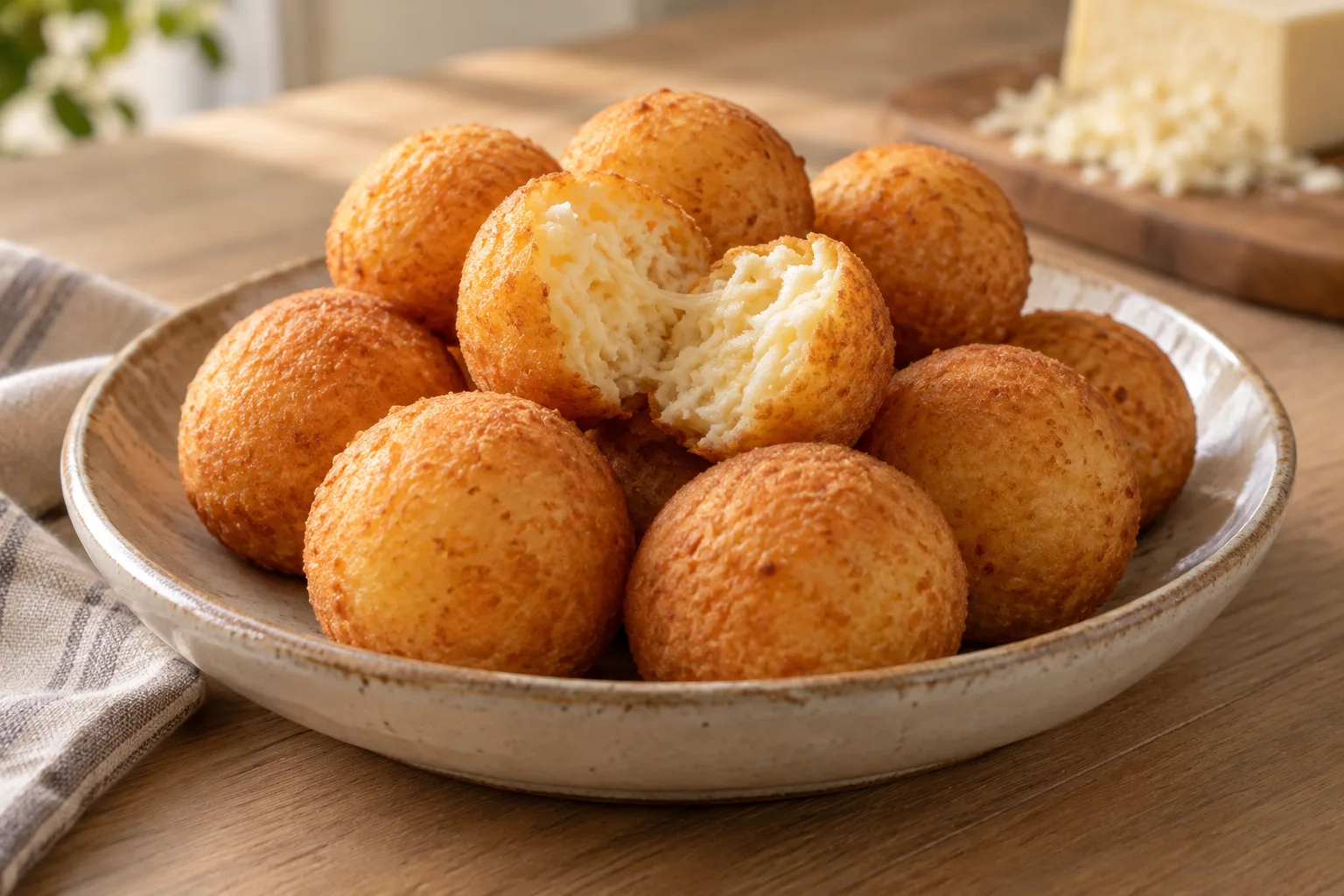
Use it when a dish needs a pronounced salty, milky flavor, especially in Colombian-style cooking. It is convenient for doughs used in buñuelos, almojábanas, yuca breads, and arepas, where the cheese can be mixed with the other ingredients. It can also be added to soups, served as an accompaniment, or worked into fillings. Queso costeño ranges from soft to firm and from more moist to drier, so consider its texture before deciding how it will blend. If the recipe already contains salt or other salty ingredients, begin with less added salt and adjust at the end.
How to use it
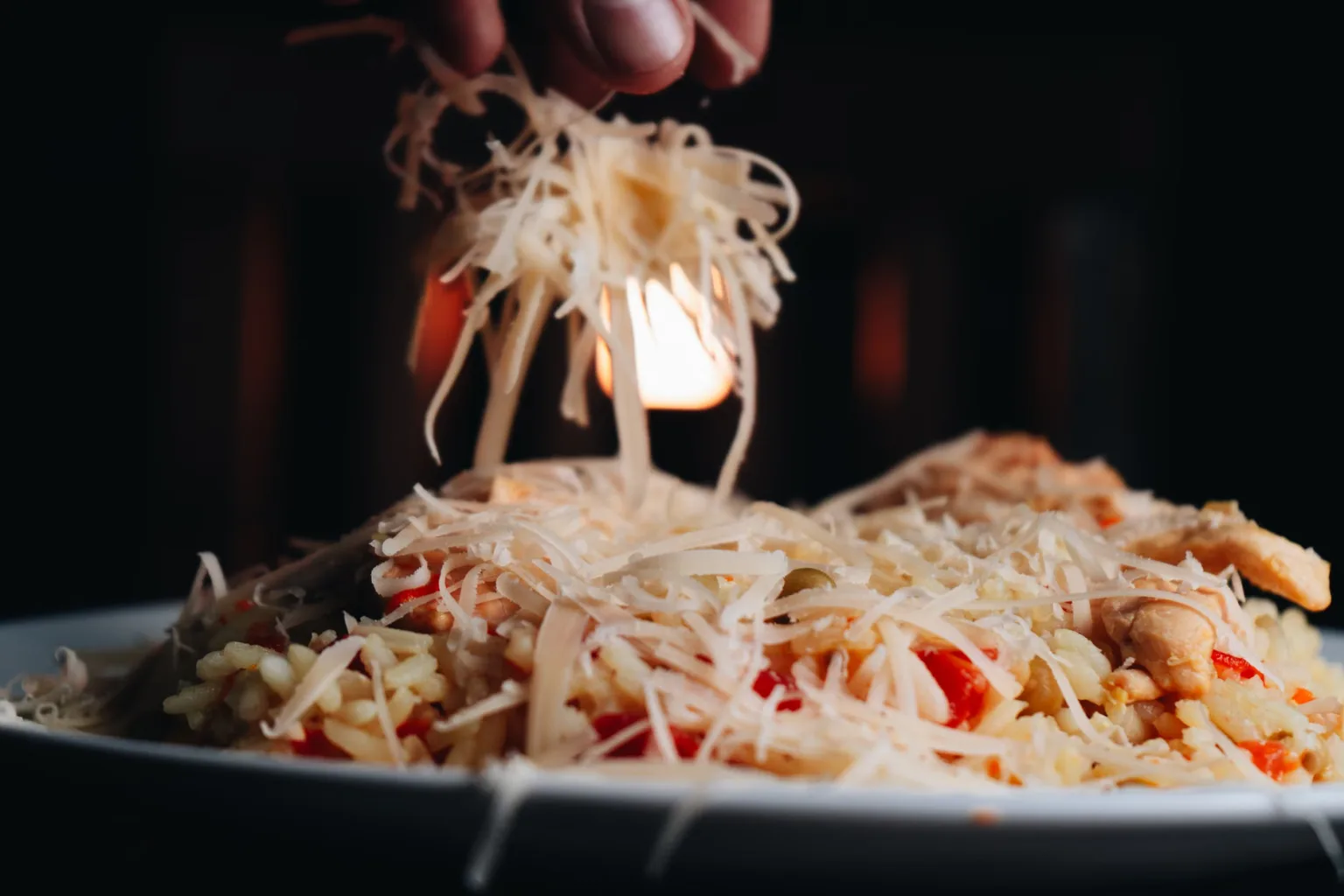
First check whether the grated cheese is moist and soft or relatively dry and firm; that difference affects how it mixes and how much moisture it adds. For buñuelos, almojábanas, yuca-bread, or arepa dough, add it gradually and distribute it evenly. Start with less added salt, taste the mixture when it is safe to do so, and adjust to the cheese’s saltiness. For soup or a finished dish, scatter it over the top as an accompaniment and let the heat warm it through. You can also mix it into fillings, spreading it evenly so its salty flavor does not collect in one spot. Follow the package directions and use clean, dry utensils.
Flavour and texture
Its defining flavor is noticeably salty, with a milky character. Texture is not uniform: the cheese may be soft or firmer, and varieties with more salt can be drier. Grating makes it easy to distribute through doughs and fillings or over a dish, although the size of the shreds and their moisture depend on the product.
How to choose it
Look for a product clearly labeled queso costeño and check its ingredients and storage directions. Choose an intact, clearly identified package. Varieties differ in firmness and moisture; a firmer cheese may be a better choice when you want it to retain more texture in a mixture.
Storage
Follow the package storage directions, particularly because the cheese is already grated. Protect it from contamination and refrigerate it if the label directs you to do so or if you will not use it soon. After opening, reseal the package or transfer the cheese to a clean, covered container. Do not rely on a fixed storage period unless the manufacturer provides one.
Substitutions
You can substitute another salty fresh cheese, bearing in mind that its saltiness and texture may differ. Crumbled fresh cheese with a little salt added, if needed, is another option. Adjust recipe seasoning gradually; neither alternative guarantees the same flavor or dough texture.
Common mistakes
The most common mistake is adding the usual amount of salt without first accounting for the cheese. Its saltiness can be pronounced. Do not assume every queso costeño has the same moisture or firmness, either; check the product and adjust the mixture gradually to avoid an overly salty dish or an unexpected texture.
Safety and allergens
Queso costeño is a dairy product and is not suitable for anyone who needs to avoid milk. Follow the package’s storage and use directions, keep the cheese protected, and use clean utensils.
Culinary uses
- Aporte salado para masas y productos de panadería
- Acompañamiento o cobertura para platos y sopas
- Ingrediente para rellenos
Recommended techniques
- Rallar o desmenuzar antes de usar
- Mezclar con masas
- Añadir a sopas o platos calientes
Pairs well with
- Arepas y yuca
- Buñuelos, almojábanas y panes de yuca
- Sopas y platos de la cocina caribeña colombiana
Frequently asked questions
What does grated queso costeño taste like?
It has a milky flavor and pronounced saltiness. The intensity can vary by product, so season the dish cautiously.
What dishes can I use it in?
Mix it into dough for buñuelos, almojábanas, yuca breads, or arepas, or add it to soups and fillings or serve it as an accompaniment.
Does all queso costeño have the same texture?
No. It can be softer or firmer, and the amount of salt affects moisture and texture. Check the cheese before using it.
Ingredient allergens
Allergen listThere are no verified associations for these ingredients yet.
Sources and review
Automatically researched, cross-checked and validated content. Sources consulted:
- Client Challenge doi.org/10.2307/jj.27939689.16
- Gastronomía del Perú - Wikipedia, la enciclopedia libre es.wikipedia.org/wiki/Gastronom%C3%ADa_del_Per%C3%BA
- Variedades e ingredientes del queso | Consumer www.consumer.es/alimentacion/quesos-variados-solo-cuatro-ingredientes
- Maridaje de queso y vino: cómo combinar por intensidad, textura, sal y acidez - El Mercado de Origen www.elmercadodeorigen.com/maridaje-queso-vino-como-combinar-intensidad-textura/
- Quesos más utilizados en la cocina | CONtexto Ganadero www.contextoganadero.com/blog/quesos-mas-utilizados-en-la-cocina
- Recetas tradicionales con sabor colombiano | OpenAlex openalex.org/W3094401594
- Client Challenge doi.org/10.2307/jj.32942756.29
- Bot Detection repositorio.uniandes.edu.co/server/api/core/bitstreams/168d4a2e-b821-4bb3-9c10-c3124d643c3c/…
- De Mi Tierra - Explorando la Riqueza del Queso Costeño Colombiano: Un Festín de Tradición y Sabor queseriademitierra.com/blog/explorando-la-riqueza-del-queso-costeno-colombiano-un-festin-de-…
- Recetas fáciles y prácticas - ensumesa www.ensumesa.com/ingrediente/queso-costeno
- Queso costeño - Wikipedia, la enciclopedia libre es.wikipedia.org/wiki/Queso_coste%C3%B1o
- De qué animal viene el queso costeño y cómo se elabora: no es de la vaca | Gastronomía | Caracol Radio caracol.com.co/2024/12/12/de-que-animal-viene-el-queso-costeno-y-como-se-elabora-no-es-de-la…
- La cocina fusión: antecedentes y nuevas propuestas en 8 recetas aplicada en la cocina Italiano-Ecuatoriano | OpenAlex openalex.org/W84058138
- **Comparativa de los mejores quesos suaves: análisis y recomendaciones** laovejaquebala.es/quesos-suaves/
- Food allergen labelling and information requirements technical guidance - GOV.UK www.gov.uk/government/publications/food-allergen-labelling-and-information-requirements-tech…