- Category
- Fruit
- State
- Fresh
- Usual unit
- unit
What it is
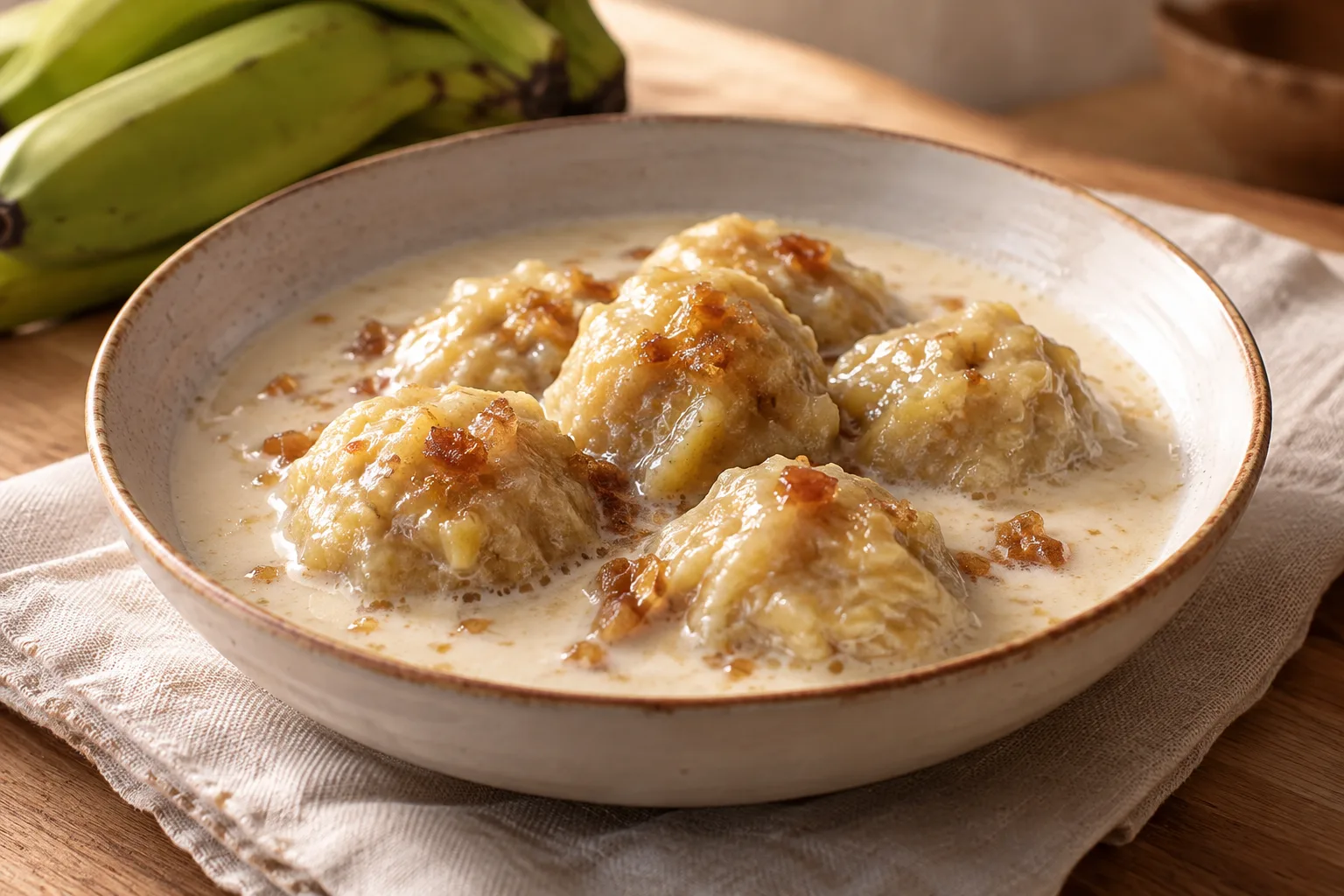
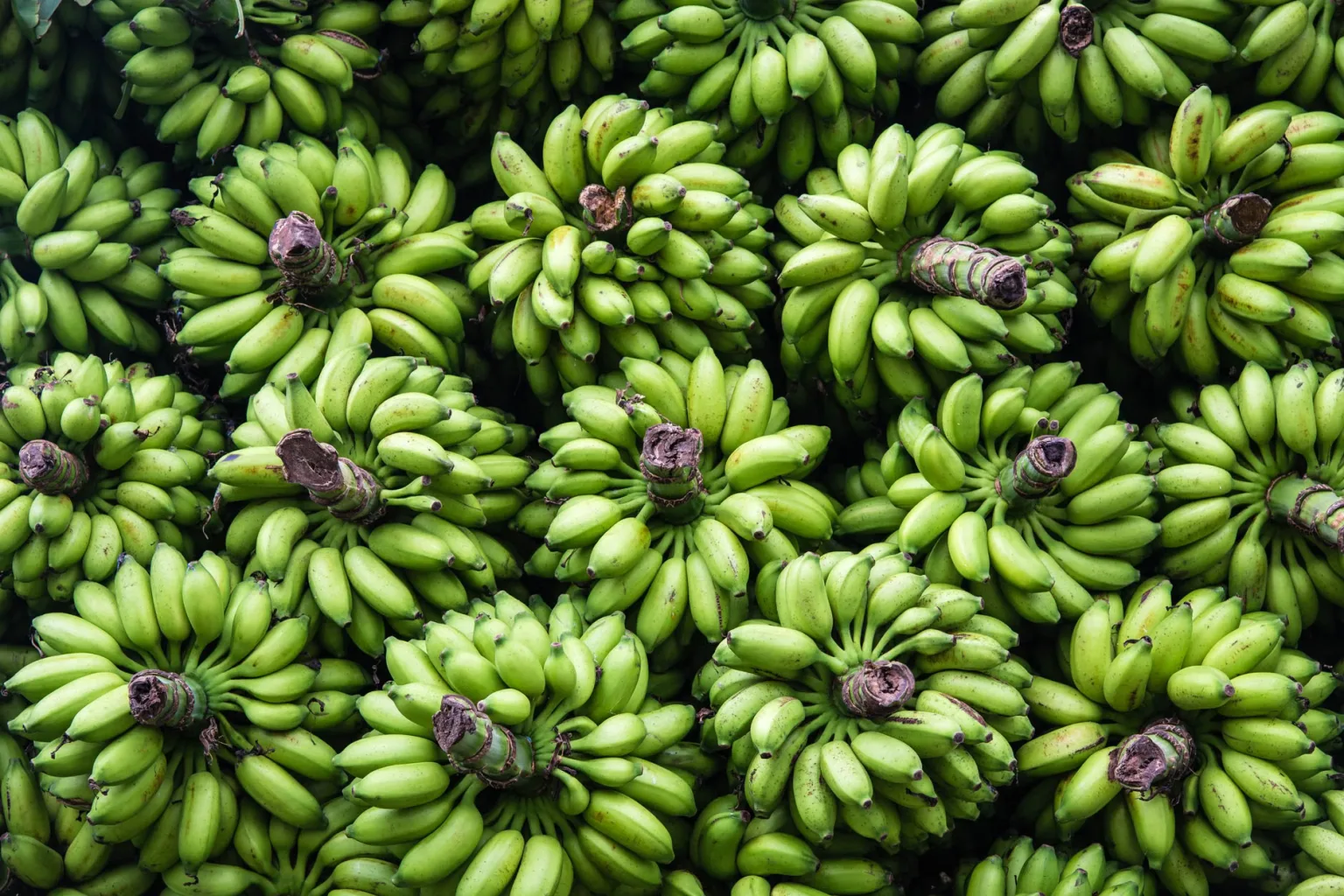
A green plantain is the unripe fruit of a cooking-banana variety. At this stage, its flesh is usually firm and less sweet than ripe fruit, so it is mainly used in cooked dishes. Texture and cooking behavior vary by variety: some stay firmer when fried, while others become creamier when boiled or roasted. The fruit can be cooked whole or in pieces, mashed after cooking, or processed into flour or dough. The peel may be rigid and difficult to remove; use a knife carefully on a stable cutting board. Green cooking plantains should not automatically be treated as dessert bananas that are merely a little underripe: the varieties, size, and culinary uses can differ.
When to use it
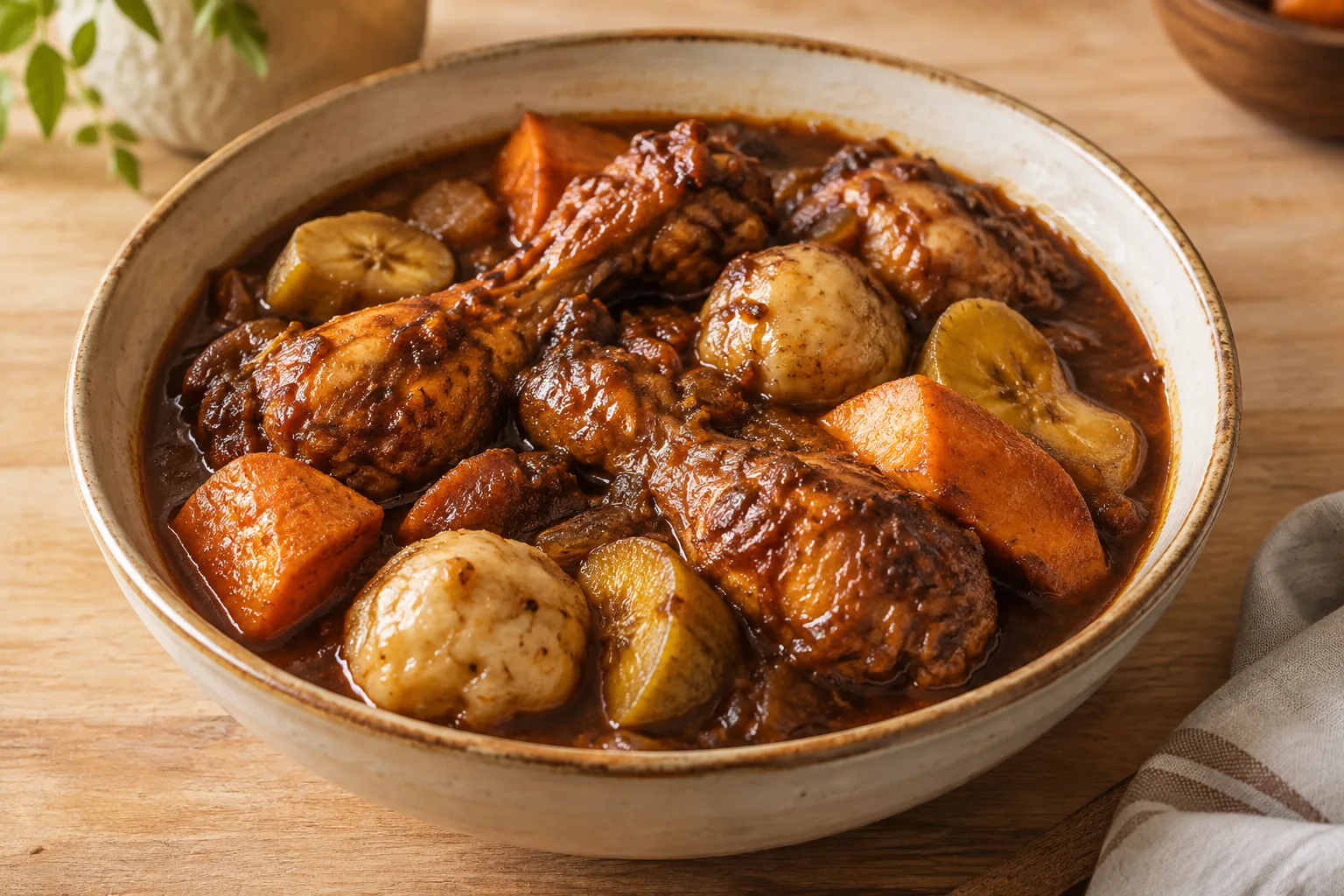
Choose green plantains when you want a substantial, relatively mild-tasting base for savory dishes. They work well sliced or cut into pieces for frying, boiled and mashed, roasted, or steamed. Variety can affect the result: firm plantains suit frying, while creamier varieties may be preferable for boiling or roasting. They can also be used in traditional doughs and, once cooked and mashed, as a thickener for soup. If you want a sweet flavor and soft flesh to eat as-is, an unripe cooking plantain is usually not the right choice.
How to use it
Wash the peel and dry the fruit before handling. Since the skin can be tough, set the plantain on a stable cutting board and remove the peel with a knife, keeping the blade pointed away from your hand. Cut the flesh into slices or pieces suited to the dish. Boil it for mashing into a dough or purée; alternatively, fry, roast, or steam it. Choose a method according to the variety and the texture you want: a firm variety suits frying, while a creamier one can work well boiled or roasted. Add salt, garlic, onion, herbs, cheese, or other ingredients to taste. To thicken soup, stir in cooked, mashed plantain until you reach the consistency you want. Cooking time depends on piece size and method, so check the texture as it cooks.
Flavour and texture
Green plantains are usually mild and only slightly sweet, with firm, starchy flesh. Cooking softens them, but the result depends on variety and method: they can become creamy when boiled or roasted, or retain more structure when fried. Added ingredients contribute much of the finished dish’s flavor.
How to choose it
Choose firm fruit with intact skin and no obvious soft spots so it is easier to cut and cook. A naturally rigid peel is not necessarily a defect. If you have a particular dish in mind, ask about the variety: firmness and creaminess differ and can make some varieties better suited to certain methods.
Storage
Keep fresh plantains in a clean, dry place, away from raw foods that could contaminate them. The available evidence does not establish a specific storage duration or special preservation method for this ingredient, so follow retailer or package guidance where provided. Once peeled or cut, refrigerate it in a clean, covered container and use it promptly; do not leave it exposed unnecessarily.
Substitutions
Cooked cassava or potato can replace green plantain in some purées and thick soups, but neither reproduces its exact flavor, firmness, or cooking behavior. Adjust liquid and seasoning to suit the substitute. For fried dishes or traditional doughs, the result may differ, so a recipe designed for the alternative ingredient may work better.
Common mistakes
Assuming every variety cooks alike can lead to an unexpected texture; choose the method to suit its firmness. Do not try to peel the tough skin while the fruit is unstable or with the blade pointed toward your hand. Also, do not expect the sweetness and softness of a ripe plantain, or treat a raw slice as ready for a cooked preparation.
Safety and allergens
Use care with a knife when removing the peel, which can be rigid, and work on a stable cutting board. Keep hands, the board, and utensils clean. Cook the plantain according to the dish and check that it has the texture you want; no specific official safety warning for this ingredient is available here.
Culinary uses
- base feculenta para guarniciones y masas
- ingrediente para snacks fritos y sopas espesas
Recommended techniques
- hervir
- freír
- asar
- cocinar al vapor
- machacar
Pairs well with
- ajo y cebolla
- queso o chicharrón
- hierbas y especias
Frequently asked questions
Can green plantains be eaten raw?
They are generally cooked because the flesh is firm and starchy. For the preparations described here, boil, fry, roast, or steam them before serving.
How do you peel a green plantain?
The peel can be rigid. Rest the fruit on a stable cutting board and use a knife carefully, keeping your hand out of the blade’s path.
Which variety is best for frying?
Firmness affects the result. In the varieties studied, barraganete is considered suitable for frying; other varieties may be better for boiled, roasted, or steamed preparations.
Ingredient allergens
Allergen listThere are no verified associations for these ingredients yet.
Sources and review
Automatically researched, cross-checked and validated content. Sources consulted:
- Usos culinarios apropiados de las variedades de plátano verde barraganete, dominico y maqueño, en la gastronomía ecuatoriana. | Revista de Gastronomía y Cocina doi.org/10.70221/rgc.v4i2.97
- Agencia Española de Seguridad Alimentaria y Nutrición www.aesan.gob.es/
- revista del - Comité Científico www.aesan.gob.es/dam/jcr:c6a76f54-0d6e-43b4-ad26-ac603ba37960/comite_cientifico_38.pdf
- Plátano verde - Wikipedia, la enciclopedia libre es.wikipedia.org/wiki/Pl%C3%A1tano_verde
- Usos culinarios apropiados de las variedades de plátano ... www.academiaculinaria.org/index.php/gastronomia-cocina/article/download/97/121
- Tomatillo Green Salsa - National Center for Home Food Preservation nchfp.uga.edu/how/can/canning-salsa/tomatillo-green-salsa/
- Bistro Verde Menu at Lincoln Land Community College www.llcc.edu/food-dining/bistro-verde/bistro-verde-menu
- Usos culinarios apropiados de las variedades de plátano ... academiaculinaria.org/index.php/gastronomia-cocina/article/download/97/121/726
- Plátano verde - Wikipedia, la enciclopedia libre www.google.com/goto?url=CAESawHrOzAVV9f-gMiOT45eWK9KFg7gGQzOonGxdihE7X_I0qSEyW7KVt-QHGu7oZGO…
- Fufú de plátano verde - Wikipedia, la enciclopedia libre es.wikipedia.org/wiki/Fuf%C3%BA_de_pl%C3%A1tano_verde
- ¿Qué es más veloz, un plátano o un conquistador? doi.org/10.64628/aao.c539xdnt3