- Category
- Vegetables
- State
- Fresh
- Usual unit
- unit
What it is
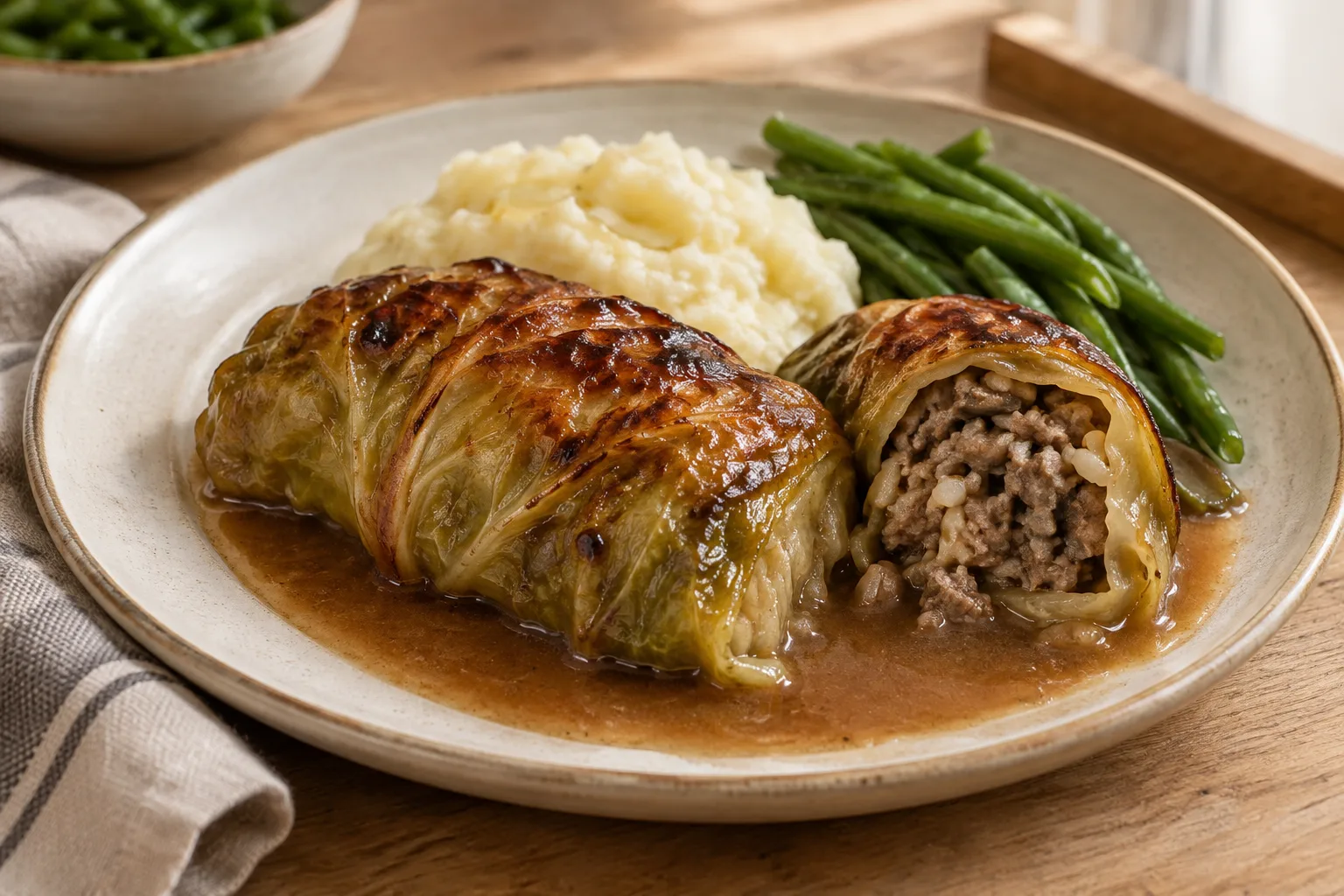
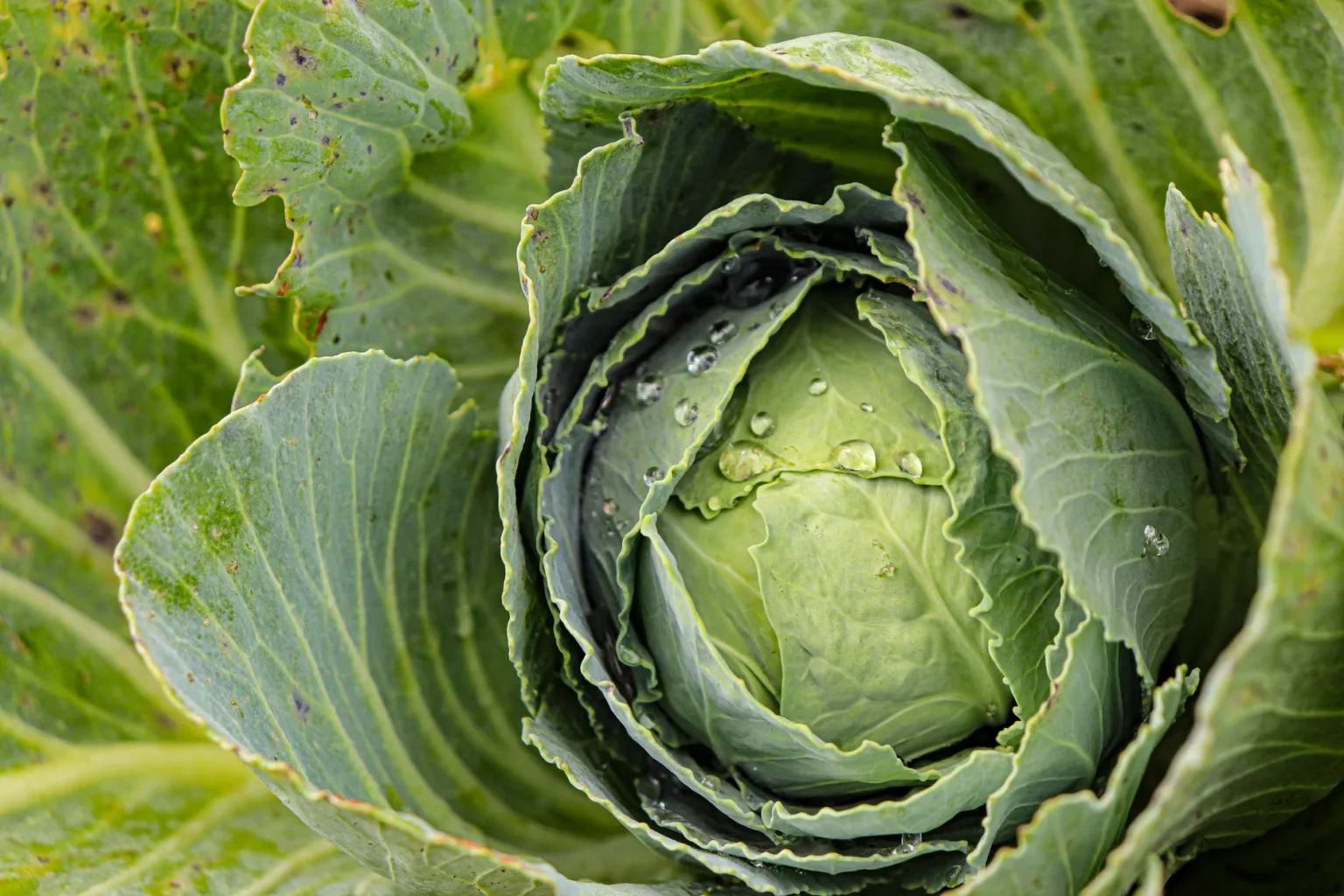
Green cabbage is a variety of cabbage that forms a round or slightly oval head of tightly layered leaves. The outer leaves are generally green, while the inner leaves may be paler. Its compact head distinguishes it from loose-leaf or elongated cabbage varieties. Slice it finely to serve raw, or cut it into pieces for soups, stews, stir-fries and casseroles. Green cabbage can also be fermented to make sauerkraut. The word “cabbage” covers several different vegetables; this guide is about green-headed cabbage, not red cabbage, napa cabbage or kale.
When to use it
Use green cabbage raw when you want a firm, crisp base for salads or coleslaw, particularly with a creamy or spicy dressing. Thin slicing makes it easier to eat uncooked. Choose it for soups, stews, casseroles and pasta dishes when you want a vegetable that can be added in strips or pieces. It also works for steaming, boiling, stir-frying or braising. If you want a milder-tasting side, cooking makes its flavor less peppery and sweeter than it is raw.
How to use it
Remove any damaged outer leaves, then cut the head into halves or quarters to make it easier to handle. For salad or coleslaw, slice the leaves into thin strips; if desired, remove the thick rib for a more even texture. For cooked dishes, cut the cabbage into pieces or strips and add it to soup, stew, a casserole or a pasta dish. You can also steam, boil, stir-fry or braise it. To make sauerkraut, use a suitable fermentation method and follow reliable, process-specific directions; do not improvise preservation conditions.
Flavour and texture
Raw green cabbage is crisp and firm, with a flavor that can be slightly peppery. Cooking softens the leaves and makes the flavor sweeter and less peppery. The finished texture depends on the cut and cooking method: finely sliced cabbage has a lighter bite, while cooked pieces become tender. Outer and inner leaves can differ in color and texture; paler inner leaves are normal.
How to choose it
Choose a firm head with fresh-looking, glossy, light-green leaves and no visible damage. Check that the stem end looks healthy and trimmed, rather than dry or split. Pick a size that suits your plans: a whole head is convenient for several preparations, while cut cabbage needs timely use and careful storage.
Storage
Keep an unwashed whole head in a plastic bag in the refrigerator; one household guide gives a storage period of up to one week. After cutting the head, place the remainder in a plastic bag and use it within two days. These are household storage guidelines, not a substitute for checking the vegetable’s condition. Do not use cabbage that shows spoilage or has an unusual odor.
Substitutions
Savoy cabbage can stand in for green cabbage in salads or cooked dishes when you want more tender leaves and a milder flavor. Napa cabbage can work in salads and stir-fries, but its leaves are more delicate and its shape and texture differ. Adjust the cut and cooking to the cabbage you choose; the result will not be identical.
Common mistakes
Do not confuse compact-headed green cabbage with kale, napa cabbage or red cabbage; they have different forms and characteristics. Avoid choosing a loose head or one with damaged leaves, and do not leave cut cabbage unwrapped in storage. For salad, slices that are too thick may be awkward to eat; for cooked dishes, match the size of the pieces to the preparation.
Safety and allergens
Handle cabbage with clean hands and utensils, and follow local food-hygiene guidance. For fermentation, use a reliable, process-specific method; safe home preservation depends on following the directions for the chosen process correctly.
Culinary uses
- raw salad and coleslaw vegetable
- cooked vegetable for soups, stews and casseroles
- fermented vegetable for sauerkraut
Recommended techniques
- shredding or slicing thinly for raw salads
- steaming or boiling
- stir-frying or sautéing
- braising
- fermenting
Pairs well with
- potatoes
- bacon or other meat
- creamy or spicy dressings
Frequently asked questions
Can green cabbage be eaten raw?
Yes. Slice it thinly for salads or coleslaw. Raw green cabbage is firm and crisp, and its flavor can be slightly peppery.
How does green cabbage change when cooked?
Cooking softens the leaves and usually makes the flavor sweeter and less peppery. It can be boiled, steamed, stir-fried or braised.
How long does green cabbage keep in the refrigerator?
An unwashed whole head in a plastic bag may keep for up to one week according to a household guide. Once cut, bag the remainder and use it within two days.
Ingredient allergens
Allergen listThere are no verified associations for these ingredients yet.
Estimated nutrition
- Fat
- 0 g
- Saturates
- 0 g
- Carbohydrate
- 5.88 g
- Sugars
- 3.53 g
- Fibre
- 2.4 g
- Protein
- 1.18 g
- Salt
- 0.04 g
Sources and review
Automatically researched, cross-checked and validated content. Sources consulted:
- Usos culinarios apropiados de las variedades de plátano verde barraganete, dominico y maqueño, en la gastronomía ecuatoriana. | Revista de Gastronomía y Cocina doi.org/10.70221/rgc.v4i2.97
- Tipos de coles y cómo cocinar esta gran verdura del invierno (con receta de 'trinxat' incluida) www.huleymantel.com/despensa/tipos-coles-como-cocinar-esta-gran-verdura-invierno-con-receta-…
- Location www.coloradomesa.edu/library/special-collections/documents/cookbook-donation_aid-for-sca-web…
- Choice Salsa - National Center for Home Food Preservation nchfp.uga.edu/how/can/canning-salsa/choice-salsa/
- 10 Essential Cooking Tips to Improve Kitchen Skills northbridge.edu/en/publications/5-lessons-from-culinary-arts-that-can-be-used-daily-as-a-hom…
- Food and Beverage Management - eCornell ecornell.cornell.edu/certificates/hospitality-and-foodservice-management/food-and-beverage-m…
- Para la ciudadanía www.aesan.gob.es/para-la-ciudadania
- Cabbage | UNL Food | Nebraska food.unl.edu/article/cabbage/
- Online Culinary School | Online Culinary Degree - Escoffier www.escoffier.edu/academics/culinary-arts-online/
- Tipos de col: variedades y características | Fine Dining Lovers www.finedininglovers.es/explorar/noticias/tipos-de-col-variedades-y-caracteristicas
- CIA in the News Archives | Culinary Institute of America www.ciachef.edu/blog/cia-alumni-lead-the-way-in-food-business-innovation/
- Forming a Culinary Architecture vtechworks.lib.vt.edu/bitstreams/de6362d6-db9d-47d1-bf26-41cbe51f8f79/download
- Nuevo folleto de ofertas para celebrar la Semana Santa spartenerife.es/la-col-verdura-saludable/
- Exploring the World of Leafy Greens: A Comprehensive Guide to Kale and – Crucible Cookware cruciblecookware.com/es-es/blogs/consejos-e-inspiracion-para-utensilios-de-cocina-cocinar-y-…