- Category
- Pulses
- State
- Dry
- Usual unit
- g
What it is
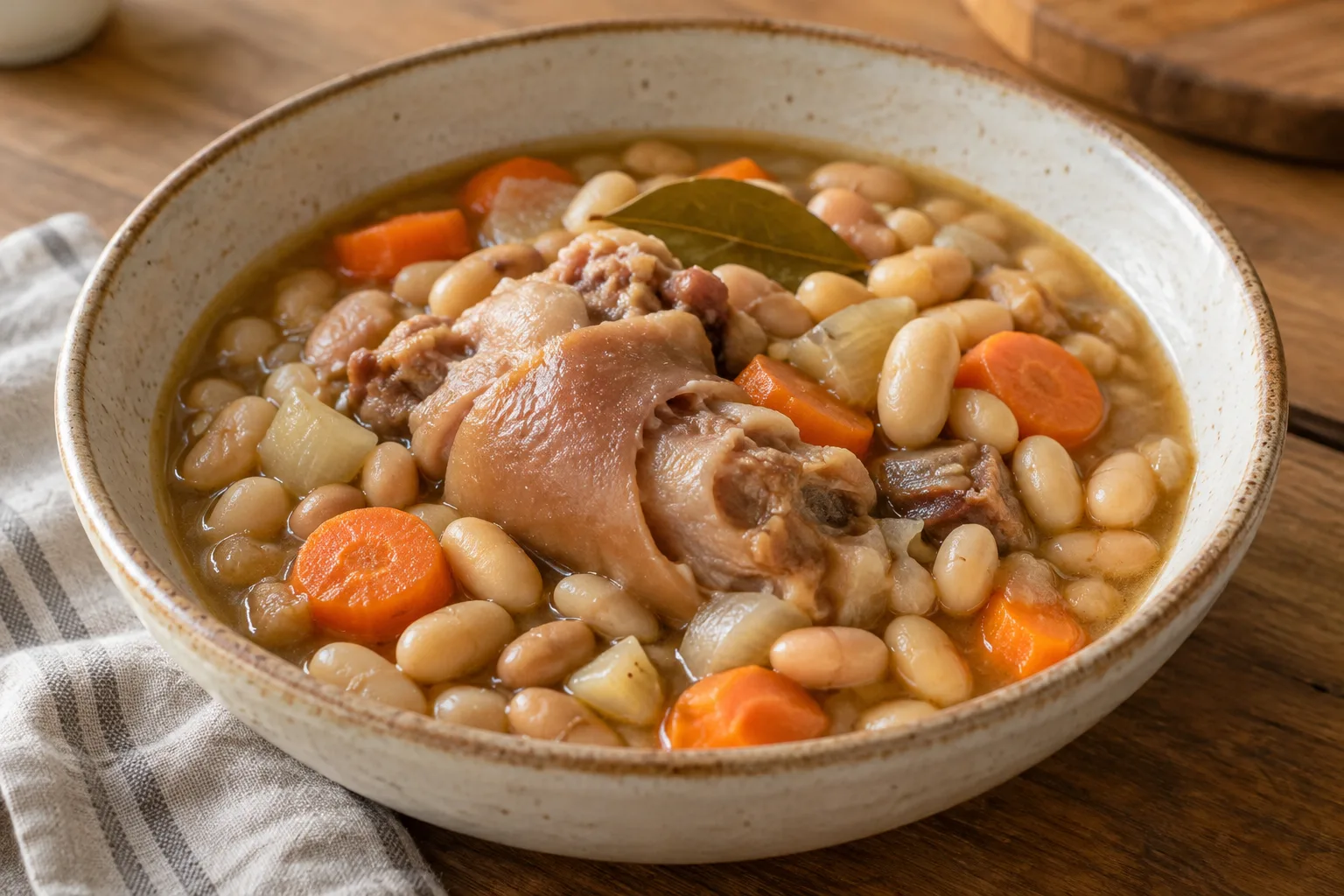
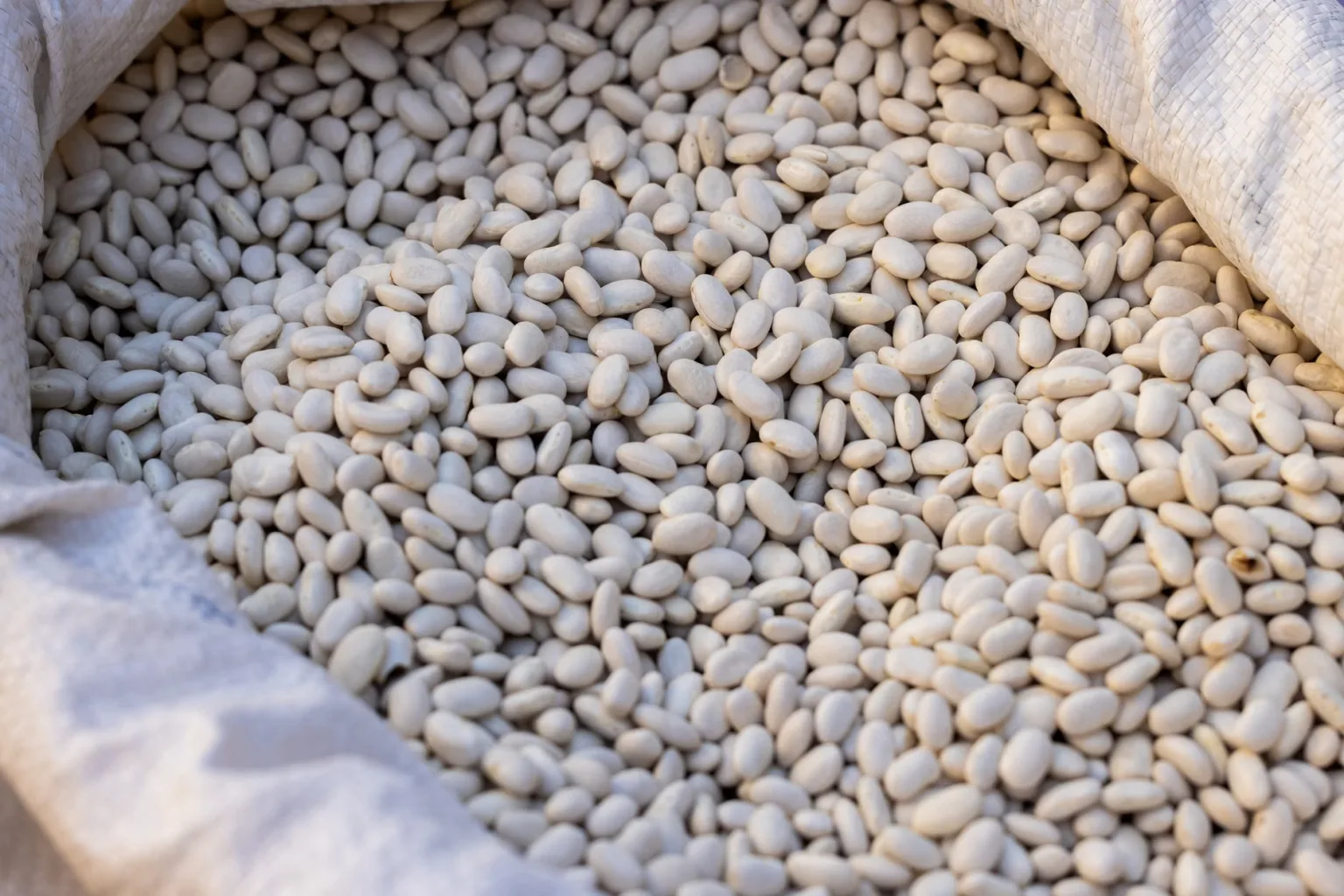
White haricot beans are dried bean seeds: mature seeds from plants in the genus Phaseolus. The word “bean” can also refer to the plant’s tender pods, but this profile is about dried white seeds, not green beans. Bean varieties and sizes differ; navy and cannellini are among the types described as white beans. Like other dried beans, they need soaking and cooking. Do not treat a dried product as if it were already cooked: inadequate cooking or eating beans nearly raw can make them unsafe.
When to use it
Choose white haricot beans when you want to add dried white beans to a stew, soup, or salad. They suit dishes in which cooked beans are a main ingredient or accompaniment. You can also use them in mixed salads, including combinations with tomato and cod, or in hearty legume dishes. If you need an alternative, consider another white bean variety and allow for a different size or appearance. Plan ahead: dried beans need soaking and thorough cooking, so they are not an instant option unless already prepared.
How to use it
Check that you have dried bean seeds rather than fresh green pods. Soak the beans before cooking; the available information describes soaking them overnight. Then cook them thoroughly before serving, and do not taste them while raw or nearly raw. The available information does not establish one cooking time for every variety and batch, so verify that the beans are cooked before adding them to a dish. Use them in soups and stews, or let them cool for a salad. They can also be combined with grains or added to a salad with tomato and cod. Season and build the rest of the dish to suit your recipe; soaking is not a substitute for cooking.
Flavour and texture
The defining feature of these beans is their white, mature, dried seed. The available information does not establish a detailed flavor profile or a guaranteed texture for every haricot variety. Varieties and sizes can differ, and the result depends on cooking the seeds properly. Choose a recipe for the intended use, such as a stew or salad, and make sure the beans are fully cooked before serving.
How to choose it
Look for a product identified as dried white haricot beans, and check that you are buying seeds rather than tender green pods. The word “bean” can describe either seeds or pods, so check the product name and presentation. White beans include varieties of different sizes, such as navy and cannellini; if size matters to your recipe, choose the type specified. The available information does not establish visual quality standards or a particular buying season.
Storage
The available information does not establish a storage life or specific storage conditions for dried beans. Follow the package directions for the product you buy, and keep its identification so it is not confused with fresh pods or other varieties. Once beans have been cooked, do not apply storage directions for the dried product to the leftovers; follow the instructions relevant to the prepared food.
Substitutions
You can replace haricot beans with another white bean variety, such as navy or cannellini, when it suits the dish. These varieties can differ in size, so the appearance of the finished dish may change. Substitution does not remove the need to soak and thoroughly cook dried beans. If a recipe depends on a particular variety, use another white bean only when the resulting size and shape are acceptable.
Common mistakes
The key mistake is treating soaking as cooking: softening the beans does not make them safe to eat. Do not serve them raw or nearly raw, and do not assume every variety cooks in the same amount of time. Another common mix-up is confusing the dried white seeds in this profile with fresh green pods, which are a different product and are used differently.
Safety and allergens
Do not eat dried haricot beans raw or nearly raw. Inadequately cooked beans can cause gastroenteritis. Soaking does not replace thorough cooking; make sure the seeds are properly cooked before serving.
Culinary uses
- Base for soups and stews
- Ingredient in bean salads and mixed dishes
Recommended techniques
- Soak dried beans before cooking
- Cook thoroughly until suitable for eating
Pairs well with
- Grains and cereals
- Tomato and cod in salads
- Other ingredients in hearty stews
Frequently asked questions
Are haricot beans green beans?
Not in this profile: it refers to mature, dried white seeds. The word “bean” can also mean tender pods, but those are a different product.
Should I soak haricot beans?
Yes. The available information describes soaking them overnight before cooking. Soaking does not replace thorough cooking.
Can I eat them nearly raw if they have been soaked?
No. Inadequately cooked or nearly raw beans can cause gastroenteritis. Cook them thoroughly before eating.
Ingredient allergens
Allergen listThere are no verified associations for these ingredients yet.
Sources and review
Automatically researched, cross-checked and validated content. Sources consulted:
- Client Challenge doi.org/10.2307/jj.27939689.16
- The Essential Glossary of Cooking Terms for the Culinary Arts - Escoffier www.escoffier.edu/blog/culinary-arts/the-essential-glossary-of-cooking-terms-for-the-culinar…
- Judías: variedades y propiedades para tu salud www.lavanguardia.com/comer/materia-prima/20180626/45394611201/judias-propiedades-alimentos.h…
- Tipos de Judías Congeladas Liofilizadas | Variedades, Calidades & Abastecimiento B2B Global | Nutrada nutrada.com/es/blog/tipos-de-judias
- The Art of Crafting a Perfect Green Bean Soup Recipe www.news.climate.columbia.edu/green-bean-soup-recipe
- Beans, Snap and Italian – Pieces, Green and Wax - National Center for Home Food Preservation nchfp.uga.edu/how/can/canning-vegetables-and-vegetable-products/beans-snap-and-italian-piece…
- Tips for Freezing Green Beans - Cooperative Extension: Food & Health - University of Maine Cooperative Extension extension.umaine.edu/food-health/2024/07/08/freezing-green-beans/
- Características de las judías – Botanical-online www.botanical-online.com/alimentos/judias-propiedades-caracteristicas
- Judía | Historia y origen | Legumbres, cereales y patata | EROSKI CONSUMER legumbres.consumer.es/judia/historia-y-origen
- - YouTube www.youtube.com/watch?v=4etekhsEtkk
- Haricots verts med smör: maridaje vino y receta fácil | Gastrona gastrona.app/es/haricots-verts-with-butter
- Judías verdes (haricots verts) – frescas y crujientes | Enciclopedia de alimentos airfryerkogebogen.dk/es/enciclopedia-de-alimentos/judias-verdes/