- Category
- Sauces and condiments
- State
- Fresh
- Usual unit
- tablespoon
What it is
Hot sauce for a marinade is a chili-based sauce added to a mixture that seasons food before cooking. It does not refer to one fixed recipe: sauces may contain different chilies, spices, vinegar, and other ingredients, so their heat, acidity, flavor, and texture vary. A sauce can provide most of a marinade’s chili character or just a small accent alongside oil, vinegar, citrus, garlic, or other seasonings. The right amount depends on the sauce’s strength, personal preference, and the food being prepared. A particular hot sauce should not be mistaken for a universal marinade formula, and different sauces should not be assumed to work in equal amounts.
When to use it
Use it when you want to add heat and flavor to a mixture for chicken, pork, meat, fish, tofu, or vegetables before cooking. Choose a sauce whose heat level and flavor suit the main ingredient; if you do not know the sauce well, start with a small amount and taste the mixture before adding more. A strongly acidic or hot sauce can overpower delicate flavors, so use it sparingly with fish and other mild foods. You can combine it with a marinade’s other ingredients, such as oil, vinegar or citrus juice, garlic, and spices, or stir a little into a prepared sauce to adjust its character.
How to use it
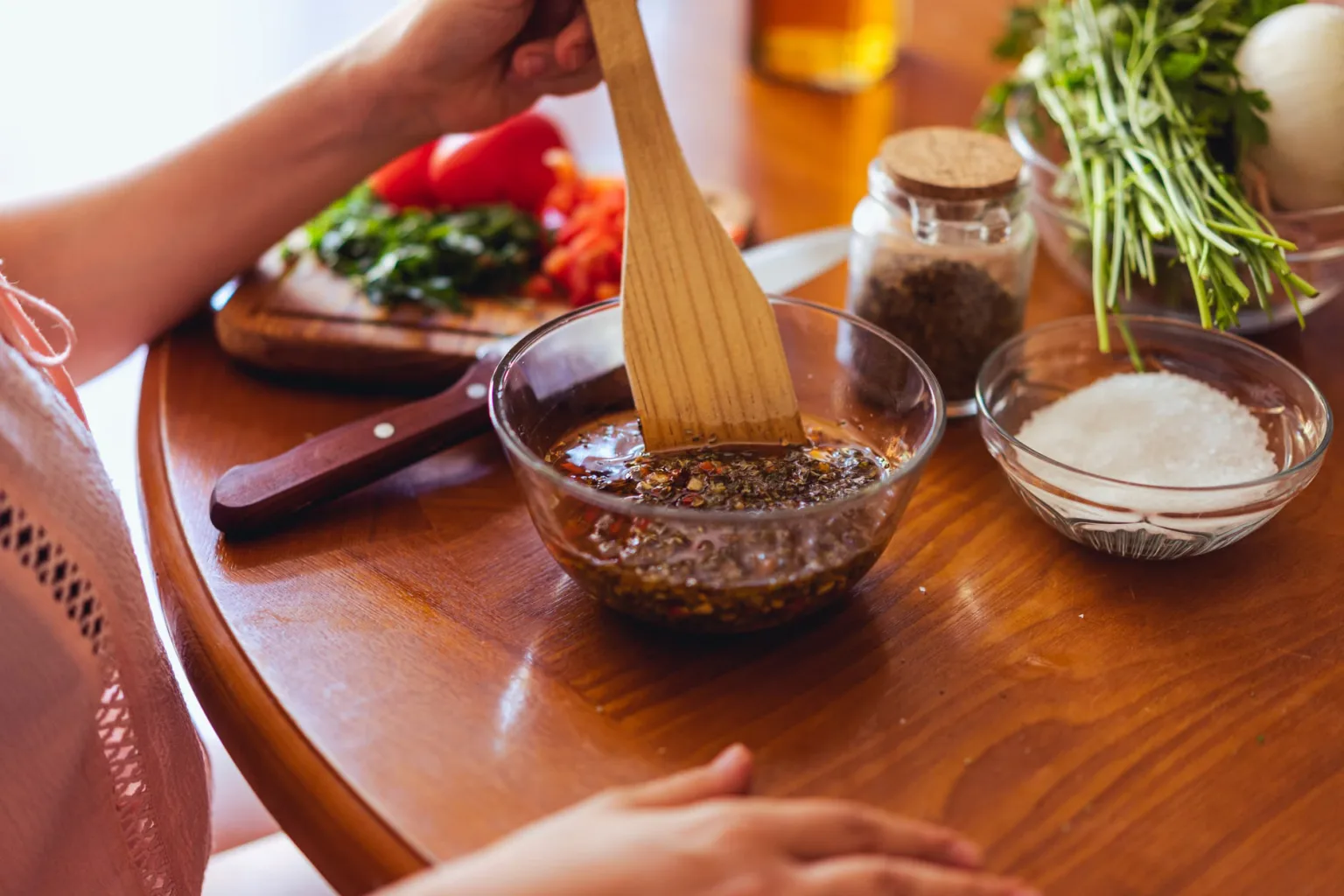
Check the label for ingredients and heat level, then begin with a small amount. Mix the sauce with the other marinade ingredients, such as oil, vinegar or citrus juice, garlic, and spices, if those flavors suit the food. Taste the mixture and add more gradually, remembering that the sauce’s saltiness, sweetness, and acidity also affect the result. Coat the food evenly and refrigerate homemade preparations containing sauce using safe storage practices; do not rely on a marinade to preserve food. Do not reuse a mixture that has touched raw food without treating it appropriately: set aside a clean portion for serving or cook it separately. A small amount of hot sauce can also add heat to stews, beans, or grains.
Flavour and texture
Flavor can range from mild to very hot, with vinegary, spiced, smoky, or fruity notes depending on the sauce. Consistency varies too: some sauces are thin, while others are thick or contain pieces. These differences affect how well the sauce coats food and how much to use, so taste a little before adjusting the marinade.
How to choose it
Choose a sauce for the heat level and flavor you want, not just its name. Check the ingredient list and package directions, especially if you want a sauce that is more acidic, spiced, or mild. Since products can differ in intensity, do not assume that a tablespoon of one sauce is equivalent to the same amount of another.
Storage
Store the sauce according to its package directions, which can differ by product. For homemade marinade made with sauce, use a clean container and keep it refrigerated; a homemade adobo sauce recipe advises refrigeration and discarding the sauce if mold, discoloration, or an unpleasant odor appears. Do not assume that chili or vinegar alone makes a preparation a safe preserve.
Substitutions
You can substitute another chili sauce, but its heat, acidity, saltiness, and consistency may differ. Add the alternative gradually and taste the mixture before finishing the marinade. Diluted chili paste can work when you need a thinner base; adjust the other liquids so the marinade does not become too thick or intense.
Common mistakes
Avoid adding a large amount before you know the sauce’s strength: heat and acidity vary between products. Do not assume the sauce supplies everything needed for a balanced marinade. Taste and adjust gradually, and do not use marinade that has touched raw food as a ready-to-serve sauce.
Safety and allergens
Follow the package storage directions. Keep homemade marinades refrigerated and do not treat them as a way to preserve food. Discard homemade sauce if it develops mold, discoloration, or an unpleasant odor.
Culinary uses
- Aportar picor y sabor al adobo
- Servir como base líquida o condimento para marinadas
Recommended techniques
- Mezclar con aceite, vinagre o zumo cítrico para formar un adobo
- Añadir poco a poco y probar para ajustar el picor
Pairs well with
- Ajo, cebolla y especias
- Pollo, cerdo, pescado, tofu y verduras
Frequently asked questions
Can any hot sauce be used in a marinade?
Many can be added, but their heat, acidity, and consistency vary. Start with a small amount and adjust it to the food and the flavor you want.
Can I replace hot sauce with chili paste?
You can try diluted chili paste with a little vinegar or water. Add it gradually and adjust the other liquids and seasonings.
Does hot sauce preserve marinated food?
Do not rely on sauce or marinade to preserve food. Follow the package directions and keep homemade marinades refrigerated.
Ingredient allergens
Allergen listThere are no verified associations for these ingredients yet.
Sources and review
Automatically researched, cross-checked and validated content. Sources consulted:
- Client Challenge doi.org/10.2307/j.ctvndv9t9.22
- The Essential Glossary of Cooking Terms for the Culinary Arts - Escoffier www.escoffier.edu/blog/culinary-arts/the-essential-glossary-of-cooking-terms-for-the-culinar…
- Adobo - Wikipedia, la enciclopedia libre es.wikipedia.org/wiki/Adobo
- - YouTube www.youtube.com/watch?v=z58qdJRiIfc
- How to Use Boiling Water and Pressure Canners - National Center for Home Food Preservation nchfp.uga.edu/how/can/general-information/recommended-canners/
- A PLANT-BASED nwa.uams.edu/wp-content/uploads/2020/11/A-Plant-Based-Pantry-Toolkit.pdf
- The Daily Monday, April 3, 2000 - LCC Library library.lanecc.edu/archives/newsletters/2000-04
- ¿Cuándo una salsa se convierte en un adobo? Read More at Chilli No. 5 chilli-no5.com/es/cuando-una-salsa-se-convierte-en-un-adobo/?srsltid=AYCX9vIw-zbcH4YCBoehl8T…
- Salsa de Adobo Mexicana | Food Hero | receta foodhero.org/es/recetas/salsa-de-adobo-mexicana
- Cómo preparar adobo con salsa y mucho sabor – Salsas Trucho salsastrucho.shop/blogs/news/como-preparar-adobo-con-salsa?srsltid=AYCX9vJrXvgUoA7sv30a-GwLj…