- Category
- Oils and fats
- State
- Fresh
- Usual unit
- g
What it is
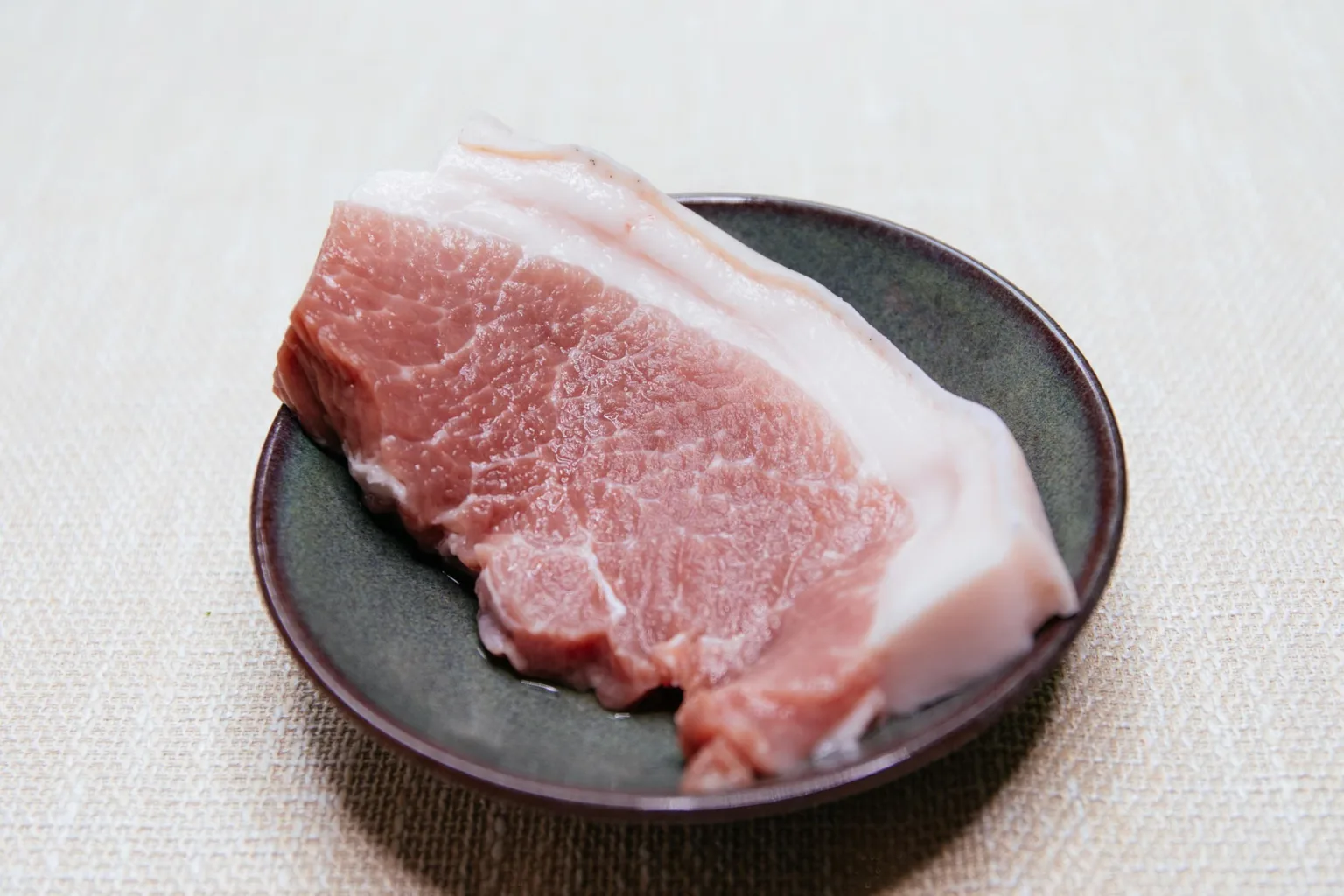
Lamb tail fat is fat that accumulates in the tails of certain sheep breeds. It is sold raw in pieces and used as a cooking ingredient in some Middle Eastern and Central Asian cuisines. Its practical role is to add fat and a distinctive lamb flavor to lamb dishes. It can be chopped and mixed into meat, or cut into portions and threaded alongside other ingredients so it melts during cooking. It is not the same as a liquid oil: in its raw state, it is a solid fat that softens and melts when heated.
When to use it
Use it when you want to add a pronounced lamb flavor and richness to a dish, especially kebabs, skewers, or other lamb preparations. It can be finely chopped and mixed through meat, or threaded between pieces on a skewer, where it melts as the food cooks. Since its flavor is distinctive, start with a modest amount if you are unsure how prominent you want it to be. It is not the most neutral choice for recipes where you want the added fat to go unnoticed.
How to use it
To mix it into meat, cut the fat into small pieces, chop it finely, and distribute it evenly through the mixture. For skewers, cut small portions and alternate them with pieces of meat so the fat melts during cooking. You can also render it separately: dice it, warm it gently in a pan over low heat, and stir occasionally. Once the solid pieces have browned, remove them and strain the liquid fat if you want to use it separately. Avoid adding so much to a skewer that dripping fat reaches the flames and causes flare-ups.
Flavour and texture
Its flavor is pronounced and distinctly lamb-like, and may be stronger than that of a neutral oil. Raw, it comes in pieces of fat; when heated, it melts and adds richness to the meat and dish. The result depends on how much you use and how you incorporate it: chopped fat is distributed through a mixture, while fat on a skewer melts alongside the meat.
How to choose it
Look for lamb tail fat clearly identified as such and sold in raw pieces. If buying from a butcher or specialist shop, ask whether it is tail fat and how it is prepared for sale; ordinary lamb fat can work as a substitute, but it is not the same cut. Choose an amount you can use soon, and follow the storage information on the package or provided by the seller.
Storage
The available information does not specify a storage temperature or a fixed storage period for this product. Store it according to the package or seller's instructions, and do not assume it keeps for a particular length of time. If sold raw, handle it as a raw animal product and keep it separate from ready-to-eat foods during preparation.
Substitutions
Ordinary lamb fat can replace it if you want to retain a lamb character, although the result will not be identical. Beef fat can also add richness but will change the flavor profile. Oil is another way to add fat, but it will produce a less distinctive result. Adjust the amount to suit the flavor and texture you want.
Common mistakes
Do not mistake lamb tail fat for a neutral oil: its lamb flavor is pronounced. Avoid using more than needed on skewers, since dripping fat can cause flare-ups. When rendering it, do not use high heat; the method described is gentle and uses low heat. Do not assume storage instructions are the same for every product; follow the package guidance.
Safety and allergens
Treat it as a raw animal product: keep it from contacting ready-to-eat foods and follow the package's handling and storage instructions. When cooking it on skewers, avoid letting fat drip onto flames.
Culinary uses
- Aportar sabor de cordero a preparaciones de carne
- Añadir grasa y jugosidad a kebabs y brochetas
Recommended techniques
- Picar e incorporar a la carne
- Derretir lentamente a fuego bajo y colar
Pairs well with
- Carne de cordero
- Kebabs y brochetas
Frequently asked questions
What is lamb tail fat?
It is fat that accumulates in the tails of certain sheep breeds. It is sold raw in pieces and used for cooking and flavor.
How can I use it on a skewer?
Cut small portions and alternate them with pieces of meat so the fat melts as the skewer cooks. Avoid letting it drip onto flames.
What can I use instead?
Ordinary lamb fat, beef fat, or oil can be used as alternatives. Each changes the flavor and result of the dish.
Ingredient allergens
Allergen listThere are no verified associations for these ingredients yet.
Estimated nutrition
- Fat
- 13.4 g
- Saturates
- 5.83 g
- Carbohydrate
- 0 g
- Sugars
- 0 g
- Fibre
- 0 g
- Protein
- 18.9 g
- Salt
- 0.18 g
Sources and review
Automatically researched, cross-checked and validated content. Sources consulted:
- Gastronomía de Chile - Wikipedia, la enciclopedia libre es.wikipedia.org/wiki/Gastronom%C3%ADa_de_Chile
- Bloque 1: ¿Qué es un dato de carácter personal? [Vídeo] doi.org/10.6035/ppd.2023.1
- The Lifestyle and Prevalence of Vegetarianism in Seventh- ... digitalcommons.andrews.edu/cgi/viewcontent.cgi?article=1009&context=theses
- Para la ciudadanía www.aesan.gob.es/para-la-ciudadania
- Comité Científico www.aesan.gob.es/dam/jcr%3A37c06c87-ec8b-4abb-b7ea-16b9f9c582b8/comite_cientifico_1.pdf
- Elaboración de sopas típicas de la Región Caribe apartir de subproductos de la trucha oncorhynchus mykiss | OpenAlex openalex.org/W7132875762
- Bloque 1: ¿Qué es un dato de carácter personal? [Presentación] doi.org/10.6035/ppd.2023.2
- Grasa de cola de cordero: calorías e información nutricional | EatBetter www.eatbetter.app/es/alimento/grasa-cola-cordero
- Chuletero de cordero: análisis y comparación de quesos y embutidos para maridar y potenciar sabores laovejaquebala.es/chuletero-de-cordero/
- Maridajes perfectos para el cordero: vinos y consejos www.google.com/goto?url=CAESeQHrOzAVTUruyLG9tiqYR9BhXIvGVlgLx8wHrUTeQ1dBgBM0KouFAN2o-COsylti…
- Validación de un instrumento de medida de creencias en alimentación | OpenAlex openalex.org/W1585270182
- Historia del aceite de oliva - Wikipedia, la enciclopedia libre es.wikipedia.org/wiki/Historia_del_aceite_de_oliva