- Category
- Vegetables
- State
- Fresh
- Usual unit
- unit
What it is
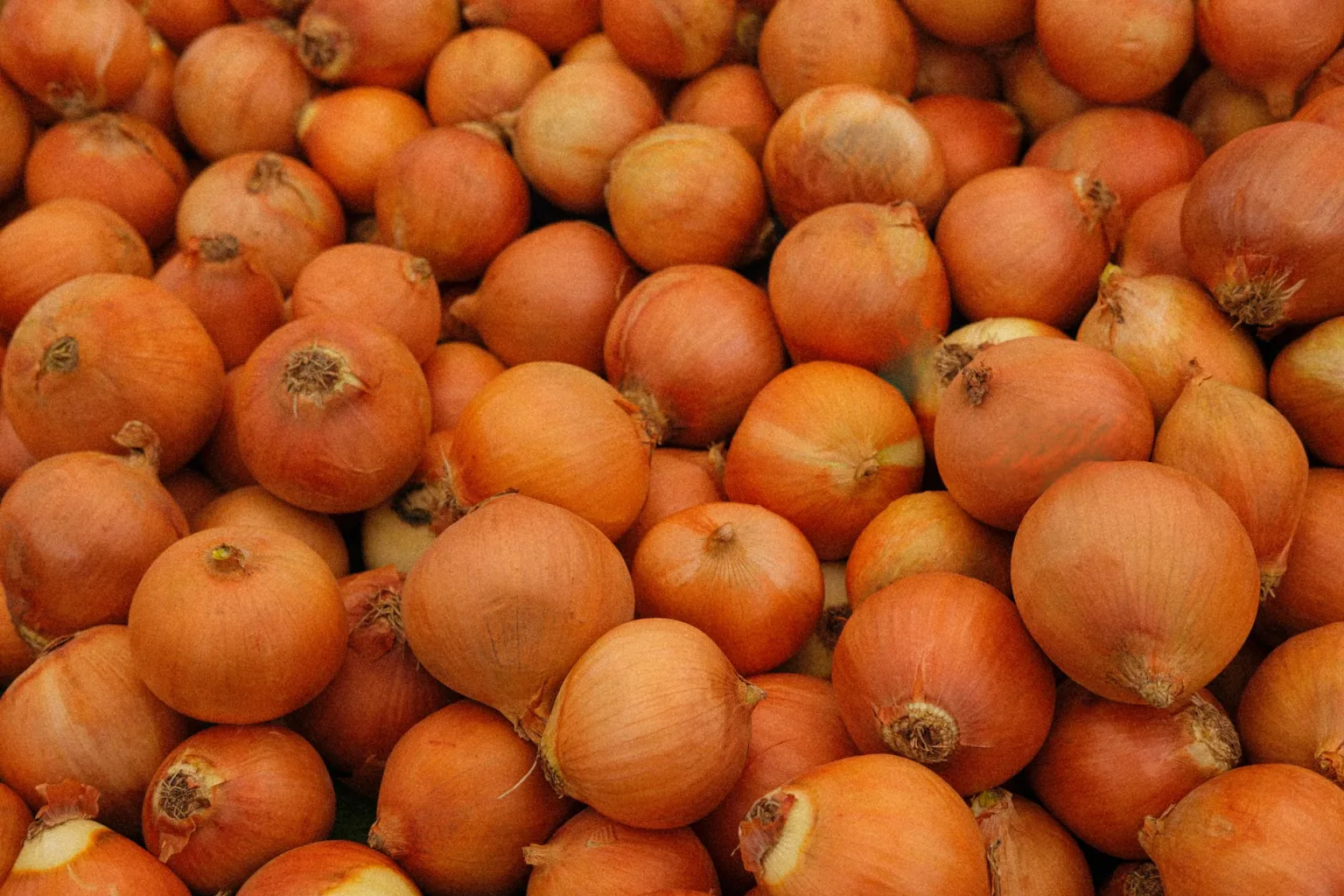
Large onions are bulbs of the common onion, Allium cepa. “Large” describes the size of the bulb, not necessarily a particular variety: common onions come in different colors and can vary in flavor and texture. Yellow onions are widely versatile; red onions are often milder and can add color to raw dishes; white onions are described as mild and crisp. These distinctions can help guide your choice, although individual onions may vary. An onion can be a prominent ingredient in a dish or part of an aromatic base that supports the other ingredients.
When to use it
Choose a large onion when a recipe calls for a generous amount or when you want the onion pieces to remain noticeable in the finished dish. Raw onion can add flavor and texture to salads and sandwiches. Cooked onion works in soups, stews, sautés, sauces, roasted dishes, and other cooked preparations. Variety can help shape the result: red onion is often used in fresh dishes, while yellow onion is a versatile choice for cooking. There is no single best variety for every recipe; choose according to the flavor and texture you want.
How to use it
Remove the dry outer skin, then cut the onion with a clean knife on a stable surface. Chop it finely for a sauce or flavor base, slice it for salads and sandwiches, or cut it into wedges or larger pieces for roasted dishes and stews. Onions can be eaten raw or fried, sautéed, roasted, baked, or simmered in a dish. Add them to meat, fish, seafood, rice, or vegetables, or combine them with tomato, garlic, and herbs as a flavor base. Match the cut and variety to the role: larger pieces make the onion more noticeable, while a fine chop distributes it through the other ingredients.
Flavour and texture
Onion flavor varies by type: some onions taste milder or sweeter, while others have a more pungent edge. White onions are described as mild and crisp; red onions are often mild but can retain some sharpness. Cooking changes their texture and lets them contribute flavor to soups, sauces, and stews.
How to choose it
Choose an onion type to suit the dish and the flavor you want, since yellow, red, and white onions do not have exactly the same characteristics. Yellow is a versatile choice; red adds color and is often used raw; white is known for a mild flavor and crisp texture. Size alone does not identify a particular onion variety.
Storage
Onions can keep for a relatively long period, but the available information does not establish a fixed shelf life or specific storage conditions for every type. Follow the package or retailer’s guidance and check the bulb before use. Use a cut onion in an appropriate preparation, and do not use onions that show clear signs of spoilage.
Substitutions
You can substitute a white, yellow, or red onion, allowing for differences in flavor and texture. A shallot is a milder-tasting alternative; a spring onion gives a fresher, more delicate character. Adjust the amount to the size of the substitute and the intensity you want.
Common mistakes
Treating every onion variety as identical in flavor and texture can change the result. Choose for the intended use: red onion can add color to raw dishes, while yellow onion is versatile for cooking. “Large” refers to size, not to one specific variety.
Safety and allergens
Before using an onion, check for obvious spoilage and remove the dry outer skin. Do not use a bulb that smells unpleasant or shows clear signs of being spoiled. Keep prepared onion away from dirty utensils and surfaces.
Culinary uses
- Base aromática para sopas, guisos y sofritos
- Ingrediente principal o complemento en preparaciones crudas y cocinadas
Recommended techniques
- Cortar o picar para usar cruda
- Freír, asar, hornear o cocinar en guisos
Pairs well with
- Carnes, pescados y mariscos
- Arroz, verduras, tomates, ajo y hierbas
Frequently asked questions
What does “large onion” mean?
It describes the size of the bulb, not a specific variety. Color and flavor can still vary.
Can large onions be eaten raw?
Yes. Slice or chop them for salads and sandwiches; red onions are often chosen for fresh preparations.
How can I cook a large onion?
It can be fried, sautéed, roasted, baked, or cooked in soups, stews, and sauces.
Ingredient allergens
Allergen listThere are no verified associations for these ingredients yet.
Sources and review
Automatically researched, cross-checked and validated content. Sources consulted:
- Client Challenge doi.org/10.2307/jj.27939689.16
- The Essential Glossary of Cooking Terms for the Culinary Arts - Escoffier www.escoffier.edu/blog/culinary-arts/the-essential-glossary-of-cooking-terms-for-the-culinar…
- La cebolla, ese humilde ingrediente tan fundamental | Gastronosfera www.gastronosfera.com/tendencias/la-cebolla-ese-humilde-ingrediente-tan-fundamental
- Tipos de cebolla y su utilización en la cocina | Blog Bernad Refrigeración www.josebernad.com/tipos-de-cebolla-mas-comunes-y-su-utilizacion-en-la-cocina/
- Agencia Española de Seguridad Alimentaria y Nutrición www.aesan.gob.es/
- Vamos a Conservar Alimentos: Raíces comestibles: remolachas, zanahorias, nabos y colinabos extension.psu.edu/vamos-a-conservar-alimentos-raices-comestibles-remolachas-zanahorias-nabos…
- Eating Spain: National Cuisine Since 1900 - UKnowledge uknowledge.uky.edu/context/hisp_etds/article/1031/viewcontent/Eating_Spain_National_Cuisine_…
- EFNEP Hispanic Heritage Recipes | Community Nutrition | Extension/College of Agriculture, Health & Natural Resources | University of Connecticut communitynutrition.cahnr.uconn.edu/efnep-hispanic-heritage-recipes/
- La cebolla, la base de la gastronomía española - Enrique Romay eromay.com/la-cebolla-la-base-de-la-gastronomia-espanola/
- Winter vegetable production on small farms and gardens west of the Cascades | Servicio de Extensión de OSU extension.oregonstate.edu/es/catalog/pnw-548-winter-vegetable-production-small-farms-gardens…
- pork chop Archives | Dinner Tonight dinnertonight.tamu.edu/tag/pork-chop/
- - YouTube www.youtube.com/watch?v=diiHYurynCQ