- Category
- Vegetables
- State
- Fresh
- Usual unit
- unit
What it is
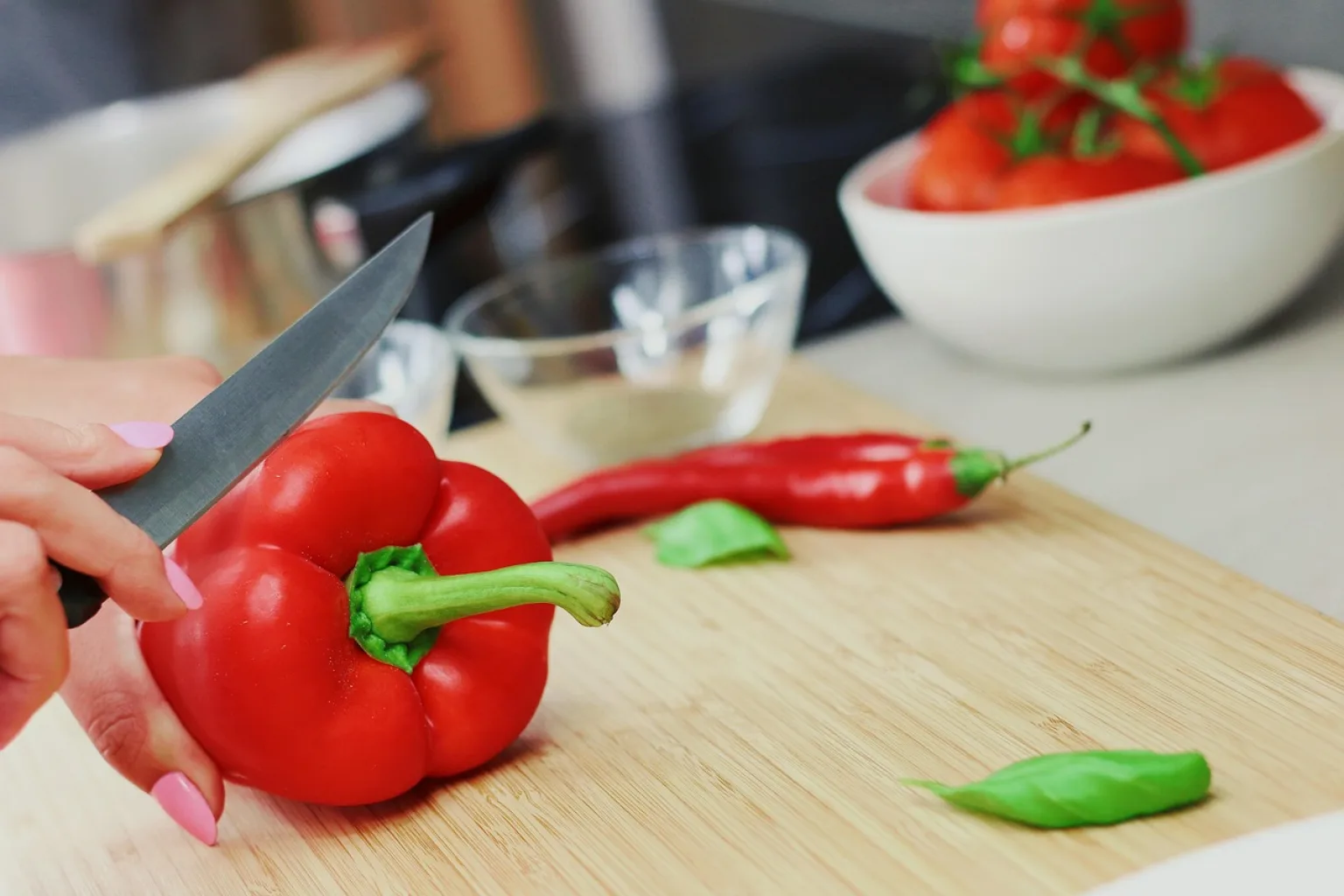
A large red bell pepper is a sweet pepper with substantial flesh, from the species Capsicum annuum. Sweet bell peppers occur in several colors, including red, green, yellow, orange and purple. Unlike hot peppers such as jalapeños, bell peppers are mild. They can be eaten fresh, used in cooked dishes or prepared for preservation with an appropriate method. Size and shape vary by variety, so “large” describes the kind of pepper selected rather than an exact measurement.
When to use it
Use the pepper fresh when you want a mild, crisp ingredient in an uncooked dish, or cut it up for cooked mixed dishes. It can also be prepared for freezing: raw-frozen peppers are especially suited to uncooked uses, while blanched peppers are intended for use as a cooked ingredient. For jarred preserves, follow a tested recipe and its specified method. Do not improvise the balance between peppers and pickling liquid.
How to use it
Wash the pepper and cut it into strips or dice it to suit the dish. Serve it fresh, or add it to cooked dishes with ingredients such as onion, garlic, tomato or cilantro. To freeze it, cut it into pieces and freeze it raw, or blanch it first. Raw-frozen peppers retain a firmer, crunchier texture and suit uncooked uses; blanched peppers are a useful ingredient for cooking. If a recipe calls for peeled pepper, heating or roasting can help loosen the skin. For home canning, use a tested recipe and do not increase the amount of low-acid vegetables relative to the specified liquid.
Flavour and texture
Sweet bell peppers have a mild flavor and substantial flesh. Fresh, they are firm and crisp. Their texture changes after freezing or cooking: peppers frozen raw stay firmer than blanched peppers, making raw freezing a practical choice when a firmer texture is wanted in uncooked uses.
How to choose it
Choose a pepper that suits the size you need and check that its skin and flesh are in good condition. Red is one of several colors of sweet bell pepper; green, yellow, orange and purple varieties are also available. If buying a packaged pepper, check the label for the product identity and any specific storage or use directions.
Storage
Follow any storage and use directions on the package. To prepare peppers for freezing, cut them into strips or dice them and freeze raw, or blanch them first; raw-frozen peppers are better suited to uncooked uses, and blanched peppers to cooking. For jarred preserves, use a tested recipe: peppers are low-acid and require an appropriate preservation method.
Substitutions
In fresh or cooked dishes, another sweet bell pepper can replace the red one, although the color and result may differ. In pickling recipes, pepper varieties can be exchanged while keeping the recipe’s total pepper quantity unchanged. Do not increase the proportion of peppers relative to the pickling liquid.
Common mistakes
Do not assume that preservation methods are interchangeable. Peppers are low-acid, so canning them without pickling requires an appropriate pressure-canning method. Also avoid changing the pepper quantity or liquid proportions in a tested pickling recipe by guesswork.
Safety and allergens
For home canning, follow a tested recipe and its specified method: peppers are low-acid, and non-pickled peppers require pressure processing. Do not store a sealed jar of peppers in oil at room temperature without adequate acidification; use a reliable recipe that explains how to acidify and mix the ingredients properly.
Culinary uses
- Fresh ingredient for salads and other uncooked dishes
- Cooked ingredient in mixed dishes and preserved preparations
Recommended techniques
- Dice or slice for use fresh or before freezing
- Freeze raw or blanch before freezing
- Roast or heat to loosen the skin when a recipe calls for peeled peppers
Pairs well with
- Onion and garlic
- Tomato and cilantro
Frequently asked questions
Can I freeze a red bell pepper raw?
Yes. It can be frozen raw, whole or cut up; slicing or dicing helps use freezer space efficiently. Raw-frozen peppers retain a firmer, crunchier texture than blanched peppers.
Should I blanch it before freezing?
Choose according to how you will use it. Blanched peppers are suited to cooked dishes, while raw-frozen peppers are a better choice when you want a firmer texture for uncooked uses.
Can I use a yellow or green pepper in a pickle recipe instead?
Pepper varieties can be substituted in pickling recipes, but keep the total pepper quantity and the specified liquid proportions unchanged.
Ingredient allergens
Allergen listThere are no verified associations for these ingredients yet.
Sources and review
Automatically researched, cross-checked and validated content. Sources consulted:
- En el etiquetado alimentario hay algunas menciones que son obligatorias eletiquetadocuentamucho.aesan.gob.es/obligatoria.html
- The Essential Glossary of Cooking Terms for the Culinary Arts - Escoffier www.escoffier.edu/blog/culinary-arts/the-essential-glossary-of-cooking-terms-for-the-culinar…
- EFNEP Hispanic Heritage Recipes | Community Nutrition | Extension/College of Agriculture, Health & Natural Resources | University of Connecticut communitynutrition.cahnr.uconn.edu/efnep-hispanic-heritage-recipes/
- Choice Salsa - National Center for Home Food Preservation nchfp.uga.edu/how/can/canning-salsa/choice-salsa/
- Conservando los Coloridos Pimientos del Huerto extension.psu.edu/conservando-los-coloridos-pimientos-del-huerto/
- Para la ciudadanía www.aesan.gob.es/para-la-ciudadania
- Memoria y duelo en escena, No es temporada de flores | un año de diseñarte, mm1 doi.org/10.24275/issn.2954-3770.n25.a73