- Category
- Meat
- State
- Fresh
- Usual unit
- kg
What it is
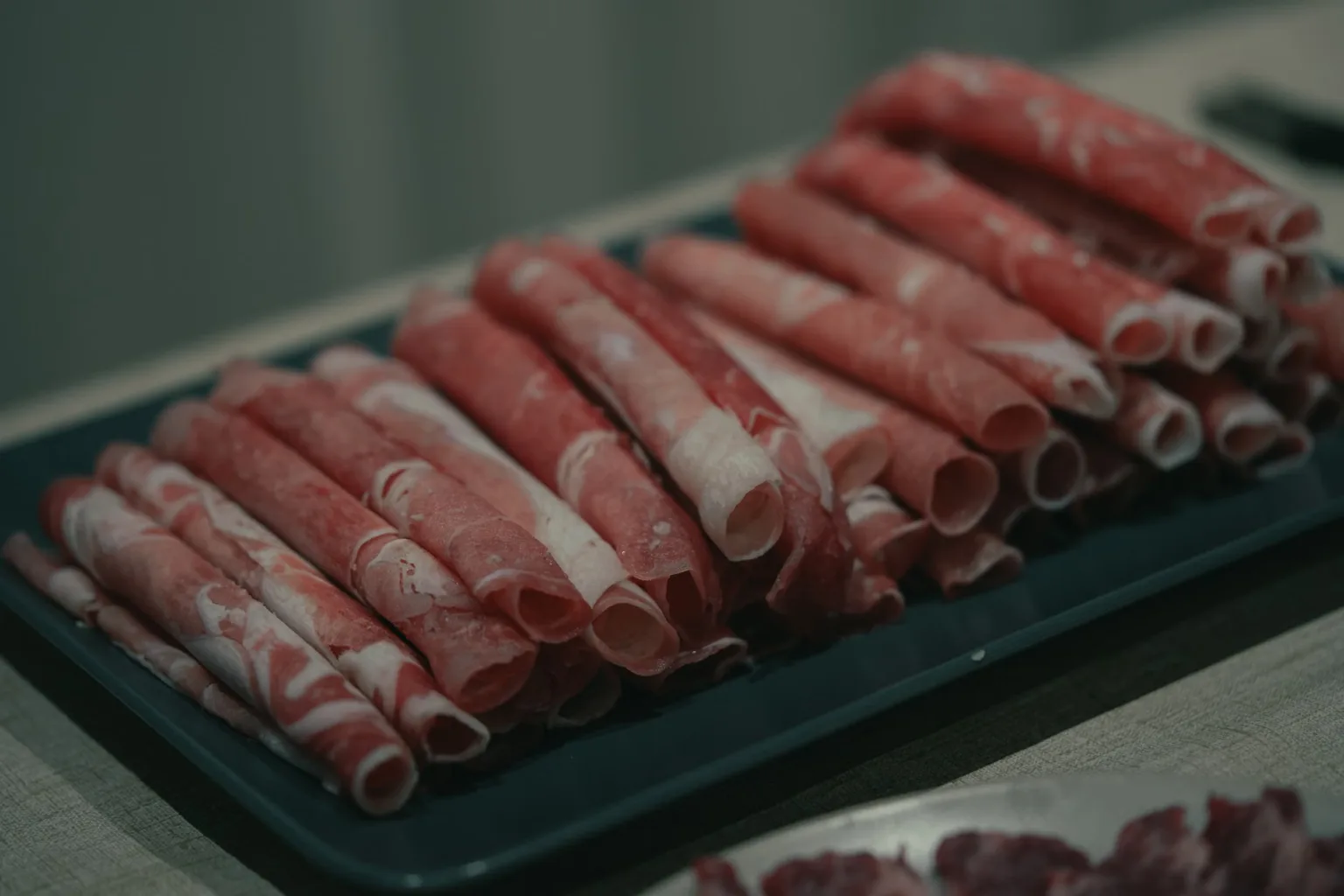
Lean lamb is lamb meat selected for having little visible fat or taken from a relatively lean cut. It is not a single cut: leg, loin and other pieces can differ in fat, bone and connective tissue. For that reason, check the cut rather than assuming that every product labelled lean will cook in the same way. Tender cuts and quick-cooking portions work well on a grill or in a pan; larger pieces can be roasted, while cuts with more connective tissue are commonly suited to stewing. Lamb's flavor can also vary with the animal's age and how it was raised. Understanding the cut helps you choose a suitable technique and serve the meat with a texture that matches the dish.
When to use it
Choose lean lamb when you want meat to anchor a roast, a grilled meal or quick pan-cooked portions. Loin cuts and chops suit shorter cooking, while a leg can be roasted whole or cut into cubes. For casseroles and stews, neck, shoulder or other diced cuts have a different texture and are generally better suited to longer cooking than a thin chop. Serve lamb with vegetables, potatoes or purées. Because lean pieces have less visible fat, do not treat every cut as interchangeable: thickness, bone and connective tissue affect how it cooks. Selecting the cut first makes it easier to plan the rest of the meal and avoid drying out a quick-cooking portion.
How to use it
Identify the cut before cooking so you can choose quick heat or longer cooking. Season with salt, garlic and aromatic herbs; a marinade with oil and a little acidity can add flavor, but it does not replace proper cooking. Cook chops and thin pieces in a pan or on a grill, watching closely so the meat does not dry out. For a larger piece, browning it before roasting can build a flavorful surface; let a whole piece rest before slicing. For stews, cut the meat into pieces and cook it with liquid and vegetables until the texture suits the cut. Serve with potatoes, vegetables, vegetable purée or a legume side. Handle raw meat carefully and follow package directions and local official food-safety guidance.
Flavour and texture
Lamb can taste delicate or more pronounced depending on the animal's age and other factors. Texture depends strongly on the cut: loin and chops can be tender with brief cooking, while pieces with more connective tissue are suited to longer stewing. A lean piece has less visible fat and can dry out if overcooked. Garlic, herbs and sauces add contrast and can complement the meat without necessarily masking its character.
How to choose it
Check the cut name before buying: leg, loin, chops, shoulder and neck behave differently in the kitchen. Choose a piece that looks fresh, has a cut and amount of visible fat appropriate for your planned dish, and check its date and package instructions. For quick cooking, look for a tender cut of even thickness; for stews, consider diced meat from cuts suited to that use. The word “lean” does not replace information about which cut you are buying. If the cut is unclear, ask the seller how it is intended to be cooked.
Storage
Keep lamb under the conditions stated on its packaging and observe the use-by date. If you will not use it soon, follow the package or retailer's storage directions. Keep raw meat separate from ready-to-eat foods, and clean surfaces and utensils that have touched it. For freezing or thawing, follow official food-safety advice and the instructions applicable to the product; appearance or smell alone cannot establish that meat is safe to eat.
Substitutions
To replace one lean lamb cut, choose another lamb cut with a similar shape and thickness, then adjust the cooking method to suit it. Leg or loin can work for roasting or quick pan-cooking, while diced shoulder or neck are different options for stews, not exact matches in texture or cooking needs. When changing cuts, do not automatically carry over the same method or cooking time.
Common mistakes
Treating every lamb cut alike can leave a thin chop dry or a stew cut too firm. Do not assume that “lean” means the meat can withstand prolonged cooking without drying out. Avoid leaving a quick-cooking piece unattended, and do not judge doneness by the outside color alone. Choose the method to suit the cut, its thickness and its connective tissue.
Safety and allergens
Handle raw lamb carefully, keep it separate from ready-to-eat foods, and follow package directions and local official food-safety guidance.
Culinary uses
- Main ingredient for roasts and grilled dishes
- Lean protein for pan-cooked portions and stews
Recommended techniques
- Roasting
- Grilling or pan-frying
- Stewing
Pairs well with
- Vegetables and potatoes
- Vegetable or legume purées
- Garlic, aromatic herbs and sauces
Frequently asked questions
Which lamb cuts are suited to quick cooking?
Loin cuts and chops are commonly cooked in a pan or on a grill. Cut and thickness matter, so watch them closely to help prevent lean meat from drying out.
Which lamb cuts can I use in a stew?
Shoulder, neck and other diced cuts are used in stews and casseroles. Their texture differs from a thin chop, so choose the method to suit the piece.
What can I serve with lean lamb?
Try vegetables, potatoes, vegetable purée or a legume side. Garlic and aromatic herbs can also complement its flavor.
Ingredient allergens
Allergen listThere are no verified associations for these ingredients yet.
Estimated nutrition
- Fat
- 11.4 g
- Saturates
- 4.62 g
- Carbohydrate
- 0.09 g
- Sugars
- 0 g
- Fibre
- 0 g
- Protein
- 20.1 g
- Salt
- 0.19 g
Sources and review
Automatically researched, cross-checked and validated content. Sources consulted:
- The Essential Glossary of Cooking Terms for the Culinary Arts - Escoffier www.escoffier.edu/blog/culinary-arts/the-essential-glossary-of-cooking-terms-for-the-culinar…
- Nutrition After Your Transplant - Health Online healthonline.washington.edu/sites/default/files/record_pdfs/Nutrition-After-Your-Transplant-…
- Bloque 1: ¿Qué es un dato de carácter personal? [Vídeo] doi.org/10.6035/ppd.2023.1
- El cordero, base de nuestra cultura, gastronomía y economía | Cultura www.restaurantecain.es/cultura/cordero-gastronomia
- El cordero, un auténtico placer gastronómico - La Mesa Habla lamesahabla.com/cordero-placer-gastronomico/
- Publicaciones de Seguridad alimentaria www.aesan.gob.es/actualidad/publicaciones-seguridad-alimentaria
- Cordero: la tradicional carne de primavera - Gastroactitud. Pasión por la comida www.gastroactitud.com/pista/cordero-la-tradicional-carne-de-primavera/
- Everything You Never Wanted to Know About Spanish Wines ... scholarcommons.sc.edu/cgi/viewcontent.cgi?article=1279&context=senior_theses
- MCW Class of 2026 Scholarly Project Abstracts www.mcw.edu/-/media/MCW/Education/Medical-School/Scholarly-Pathways/MCW-Class-of-2026-Schola…
- Paul M. Barr, M.D. | URochester Medicine www.urmc.rochester.edu/people/112359745-paul-m-barr
- biological control of bacterial leaf streak of wheat using openprairie.sdstate.edu/cgi/viewcontent.cgi?article=1845&context=etd2
- Cordero magro: 198 calorías en 1 unidad (120 g) · Información nutricional www.eatbetter.app/es/alimento/kuzu-eti-az-yagli