- Category
- Fruit
- State
- Fresh
- Usual unit
- unit
What it is
Mango is the fleshy fruit of Mangifera indica, a member of the Anacardiaceae family. It has thin skin and one large, flat, oval seed, so the flesh is cut from either side of the seed. There are many varieties, and their size, skin color, fiber content, and flavor differ. Skin color alone does not tell you whether a mango is ready to eat. Ripe flesh is often golden yellow or orange, but its amount of fiber varies. A less-ripe mango can be firm and tart; as it ripens, it becomes sweeter and yields slightly to gentle pressure. These differences make it possible to choose a fruit for eating fresh, adding a tart note to a savory dish, or blending into a soft pulp.
When to use it
Choose a ripe mango when you want sweet, juicy fruit to eat on its own, add to a fruit salad, blend into a drink, or turn into a purée, sauce, or dessert. For a firmer texture and more tartness, use a less-ripe mango in salads, fresh salsas, or savory dishes. Puréed flesh also works in creams, frozen desserts, and baked goods. Mango can be grilled or gently caramelized for a warm preparation; it also suits chutneys and sauces with acidic ingredients and spices. Varieties differ in texture and flavor, so judge the fruit by its firmness and condition rather than relying on skin color alone.
How to use it
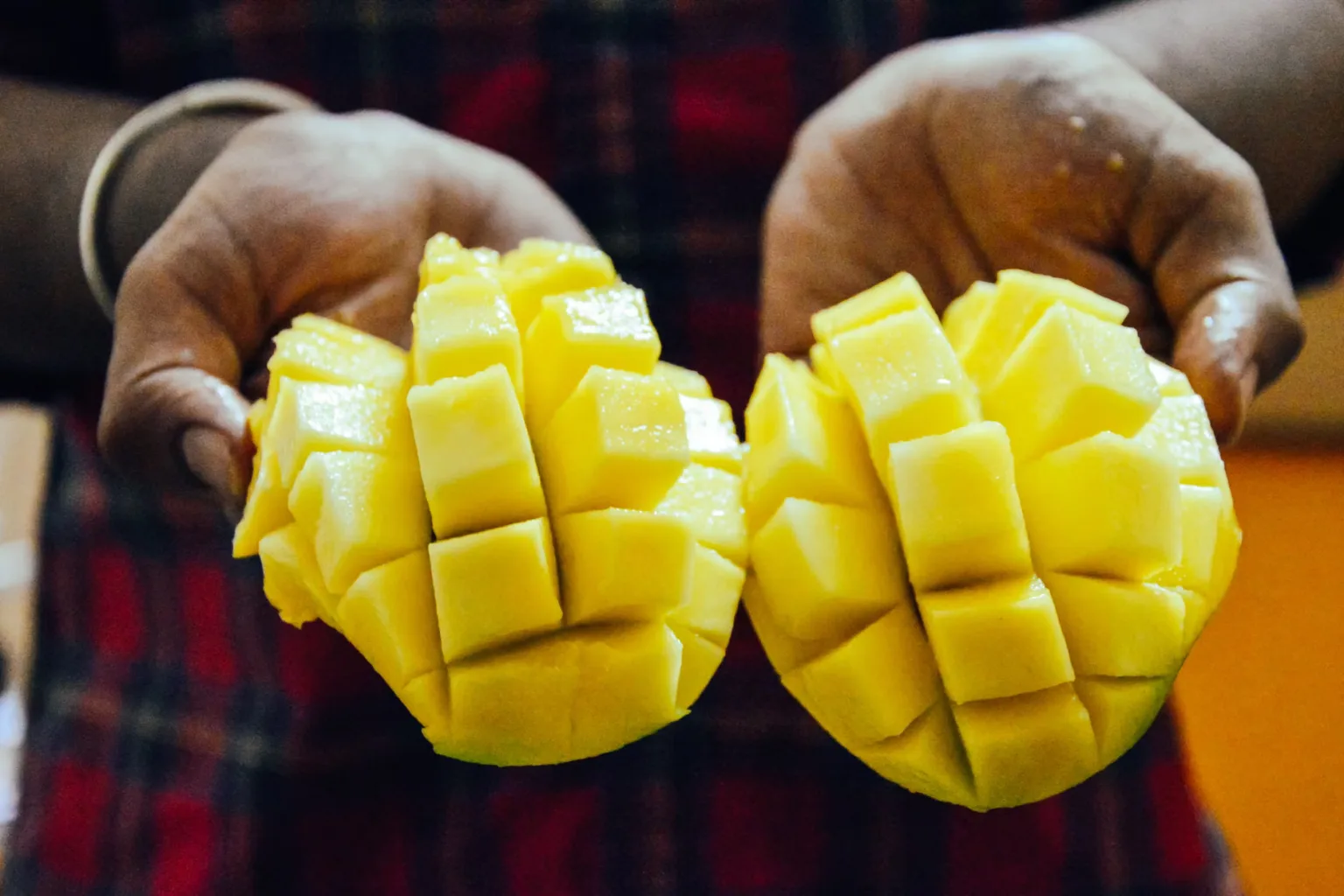
Wash the mango before cutting. A firm fruit can be peeled with a vegetable peeler; with a ripe mango, it may be easier to separate the skin after cutting the flesh. Stand the fruit on a stable cutting board and slice down either side of the central seed to make two cheeks. Trim flesh from around the seed and cut it into cubes or slices. You can also scoop the flesh from each cheek with a spoon. Serve the pieces fresh, add them to salads, or blend them for purée, drinks, sauces, or chutney. Mango works in both sweet and savory preparations. Cut the fruit rather than blending it when you want distinct pieces; purée it for a smooth sauce. Slices or chunks can also be frozen for later use in drinks and desserts.
Flavour and texture
Ripe mango is generally sweet, aromatic, juicy, and tender, with a flavor often described as tropical. Less-ripe fruit tends to be firmer and more tart. The flesh may be smooth or noticeably fibrous depending on the variety. Skin can be green, yellow, red, or a mix of colors, and its appearance alone is not a dependable measure of ripeness.
How to choose it
For a ripe mango, choose one that gives slightly to gentle pressure but is not very soft or wrinkled. The skin should look taut; green, yellow, red, or orange areas can all occur. If you need a firm fruit for a recipe, look for one that is uniformly hard and free of visible blemishes. Varieties vary in size, color, and fiber, so check firmness and overall condition as well as appearance.
Storage
Let a firm mango ripen at room temperature and check its firmness from time to time. Ripening varies by fruit; not every variety or individual mango follows the same pace. Use a ripe mango when its texture and aroma suit the recipe. You can cut the flesh into slices or chunks and freeze it for later use in smoothies, desserts, or other dishes. Discard fruit that is wrinkled, excessively soft, or damaged, and avoid leaving cut pieces unprotected.
Substitutions
Peach or nectarine can replace mango in a fruit salad, though the flavor and texture will differ. Papaya is another option when a soft, tropical fruit texture is wanted. Neither substitute exactly matches mango’s balance of sweetness, tartness, and aroma; adjust citrus, spices, or sweetness to suit the fruit you use.
Common mistakes
Do not judge ripeness by skin color alone: the skin may remain green even when the flesh is ready. Avoid very soft, wrinkled fruit when you need pieces that hold their shape. Remember the large, flat seed when cutting; trying to slice straight through the middle can make the knife slip or leave usable flesh behind. Fiber also varies by variety, so the flesh is not always smooth.
Safety and allergens
Wash the fruit before cutting and take care when cutting around the large seed. Some people may react to mango skin resin or sap; if you know you are sensitive to these parts, avoid handling them and consult a healthcare professional about your situation.
Culinary uses
- fresh fruit
- sweet component
- tart component when unripe
- sauce and chutney base
Recommended techniques
- peeling and slicing around the central seed
- dicing
- puréeing
- grilling or gently caramelizing
Pairs well with
- lime and other citrus
- yogurt or coconut
- chili and ginger
- seafood, poultry or leafy salads
Frequently asked questions
How can I tell whether a mango is ripe?
A ripe mango usually yields slightly to gentle pressure and has taut skin, though it may still have green areas. Color alone is not a reliable guide.
How do I cut a mango with less waste?
Slice down either side of the central seed to make two cheeks. Separate the flesh from the skin with a knife or spoon, then trim the remaining flesh around the seed.
Can mango be frozen?
Yes. Cut the flesh into slices or chunks and freeze it for later use in smoothies, frozen desserts, sauces, or other dishes.
Ingredient allergens
Allergen listThere are no verified associations for these ingredients yet.
Estimated nutrition
- Fat
- 0 g
- Saturates
- 0 g
- Carbohydrate
- 78.6 g
- Sugars
- 60.7 g
- Fibre
- 0 g
- Protein
- 0 g
- Salt
- 0.14 g
Sources and review
Automatically researched, cross-checked and validated content. Sources consulted:
- ¿Por qué la muerte es origen de miedos y tabúes? doi.org/10.64628/aao.fccyk3qj3
- Elaboración de productos reposteros a base de harina de almendra de mango Mangifera indica | OpenAlex openalex.org/W7132966844
- Client Challenge doi.org/10.2307/jj.27939689.16
- Gastronomía del Perú - Wikipedia, la enciclopedia libre es.wikipedia.org/wiki/Gastronom%C3%ADa_del_Per%C3%BA
- Gastronomía de Filipinas - Wikipedia, la enciclopedia libre es.wikipedia.org/wiki/Gastronom%C3%ADa_de_Filipinas
- The Mango - A Tropical Treat - National Center for Home Food Preservation nchfp.uga.edu/resources/entry/the-mango-a-tropical-treat
- Comité Científico www.aesan.gob.es/dam/jcr:ed009337-0085-4c40-8a9d-4941400ca954/comite_cientifico_35.pdf
- Evolución del léxico culinario desde 1932 a 1972 | OpenAlex openalex.org/W2291578502
- Mango ⋆ Larousse Cocina laroussecocina.mx/palabra/mango/
- Antes de ir a YouTube www.youtube.com/shorts/LnghnjobCBI
- Descubre cómo los chefs cocinan el mango www.finedininglovers.es/explorar/noticias/chefs-famoso-recetas-mango
- Todo sobre el mango: qué es, cómo elegirlo, cómo conservarlo y cómo utilizarlo en cocina con estas 14 recetas www.directoalpaladar.com/ingredientes-y-alimentos/todo-mango-que-como-elegirlo-como-conserva…
- Maridajes y combinaciones de sabores de mango | Junta Nacional del Mango www.mango.org/es/servicio-alimentario/maridajes-de-sabores/
- Receta ‘Maridaje’: Librito de Mango Caramelizado - Bodegas Luzón www.bodegasluzon.com/receta-maridaje-librito-de-mango-caramelizado/
- Has buscado Mango ⋆ Larousse Cocina laroussecocina.mx/?s=Mango