- Category
- Vegetables
- State
- Fresh
- Usual unit
- unit
What it is
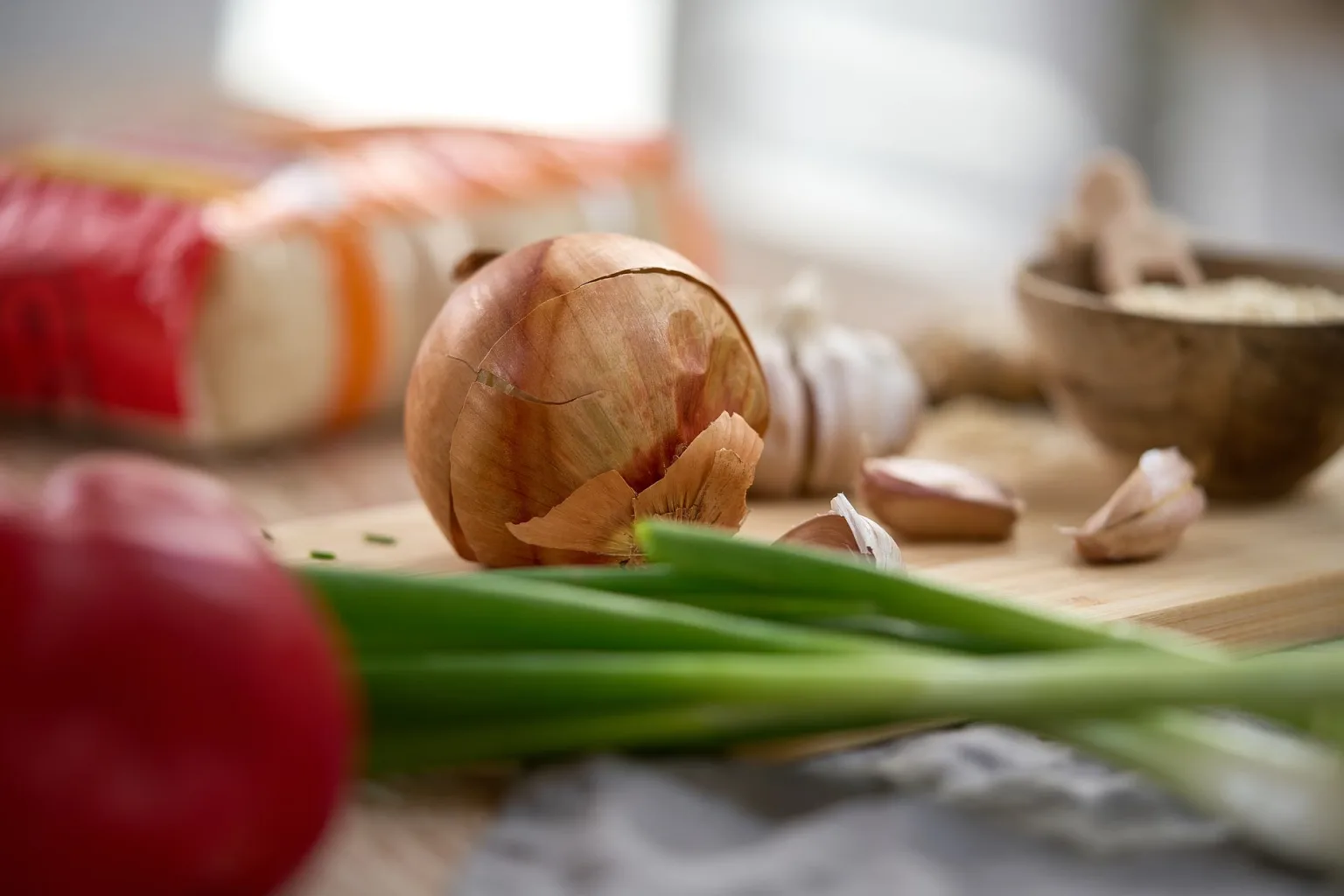
A medium onion is an edible fresh bulb of the species Allium cepa, used in a wide range of cooking. “Medium” is a practical size description rather than an exact measurement, so the weight and volume can vary from one onion to another. Peel and cut it into dice, slices or strips to suit the dish. Raw onion adds texture and a more pronounced flavor; cooked onion can form a base for soups, stews and sauces, or be served fried, roasted, baked or caramelized. Color and variety can also guide the choice: red onion is commonly used in fresh dishes, while yellow onion is suitable for soups and stews. If a recipe calls for one medium onion, adjust the cut and amount to the dish and your preference rather than assuming every onion is identical.
When to use it
Use an onion when you want an aromatic base for a soup, stew, sauce or sauté, or when it is one of the vegetables in the dish. Finely cut raw onion can add flavor and texture to salads and other cold preparations. For a cooked result, add it to a sauté, roast or bake it, fry it, or cook it slowly to caramelize. Variety can help guide your choice: red onion is a common option for fresh dishes, while yellow onion is used for soups and stews. When a recipe does not specify a color, choose according to the dish you are making and what is available.
How to use it
Remove the dry outer skin and cut the onion with a clean knife on a stable surface. Dice it for a soup or stew base; slice it or cut it into strips for salads and dishes where you want visible pieces. Add it raw for a crisp texture and distinct flavor. To cook it, sauté it as the start of a dish, add it to soups, stews and sauces, fry it, roast it or bake it. You can also cook it slowly until caramelized. When preparing it with other ingredients, choose a cut that suits them. If a recipe calls for one medium onion, remember that actual onion size can vary. Wash fresh produce before preparation.
Flavour and texture
Raw onion can have a pronounced flavor and a crisp texture, with intensity varying by variety. Cooked onion can be incorporated into soups, stews and sauces, or served fried, roasted or caramelized. Sweet and red onions offer different profiles and common uses.
How to choose it
Choose a fresh onion that looks intact and has no obvious damaged areas. “Medium” is an approximate size, not a guaranteed weight; if a recipe needs precision, judge the amount by the volume of chopped onion required. Choose color and variety to suit the dish: red onion is commonly used in fresh preparations, while yellow onion is used in soups and stews.
Storage
Keep the onion whole until you are ready to prepare it, and peel and cut only the amount you plan to use. That lets you add it freshly cut to a recipe, whether raw or cooked. If a dish needs a specific quantity, measure the portion after chopping, since the size of a medium onion can vary.
Substitutions
In some sauces, a shallot or sweet onion can take the place of the specified onion if the recipe allows either. For cold dishes, red onion can stand in for white onion when its color and flavor suit the dish. The result may vary with the variety and preparation.
Common mistakes
Do not assume that every medium onion is the same size or that every variety tastes alike. Match the cut to the dish and choose raw or cooked onion according to the flavor and texture you want; red and yellow onions have different common uses.
Safety and allergens
Wash the onion and your hands before preparation, and use clean utensils and a clean work surface. Handle the knife carefully and avoid using onions with obvious signs of spoilage.
Culinary uses
- Aromatic base for soups, stews, sauces and sautés
- Fresh or cooked vegetable for salads and other dishes
Recommended techniques
- Chop or slice for raw preparations
- Sauté, roast, bake, fry, simmer or caramelize
Pairs well with
- Tomatoes, garlic and peppers
- Meat, fish, vegetables and herbs
Frequently asked questions
What does “medium onion” mean in a recipe?
It is an approximate size description, not an identical amount in every case. If precision matters, adjust to the volume your recipe needs.
Can you eat onion raw?
Yes. Slice it finely for salads and other cold preparations. Red onion is a common choice for fresh dishes.
How can I cook a medium onion?
You can sauté, fry, roast or bake it, add it to soups, stews and sauces, or cook it slowly to caramelize it.
Ingredient allergens
Allergen listThere are no verified associations for these ingredients yet.
Sources and review
Automatically researched, cross-checked and validated content. Sources consulted:
- Client Challenge doi.org/10.2307/jj.27939689.16
- La cebolla, ese humilde ingrediente tan fundamental | Gastronosfera www.gastronosfera.com/tendencias/la-cebolla-ese-humilde-ingrediente-tan-fundamental
- Sabores de nuestras tierras/recetas - 2024 | Agricultura y Recursos Naturales ucanr.edu/site/agricultura-y-recursos-naturales/sabores-de-nuestras-tierras-recetas-2024
- Vamos a Conservar Alimentos: Raíces comestibles: remolachas, zanahorias, nabos y colinabos extension.psu.edu/vamos-a-conservar-alimentos-raices-comestibles-remolachas-zanahorias-nabos…
- EFNEP Hispanic Heritage Recipes | Community Nutrition | Extension/College of Agriculture, Health & Natural Resources | University of Connecticut communitynutrition.cahnr.uconn.edu/efnep-hispanic-heritage-recipes/
- La cebolla, la base de la gastronomía española - Enrique Romay eromay.com/la-cebolla-la-base-de-la-gastronomia-espanola/
- Tipo de Cebollas: usos y propiedades | Fruta y verdura Cal Fruitós www.calfruitos.com/es/blog/tipo-de-cebollas-usos-y-propiedades-289
- Para la ciudadanía www.aesan.gob.es/para-la-ciudadania
- A Panoramic View of Picacho Peak in Picacho, Arizona | ClipVR ETC etc.usf.edu/clipvr/357-a-panoramic-view-of-picacho-peak-in-picacho-arizona?xml=data%3Agsf%2C…
- Pollo con Chile y Zarzamora | Dinner Tonight dinnertonight.tamu.edu/recipe/pollo-con-chile-y-zarzamora/