- Category
- Baking
- State
- Fresh
- Usual unit
- Variable
What it is
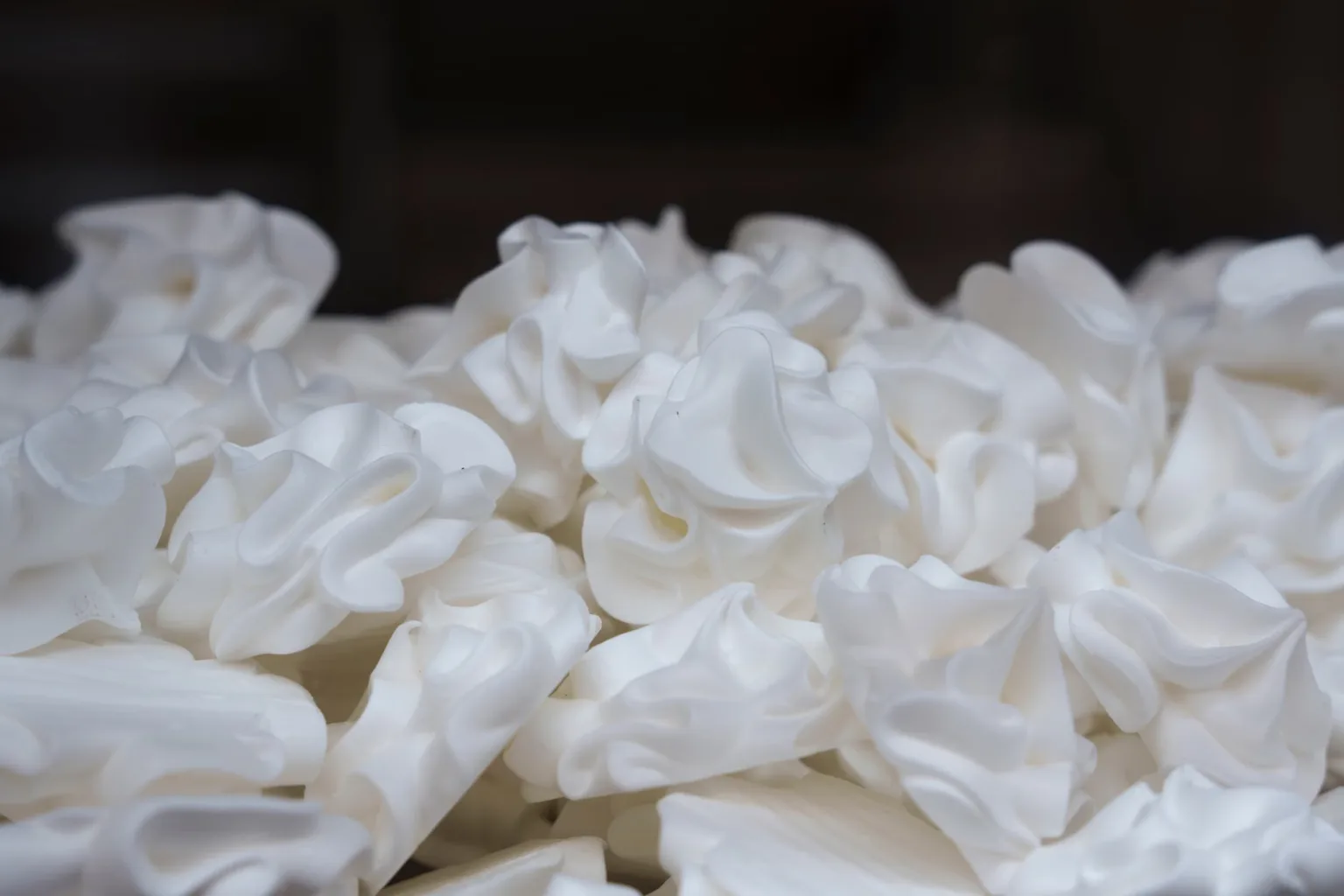
Meringue is a sweet baking preparation made mainly from whipped egg whites and sugar. Beating the whites incorporates air and creates a light foam; sugar adds sweetness and contributes to the mixture’s structure. French meringue is made by beating the whites and adding sugar; Italian meringue incorporates syrup into beaten whites; and Swiss meringue is beaten with sugar while the mixture is warmed over a bain-marie. Depending on the method and intended finish, it can be soft and airy, firm and glossy, or drier and crisp after baking. Meringue is not a single uniform product: the technique, intended use, and baking change its texture.
When to use it
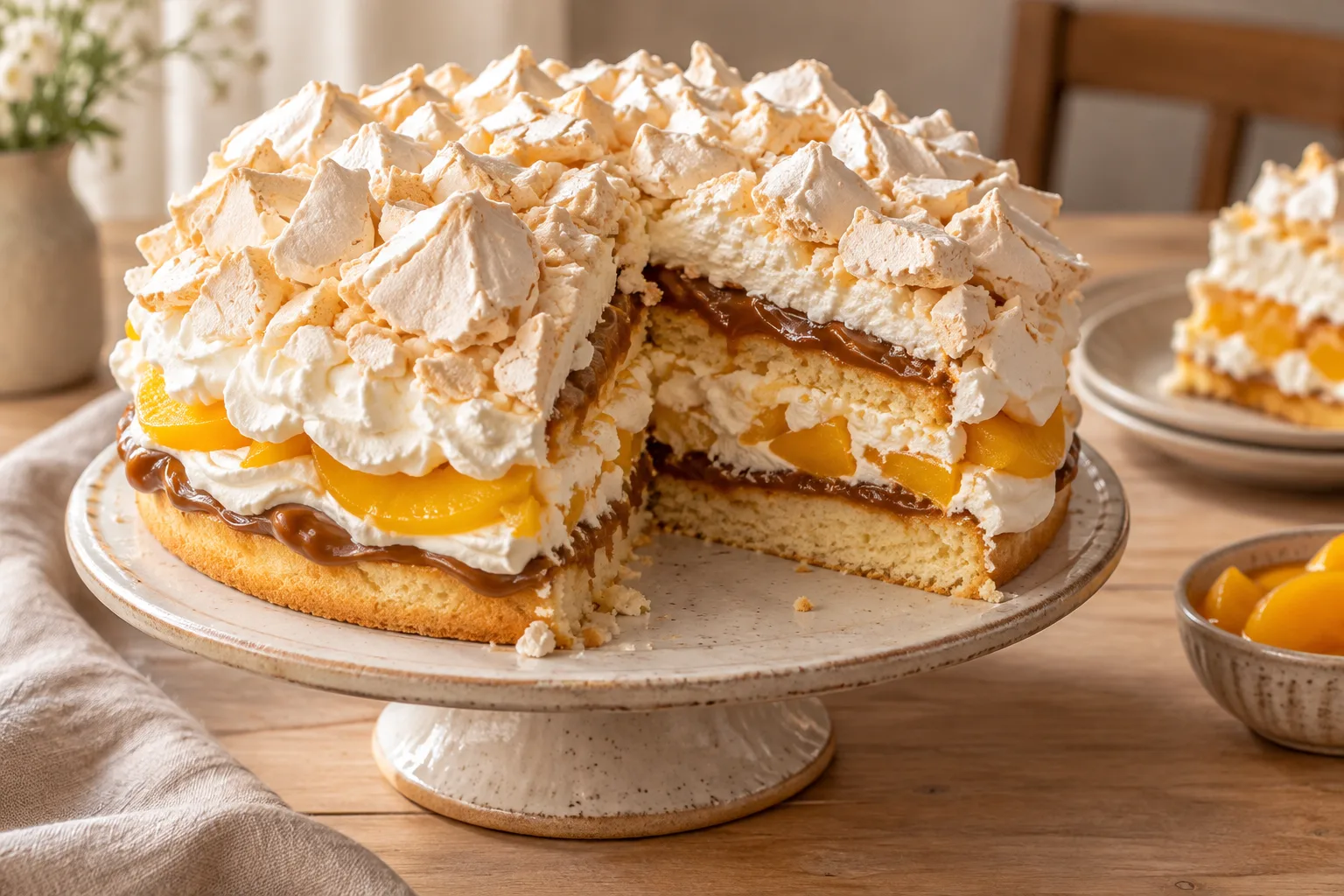
Use meringue when you want a light topping or filling for cakes and pies, a piped decoration with volume, or a base for baked sweets. French meringue is an option for shaped pieces that will be baked; Italian meringue, which is firmer and glossier, can be used for decoration and airy desserts; and Swiss meringue works in fillings and decorations. Choose the style to suit the method and texture required by the recipe. If meringue will be served unbaked or with a lightly cooked center, remember that it contains egg white and take particular care with food safety.
How to use it
Begin with egg whites separated from the yolks and beat them until foamy. For French meringue, add sugar to the beaten whites; for Swiss meringue, beat the whites with sugar over a bain-marie; for Italian meringue, pour syrup into the beaten whites while continuing to beat. Use the mixture as directed in the recipe: spread or pipe it as a topping, shape it for baking, or fold it into an airy dessert. Baking can dry the preparation and make it crisp, while unbaked meringue remains softer. Do not assume the three styles behave identically: choose the method specified for the intended use and follow the recipe instructions.
Flavour and texture
Meringue tastes sweet, with a mild egg-white flavor that can be complemented by vanilla, lemon, or nuts. When whipped, it is light and airy; depending on the method, it can be softer, firmer, or glossier. Baking can dry the outside and make it crisp, although larger pieces may retain a more tender center. Texture depends on the type of meringue and the baking, so not every preparation has the same result.
How to choose it
When buying prepared meringue, check which style the product is and whether it is intended as a topping, filling, or baked piece: French, Italian, and Swiss meringues are made differently. Read the ingredient list and storage directions on the package, since meringue contains egg white and sugar. Appearance alone cannot tell you whether a product is soft, firm, or dry inside; look for a texture description and suggested use.
Storage
If you buy prepared meringue, follow the package storage directions first. Moisture can harm a dry, crisp texture, and refrigeration can make some baked meringues damp, so one storage rule does not suit every style. If the meringue contains egg and is served unbaked, handle it as an egg preparation and protect it from contamination. There is no single storage time that applies to every recipe and product.
Substitutions
French, Italian, and Swiss meringues can substitute for one another only when the intended use allows for their differences. French meringue is made by adding sugar to beaten whites; Italian uses syrup and is often firmer and glossier; Swiss is beaten with sugar over a bain-marie and is used in fillings and decorations. Changing styles can alter the finish and texture, so check the recipe method before swapping them.
Common mistakes
Do not treat every kind of meringue as interchangeable: French, Italian, and Swiss meringues use different methods. Keep yolk out of the whites, since it can make them harder to whip. Choose a style with the recipe’s intended result in mind, whether that is a soft foam, a firm decoration, or a piece baked until dry. Overbeating can also make the foam grainy.
Safety and allergens
Meringue contains egg white, and some styles are served unbaked or may remain lightly cooked. Handle eggs and the preparation hygienically, prevent cross-contamination, and do not serve an insufficiently cooked egg preparation. If a recipe gives specific egg-safety instructions, follow them.
Culinary uses
- Relleno o cobertura de tartas y pasteles
- Base de merenguitos horneados y otras preparaciones dulces aireadas
- Decoración de postres
Recommended techniques
- Batir claras para incorporar aire
- Añadir azúcar a claras montadas, como en el merengue francés
- Batir claras y azúcar al baño María, como en el merengue suizo
- Incorporar almíbar a las claras batidas, como en el merengue italiano
- Hornear para obtener una textura más seca o crujiente
Pairs well with
- Limón
- Vainilla
- Avellanas o almendras
- Frutas y tartas
Frequently asked questions
What are the main types of meringue?
The most common styles are French, Italian, and Swiss. They differ in how sugar is added: directly to beaten whites, as syrup, or by beating it with the whites over a bain-marie.
What is meringue used for?
It can fill or top cakes, decorate desserts, form baked pieces, or add lightness to sweet preparations.
Is meringue always crisp?
No. It can be soft and airy, firm, or dry and crisp. The meringue style and baking affect the result.
Which allergen does meringue contain?
Traditional meringue contains egg white, so it contains egg as an allergen.
Ingredient allergens
Allergen listDocumented presence
-
Eggs
Meringue
Estimated nutrition
- Fat
- 0 g
- Saturates
- 0 g
- Carbohydrate
- 66.7 g
- Sugars
- 133 g
- Fibre
- 16.7 g
- Protein
- 0 g
- Salt
- 0 g
Sources and review
Automatically researched, cross-checked and validated content. Sources consulted:
- Client Challenge doi.org/10.2307/jj.27939689.16
- The Essential Glossary of Cooking Terms for the Culinary Arts - Escoffier www.escoffier.edu/blog/culinary-arts/the-essential-glossary-of-cooking-terms-for-the-culinar…
- Kitchen Companion: Your Safe Food Handbook ucanr.edu/sites/default/files/2020-09/336322.pdf
- Make Your Own Mix | Cooperative Extension Service www.uaf.edu/ces/publications/database/food/make-your-own-mix.php
- Recipes Archives - Walnut Hill College walnuthillcollege.edu/tag/recipes/
- Health-Centered Culinary Arts | Associate Degree | Institute of Culinary Education www.ice.edu/campus-programs/health-centered-culinary-arts-associate-degree
- Culinary (CUL) | Central Piedmont Community College Catalog catalog.cpcc.edu/courses-a-z/cul/
- Food Freezing Guide | NDSU Agriculture www.ndsu.edu/agriculture/extension/publications/food-freezing-guide
- 4-H Egg Chef Challenge | Animal & Food Sciences afs.mgcafe.uky.edu/extension/4-h-youth/poultry/4-h-egg-chef-challenges
- Curiosidades sobre el Merengue: un dulce muy típico www.sierracantabria.com/restauranteelpuntido/blog/restaurante-el-puntido/curiosidades-sobre-…
- Merengue (alimento) - Wikipedia, la enciclopedia libre es.wikipedia.org/wiki/Merengue_(alimento)
- Merengue (alimento) para Niños ninos.kiddle.co/Merengue_(alimento)
- Merengue básico, merengue italiano y merengue suizo | Gastronomía & Cía www.gastronomiaycia.com/merengue-basico-merengue-italiano-y-merengue-suizo/amp/