- Category
- Sauces and condiments
- State
- Paste
- Usual unit
- tablespoon
What it is
Miso is a thick seasoning paste made by fermenting soybeans with salt and, depending on the variety, grains such as rice, barley or wheat. The ingredients and production process create pastes with different colors, densities and intensities. White or light miso is often milder and somewhat sweet, while red or darker styles tend to be more assertive and salty; the specific product matters. Miso is used as more than a soup base: it can also add depth to sauces, dressings, marinades and glazes. Check the package to identify the ingredients in the particular variety you have.
When to use it
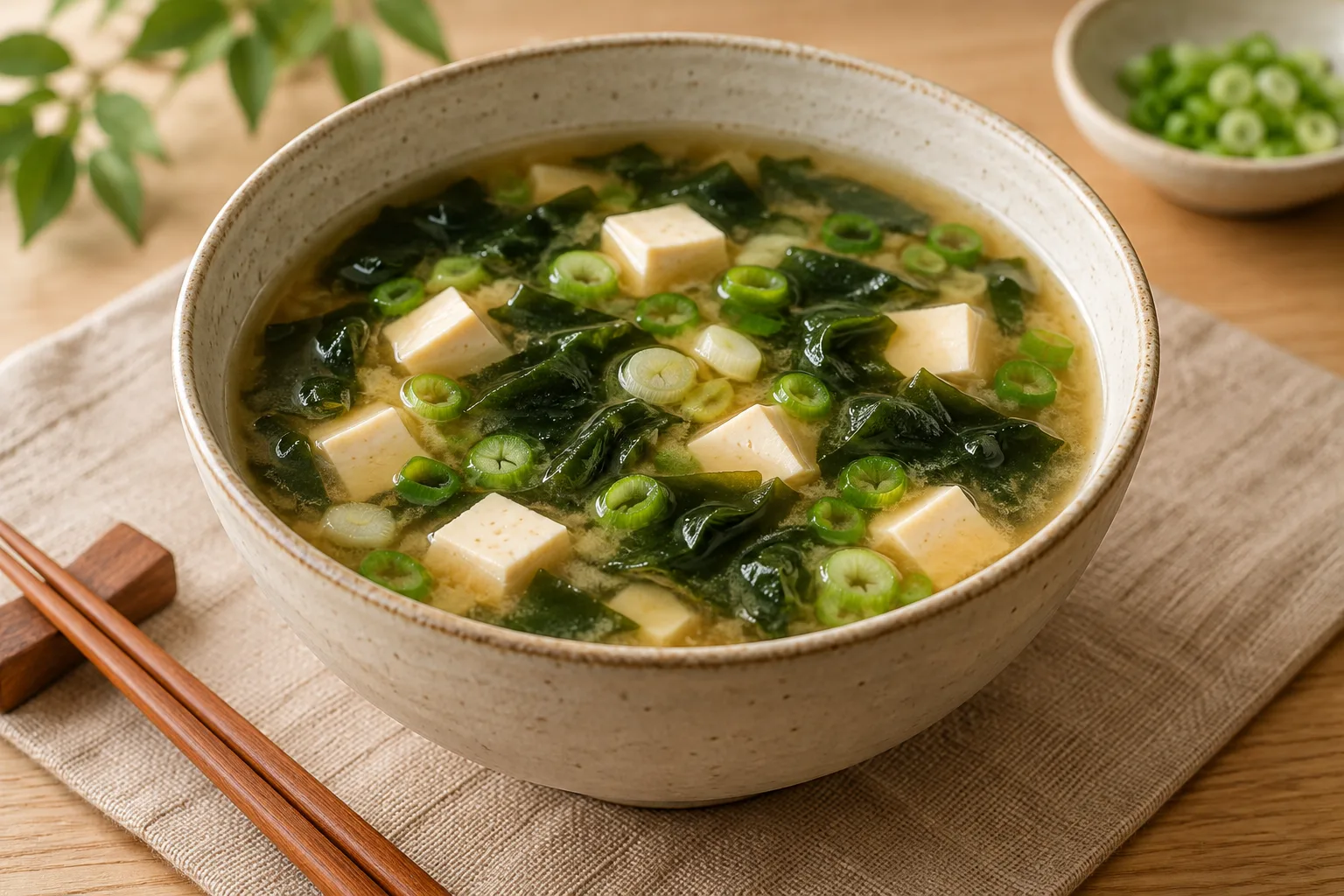
Use miso when you want to add salty, deep, savory flavor to a dish. It works in soups and broths, as well as in sauces for pasta or vegetables, dressings, marinades and glazes. Choose a lighter, milder paste for a gentler result and a darker or more assertive one when you want the seasoning to stand out. Saltiness and strength vary, so begin with a small amount, mix, and taste before adding more. Miso can season vegetable dishes as well as preparations with fish or meat.
How to use it
To incorporate miso smoothly, take a small amount of paste and dilute it with a little broth, water or another liquid from the recipe; then stir that mixture into the rest. In soup, add it toward the end and stir until evenly distributed. You can also whisk it with vinegar and other dressing ingredients, combine it with liquids for a sauce, or spread a miso mixture over vegetables to glaze them. Add it gradually and taste before adding extra salt, since miso already brings saltiness. Follow the recipe and any package directions if they specify a particular use.
Flavour and texture
Miso tastes salty, savory and complex, and can give a dish a pronounced depth of flavor. The paste is generally thick, though its consistency varies with its ingredients and style. Light miso is often milder and somewhat sweet; red and darker styles tend to have a more pronounced, saltier flavor. Color alone does not reliably tell you how strong a particular paste will taste, so sample a little and adjust the recipe.
How to choose it
Look for miso near refrigerated condiments or in shops selling Asian groceries. Check the package for the style, ingredient list and storage directions. Some varieties contain grains such as barley or wheat in addition to soybeans, and product formulations differ. If you need to avoid an ingredient because of an allergy or intolerance, do not rely on the product name or color alone; read the label for the specific product.
Storage
Store miso according to the package directions and, after opening, keep it refrigerated if instructed; refrigeration is common for preserving the paste. Use clean utensils and close the container after each use. Do not treat one universal storage period as a guarantee: formulations and directions vary between products. If the appearance, smell or container seems abnormal, follow the manufacturer's guidance and avoid consuming a product that appears spoiled.
Substitutions
Soy sauce or tamari can add saltiness and savory flavor to a dish, but they are liquids and do not exactly replace the texture or complexity of a fermented paste. You can also adjust a recipe with salt and broth if you only need to correct seasoning, though this will not reproduce miso's characteristic flavor. Make changes gradually and taste as you go, since substitutes and miso styles vary in intensity.
Common mistakes
A common mistake is adding too much miso at once: saltiness and intensity vary by style. Start with a small amount and taste before correcting the seasoning with more salt. Adding the paste straight to liquid without mixing can leave lumps; first dilute it in a little broth or other recipe liquid. Do not assume that every miso contains the same grains or suits a particular diet; check the ingredients on the package.
Safety and allergens
Miso commonly contains soy, and some varieties include wheat, barley or other grains. If you have an allergy or intolerance, check the ingredient list and allergen information for the specific product; varieties are not interchangeable with respect to ingredients. Also follow the package's storage and use directions.
Culinary uses
- Condimento salado y sabroso para intensificar el sabor
- Base para sopas, salsas, aderezos y marinados
Recommended techniques
- Disolver en un poco de caldo o líquido antes de incorporarlo
- Mezclar en sopas hacia el final de la cocción o usar en glaseados y marinados
Pairs well with
- Tofu, champiñones y verduras
- Caldo, fideos, arroz y aderezos con jengibre o vinagre
Frequently asked questions
Is miso always made only from soybeans?
Not necessarily. It may combine soybeans with grains such as rice, barley or wheat. Check the ingredients of the variety you buy.
What is the difference between light and dark miso?
Light miso is often milder and somewhat sweet, while red or darker varieties tend to be more assertive and salty. Ingredients and recipe also affect the flavor.
How can I prevent lumps when using miso?
First dilute the paste in a small amount of broth, water or another recipe liquid, then stir it into the dish.
Ingredient allergens
Allergen listDocumented presence
-
Soybeans
Miso paste
Estimated nutrition
- Fat
- 5.56 g
- Saturates
- 1.11 g
- Carbohydrate
- 22.2 g
- Sugars
- 11.1 g
- Fibre
- 5.6 g
- Protein
- 11.1 g
- Salt
- 11.52 g
Sources and review
Automatically researched, cross-checked and validated content. Sources consulted:
- En el etiquetado alimentario hay algunas menciones que son obligatorias eletiquetadocuentamucho.aesan.gob.es/obligatoria.html
- ¿Por qué la muerte es origen de miedos y tabúes? doi.org/10.64628/aao.fccyk3qj3
- The Essential Glossary of Cooking Terms for the Culinary Arts - Escoffier www.escoffier.edu/blog/culinary-arts/the-essential-glossary-of-cooking-terms-for-the-culinar…
- Agencia Española de Seguridad Alimentaria y Nutrición www.aesan.gob.es/
- TOL - Formulario de búsqueda tol-alim.aesan.gob.es/TOL-ALIM/xhtml/busqueda/formBusqueda.jsf
- Nutrition.gov libguides.lsco.edu/nutrition
- ALCON alcon.aesan.gob.es/ALCON/Login.do
- Miso Sauce for Winter Pasta Recipe | Institute of Culinary Education www.ice.edu/blog/miso-sauce-winter-pasta
- Blog - Mastering Umami Without Meat: Plant-Based Flavour-Building Techniques www.cordonbleu.edu/malaysia/blog-mastering-umami-without-meat-plant-based-flavour-building-t…
- SPRING RECIPES drexel.edu/moment/~/media/Drexel/EMSS-Site-Group/Moment/Documents/activities/drexel-spring-r…
- ¿Qué es el miso y cómo incorporarlo a tus recetas? foodandtravel.mx/sabores/productos-en-temporada/que-es-el-miso-y-como-incorporarlo-a-tus-rec…
- ¿Qué es el miso? La joya culinaria de la cocina japonesa www.cocinadelirante.com/curiosidades/que-es-el-miso
- Miso | Gastronomía & Cía www.gastronomiaycia.com/miso/amp/
- Managing allergens | Food Standards Scotland www.foodstandards.gov.scot/business-guidance/running-a-food-business/managing-allergens