- Category
- Grains, flour and pasta
- State
- Powdered
- Usual unit
- cup
What it is
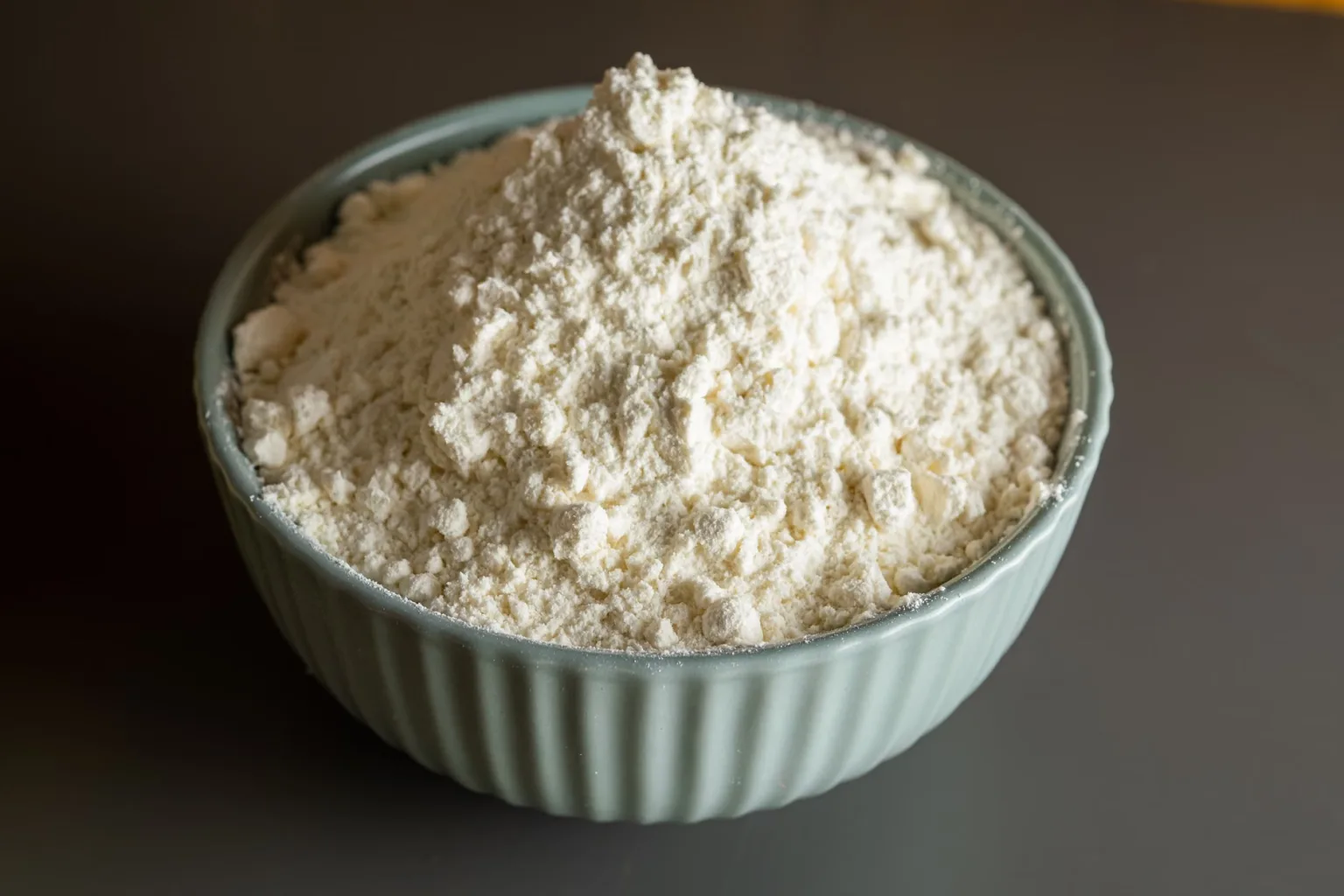
Nixtamalized corn flour is made from corn kernels treated with an alkaline solution, dried, and ground. That process sets it apart from flour made simply by milling raw, dry corn, coarse cornmeal, corn starch, and precooked corn flour for arepas. The product is sold dry and ground, usually as a fine powder that is mixed with water to make dough. It is commonly used for tortillas, tortilla chips, and tamales. Its color can vary with the corn used; color alone does not mean that the flour belongs to a different product category.
When to use it
Choose this flour when a recipe calls for nixtamalized corn flour or masa harina, particularly for tortillas, tortilla chips, and tamales. It is intended to be mixed with water to make dough for preparations associated with nixtamalized corn. Do not automatically replace it with ordinary corn flour, coarse cornmeal, corn starch, or precooked corn flour: these products are made differently and may behave differently in a recipe. If making arepas, check whether the recipe specifies precooked corn flour, a distinct product. Use it in breads or other doughs only when the recipe is designed for this type of flour.
How to use it
Check the package first to confirm that the product is nixtamalized corn flour, and follow its directions because products and milling can vary. Gradually mix it with water until a moist, workable dough forms; allow the flour to take up the liquid as you mix, and adjust the consistency a little at a time rather than assuming one universal ratio. For tortillas, divide and flatten the dough into rounds, then cook them before serving. It can also be used for tamales and tortilla chips when the recipe calls for it. Do not treat it as corn starch for thickening or as ordinary flour milled from raw corn: the processing and culinary uses differ.
Flavour and texture
It has a recognizable corn flavor and a fine, powdery texture when dry. When mixed with water, it forms a dough that can be shaped for tortillas and other preparations intended for nixtamalized flour. The color depends on the corn variety and may be light or darker; white, yellow, or blue color alone does not change the type of processing. The final texture also depends on the grind, hydration, and preparation.
How to choose it
Look for “nixtamalized” or “masa harina” on the package and check the suggested uses. Do not assume every corn flour works for tortillas: ordinary dry-milled corn flour, corn starch, and precooked corn flour are different products. Color can reflect the corn used, so identify the product by its name and process rather than by whether it is white or yellow. If a recipe calls for precooked corn flour for arepas, choose that product instead.
Storage
Keep the flour dry in a tightly closed package and follow the storage directions printed on the label. Protect it from moisture, and check the product before use if the package is damaged or water has entered it. There is no universal storage period established here; use the date and instructions supplied for the particular product.
Substitutions
Fresh nixtamalized corn masa may work in some preparations such as tortillas or tamales, but it contains more moisture than dry flour and requires an adjustment to the method. There is no universal quantity conversion. Ordinary corn flour, cornmeal, corn starch, and precooked arepa flour are not direct substitutes; their processing differs and the result may change.
Common mistakes
The most common mistake is treating all corn flours as equivalent. Nixtamalized corn flour is not the same as ordinary flour milled from dry corn or precooked flour for arepas. Another mistake is adding all the water at once or relying on a ratio from a different product: add liquid gradually and follow the package directions. Do not confuse it with corn starch.
Safety and allergens
Follow the package directions and cook preparations as directed by the recipe. Do not infer that a product meets a particular dietary need from its name alone; check its label and cross-contact information if that matters to you.
Culinary uses
- Making tortillas and other pliable corn-based doughs
- Preparing tamales and tortilla-based dishes
Recommended techniques
- Whisk or mix with water to form dough, following the package directions
- Shape into tortillas and cook before serving
- Use in tamale preparations
Pairs well with
- Tortilla fillings
- Tamale fillings
Frequently asked questions
Is it the same as precooked corn flour for arepas?
No. Nixtamalized flour is made by treating corn with an alkaline solution, then drying and milling it; precooked flour for arepas is made by cooking, drying, and milling corn. They are not automatic substitutes.
What is it mainly used for?
It is commonly mixed into dough for tortillas, tortilla chips, and tamales. Check that the recipe specifically calls for nixtamalized flour.
How should I store it?
Keep it dry in a closed package and follow the package directions and date. There is no single storage period that applies to every product.
Ingredient allergens
Allergen listThere are no verified associations for these ingredients yet.
Sources and review
Automatically researched, cross-checked and validated content. Sources consulted:
- Harinas de maíz ¿Cuántos tipos hay y para qué sirven? - Formacion en Gastronomia www.formacionengastronomia.com/cocina-latina/harinas-de-maiz-cuantos-tipos-hay-y-para-que-si…
- La harina de maíz y sus diferentes usos en la cocina | masymas supermercados www.supermasymas.com/blog/la-harina-de-maiz-y-sus-diferentes-usos-en-la-cocina/
- Para qué sirve la harina de maíz y cuántos tipos de ella existen www.eldiario.es/consumoclaro/sirve-harina-maiz-tipos-existen-pm_1_12914046.html
- Cuáles son los cinco tipos más comunes de harinas de maíz y para qué sirve cada una www.directoalpaladar.com/ingredientes-y-alimentos/cuales-cinco-tipos-comunes-harinas-maiz-si…
- case Córdoba, Veracruz, Mexico Caracterización fis ageconsearch.umn.edu/record/353264/files/Hern%C3%A1ndez-C%C3%A1zares%2C%2Bcon-2.pdf
- Zea mays - Wikipedia, la enciclopedia libre es.wikipedia.org/wiki/Zea_mays
- Client Challenge doi.org/10.2307/jj.25999138.11
- The Persistence of Indigenous Markets in Mexico's ... pdxscholar.library.pdx.edu/context/open_access_etds/article/6591/viewcontent/Denham_psu_0180…
- ¿Qué es el Maíz Nixtamalizado? Guía tacosdonaloren.com/raices-de-mexico/que-es-el-maiz-nixtamalizado-el-secreto-de-las-autentica…
- Descubre qué es la harina de maíz nixtamalizado | Tortillas Nagual tortillasnagual.com/harina-maiz-nixtamalizado/
- - YouTube www.youtube.com/watch?v=pVFoSsDiVDQ&vl=es-ES