- Category
- Fruit
- State
- Fresh
- Usual unit
- slice
What it is
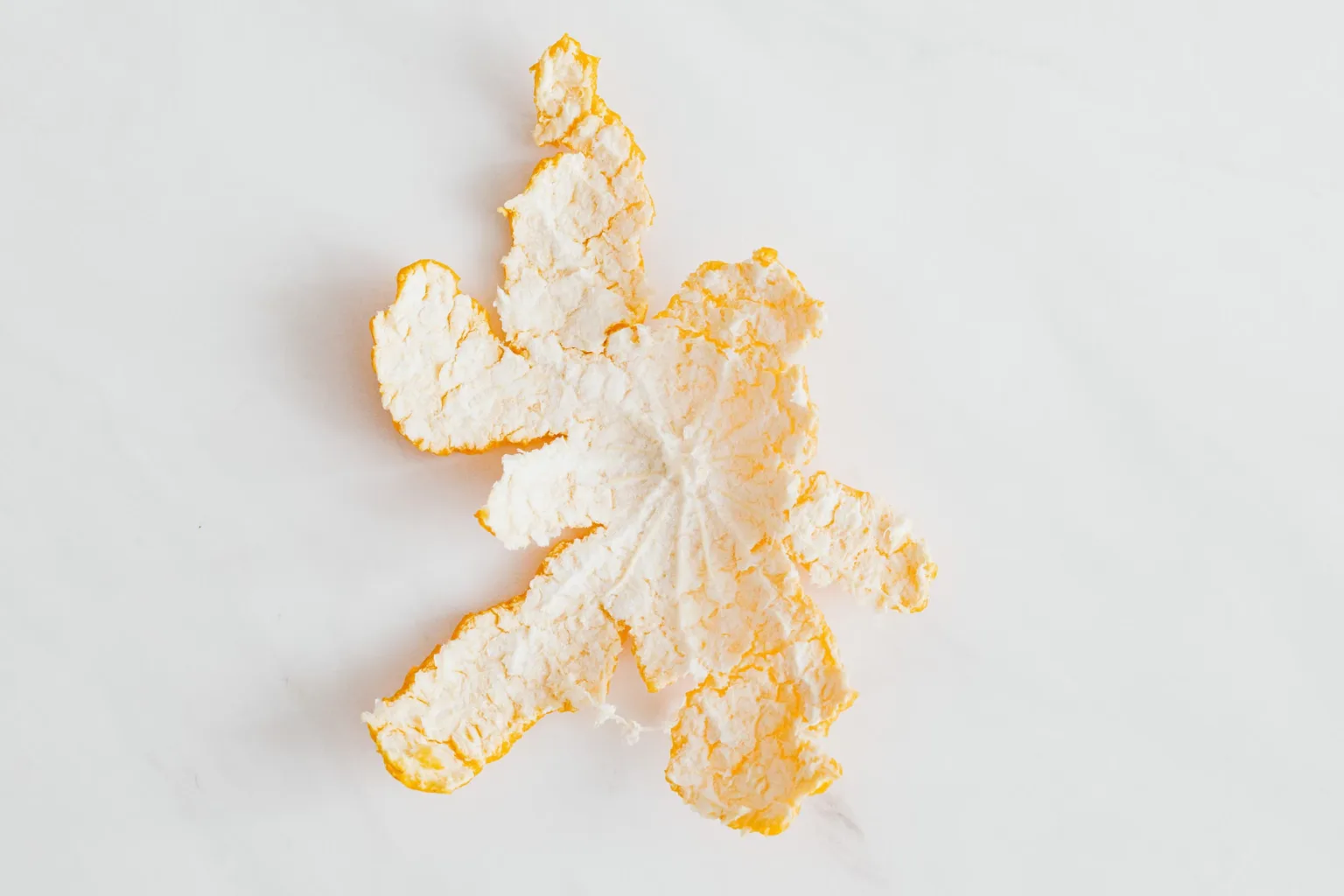
Orange peel is the outer covering of the fruit Citrus sinensis, a plant in the Rutaceae family. In cooking, the thin colored outer layer is commonly used, grated or cut into strips to contribute aroma. Beneath it is the white pith, which can taste bitter and may dominate a dish if too much is included. Peel can be used fresh or dried, as an aromatic ingredient rather than merely discarded fruit covering. The orange variety and the way the peel is prepared can affect its aroma and the result in a recipe.
When to use it
Use orange peel when you want citrus aroma without adding orange juice or much liquid. Fresh zest works well in cakes, cookies, creams, vinaigrettes, and sauces; strips can infuse drinks or preparations that will be strained. In savory cooking, it can accompany vegetables, fish, seafood, meat, or stews. Start with a modest amount and taste before adding more, especially if a recipe might include some of the white pith, which can contribute bitterness.
How to use it
Wash the orange thoroughly before removing its peel. To make zest, run a fine grater over the surface and turn the fruit as you work, taking only the colored outer layer and avoiding the white pith beneath it. A peeler can remove wider strips, which you can trim to suit the recipe. Stir zest into batters, creams, vinaigrettes, sauces, or drinks; in hot dishes, add it as a seasoning and taste as you cook. To use dried zest, dry it and keep it in a closed container. Avoid adding large amounts of pith unless you want a more bitter flavor.
Flavour and texture
The colored outer layer has a citrus aroma and a flavor that can seem bittersweet. Fine zest blends readily into batters, sauces, and dressings; strips are more visible and can be removed before serving. The inner white pith may taste bitter, so the result depends on which layer is removed and how much is used. Fresh zest has a clearer, fresher citrus character than dried zest, which loses some of that freshness.
How to choose it
Choose oranges that are firm and free of damaged areas when you plan to use the peel. If the package identifies a surface treatment or says the peel is not for food use, do not use it in cooking; follow the label. Wash the fruit well before zesting or peeling. For recipes that need strips, choose fruit whose peel can be removed without breaking apart; for zest, the fruit’s shape matters less.
Storage
For a stored seasoning, dry the zest and keep it in a closed container, like a spice or dried herb. Fresh zest has a clearer aroma, so prepare it when the recipe needs it. No storage duration for fresh peel is established here: do not assign it a fixed shelf life, and follow the product’s storage instructions and local food-safety guidance.
Substitutions
Try lemon or mandarin zest if orange is unavailable. These are different citrus fruits and will not reproduce orange’s aroma exactly, so start with less and adjust after tasting. Lemon can give a sharper, more acidic impression; mandarin has a different citrus profile. Substitution works best when the peel is used for aroma rather than as a main ingredient.
Common mistakes
Grating too deeply includes the white pith and can add unwanted bitterness. Other common errors are skipping the wash before removing peel or adding so much zest that it masks other flavors. Take only the colored outer layer, use what the recipe needs, and taste before increasing the amount.
Safety and allergens
Wash the orange thoroughly before zesting or peeling, and use only fruit whose peel is suitable for food use. Keep the peel clean and avoid contact with unclean surfaces or utensils. Follow any specific washing or storage directions on the package.
Culinary uses
- Aromatizante cítrico para platos dulces y salados
- Condimento y guarnición para bebidas y comidas
Recommended techniques
- Rallar finamente solo la parte exterior coloreada
- Cortar en tiras o secar la ralladura para usarla como condimento
Pairs well with
- Chocolate, pasteles y postres
- Vinagretas, salsas, pescado y marisco
Frequently asked questions
Can orange peel be eaten?
Orange peel is used as a cooking ingredient, especially grated or cut into strips. Wash the fruit well and check that the peel is suitable for food use.
Which part of the peel should I zest?
Zest the colored outer layer. Avoid taking much of the white pith, which can add a bitter taste.
How should I store dried zest?
Keep it in a closed container, like a spice or dried herb. For a fresher aroma, prepare zest when you need it.
Ingredient allergens
Allergen listThere are no verified associations for these ingredients yet.
Estimated nutrition
- Fat
- 0 g
- Saturates
- 0 g
- Carbohydrate
- 72 g
- Sugars
- 72 g
- Fibre
- 2 g
- Protein
- 4 g
- Salt
- 0.21 g
Sources and review
Automatically researched, cross-checked and validated content. Sources consulted:
- The Essential Glossary of Cooking Terms for the Culinary Arts - Escoffier www.escoffier.edu/blog/culinary-arts/the-essential-glossary-of-cooking-terms-for-the-culinar…
- Washington State Food Access English-Spanish Glossary wpcdn.web.wsu.edu/wp-snaped/uploads/sites/2/2025/10/Food-Access-Spanish-Glossary.pdf
- melons - Extension St. Croix County stcroix.extension.wisc.edu/files/2019/06/Melons-Melones-Fact-Sheet.pdf
- Is it possible to microwave an egg? | Servicio de Extensión de OSU extension.oregonstate.edu/es/ask-extension/featured/it-possible-microwave-egg
- Para la ciudadanía www.aesan.gob.es/para-la-ciudadania
- Cáscara de Naranja Dulce, Tintura doi.org/10.31003/uspnf_m58748_01_02
- Cáscara de naranja, cruda (¿orgánica?) | Fundación G+E www.diet-health.info/es/recetas/ingredientes/in/sk2533-cascara-de-naranja-cruda
- Evaluación sensorial de ate hecho con pectina de cáscara de ... ageconsearch.umn.edu/record/353223/
- Colinabo Repollo | Healthy Seasonal Recipes | Health and Nutrition | Cooperative Extension www.udel.edu/academics/colleges/canr/cooperative-extension/nutrition-wellness/recipes/colina…
- ¿Qué hacer con cáscaras de naranja? Ideas www.naranjasjulian.com/blog/que-hacer-con-cascaras-de-naranja-11-ideas/?srsltid=AYCX9vIIcBnN…
- La cáscara de los cítricos en la cocina | Consumer www.consumer.es/alimentacion/la-cascara-de-los-citricos-en-la-cocina.html
- Propiedades de la naranja (y de su cáscara) | Tu Huerta Online www.tuhuertaonline.es/propiedades-naranja