- Category
- Fish and seafood
- State
- Fresh
- Usual unit
- g
What it is
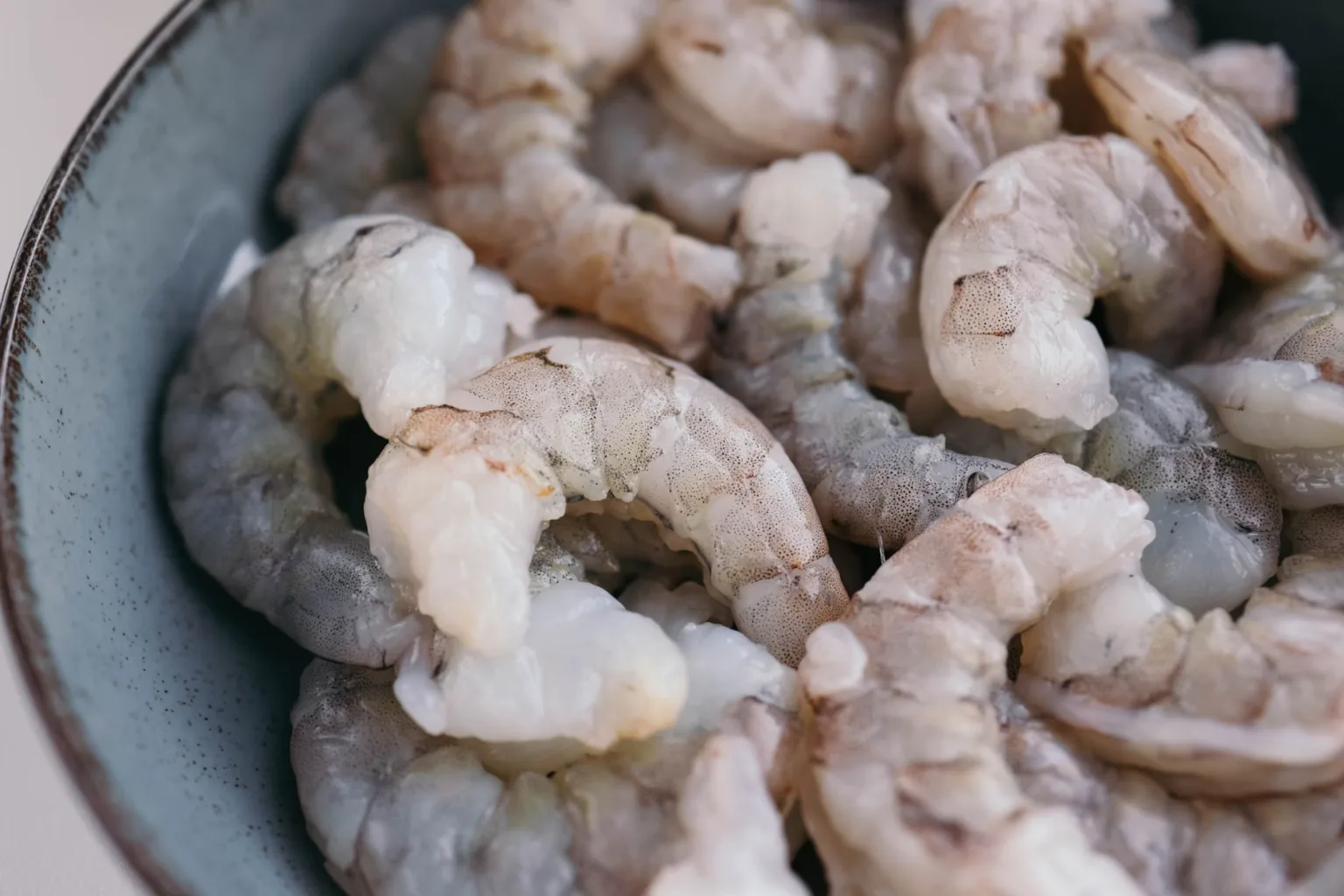
Peeled shrimp are shrimp with the shell already removed, making them ready to cook or add to a recipe depending on whether they are sold raw or cooked. Shrimp are crustaceans. The term does not, by itself, identify the species, size, origin, or whether the shrimp are raw or cooked. They may be sold refrigerated or frozen, so check the package rather than guessing from appearance. Some products retain the tail; check whether you want to remove it for the dish you are making.
When to use it
Choose peeled shrimp when you want to reduce prep work or add seafood to an everyday meal. Raw shrimp suit recipes where you want to control doneness and seasoning, such as stir-fries, pasta, rice dishes, or skewers. Cooked shrimp are convenient in cold dishes such as salads, sandwiches, or shrimp cocktails, and can be added near the end of a hot dish. In every case, check the label to see whether the shrimp are raw or cooked, then choose a use that fits the product.
How to use it
Check the package to confirm whether the shrimp are raw or cooked and refrigerated or frozen, and follow its handling directions. If frozen, thaw them according to the product directions before cooking for more even results. Pat them dry before sautéing so they release less moisture in the pan. Cook raw shrimp until the flesh is firm and opaque, and avoid prolonged cooking, which can make them tough. Adapt pan-cooking, grilling, or poaching to the shrimp size and package directions. Cooked shrimp do not need to be cooked again: add them near the end of a hot dish or serve them cold. Remove the tail if desired, and check for the dark digestive tract if relevant to your preparation.
Flavour and texture
Flavor and texture vary with species, size, handling, and whether the shrimp are raw or cooked. Their generally delicate flavor works with simple seasonings as well as more assertive sauces. When cooked with care, shrimp are tender and juicy; extended cooking can make them firm and rubbery. Frozen and refrigerated products may differ in texture, so use the product label and instructions as your guide.
How to choose it
Check the label to find out whether the shrimp are raw or cooked, refrigerated or frozen, and whether the tails are on. A count per pound or kilogram can indicate commercial size: a lower count generally means larger shrimp, though grading conventions can vary. Raw peeled shrimp should feel firm rather than soft, and should not have an unusual or strong odor. Check species and origin information too, when it is available.
Storage
Store shrimp according to the package directions and keep the product in the cold-storage conditions specified there. If the package identifies them as frozen, follow its thawing directions and do not leave them on the counter. After thawing, follow the package instructions for use, and do not refreeze unless the label permits it. If the shrimp have an unusual odor, do not taste them; refer to the package or seller for guidance.
Substitutions
For a similar preparation, peeled prawns of a comparable size can stand in, but species and size may change cooking needs. In salads or sandwiches, cooked peeled shrimp can replace raw shrimp when the recipe does not rely on cooking them; add them at the end or serve them cold. Do not swap cooked shrimp for raw shrimp without adjusting the method.
Common mistakes
Do not assume peeled shrimp are raw, cooked, refrigerated, or frozen; check the package. Avoid cooking them for too long, as the flesh can become tough and rubbery. Do not add cooked shrimp at the start of a long cooking process, or they may lose their texture. Before sautéing, patting the shrimp dry helps them brown instead of releasing excess moisture.
Safety and allergens
Shrimp are crustaceans and can trigger allergic reactions. Check the package allergen information, especially if you have a shellfish allergy or need to avoid cross-contact. Follow the product directions for storage and handling.
Culinary uses
- Main ingredient in seafood dishes
- Addition to pasta, rice, soups and salads
Recommended techniques
- Sautéing
- Boiling or poaching
- Grilling
- Adding cooked shrimp to cold dishes
Pairs well with
- Garlic and butter
- Pasta and rice
- Curry and pineapple
- Lemon and fresh herbs
Frequently asked questions
Are peeled shrimp always raw?
No. They are sold raw or cooked. Check the label before deciding how to prepare them.
Can I use cooked shrimp in a hot recipe?
Yes. Add them near the end to warm them without subjecting them to prolonged cooking.
Can peeled shrimp cause an allergy?
Yes. Shrimp are crustaceans and can trigger allergic reactions. Check the package allergen information as well.
Ingredient allergens
Allergen listThere are no verified associations for these ingredients yet.
Estimated nutrition
- Fat
- 1.79 g
- Saturates
- 0 g
- Carbohydrate
- 0 g
- Sugars
- 0 g
- Fibre
- 0 g
- Protein
- 17.9 g
- Salt
- 0.78 g
Sources and review
Automatically researched, cross-checked and validated content. Sources consulted:
- Client Challenge doi.org/10.2307/jj.27939689.16
- The Essential Glossary of Cooking Terms for the Culinary Arts - Escoffier www.escoffier.edu/blog/culinary-arts/the-essential-glossary-of-cooking-terms-for-the-culinar…
- Regionalismo y centralismo culinario en un manuscrito huancaíno del siglo XIX : influencias y sabores | OpenAlex openalex.org/W2981277873
- " El amor en los tiempos del cólera -- [Love in the Time of Cholera]" people.duke.edu/~garci/cibertextos/bilingues/GARCIA-MARQUEZ-G/AMOR-TIEMPOS-COLERA/AMOR-TIEMP…
- Camarones pelados y secos_Baidu Enciclopedia baike.baidu.com/es/item/Camarones%20pelados%20y%20secos/1336163
- Camarones: todo lo que necesitas saber - Compesca compesca.com/camarones-todo-lo-que-necesitas-saber/
- Cómo cocinar camarones y 10 recetas para usarlos. - La Cocina de Vero lacocinadevero.com/como-cocinar-camarones-y-10-recetas-para-usarlos/
- Fufú de plátano verde - Wikipedia, la enciclopedia libre es.wikipedia.org/wiki/Fuf%C3%BA_de_pl%C3%A1tano_verde
- - YouTube www.youtube.com/watch?v=pFyNyrDyLoY
- Camarones, un manjar incomparable del mar — Cuisine Santé du Chef Jimmy O'Brien cuisinesante.net/es/article.html?slug=la-crevette-delice-de-la-mer-incomparable
- El Saber: La Compra de Camarones y Vieiras | Cook for Your Life www.cookforyourlife.org/es/nuestro-blog-de-cocina/el-saber-la-compra-de-camarones-y-vieiras/
- Cómo Cocinar Camarones: Hervir, Asar, Saltear y Hornear – Intershell Seafood intershellseafood.com/es/blogs/shellfish-recipes/how-to-cook-shrimp?srsltid=AYCX9vJMUL3dqOcT…
- Cómo los métodos de cocción afectan la calidad y el sabor del camarón vannamei allaquaculture.com/entrada/como-los-metodos-de-coccion-afectan-la-calidad-y-el-sabor-del-cam…
- Food allergen labelling and information requirements technical guidance - GOV.UK www.gov.uk/government/publications/food-allergen-labelling-and-information-requirements-tech…