- Category
- Drinks
- State
- Liquid
- Usual unit
- ml
What it is
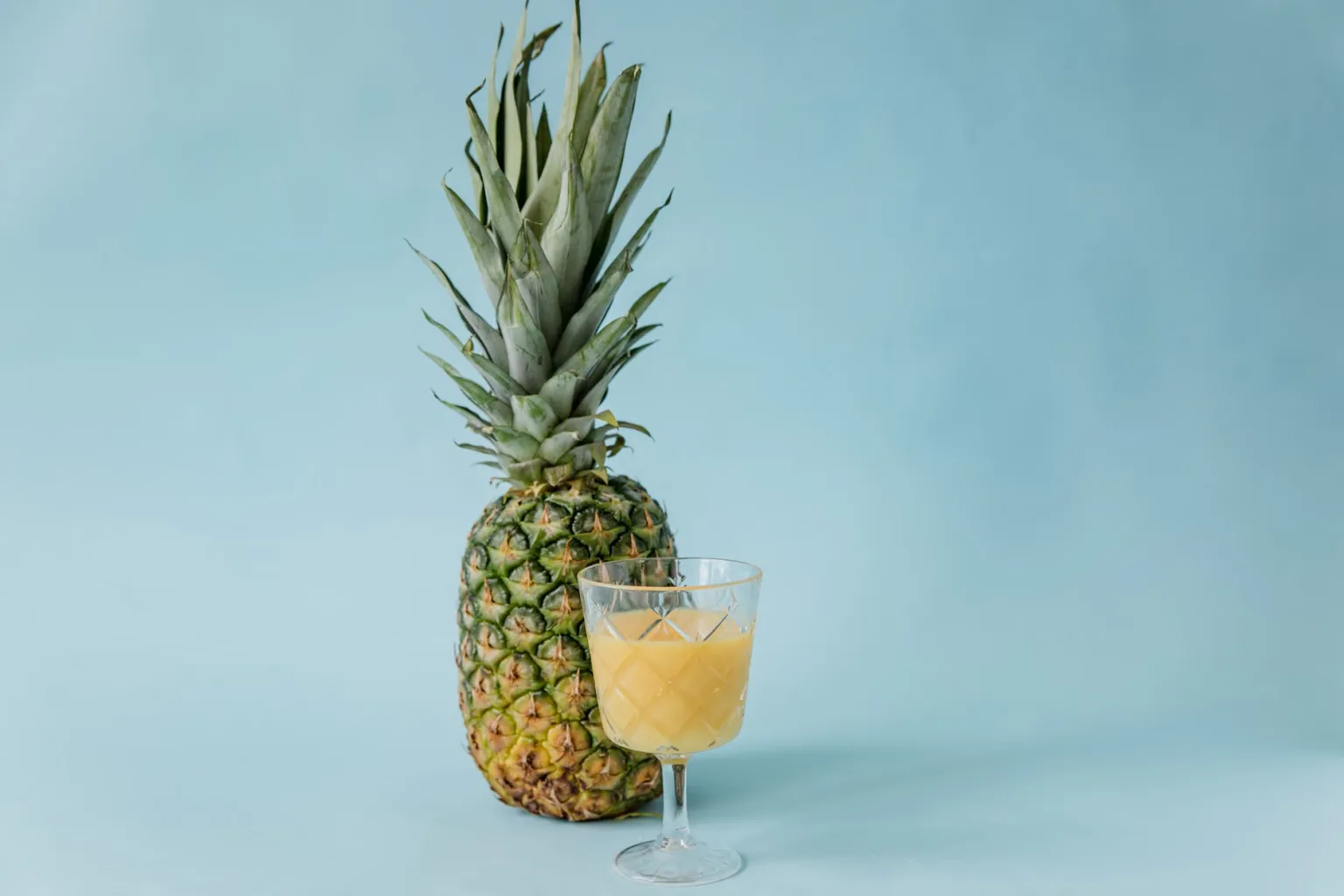
Pineapple juice is the liquid extracted from pineapple flesh. It can be made at home or purchased ready-made, and commercial products may differ according to their form and processing. It is sold as a drink ready to serve and also as concentrate; these should not be treated as interchangeable, since concentrate can differ in strength and consistency. Its flavor typically brings tropical fruit notes, sweetness and acidity, though the balance varies with the fruit and the product. In cooking, it works both as a drink and as an ingredient for flavoring blends, cocktails, smoothies, sauces and marinades. Not every carton or bottle contains the same kind of product, so read the label and follow the manufacturer’s directions.
When to use it
Use it when you want a distinct tropical note in a drink, smoothie or cocktail, or a fruity accent in a sauce or marinade. It pairs readily with citrus, coconut and ginger, and can complement sweet preparations or contrast with savory dishes. It can also be used as the liquid in some preserved-fruit recipes, provided the recipe specifies an appropriate method. Keep in mind that its flavor can dominate when used generously: add it gradually and taste before adjusting the other ingredients.
How to use it
Shake or stir the product if the label says it may separate, then measure the amount you need. For a simple drink, serve it on its own or combine it with water, citrus or another juice. In smoothies, blend it with fruit and yogurt or a suitable alternative; add liquid gradually to control consistency. In cocktails, use it as the fruity component and balance its sweetness with acidic or less-sweet ingredients. Add a moderate amount to sauces and dressings, tasting before seasoning further. It can also be included in a marinade or a preserved-fruit recipe: follow a reliable recipe rather than improvising a preservation process. If using concentrate, check the label for directions.
Flavour and texture
Pineapple juice has a tropical fruit flavor, usually with noticeable sweetness and acidity. Its intensity, color and mouthfeel vary among products and depending on whether the juice is filtered, pulpy or concentrated. Filtered juice generally feels lighter, while pulp can add body. Its aroma can stand out quickly in a mixture, so add it gradually when you want a balanced result.
How to choose it
Read the label to distinguish ready-to-drink juice, juice with pulp and concentrate. Check for listed added ingredients and for product-specific preparation and storage directions. Choose an intact package and check its printed dates and handling instructions. If you want a less intense ingredient for mixing, consider ready-to-drink juice rather than concentrate; their uses and proportions are not necessarily interchangeable.
Storage
Follow the storage directions printed on the package, since they can vary by product and processing. After opening, follow the label’s refrigeration and consumption instructions, and close the container again after serving. For freshly prepared juice, use a clean container and refrigerate it; do not leave it out of the cold longer than necessary. There is no single storage duration that applies to every pineapple juice.
Substitutions
Orange juice can replace it when a fruity, citrus profile is suitable, although the flavor will change. Apple or white grape juice offers a milder alternative and also changes the sweetness and acidity. To reduce sweetness, try water with a little lime. Adjust gradually and taste again: no substitute reproduces pineapple’s tropical flavor exactly.
Common mistakes
Do not use concentrate as though it were ready-to-drink juice; check its label first. Avoid adding a large amount at once, since its flavor can overpower other ingredients. Do not assume that every product has the same pulp, sweetness or acidity. When preserving fruit, do not replace a tested recipe’s instructions with an improvised method using juice.
Safety and allergens
Use clean utensils and follow the package’s storage and consumption directions. Keep freshly prepared juice refrigerated and handle it carefully. Do not use a product if its package is damaged or it shows unusual signs; discard it if in doubt.
Culinary uses
- Bebida para servir sola o mezclada
- Ingrediente para cócteles y batidos
- Aporte de sabor a salsas y marinadas
Recommended techniques
- Mezclar en bebidas y batidos
- Incorporar a salsas o aderezos
- Usar como líquido para preparar fruta conservada siguiendo una receta validada
Pairs well with
- Coco y lima
- Jengibre y cítricos
- Yogur y frutas tropicales
- Pollo o pescado en preparaciones marinadas
Frequently asked questions
Are pineapple juice and pineapple concentrate the same?
Not necessarily. Concentrate may be more intense and may require preparation as directed on its label. Check the package before substituting one for the other.
What can I make with pineapple juice?
Use it in drinks, smoothies, cocktails, sauces and marinades. It can also be used in some preserved-fruit recipes when the recipe specifically calls for it.
How should I store it after opening?
Follow the package directions, including refrigeration and consumption instructions. Products can differ, so there is no single duration that applies to all of them.
Ingredient allergens
Allergen listThere are no verified associations for these ingredients yet.
Estimated nutrition
- Fat
- 0 g
- Saturates
- 0 g
- Carbohydrate
- 10.1 g
- Sugars
- 9.3 g
- Fibre
- 0.3 g
- Protein
- 0.28 g
- Salt
- 0 g
Sources and review
Automatically researched, cross-checked and validated content. Sources consulted:
- ¿Por qué la muerte es origen de miedos y tabúes? doi.org/10.64628/aao.fccyk3qj3
- The Essential Glossary of Cooking Terms for the Culinary Arts - Escoffier www.escoffier.edu/blog/culinary-arts/the-essential-glossary-of-cooking-terms-for-the-culinar…
- Tipos de Maridaje: de afinidad o contraste | Bartalent Lab www.bartalentlab.com/academy/tecnicas-sala-barra/clases-maridaje-combinacion-comida-bebida
- Vamos a Conservar Alimentos: La Congelación de Frutas extension.psu.edu/vamos-a-conservar-alimentos-la-congelacion-de-frutas/
- Para la ciudadanía www.aesan.gob.es/para-la-ciudadania
- Preserving for special diets | Servicio de Extensión de OSU extension.oregonstate.edu/es/catalog/sp-50-646-preserving-special-diets
- Thumo? Fumo? Or Zumo? - Off-Campus Study blogs.hope.edu/off-campus/culture/thumo-fumo-or-zumo/
- Spanish Language & Culture in Cadiz, Spain - UMass Lowell BlogSpanish Language & Culture in Cadiz, Spain | UMass Lowell Blog blogs.uml.edu/cadiz-spain-summer-2024/
- Jugo de piña - Wikipedia, la enciclopedia libre es.wikipedia.org/wiki/Zumo_de_pi%C3%B1a
- Zumo natural de piña en el análisis y la comparación de vinos y bebidas alcohólicas: ¿cómo encaja una opción sin alcohol en la competencia? oganyo.es/zumo-natural-de-pina/
- Los zumos concentrados de piña y uva: alternativas nutritivas de sabores intensos - Productores de zumo de uva concentrado y NFC: JULIAN SOLER juliansoler.com/es/los-zumos-concentrados-de-pina-y-uva-alternativas-nutritivas-de-sabores-i…
- Maridajes para piña en Latinoamérica ✓ basmatic.com/maridaje/pina/latinoamerica