- Category
- Meat
- State
- Fresh
- Usual unit
- g
What it is
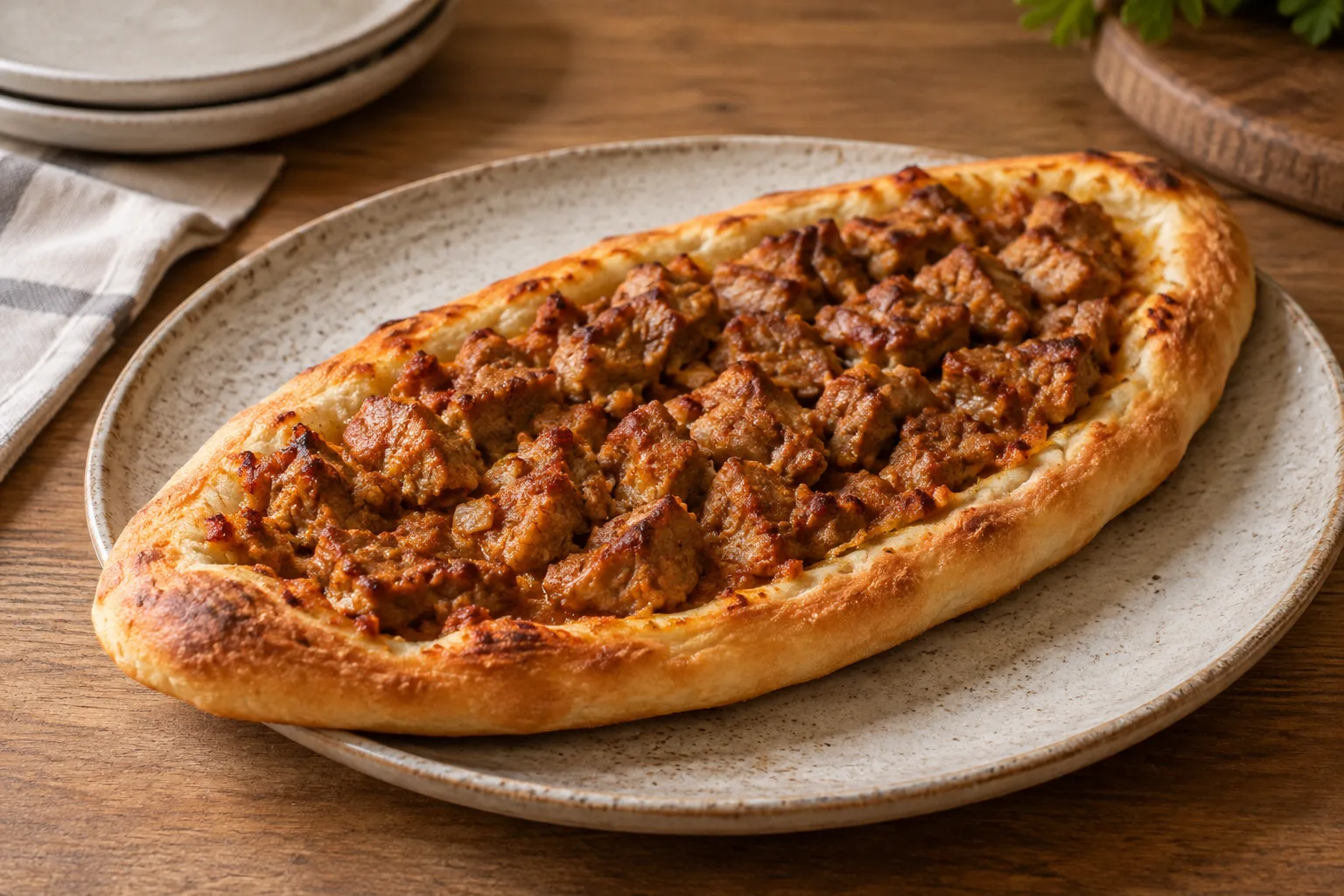
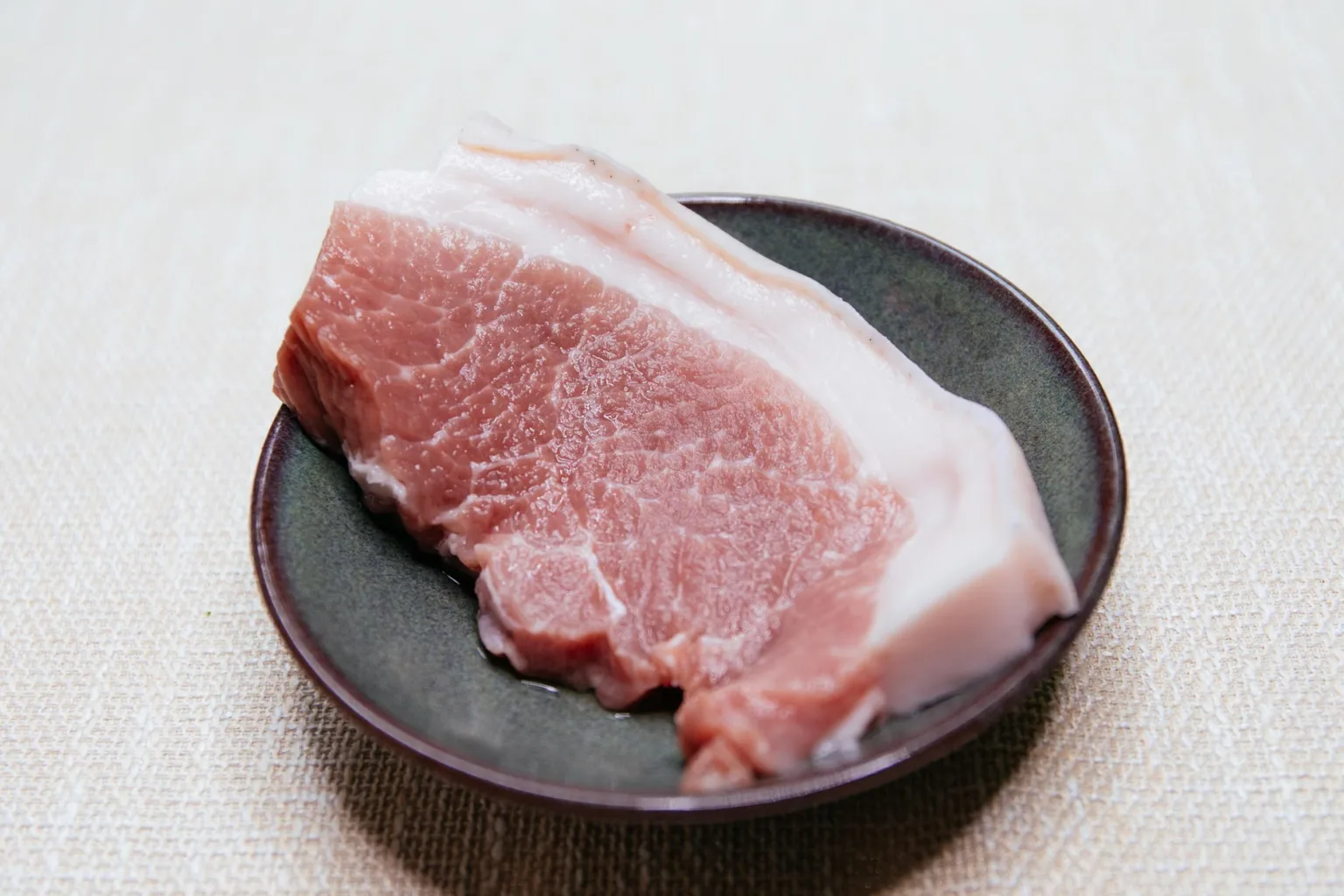
Pork is meat from a pig and is sold in different forms, including chops, roasts, pork belly and ground pork. These forms do not behave alike in the kitchen: the cut, size and proportion of lean meat to fat affect texture and preparation. Pork belly, for example, has layers of meat and fat; it can be cooked slowly and finished with high heat to brown the surface. Depending on the cut and recipe, pork can be served in pieces or shredded. When buying it, choose a cold product in intact packaging. At home, handle raw pork separately from foods that will be eaten without further cooking.
When to use it
Choose pork when a recipe calls for meat served in pieces, roasted, grilled or cooked slowly, or for ground meat when the recipe specifies it. Start with the cut: chops and roasts are cooked as whole pieces, while ground pork requires a different final temperature. Pork belly has a noticeable proportion of fat and may suit dishes where a rich texture or browned surface is wanted. Do not swap cuts without considering their shape and fat content: a recipe designed for slow cooking may not work the same way with a different piece.
How to use it
Keep raw pork cold from the time you shop and refrigerate it in secure packaging, positioned so juices cannot reach other foods. Wash your hands with soap and water before and after handling it, and use separate utensils and surfaces for raw meat and ready-to-eat foods. Cook pork chops and roasts to an internal temperature of 145°F (63°C), then let them rest for at least three minutes; cook ground pork to 160°F (71°C). Check with a food thermometer in the thickest part, without touching bone. Roast, grill, pan-cook or slow-cook pork according to the cut and recipe. Refrigerate leftovers promptly.
Flavour and texture
Flavor and texture vary with the cut and its fat content. Pork belly, for instance, has layers of meat and fat; slow cooking can make it tender, while a high-heat finish can brown and crisp the surface. Leaner pieces can dry out if overcooked. Depending on the preparation, pork may be served in pieces, sliced or shredded.
How to choose it
Choose pork near the end of your shopping trip to keep it cold, and look for intact packaging without tears or leaks. Refrigerated pork should feel cold. Put the package in a bag to contain juices and take it home promptly. Appearance and smell alone cannot confirm that meat has been handled safely, so follow the package’s storage instructions and date guidance.
Storage
Refrigerate raw pork as soon as you get home, at 40°F (4°C) or below, on a tray or in a container that can catch leaks and away from ready-to-eat foods. As a guide, use it within three to five days or freeze it. For freezing, use freezer-safe wrapping that fits closely and limits air; label it with the cut and date. Thaw pork in the refrigerator or microwave, not on the counter.
Substitutions
If you need to change the cut, choose another pork cut that suits the method and texture you want, and adapt the preparation to that piece. A swap will not guarantee the same result: pork belly has layers of fat and meat unlike a chop or roast. For a different type of meat, adapt the recipe and check the relevant safe cooking temperatures.
Common mistakes
Do not treat every pork cut as interchangeable or rely on pink color alone to decide whether pork is done. Do not use the same utensil or board for raw meat and ready-to-eat food without washing it. Avoid thawing pork at room temperature, and do not treat appearance or smell as proof that it is safe.
Safety and allergens
Prevent cross-contamination by keeping raw pork separate from other foods and washing hands, utensils and surfaces after handling it. Use a thermometer: whole cuts should reach 145°F (63°C) and rest for at least three minutes; ground pork should reach 160°F (71°C). Chill perishable foods promptly and keep the refrigerator at 40°F (4°C) or below.
Culinary uses
- main protein
- filling for sandwiches, tacos and other dishes
Recommended techniques
- roasting
- grilling
- slow cooking
- pan-cooking
Pairs well with
- herbs and spices
- sweet-and-savory sauces
- fresh salad vegetables
Frequently asked questions
What temperature should pork reach?
Whole cuts such as chops and roasts should reach 145°F (63°C) internally and rest for at least three minutes. Ground pork should reach 160°F (71°C). Check with a food thermometer.
How long can raw pork stay in the refrigerator?
As a guide, keep it at 40°F (4°C) or below and use it within three to five days, or freeze it. Also follow the package’s storage directions.
Can I thaw pork on the counter?
No. Thaw it in the refrigerator or microwave. If you use a microwave, cook the pork immediately afterward.
Ingredient allergens
Allergen listThere are no verified associations for these ingredients yet.
Estimated nutrition
- Fat
- 4.12 g
- Saturates
- 2.35 g
- Carbohydrate
- 1.18 g
- Sugars
- 0 g
- Fibre
- 0 g
- Protein
- 21.2 g
- Salt
- 0.53 g
Sources and review
Automatically researched, cross-checked and validated content. Sources consulted:
- Client Challenge doi.org/10.2307/jj.27939689.16
- Food Selection & Storage | Home & Garden Information Center hgic.clemson.edu/factsheet/food-selection-storage/
- Food Storage for Safety and Quality - El Paso County Extension elpaso.extension.colostate.edu/wp-content/uploads/sites/44/2020/03/Food-Storage-and-Quality.…
- Chapter 2: In the Kitchen (Storing and Preparing Food; Preventing Food Waste) – Culinary Medicine opentextbooks.library.arizona.edu/culinarymedicine/chapter/chapter-2-kitchen/
- Kitchen Companion: Your Safe Food Handbook ucanr.edu/sites/default/files/2020-09/336322.pdf
- directrices del grupo de trabajo electrónico “aditivos en derivados de www.aesan.gob.es/dam/jcr:61b6b064-2831-4aaa-b068-2e63b9c9215d/trabajo_electronico.pdf
- Pork Carcass Fabrication: Packaging and Meat Safety extension.sdstate.edu/pork-carcass-fabrication-packaging-and-meat-safety
- New Pork Cooking Guidelines Similar for Beef — Extension and Ag Research News www.ag.ndsu.edu/news/newsreleases/2011/may-23-2011/new-pork-cooking-guidelines-similar-for-b…
- how to select pork Archives | Dinner Tonight dinnertonight.tamu.edu/tag/how-to-select-pork/
- Pulled Pork, un ingrediente comodín naturalxef.com/pulled-pork-quinta-gama/
- Todo sobre los usos del pork belly – Proan Alimentos proanalimentos.com/blogs/carne-cerdo/todo-sobre-los-usos-del-pork-belly?srsltid=AYCX9vLTT1vM…
- Pulled pork: qué hay detrás de esta carne deshilachada que el mundo entero ha convertido en tendencia margavilan.substack.com/p/pulled-pork-que-hay-detras-de-esta
- - YouTube www.youtube.com/watch?v=hy6XAvUMbQM