- Category
- Meat
- State
- Preserved
- Usual unit
- g
What it is
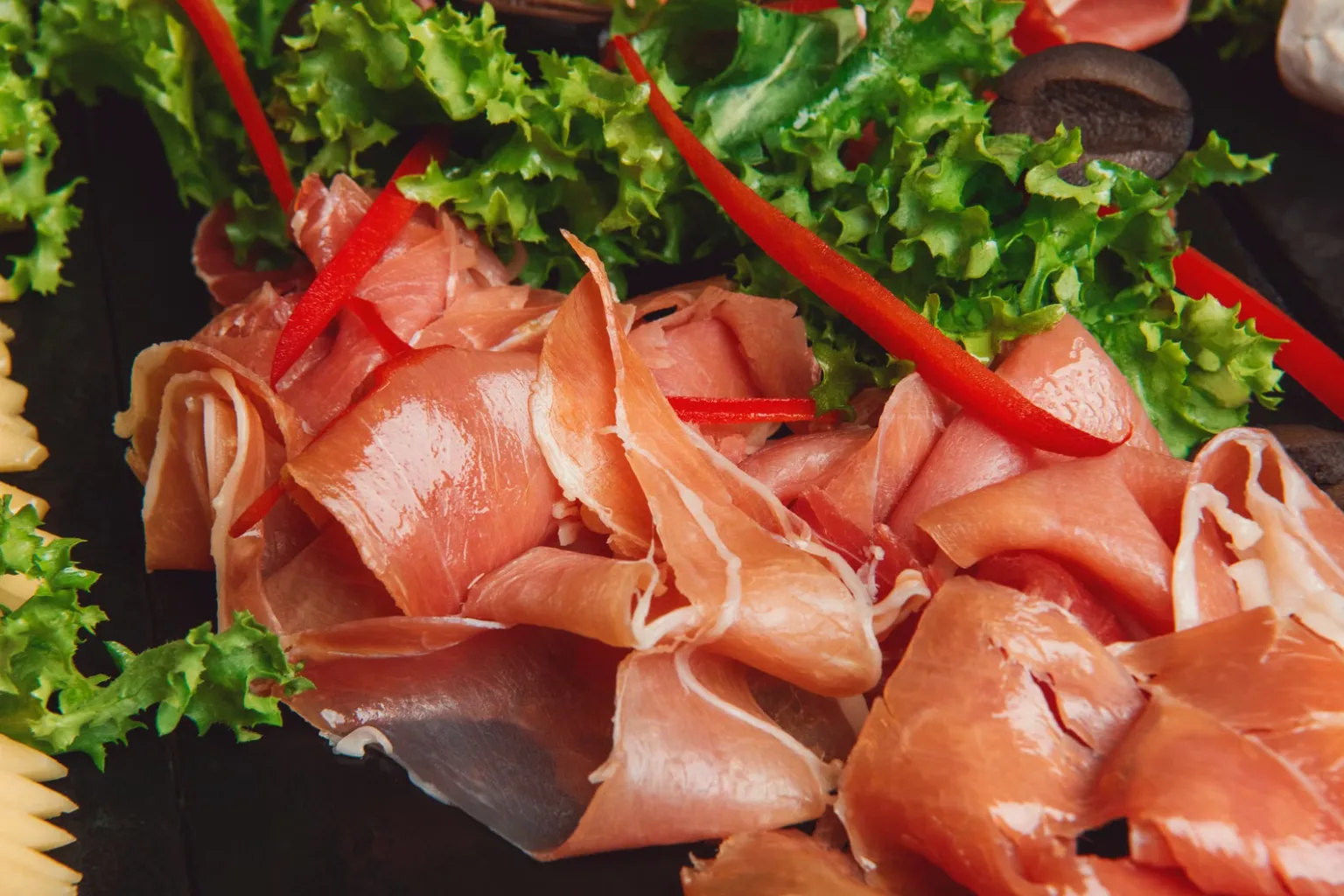
Prosciutto is the Italian word for ham and can refer to different products. In many culinary contexts, the unqualified name means prosciutto crudo: a pork leg that has been salted and cured, commonly served in thin slices. Prosciutto cotto, by contrast, is cooked ham and is usually softer and moister. Cured varieties can differ according to region and production method. Prosciutto di Parma PDO, for example, is a protected designation with a defined production area and specific requirements. It is therefore unwise to assume that every product called prosciutto has the same flavor, texture, or treatment. Read the full product name and package directions before serving or cooking it.
When to use it
Choose prosciutto crudo when you want a savory, salty ingredient to show off in thin slices, such as on an antipasto board, in a sandwich, or in a salad with fruit. It can also add flavor to pasta, pizza, or vegetables. Prosciutto cotto is a better fit when you want mild, moist cooked ham for sandwiches, with cheese, or in hot dishes. In either case, it can bring plenty of saltiness: taste the dish before adding more. Follow the package directions to determine whether the product is meant to be served as is or cooked.
How to use it
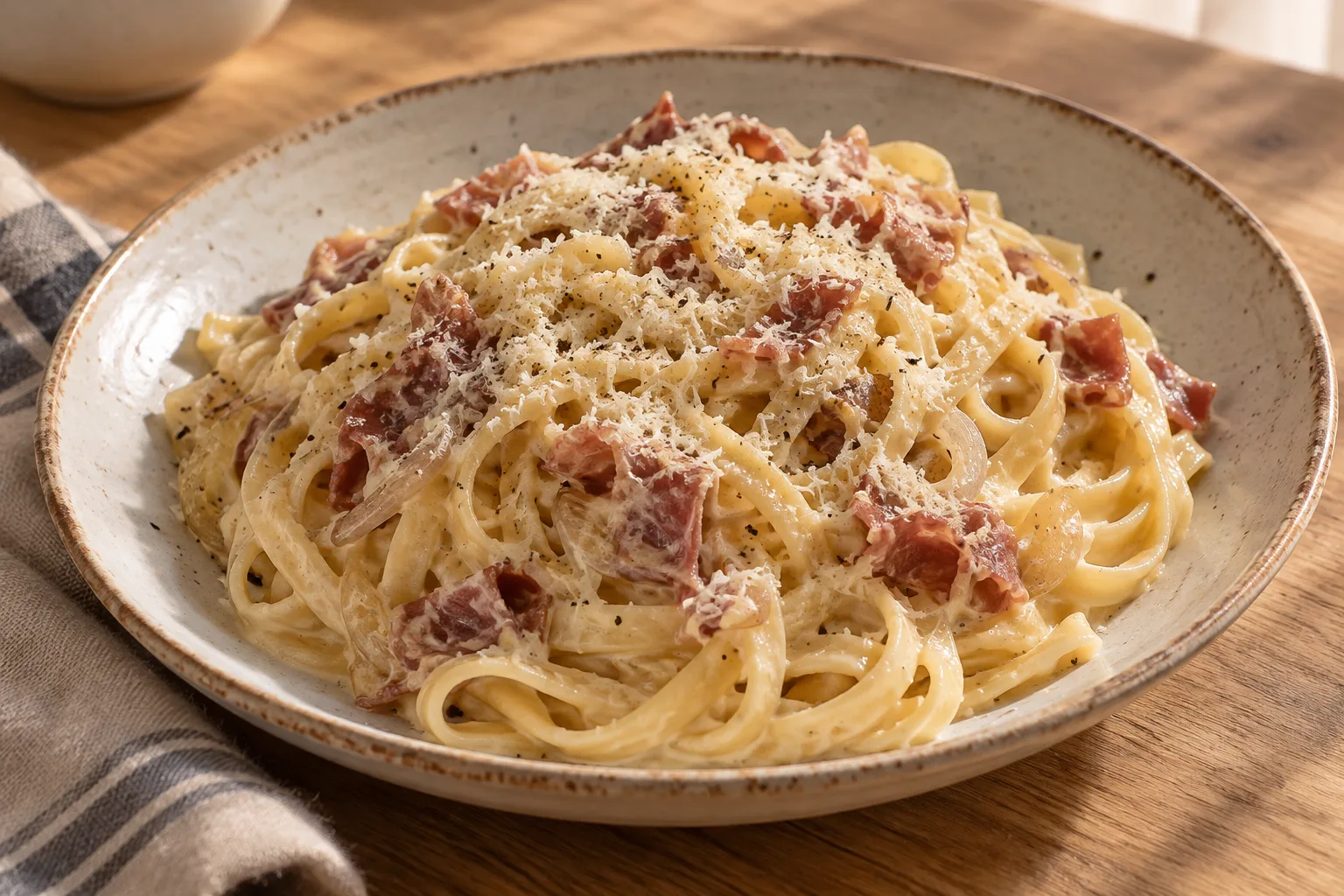
To serve prosciutto crudo, gently separate the slices and arrange them loosely on a board or over bread; thin slices tear easily. Pair it with melon, other sweet fruit, cheese, or vegetables, and add it to a salad just before serving. For pasta or pizza, add it at the end for a tender texture, or cook it briefly if you prefer it firmer and crisp. Prosciutto cotto works in sandwiches, fillings, and hot dishes much like other cooked ham. Avoid over-seasoning: the ham already contributes salt. Always check the label, since the name may describe cured or cooked products with different directions for use.
Flavour and texture
Prosciutto crudo is typically savory, salty, and aromatic, with thin, tender slices that can feel silky. Its precise profile depends on the product and its curing. Prosciutto cotto is usually milder and moister, with the texture of cooked ham. The cut and serving method also matter: a thin, cold slice tastes and feels different from one that has been warmed or crisped in a pan.
How to choose it
Read the full product name: prosciutto crudo and prosciutto cotto are not interchangeable in every dish. If you want a protected variety, check that its designation appears on the package; Prosciutto di Parma PDO has specific requirements. Choose a format for your use, such as slices for serving or a piece to slice at home. Check the package for storage and serving directions, and do not assume all types have the same degree of curing or can be stored in the same way.
Storage
Prosciutto comes in different formats and product states, so the package is the safest guide to storage. Keep it refrigerated when the label says refrigeration is required, and return it to storage after opening according to those instructions. Follow the date and any directions for the product after opening. Do not assume cured prosciutto is safe to keep at room temperature simply because it is salted or cured.
Substitutions
To replace prosciutto crudo on a board or in a salad, try jamón serrano or another flavorful cured ham; saltiness and texture will vary. Prosciutto cotto can be replaced with another cooked ham when a moist, mild texture is wanted. In some hot recipes where a salty, browned note matters, cooked pancetta may work, though it does not reproduce prosciutto’s flavor or slice format.
Common mistakes
Do not confuse prosciutto crudo with prosciutto cotto: one is cured and the other cooked, and they are not always used in the same way. Avoid cooking thin slices for too long if you want them to remain tender. Taste before adding salt, since prosciutto contributes saltiness. Do not assume every product has identical storage directions; check the package.
Safety and allergens
Check whether the package says prosciutto crudo or cotto and follow its storage and serving directions, especially after opening. Do not assume a product can be kept at room temperature solely because it is cured or salted. If the label says it must be cooked, follow those instructions.
Culinary uses
- antipasto or charcuterie-board ingredient
- savory addition to hot dishes
- sandwich and salad filling
Recommended techniques
- serve in thin slices
- add near the end of cooking
- briefly cook for a firmer, crisp texture
Pairs well with
- melon and other sweet fruit
- bread and cheese
- pasta, pizza, salads, and vegetables
Frequently asked questions
Is prosciutto eaten raw?
Prosciutto crudo is cured ham and is commonly served without cooking. Prosciutto cotto means cooked ham. Check the full product name and package directions.
What is the difference between prosciutto crudo and cotto?
Crudo is cured and commonly sold in thin slices; cotto is cooked and usually milder and moister. Choose according to the texture and use you want.
Does prosciutto need to be cooked?
It depends on the product. Crudo is commonly served as is, while cotto is already cooked; follow the directions for the specific product.
Ingredient allergens
Allergen listThere are no verified associations for these ingredients yet.
Estimated nutrition
- Fat
- 12.5 g
- Saturates
- 5.36 g
- Carbohydrate
- 0 g
- Sugars
- 0 g
- Fibre
- 0 g
- Protein
- 25 g
- Salt
- 4.65 g
Sources and review
Automatically researched, cross-checked and validated content. Sources consulted:
- Client Challenge doi.org/10.2307/jj.27939689.16
- The Essential Glossary of Cooking Terms for the Culinary Arts - Escoffier www.escoffier.edu/blog/culinary-arts/the-essential-glossary-of-cooking-terms-for-the-culinar…
- directrices del grupo de trabajo electrónico “aditivos en derivados de www.aesan.gob.es/dam/jcr:61b6b064-2831-4aaa-b068-2e63b9c9215d/trabajo_electronico.pdf
- Prosciutto di Parma (DOP) - Agricultura y Desarrollo Rural agriculture.ec.europa.eu/farming/geographical-indications-and-quality-schemes/geographical-i…
- Salt: The Great Transformer | Institute of Culinary Education www.ice.edu/blog/salt-duck-prosciutto
- Evaluating the Safety of Duck Prosciutto - Blacklight honors.libraries.psu.edu/catalog/6353kmk52
- Ham Tips • AnswerLine • Iowa State University Extension and Outreach blogs.extension.iastate.edu/answerline/2019/04/15/ham-tips/
- Examining Food Culture as a Multivocal Dominant Symbol in openworks.wooster.edu/cgi/viewcontent.cgi?article=8247&context=independentstudy
- Prosciutto: ¿Qué es y qué tipos existen? lafamigliarestaurantes.com/blog/prosciutto-que-es-y-tipos/
- Prosciutto, ¿Qué es y cómo utilizarlo? hosteleriasantander.com/prosciutto/