- Category
- Grains, flour and pasta
- State
- Fresh
- Usual unit
- g
What it is
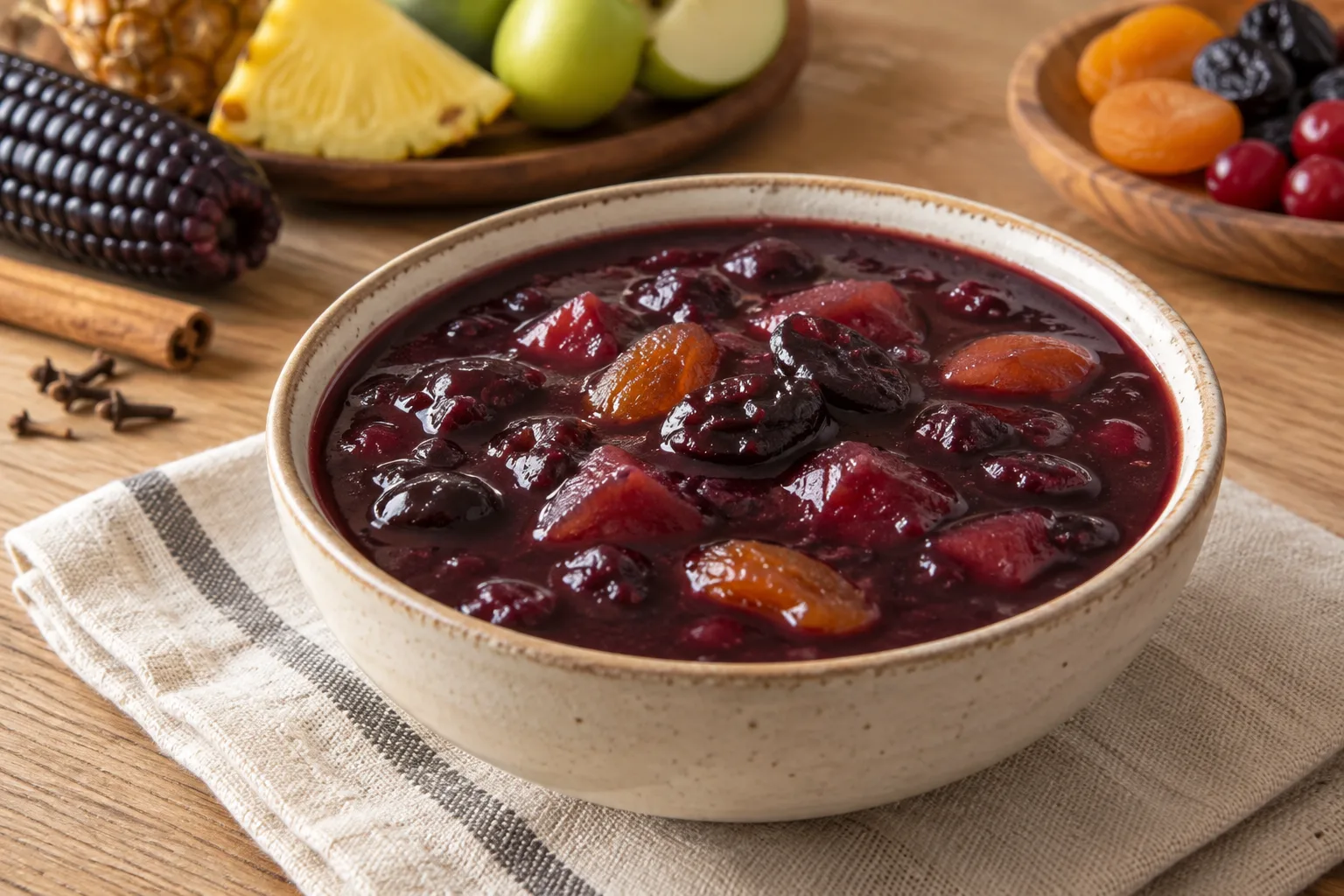
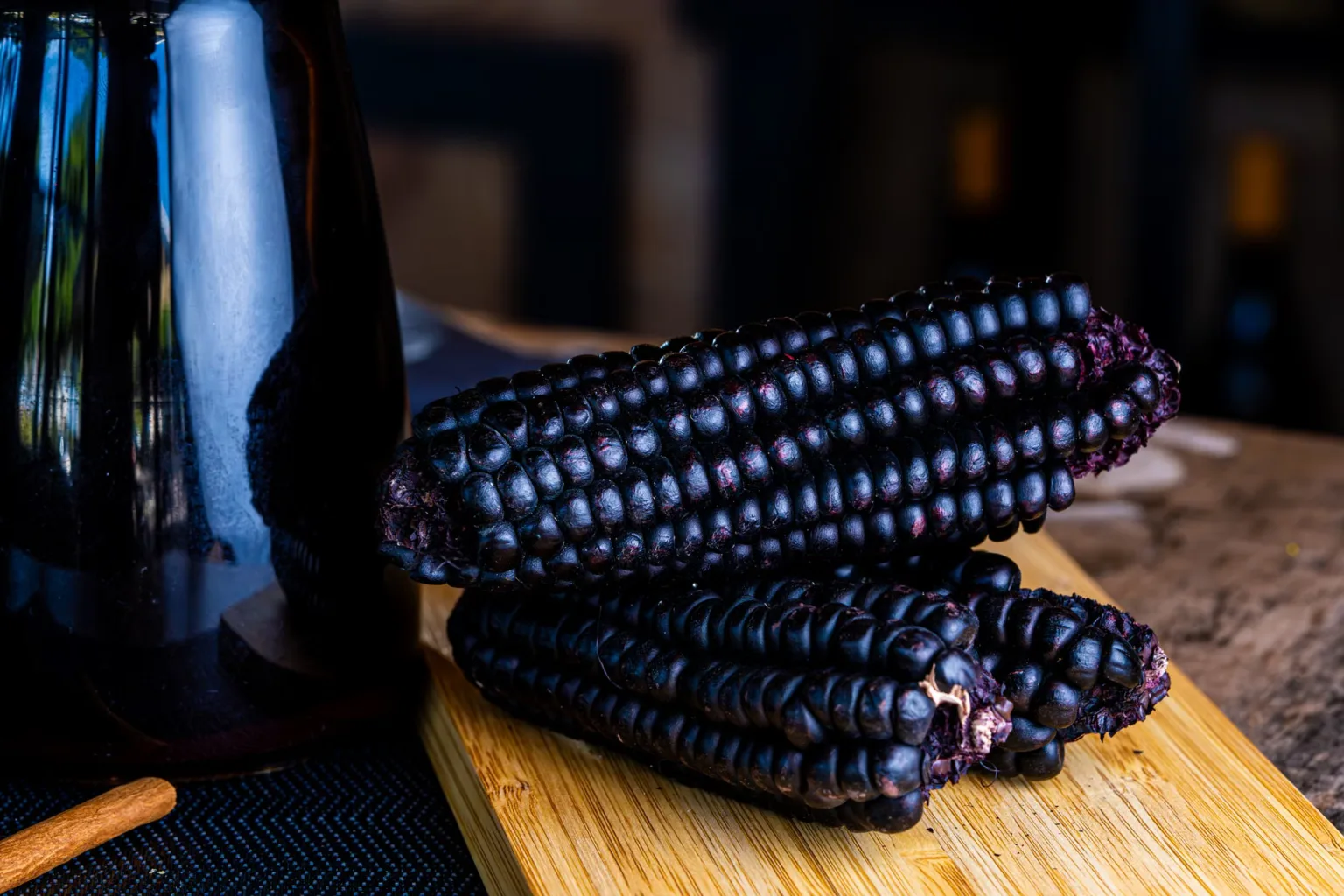
Purple corn is a cereal from the species Zea mays, recognized by the purple color of its kernels and, in some varieties, the central cob. In Peruvian cooking it is used for chicha morada, a drink, and mazamorra morada, a dessert. It can also be used to color other foods and drinks. Several varieties exist, and their color intensity is not necessarily identical. Purple corn works in both sweet and savory preparations; its striking color is a culinary characteristic, not a measure of flavor or quality.
When to use it
Choose purple corn when you want a drink or dessert to take on its distinctive color and a gentle maize flavor. It is especially suitable for chicha morada or mazamorra morada, and can also be incorporated into savory dishes or used to color food. The final shade can vary with the corn and the preparation. If you need only the structure of a maize grain, another kind of corn may work, but it will not give the same purple color.
How to use it
For a chicha morada-style drink, simmer purple corn with aromatic ingredients and fruit, strain the mixture, then adjust its sweetness and citrus flavor to taste. Cinnamon, cloves, pineapple, apple, quince, lemon and sugar appear in a traditional preparation of this kind. Purple corn can also be cooked into a dessert such as mazamorra morada or used to color other foods. In savory dishes, pair it with ingredients that do not obscure its color. Adjust liquid and sweetness to the recipe: there is no single proportion that applies to every variety and form.
Flavour and texture
Its flavor is described as pleasant and similar in character to traditional maize, so it can suit sweet and savory preparations. Its purple color is its most distinctive visual feature and can tint the liquid or food cooked with it. Color intensity depends on the variety and how it is used; not every product will look the same. Texture depends on whether the kernels are cooked whole, ground, or used in a drink or dessert.
How to choose it
Look for a product clearly identified as purple corn and check whether it is sold fresh, as kernels, or in another form. Shades vary among varieties, so a difference in color intensity alone does not show that a product is poor quality. If color matters to your recipe, choose a form that clearly states which part of the corn it contains. A traditional drink can use the whole cob and kernels; for other uses, choose the form that suits the preparation.
Storage
Follow the package directions when the corn is packaged, since storage depends on its form. Buy an amount suited to your planned use and keep it separate from anything that could contaminate it. Guidance for sweet corn says to process fresh corn promptly for best quality; that is not a storage rule validated specifically for every purple corn variety.
Substitutions
Yellow or white corn can replace purple corn when you want a maize ingredient with a similar role in a recipe. The result will lose the characteristic purple color, so these are not equivalent substitutes for a drink or dessert where that color is essential. Adjust the recipe to the form and flavor of the product you use.
Common mistakes
Do not assume every purple corn variety has the same color intensity or will color a recipe in the same way. Replacing it with yellow or white corn will not preserve the purple shade. Avoid adding citrus or sugar without tasting first, since suitable amounts depend on the recipe and personal preference.
Safety and allergens
Wash the corn and use clean utensils and surfaces before preparing it. Do not use these cooking suggestions for canning: preserving corn in jars requires a safe, specific canning recipe.
Culinary uses
- Base para bebidas de maíz morado
- Ingrediente de postres como la mazamorra morada
- Colorante natural para alimentos y bebidas
Recommended techniques
- Hervir la mazorca entera o los granos para preparar una bebida
- Cocerlo como parte de un postre
- Usarlo para aportar color a preparaciones
Pairs well with
- Canela y clavo de olor
- Piña, manzana y membrillo
- Limón y azúcar
Frequently asked questions
What is purple corn used for?
It is used in drinks such as chicha morada, desserts such as mazamorra morada, and as a coloring ingredient in foods.
Can purple corn be used in savory dishes?
Yes. It can be used in savory preparations as well as drinks and desserts; its color may be an important part of the result.
Can yellow corn replace purple corn?
It can replace it when a similar maize ingredient is needed, but it will not provide purple corn’s distinctive color.
Ingredient allergens
Allergen listThere are no verified associations for these ingredients yet.
Estimated nutrition
- Fat
- 2.5 g
- Saturates
- 0 g
- Carbohydrate
- 80 g
- Sugars
- 0 g
- Fibre
- 2.5 g
- Protein
- 0 g
- Salt
- 0 g
Sources and review
Automatically researched, cross-checked and validated content. Sources consulted:
- Vamos a Conservar Alimentos: Maíz dulce extension.psu.edu/vamos-a-conservar-alimentos-maiz-dulce/
- Growing Culturally Relevant Food at the Urban Farm scholarship.claremont.edu/cgi/viewcontent.cgi?article=1171&context=pitzer_theses
- ¡Asegurándonos de que no eres un robot! repositorio.unac.edu.pe/bitstream/handle/20.500.12952/3152/Moreno%20y%20Silva_TESIS_2018.pdf…
- Seasonal Produce Handouts | UNL Food | Nebraska food.unl.edu/seasonal-produce-handouts/?page=2
- Repositorio Digital Universidad De Las Américas: Aplicación gastronómica del maíz morado dspace.udla.edu.ec/handle/33000/7057
- The human-alloprimate interface in Gandoca, Costa Rica dr.lib.iastate.edu/bitstreams/b4f8dda8-433c-4515-b5c9-b4e9617a5961/download
- Maíz morado - EcuRed www.ecured.cu/index.php/Ma%C3%ADz_morado
- Chicha morada: la emblemática bebida de origen inca de propiedades antioxidantes - Food & Wine en Español foodandwineespanol.com/gastronomia/chicha-morada-la-emblematica-bebida-de-origen-inca-de-pro…
- Maíz morado para Niños ninos.kiddle.co/Ma%C3%ADz_morado