- Category
- Fruit
- State
- Fresh
- Usual unit
- g
What it is
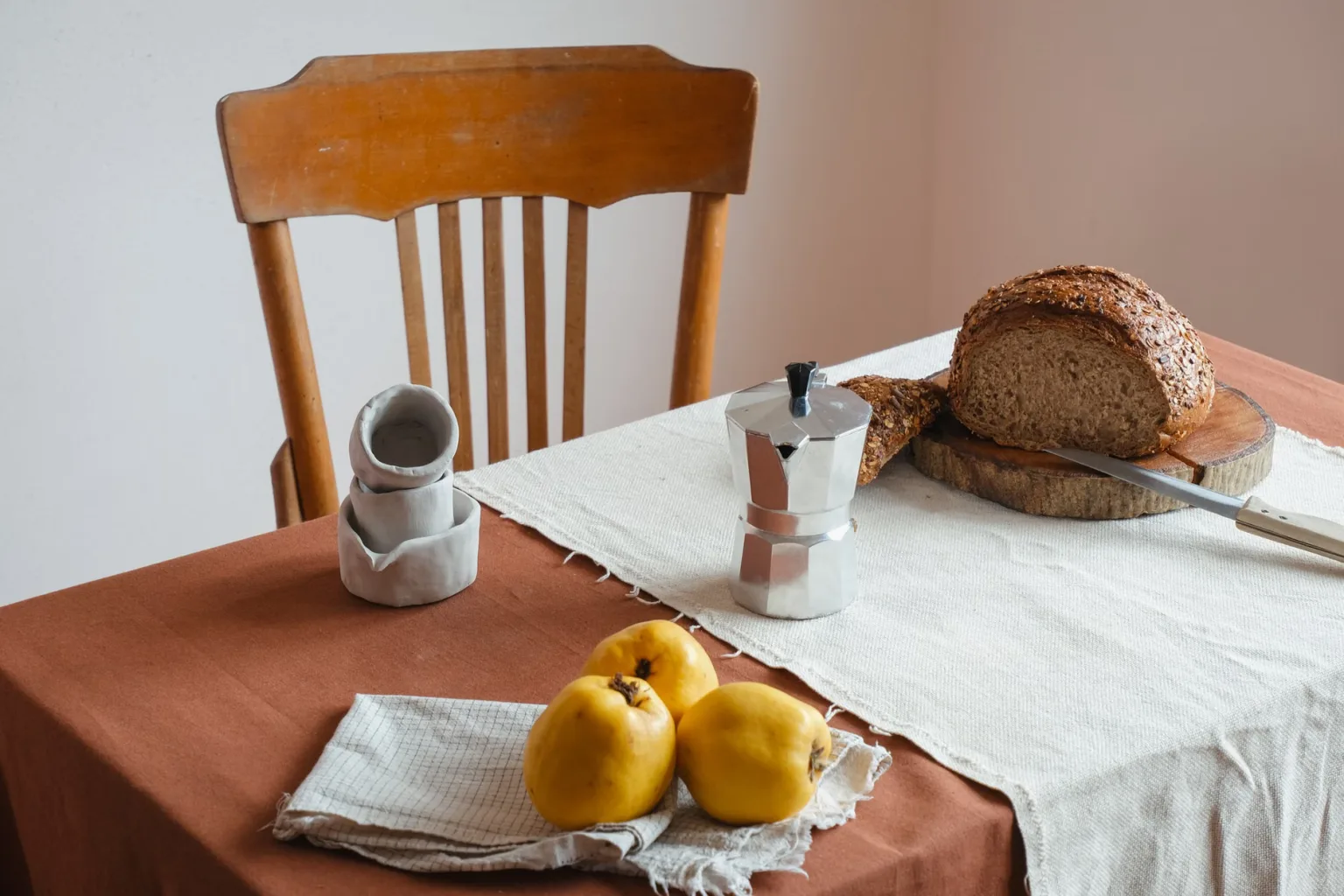
Quince is the fruit of the quince tree, Cydonia oblonga, in the rose family, Rosaceae. The fruit resembles an apple or pear and may have an irregular shape; as it ripens, its skin can turn yellow or golden. Its flesh stays firm even when mature. The aroma is pronounced and sweet, while the raw flavor can be tart and somewhat bitter, so quince is commonly used cooked. It is a pome fruit botanically related to apples and pears, but it should not be confused with them or assumed to have the same flavor and texture. Quince is used in sweet preparations such as fruit paste, jams, and jellies, and in cooked-fruit recipes.
When to use it
Choose quince when you want a strongly scented fruit for cooking rather than tender fruit to eat like an apple. It works well roasted, simmered, or candied, and in fruit paste, jam, and jelly. A few pieces can also be added to apple sauce or pie for a distinct aromatic note. Availability depends on location: in Argentina, quince arrives during the Southern Hemisphere autumn and early winter, while other regions follow different calendars. Use it in dishes that benefit from cooking and from its tart, fragrant character.
How to use it
Wash the fruit and remove the stem and any damaged ends. Cut it into pieces or slices to suit the preparation; its firm flesh is suited to cooking. Roast, simmer, or candy it, or make it into fruit paste, jam, or jelly. You can also add a few pieces to apple sauce or pie for extra fragrance and a different flavor. Quince can provide its own gelling power in jelly; use a tested recipe and follow its processing and canning directions rather than improvising times or storage conditions. Do not expect the raw flavor to match a ripe apple: quince is usually firmer, tarter, and more bitter.
Flavour and texture
Quince has a pronounced, sweet fragrance. Its flesh is very firm, even when ripe, and the raw fruit can taste tart and somewhat bitter. It suits fruit paste, jam, and jelly; the finished flavor and texture depend on the preparation.
How to choose it
Look for yellowish skin that is intact, without bruises or other damage. A ripe quince can resemble a golden apple or pear, though its surface is often irregular. Its fragrance is a notable feature, and appearance can vary by variety and growing region.
Storage
Choose intact fruit without bruises and check its condition before cooking. There is no single storage duration that can be applied to every quince: variety, ripeness, and conditions vary. For preserved jelly or jam, follow a tested recipe and its canning instructions.
Substitutions
Apple or pear may work as alternatives in some cooked-fruit dishes, but they are not exact equivalents: quince is especially firm, tart, and fragrant. Choose according to the result you want, and do not assume the fruits will behave identically in a recipe.
Common mistakes
Expecting quince to eat like an apple can be disappointing: it is often firm, tart, and somewhat bitter when raw. Another mistake is assuming that quince, apples, and pears have the same texture or that canning directions can be exchanged between recipes.
Safety and allergens
For jelly or jam intended for storage, use a tested preserving recipe and follow its preparation and canning directions. Do not transfer processing times or methods from a different recipe.
Culinary uses
- Fruta cocida para dulces, mermeladas y jaleas
- Aromatizante para preparaciones de manzana y postres
Recommended techniques
- Asar
- Cocer o confitar
- Preparar en mermelada o jalea
Pairs well with
- Manzana
- Queso manchego
Frequently asked questions
Can quince be eaten raw?
It can be tasted raw, but it is usually very firm and may taste tart and somewhat bitter. That is why it is more often cooked.
How do I choose a good quince?
Choose fruit with yellowish, intact skin and no bruises or other damage.
What can I make with quince?
Roast, simmer, or candy it, or use it for fruit paste, jam, and jelly. It can also add fragrance to apple dishes.
Ingredient allergens
Allergen listThere are no verified associations for these ingredients yet.
Sources and review
Automatically researched, cross-checked and validated content. Sources consulted:
- Client Challenge doi.org/10.2307/jj.27939689.16
- The Essential Glossary of Cooking Terms for the Culinary Arts - Escoffier www.escoffier.edu/blog/culinary-arts/the-essential-glossary-of-cooking-terms-for-the-culinar…
- Award-Winning Cookbook Author Offers a Fresh Take on New England Cuisine | Tufts Now now.tufts.edu/2023/07/05/award-winning-cookbook-author-offers-fresh-take-new-england-cuisine
- Comité Científico aesan.gob.es/dam/jcr:a7c4e553-46f5-4def-9ede-b6d1e19b3948/comite_cientifico_42.pdf
- THE ETHNOBOT ANY OF A MESTIZO VILLAGE digitalcommons.unl.edu/cgi/viewcontent.cgi?article=1088&context=nebanthro
- Membrillo: una delicia saludable y de calidad para aprovechar en el otoño | Argentina.gob.ar www.argentina.gob.ar/noticias/membrillo-una-delicia-saludable-y-de-calidad-para-aprovechar-e…
- Quince Cydonia vulgaris www.mapa.gob.es/ca/ministerio/servicios/informacion/membrillo_tcm34-103042.pdf
- MEMBRILLO, la fruta especial del otoño | Mercado Central mercadocentral.gob.ar/news/membrillo-la-fruta-especial-del-oto%C3%B1o
- UNIVERSIDAD TECNOLÓGICA EQUINOCCIAL repositorio.ute.edu.ec/bitstreams/c29a813a-7198-4948-b5e8-3c06dfe078b3/download
- Los frutos del sauco deben presentar una madurez industrial en la elaboración de licores, mermeladas, yogures y néctares, que se... apirepositorio.unh.edu.pe/server/api/core/bitstreams/7aeb9ae4-db0e-4dc6-8157-6d3739d1331d/co…
- Techniques and Flavors of Spain with Chef Anthony Sasso | Institute of Culinary Education www.ice.edu/blog/techniques-and-flavors-spain-with-chef-anthony-sasso
- Quince Jelly without Pectin - National Center for Home Food Preservation nchfp.uga.edu/how/make-jam-jelly/jellies/quince-jelly-without-pectin/
- Quince: An Autumn Fruit extension.psu.edu/quince-an-autumn-fruit/