- Category
- Fruit
- State
- Preserved
- Usual unit
- g
What it is
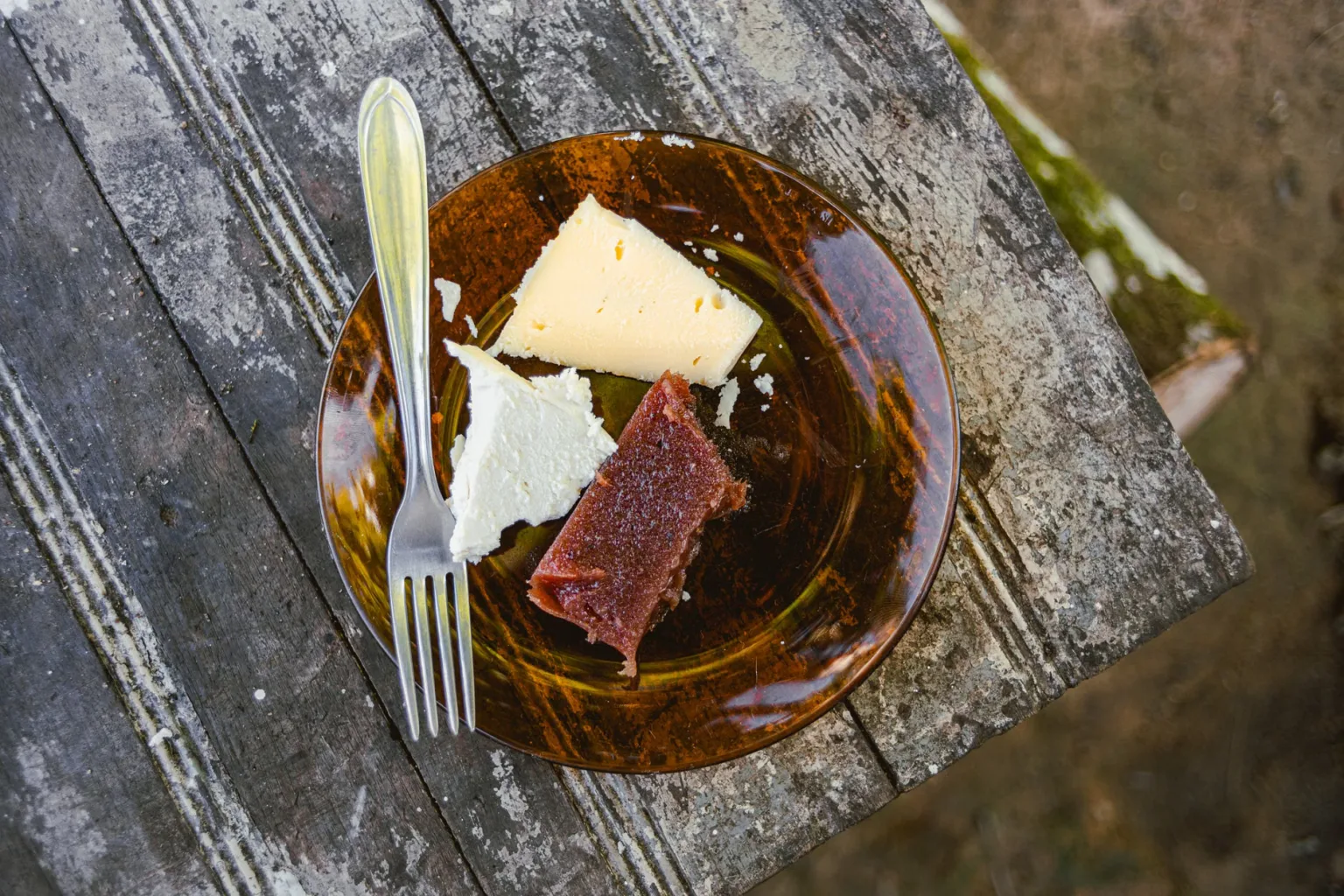
Quince paste is a sweet preparation made from quince fruit and sold as a compact paste or block that can be sliced. Once cool, it is often firm enough to portion, although products can range from softer to denser. Its flavor can balance sweetness with acidity. It is ready to serve and is also used as a baking ingredient. Names and presentations differ by region: the Italian name is cotognata, while ate is used for some fruit sweets in parts of Latin America. The exact firmness and ingredient list depend on the product.
When to use it
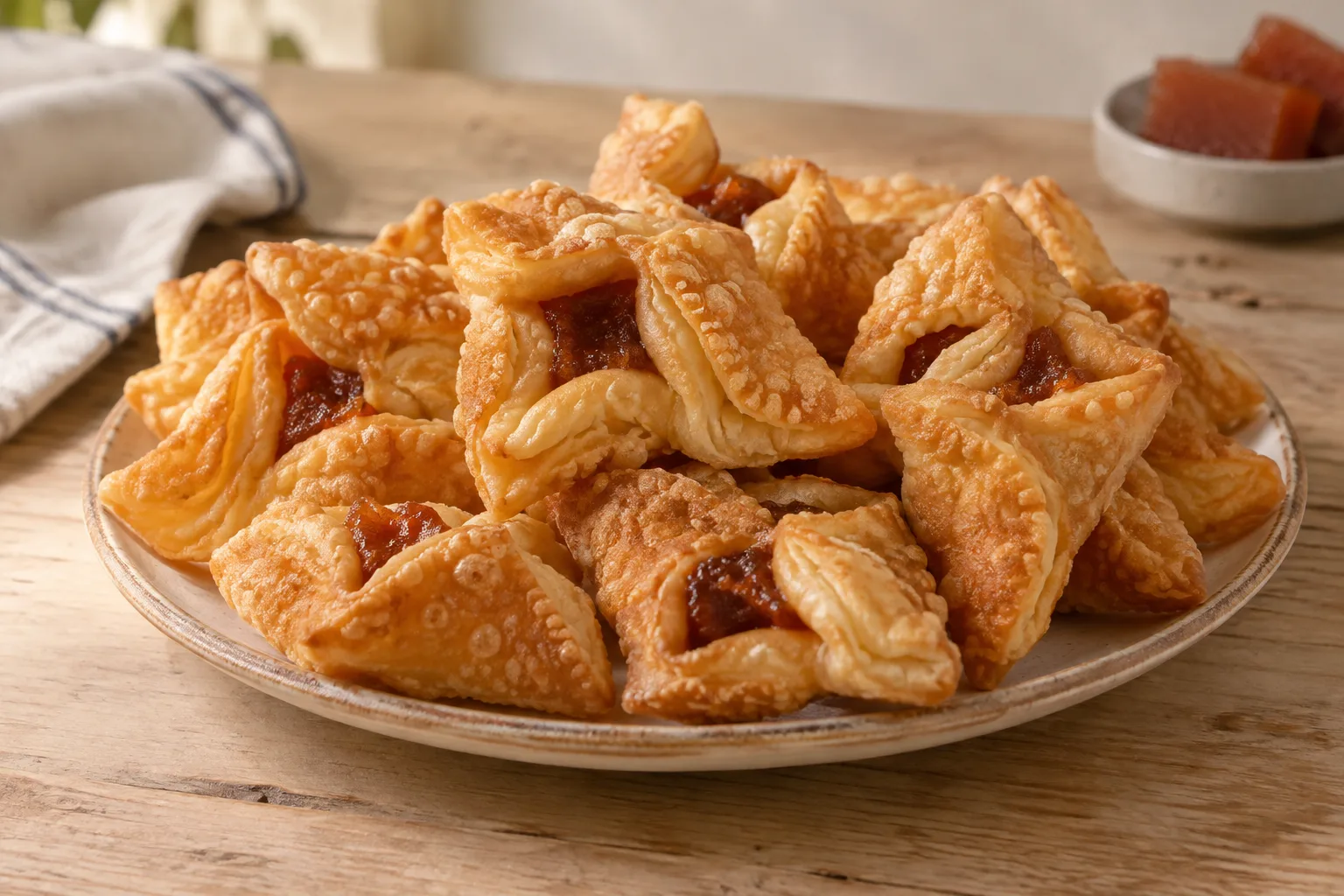
Use quince paste when you want a sweet, fruity accent on a cheese board, at snack time or in a dessert. It suits recipes where a firm paste can be sliced, layered or used as a filling, including cookies and tarts. You can also serve small pieces directly alongside cheese. If a recipe calls for a spreadable filling, gently soften only the amount you need before using it; products do not all have the same consistency.
How to use it
Cut the paste into slices, cubes or small portions and serve it with cheese. For cookies or tarts, use thin pieces between layers or distribute them as a filling according to the recipe. If it is too firm to spread, gently warm just the portion you need and stir until it softens; do not assume every product melts in the same way. You can also add pieces to baked preparations as a filling or topping. Taste a small amount first so you can balance the sweetness of the finished dish.
Flavour and texture
Quince paste tastes sweet and fruity, often with a balancing hint of acidity. Its texture is usually smooth, dense and firm when cool, which makes it easy to slice; some products are softer or more compact than others. That cuttable consistency works for serving in portions or using as a pastry filling.
How to choose it
Choose a block with intact packaging and no visible damage. If you want slices that hold their shape, look for a product described or presented as firm; softer pastes may be easier to spread. Read the ingredient list and package directions, since recipes and product formats can differ.
Storage
Store the product according to its package directions, which may differ for sealed and opened products. After opening, rewrap it or place it in a clean, closed container, and follow the manufacturer’s storage instructions. Keep it away from dirt and moisture, and check the package before putting it away.
Substitutions
For some sweet fillings, sweet potato paste can play a similar role, though its flavor and texture differ. Guava paste is another fruit-based option for recipes that can use a sweet, sliceable paste. Neither substitute duplicates quince exactly; adjust the amount and account for the sweetness of the recipe.
Common mistakes
Do not assume every quince paste has the same firmness: a dense block may need softening before it can be spread. Avoid adding a large amount to a dessert without tasting it, since the paste contributes sweetness. For fillings, cut manageable pieces and distribute them evenly.
Safety and allergens
Check the label for ingredients and storage directions. Recipes and product formats can vary; no ingredient-specific safety warning is established here.
Culinary uses
- Pasta dulce de fruta para acompañar quesos
- Relleno o cobertura de repostería
Recommended techniques
- Cortar en láminas o dados
- Ablandar suavemente para extender o mezclar
Pairs well with
- Quesos
- Galletas y tartas
Frequently asked questions
How do you serve quince paste?
Cut it into portions and serve it on its own or alongside cheese.
Can quince paste be used as a filling?
Yes. Slice it or soften it for cookies and tarts, adjusting its consistency to suit the recipe.
What can I substitute for quince paste?
Sweet potato paste or guava paste may work in some sweet fillings, though the flavor and texture will be different.
Ingredient allergens
Allergen listThere are no verified associations for these ingredients yet.
Estimated nutrition
- Fat
- 0 g
- Saturates
- 0 g
- Carbohydrate
- 70 g
- Sugars
- 63.3 g
- Fibre
- 0.8 g
- Protein
- 0 g
- Salt
- 0 g
Sources and review
Automatically researched, cross-checked and validated content. Sources consulted:
- ¿Por qué la muerte es origen de miedos y tabúes? doi.org/10.64628/aao.fccyk3qj3
- The Essential Glossary of Cooking Terms for the Culinary Arts - Escoffier www.escoffier.edu/blog/culinary-arts/the-essential-glossary-of-cooking-terms-for-the-culinar…
- Comité Científico aesan.gob.es/dam/jcr:a7c4e553-46f5-4def-9ede-b6d1e19b3948/comite_cientifico_42.pdf
- How to Make Perfectly Crumbly Alfajores with Creamy Dulce de Leche | Institute of Culinary Education www.ice.edu/blog/how-make-perfectly-crumbly-alfajores-with-creamy-dulce-de-leche
- DOCUMENTO RESUMEN alimentosargentinos.magyp.gob.ar/HomeAlimentos/igdo/resumenes/Resumen-Membrillo.pdf
- Bienvenidos a Argentina – The First Week in Buenos Aires! – International and Off-Campus Studies wp.stolaf.edu/international/2019/11/24/bienvenidos-a-argentina-the-first-week-in-buenos-aire…
- Growing Quince | The Backyard Gardener ucanr.edu/blog/backyard-gardener/article/growing-quince
- It was fruit Jesse Ausubel phe.rockefeller.edu/docs/It%20was%20fruit%20v3.pdf
- Pati's Mexican Table | The Desert's Treasures | Season 15 | Episode 1502 | WILL-TV video.will.illinois.edu/video/the-deserts-treasures-odQStN/
- Dulce de membrillo - Wikipedia, la enciclopedia libre es.wikipedia.org/wiki/Dulce_de_membrillo
- Dulce de membrillo - EcuRed www.ecured.cu/index.php?oldid=3430349&printable=yes&title=Dulce_de_membrillo
- Dulce de membrillo para Niños ninos.kiddle.co/Dulce_de_membrillo