- Category
- Vegetables
- State
- Fresh
- Usual unit
- piece
What it is
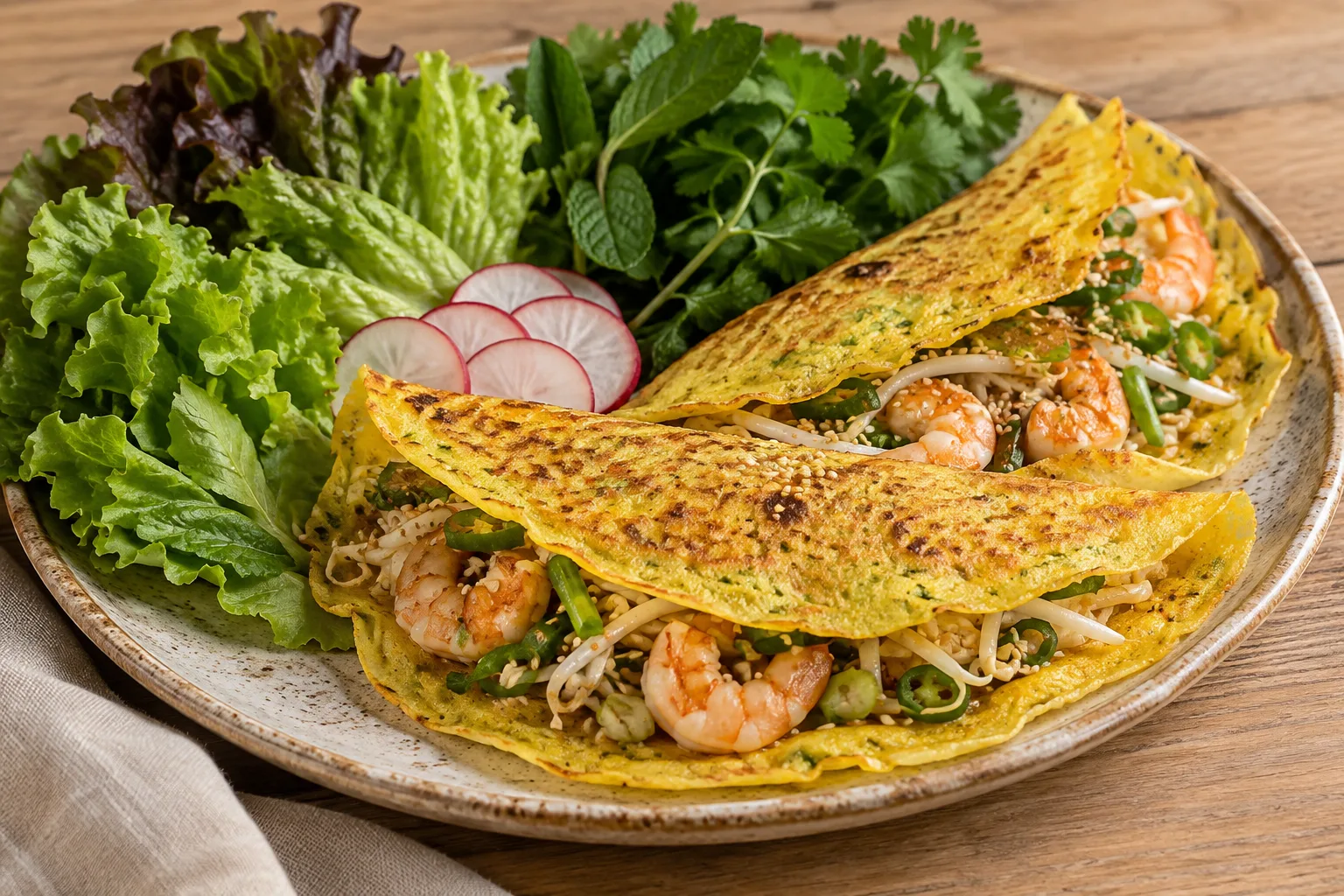
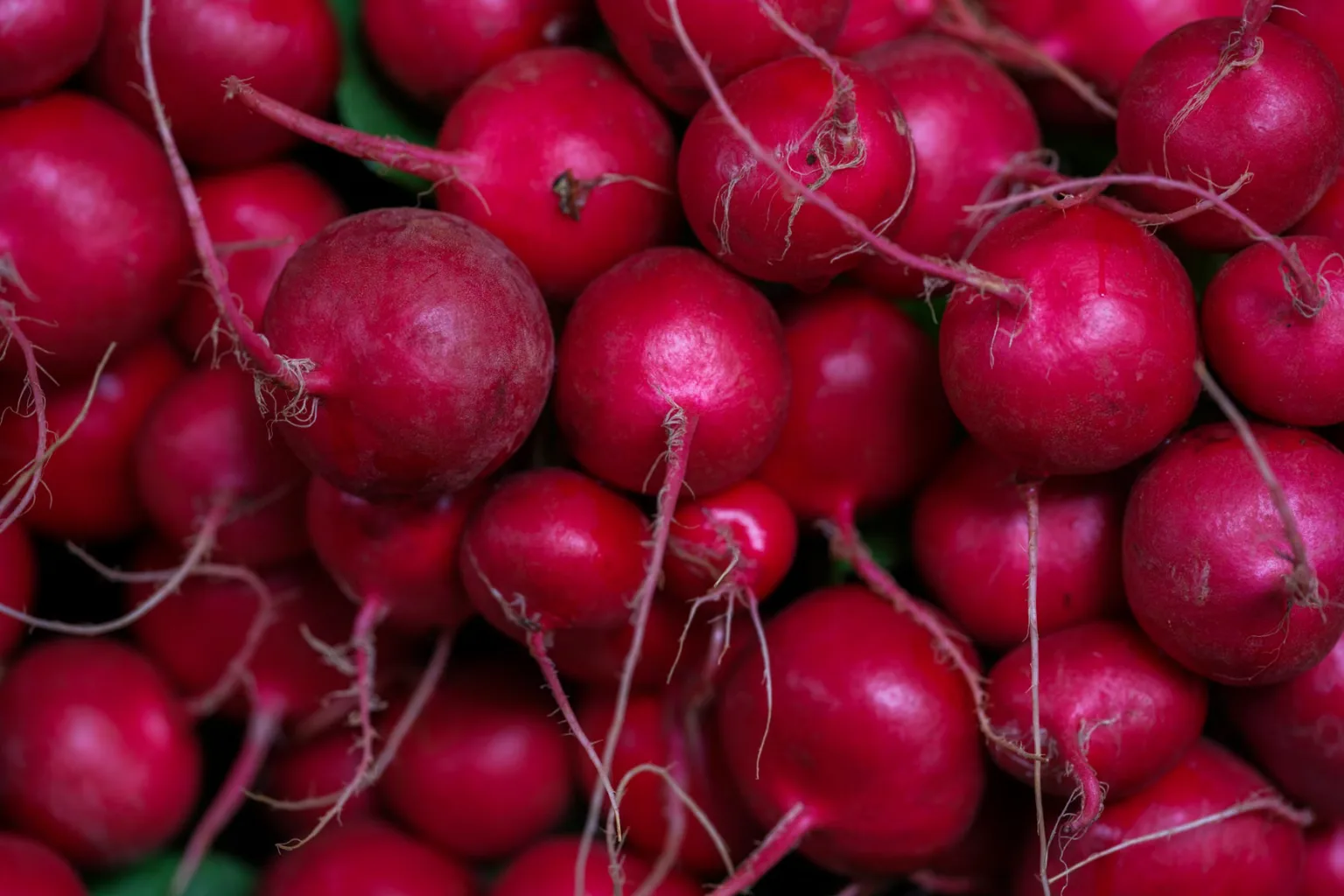
A radish is a fleshy-rooted vegetable from the species Raphanus sativus. The name covers varieties with different shapes and colours: some are small and round, others elongated, and their skins may be red, white, purple or black. The flesh is usually white. Radishes generally taste slightly peppery, though some varieties, such as daikon, are milder. Spring and summer radishes are commonly eaten raw, while larger autumn varieties may be cooked before serving. The variety matters: radishes do not all have the same size, intensity of flavour or best use. Choose and prepare them with those differences in mind.
When to use it
Use small, firm radishes when you want to add freshness, crunch and a peppery note to a salad or sandwich. They also work as an appetizer, served alone or with oil, salt, pepper or a sauce. For a milder flavour in a raw dish, daikon is another radish option. Larger autumn radishes can be cooked before eating. Availability varies with variety and growing conditions; May, June and July are noted as months when radishes are especially prominent in markets.
How to use it
Remove the leaves if you do not plan to use them, then prepare the root for the dish: slice or chop it for salads and sandwiches, or serve it whole as an appetizer. Pair raw radishes with lettuce and tomato, or serve them with oil, salt and pepper. If you want a less peppery result, peel the radish; flavour also differs between varieties, and daikon is generally milder. For cooked dishes, sauté radishes and add them to robust sauces served with roasted or grilled meat. Larger autumn varieties are commonly cooked before serving. Fresh leaves can be prepared in a way similar to spinach.
Flavour and texture
Fresh radishes are usually firm and crunchy, with a slightly peppery flavour. Their character varies by variety: some small radishes are milder, and daikon is described as having a gentler flavour. Skin colour varies, while the flesh is usually white. The skin can contribute to the pungent note, so peeling is an option when you want a milder-tasting result.
How to choose it
Choose medium-sized radishes that feel fleshy and firm, with smooth, intact skin and no cracks. When comparing red radishes, look for a vivid colour. If the leaves are attached, check that they look fresh and have a strong colour. Avoid soft, very large specimens and those with a yellowish neck; size and firmness can help you select roots with a less fibrous texture.
Storage
If the radishes have leaves and you do not plan to use them, remove the leaves before storage because they can speed up drying of the roots. Keep the radishes in the refrigerator in a perforated plastic bag, and wait to wash them until just before use. They may keep for up to about seven days under these conditions; check their condition before preparing them.
Substitutions
In a raw preparation, you can replace a sharper-tasting radish with daikon when you want a milder note, bearing in mind that its size and texture may differ. Another fresh radish variety can also work where the recipe allows for a change. Do not expect every variety to have the same pungency, shape or texture.
Common mistakes
Do not assume that every variety is used in the same way: small spring and summer radishes are commonly served raw, while larger autumn radishes may be cooked first. Avoid buying soft roots or ones with damaged skin. Storing radishes with their leaves or washing them well before you need them can reduce their quality during storage.
Safety and allergens
Discard soft or damaged radishes and keep fresh ones refrigerated. If you have a food allergy, also check the ingredients and food information for any prepared foods served with them.
Culinary uses
- Fresh, crisp addition to salads and sandwiches
- Peppery accompaniment or appetizer
- Cooked ingredient in sautéed dishes and robust sauces
Recommended techniques
- Serve raw, sliced or whole, in salads and sandwiches
- Sauté as an ingredient in sauces for roasted or grilled meat
- Cook larger autumn varieties before serving
Pairs well with
- Lettuce
- Tomato
- Oil, salt and pepper
- Sauces
Frequently asked questions
Are radishes eaten raw or cooked?
Spring and summer radishes are commonly eaten raw in salads, sandwiches or as an appetizer. Some autumn varieties, especially larger ones, are cooked before serving.
How can I make radishes taste milder?
You can peel a radish or choose a milder variety such as daikon. The intensity also varies from one variety to another.
How should fresh radishes be stored?
Remove the leaves if you will not use them, refrigerate the roots in a perforated bag and wash them just before eating. They may keep for up to about seven days this way.
Ingredient allergens
Allergen listThere are no verified associations for these ingredients yet.
Estimated nutrition
- Fat
- 0 g
- Saturates
- 0 g
- Carbohydrate
- 3.53 g
- Sugars
- 2.35 g
- Fibre
- 1.2 g
- Protein
- 1.18 g
- Salt
- 0.1 g
Sources and review
Automatically researched, cross-checked and validated content. Sources consulted:
- Client Challenge doi.org/10.2307/jj.27939689.16
- Agencia Española de Seguridad Alimentaria y Nutrición www.aesan.gob.es/
- Food Allergens - International Regulatory Chart | Food Allergy Research & Resource Program | Nebraska farrp.unl.edu/IRChart/
- Rábano | Introducción | Verduras y hortalizas | EROSKI CONSUMER verduras.consumer.es/rabano/introduccion
- Food Allergies | FDA www.fda.gov/food/nutrition-food-labeling-and-critical-foods/food-allergies
- Risk assessment of food allergens: part 1: review and validation of Codex alimentarius priority allergen list through risk assessment: meeting report www.who.int/publications/i/item/9789240042391
- Food allergens | Food Safety and Quality | FAO www.fao.org/food-safety/scientific-advice/food-allergens/en
- Food Allergy: Labelling and exposure risks - PMC pmc.ncbi.nlm.nih.gov/articles/PMC11250542/
- Allergen guidance for food businesses - GOV.UK www.gov.uk/government/publications/allergen-guidance-for-food-businesses/allergen-guidance-f…
- Rábano: propiedades, usos en cocina y ocho recetas para disfrutarlo a tope www.directoalpaladar.com/ingredientes-y-alimentos/rabano-propiedades-usos-cocina-ocho-receta…
- Rábano- Gastronomía - Región de Murcia Digital www.regmurcia.com/servlet/s.Sl?r=ReP-20527-DETALLE_REPORTAJESPADRE&sit=c%2C543%2Cm%2C2714
- Vídeo: Variedades de rábanos y sus usos en cocina www.eitb.eus/es/television/programas/a-bocados/videos/detalle/5311612/video-variedades-raban…