- Category
- Fish and seafood
- State
- Fresh
- Usual unit
- g
What it is
Salmon is a fish in the salmonid family, available in different species and from different sources. This profile focuses on fresh salmon, not smoked, cured or canned versions. Its flesh is often pink, but color varies with species and other factors, so color alone should not be used to decide whether it is cooked. In the kitchen, salmon can be the centerpiece of a meal or an ingredient in smaller dishes, from salads to sandwiches and appetizers. Smoked salmon and lox are prepared differently and are not equivalent to fresh fish.
When to use it
Choose fresh salmon when you want fish to be the focus of lunch or dinner, or when you need an ingredient to round out a salad, sandwich or appetizer. Its versatility makes it suitable with vegetables or in preparations featuring avocado and leafy greens. You can bake, grill or sauté it, depending on your equipment and the result you want. For a cold preparation, remember that smoked salmon and lox are prepared differently and are not exact replacements for fresh salmon.
How to use it
Keep salmon refrigerated until you are ready to prepare it, and prevent its juices from contacting other foods. Bake, grill, sauté or steam it and serve it as a main course with vegetables. For a lighter meal, add cooked salmon to a salad with leafy greens and avocado; it can also go in a sandwich. Lemon and fresh herbs are options for seasoning fish. Do not judge doneness by color alone: salmon color varies with species and thickness.
Flavour and texture
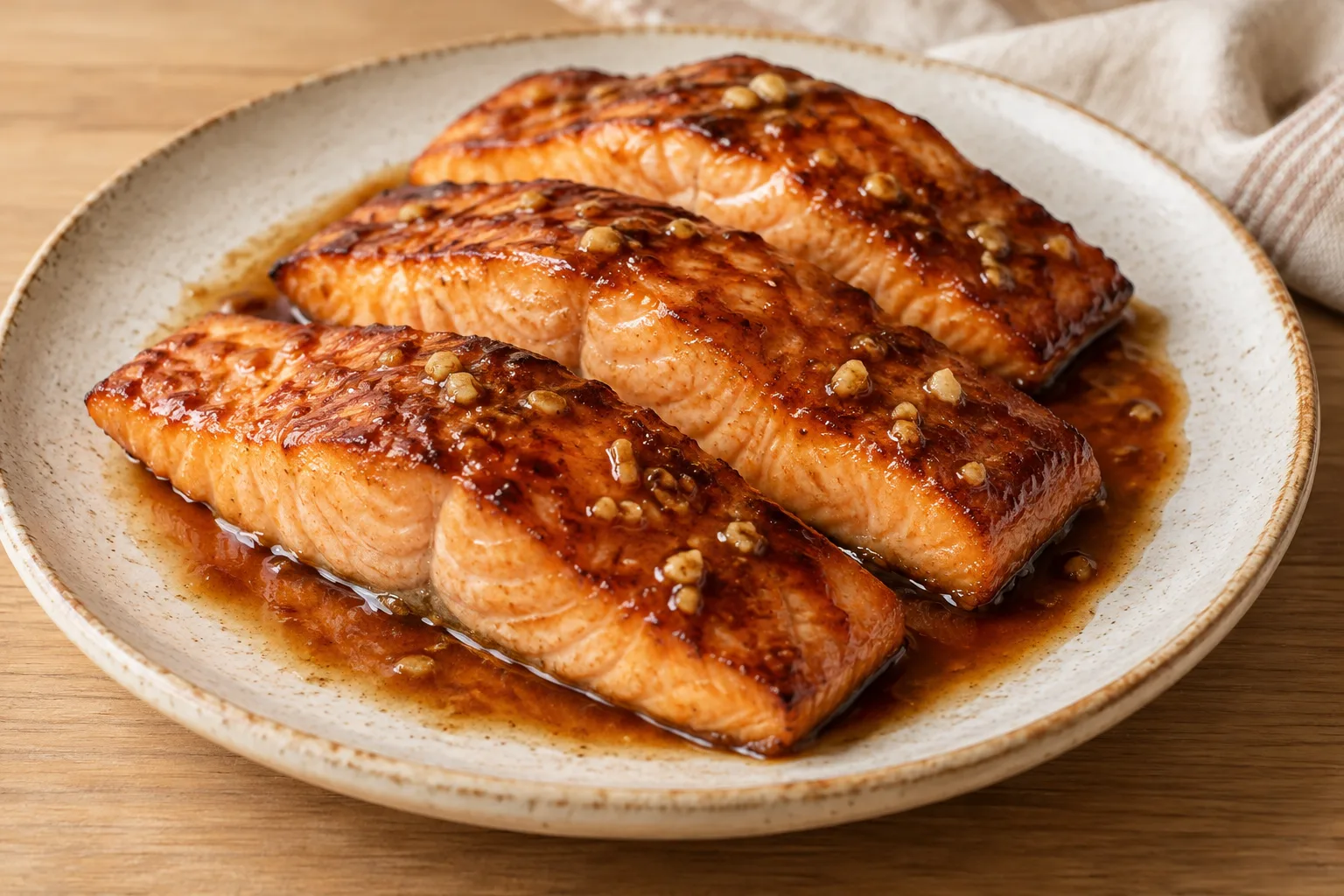
Salmon can suit mild or more pronounced seasoning, depending on the method and flavorings. Grilling can give it a browned surface; the result depends on the method and the thickness of the cut. Flesh color varies between fish and is not a reliable measure of doneness. Smoked salmon and lox have different flavor profiles and textures from fresh fish, so choose them for dishes that suit their preparation.
How to choose it
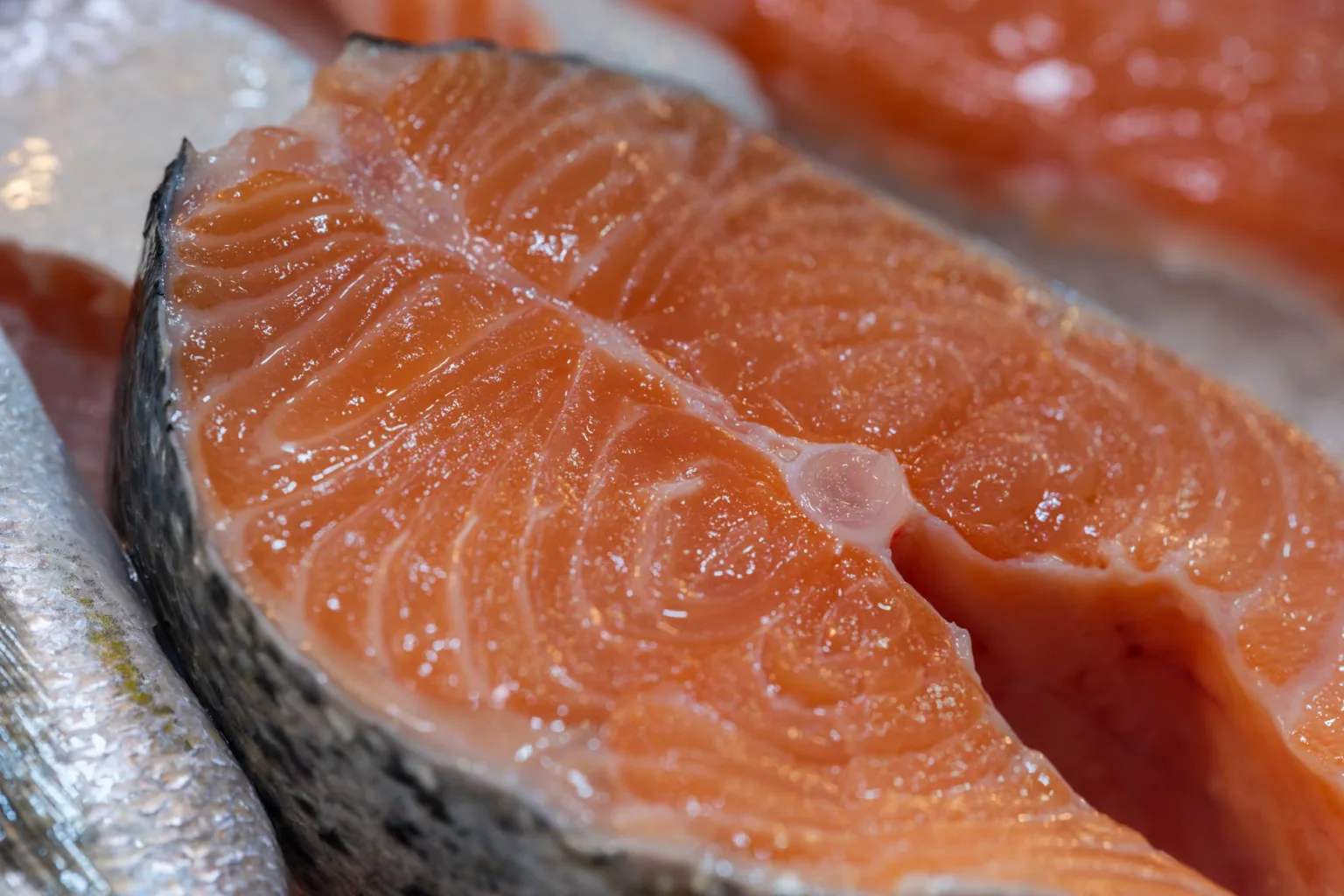
For a fillet, look for firm, unbroken flesh; for a whole fish, look for clear eyes. A fresh, briny scent is also recommended as a quality cue. Choose fish that feels cold when refrigerated, and take it home without unnecessary delay. The available evidence does not support recommending one species, source or production method as universally better; choose according to the recipe and the information provided by the seller.
Storage
Refrigerate fresh salmon as soon as you get home and keep it separate from ready-to-eat foods. Keep its package contained or place it on a plate to catch any juices, and clean up spills. The available evidence does not establish a salmon-specific storage period here, so follow package or seller directions. Do not judge safety by appearance or smell alone, since quality and safety are not the same.
Substitutions
Smoked salmon and lox may work in some cold dishes, such as toast, but they are not equivalent to fresh salmon: they are prepared differently and have different flavor and texture. Lox is cured salmon, while smoked salmon is smoked. The evidence provided here is not sufficient to recommend another fish as a direct substitute in every recipe.
Common mistakes
Do not judge whether salmon is cooked by color alone: species and thickness affect its appearance. Another mistake is treating fresh salmon, smoked salmon and lox as interchangeable; their preparation, texture and flavor differ. Also prevent juices from raw fish from contaminating other foods, and do not taste questionable food to decide whether it is safe.
Safety and allergens
Keep fish cold, refrigerate it promptly and prevent its juices from contacting other foods. Clean up spills and follow storage directions on the package. Do not taste food to decide whether it is safe, and do not rely only on its appearance or smell. This profile does not set salmon-specific times or temperatures.
Culinary uses
- Plato principal de pescado
- Ingrediente para ensaladas, bocadillos y aperitivos
Recommended techniques
- Hornear
- Asar a la parrilla
- Saltear
- Cocinar al vapor
Pairs well with
- Aguacate y hojas verdes
- Cebolla y pimiento
- Limón y hierbas frescas
- Verduras como guarnición
Frequently asked questions
Does pink color mean salmon is cooked?
No. Color varies between species and with thickness; it is not a reliable guide to doneness on its own.
How can I cook fresh salmon?
You can bake, grill, sauté or steam it. Choose a method to suit your equipment and preferred result.
Can smoked salmon replace fresh salmon?
It can work in some cold preparations, but it is prepared differently and has a different texture and flavor.
Ingredient allergens
Allergen listThere are no verified associations for these ingredients yet.
Estimated nutrition
- Fat
- 15.5 g
- Saturates
- 2.46 g
- Carbohydrate
- 0 g
- Sugars
- 0 g
- Fibre
- 0 g
- Protein
- 19 g
- Salt
- 0.16 g
Sources and review
Automatically researched, cross-checked and validated content. Sources consulted:
- Client Challenge doi.org/10.2307/jj.27939689.16
- Food Selection & Storage | Home & Garden Information Center hgic.clemson.edu/factsheet/food-selection-storage/
- E-118: Storing Food Safely | New Mexico State University - BE BOLD. Shape the Future. pubs.nmsu.edu/_e/E118/
- Para la ciudadanía www.aesan.gob.es/para-la-ciudadania
- Chef Phil's Summer Salmon Recipe | Institute of Culinary Education www.ice.edu/blog/blackened-salmon-kale-caesar-recipe
- Sous-Vide Salmon Cooking: Why Color Isn’t a Key Indicator insights.ehl.edu/sous-vide-salmon-cooking
- Space Food, Salmon, Space Shuttle, STS-1 | National Air and Space Museum airandspace.si.edu/collection-objects/space-food-salmon-space-shuttle-sts-1/nasm_A1982014600…
- Salmon – The Kw’éts’tel Project kwetstel.conncoll.edu/salmon/
- America's Test Kitchen | Tandoori Salmon and Broiled Zucchini | Season 26 | Episode 2624 | WNMU-TV PBS wnmuvideo.nmu.edu/video/tandoori-salmon-and-broiled-zucchini-rAoQNE/
- Optimum Cooking Conditions for Shrimp and Atlantic Salmon vtechworks.lib.vt.edu/bitstream/handle/10919/73514/Optimum%20Coditions%20for%20Seafood.pdf?i…
- How To Eat Salmon With Every Meal - Escoffier www.escoffier.edu/blog/culinary-arts/how-to-eat-salmon-with-every-meal/
- Ingredientes del alimento que consume el salmón: ¿Por qué son importantes los ingredientes marinos? | Global Salmon Initiative globalsalmoninitiative.org/es/nuestro-progreso/blogs-y-noticias/ingredientes-del-alimento-qu…
- Salmón - Gastronomía Vasca: Escuela de Hostelería Leioa www.gastronomiavasca.net/es/gastro/glossary/salmon
- El salmón: propiedades y beneficios - Compesca compesca.com/salmon-propiedades/
- Todo sobre cómo cocinar: el salmón - Diario de Gastronomía: Cocina, vino, gastronomía y recetas gourmet diariodegastronomia.com/todo-sobre-como-cocinar-el-salmon/
- El salmón, un pescado noruego excelente - El Blog de Mariskito mariskito.com/blog/el-salmon-un-pescado-noruego-excelente/?srsltid=AYCX9vJWnYcp05ukgMUsqtj0I…
- Food allergen labelling and information requirements technical guidance - GOV.UK www.gov.uk/government/publications/food-allergen-labelling-and-information-requirements-tech…