- Category
- Nuts and seeds
- State
- Dry
- Usual unit
- teaspoon
What it is
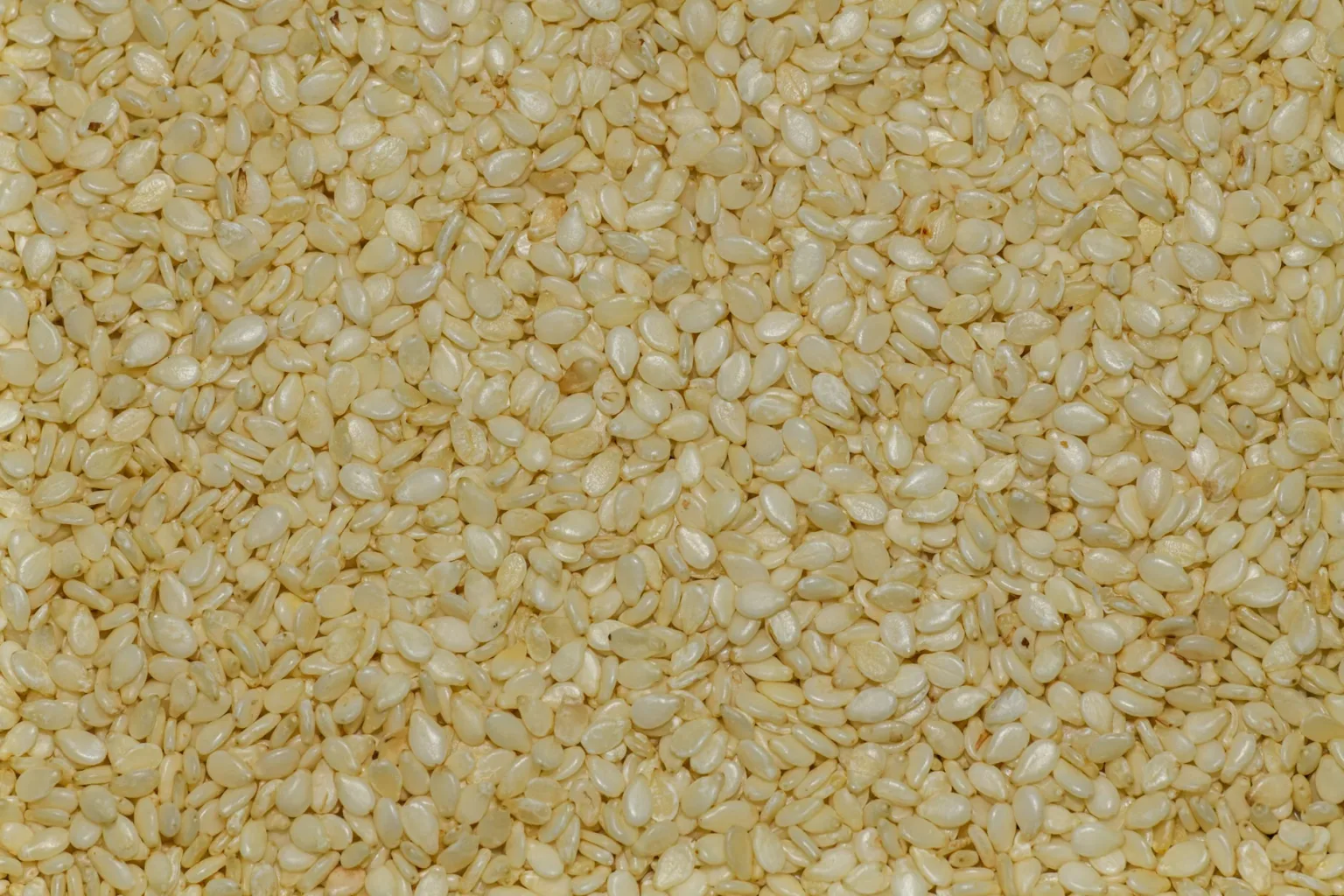
Sesame is the edible seed of Sesamum indicum. It is commonly sold whole, in white, golden or black varieties, and may be raw or toasted. In cooking, sesame adds texture and flavour to breads, salads and other dishes; it can also be ground to make tahini or added to baked goods. Varieties may differ in colour and flavour intensity, so the choice can depend on the appearance and taste you want. Sesame is a regulated food allergen in the European Union: anyone with a sesame allergy should avoid it and check ingredient information on foods.
When to use it
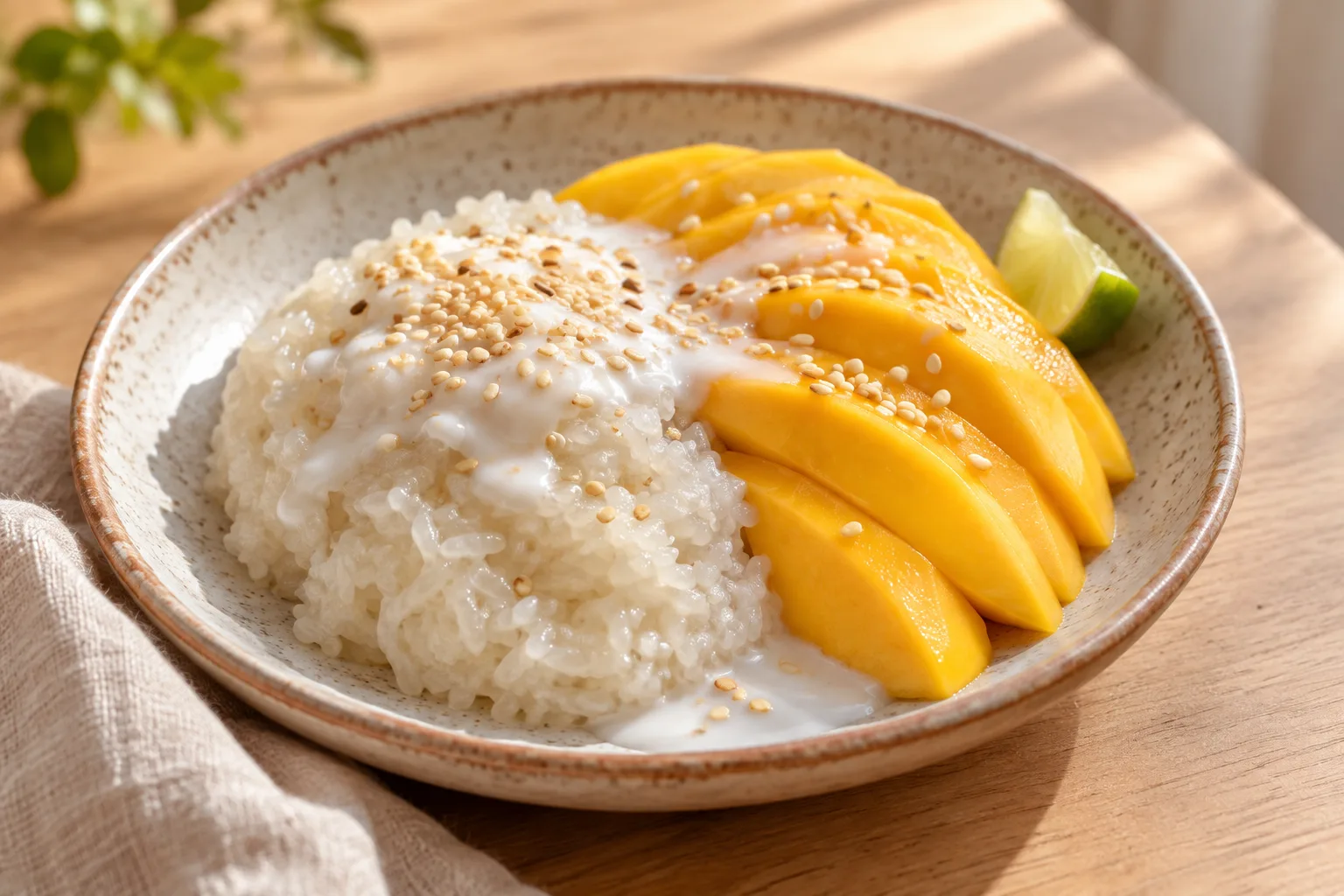
Use sesame when you want a crisp finish on bread, salads, rice, soups or vegetables, or when a dish would benefit from a toasted note. Whole seeds work well sprinkled over a dish or mixed into dough. Toasting makes their aroma and flavour more pronounced, so choose the preparation according to how noticeable you want the sesame to be. Ground sesame can be used in paste preparations such as tahini. White sesame is generally milder, while black sesame may have a stronger flavour and provides colour contrast. Do not use sesame in food for someone with a sesame allergy.
How to use it
Add whole seeds to bread before baking, mix them into doughs and biscuits, or sprinkle them over salads, rice, soups and vegetables. For a more pronounced flavour, toast them briefly in a dry pan, stirring often; take them off the heat as soon as they smell aromatic, since small seeds can burn easily. Let them cool before adding them to a dish. You can also grind sesame to make tahini or incorporate it ground into a recipe. White, golden and black sesame can differ in flavour and intensity, so choose according to the result you want. If preparing food for someone with an allergy, do not assume that toasting or grinding makes sesame safe: check food information and avoid the ingredient.
Flavour and texture
Whole sesame seeds add a small crunch and a mild flavour with a nut-like note. Toasting makes the aroma more noticeable and the flavour stronger. White sesame is usually delicate; black sesame can be more intense and earthy. Colour and toasting affect the final character, so the varieties are not always interchangeable without changing the result.
How to choose it
Choose seeds that look dry and clean, and check that the package is sealed and within its use-by date. Sesame is sold in white, golden or black varieties, raw or toasted. Colour can help you choose the look of a dish and may come with flavour differences. Read the ingredient list and food information, especially where a food allergy is involved; sesame is an allergen that must be identified in applicable food information.
Storage
Keep the seeds in a tightly closed container in a cool, dry place, and follow any more specific directions on the package. Avoid exposing them to moisture, heat or strong aromas. If they become damp, look abnormal or smell unpleasant, do not use them. There is no single storage period that applies to every product; it depends on the product and the maker’s instructions.
Substitutions
White and black sesame can replace one another in recipes that use seeds, but colour and flavour intensity may change. Raw seeds can also be swapped for toasted ones when a stronger flavour is wanted. These options do not make a dish suitable for someone with a sesame allergy: both are still sesame.
Common mistakes
Toasting without watching the pan can burn the seeds quickly and give them a bitter taste. Another mistake is assuming white and black sesame have identical intensity, or that toasted sesame is no longer sesame. If there is an allergy, changing the colour, grinding or cooking the seeds does not remove the allergen.
Safety and allergens
Sesame is one of the allergens that must be declared in food information in the European Union. Anyone with a sesame allergy should avoid sesame seeds and products containing them, and check the labels of packaged foods. For restaurant or unpackaged food, ask about ingredients and handling; do not assume that a dish is sesame-free.
Culinary uses
- Añade textura crujiente y un sabor suave, ligeramente dulce o tostado a platos y productos horneados.
- Puede molerse para preparar tahini u otras pastas y salsas.
Recommended techniques
- Espolvorear las semillas enteras sobre panes, ensaladas o platos terminados.
- Tostar las semillas en una sartén seca para intensificar su aroma; vigilar de cerca y retirarlas cuando estén aromáticas.
- Moler las semillas para incorporarlas a pastas o preparaciones horneadas.
Pairs well with
- Panes y productos horneados
- Ensaladas, arroz y sopas
- Verduras, carnes y platos de inspiración asiática
Frequently asked questions
Are sesame and benne the same seed?
Sesame is also known by names such as benne in some contexts; sesame and ajonjolí refer to the same edible seed.
Do sesame seeds have to be toasted before use?
No. They can be used raw or toasted; toasting makes their aroma and flavour more pronounced.
Is sesame a food allergen?
Yes. Sesame is among the allergens that must be identified in European Union food information. If you have an allergy, avoid it and check food labels.
Ingredient allergens
Allergen listDocumented presence
-
Sesame
Sesame
Sources and review
Automatically researched, cross-checked and validated content. Sources consulted:
- Client Challenge doi.org/10.2307/jj.27939689.16
- Gastronomía del Perú - Wikipedia, la enciclopedia libre es.wikipedia.org/wiki/Gastronom%C3%ADa_del_Per%C3%BA
- Aceite de sésamo para cocinar | Usos y cómo aprovechar su sabor www.distribucionesballester.es/blog/aceite-de-sesamo-para-cocinar/
- Conocé las propiedades culinarias del sésamo | Recetas Nestlé www.recetasnestle.com.ar/escuela-de-sabor/ingredientes/sesamo
- El “lujo culinario”: elites, cocina y poder en el espacio Atlántico | OpenAlex openalex.org/W4408399161
- Food Allergies | FDA www.fda.gov/food/nutrition-food-labeling-and-critical-foods/food-allergies
- Food allergens | EFSA www.efsa.europa.eu/en/safe2eat/food-allergens
- Precautionary labelling of foods for allergen content: are we ready for a global framework? - PMC pmc.ncbi.nlm.nih.gov/articles/PMC4005619/
- Allergen guidance for food businesses - GOV.UK www.gov.uk/government/publications/allergen-guidance-for-food-businesses/allergen-guidance-f…
- Information on Food Allergy & Intolerance www.sfa.gov.sg/food-safety-tips/food-risk-concerns/food-allergy-intolerance
- Allergens in Food www.cfs.gov.hk/english/multimedia/multimedia_pub/multimedia_pub_fsf_09_02.html
- Sesame - Sesamum indicum ( Spanish; Castilian ) eol.org/pages/484896/articles?locale_code=es
- Sésamo: propiedades y beneficios para la salud | Excelencias Gourmet www.excelenciasgourmet.com/es/salud-news/sesamo-propiedades-y-beneficios-para-la-salud
- Semillas de sésamo o ajonjolí (Sesamum Indicum) | Gastronomía & Cía www.gastronomiaycia.com/semillas-de-sesamo-o-ajonjoli-sesamum-indicum/?wpmp_switcher=mobile
- Ajonjolí - EcuRed www.ecured.cu/index.php?oldid=2202246&title=Ajonjol%C3%AD
- El sésamo o ajonjolí - Propiedades e historia - Castro y González castroygonzalez.es/blog/el-sesamo-o-ajonjoli/?v=82a9e4d26595
- Propiedades y usos del sésamo www.directoalpaladar.com/ingredientes-y-alimentos/propiedades-y-usos-del-sesamo