- Category
- Nuts and seeds
- State
- Dry
- Usual unit
- g
What it is
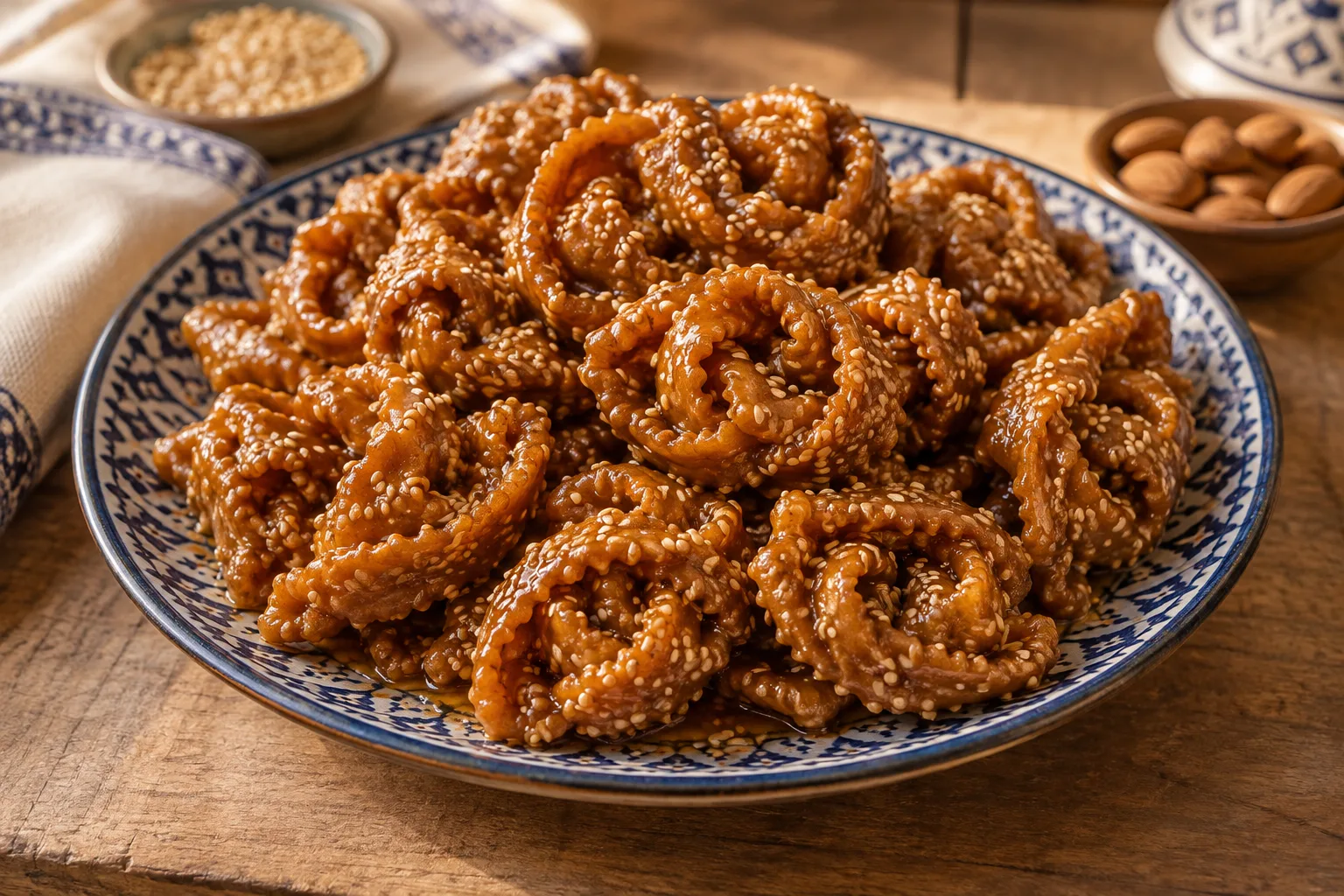
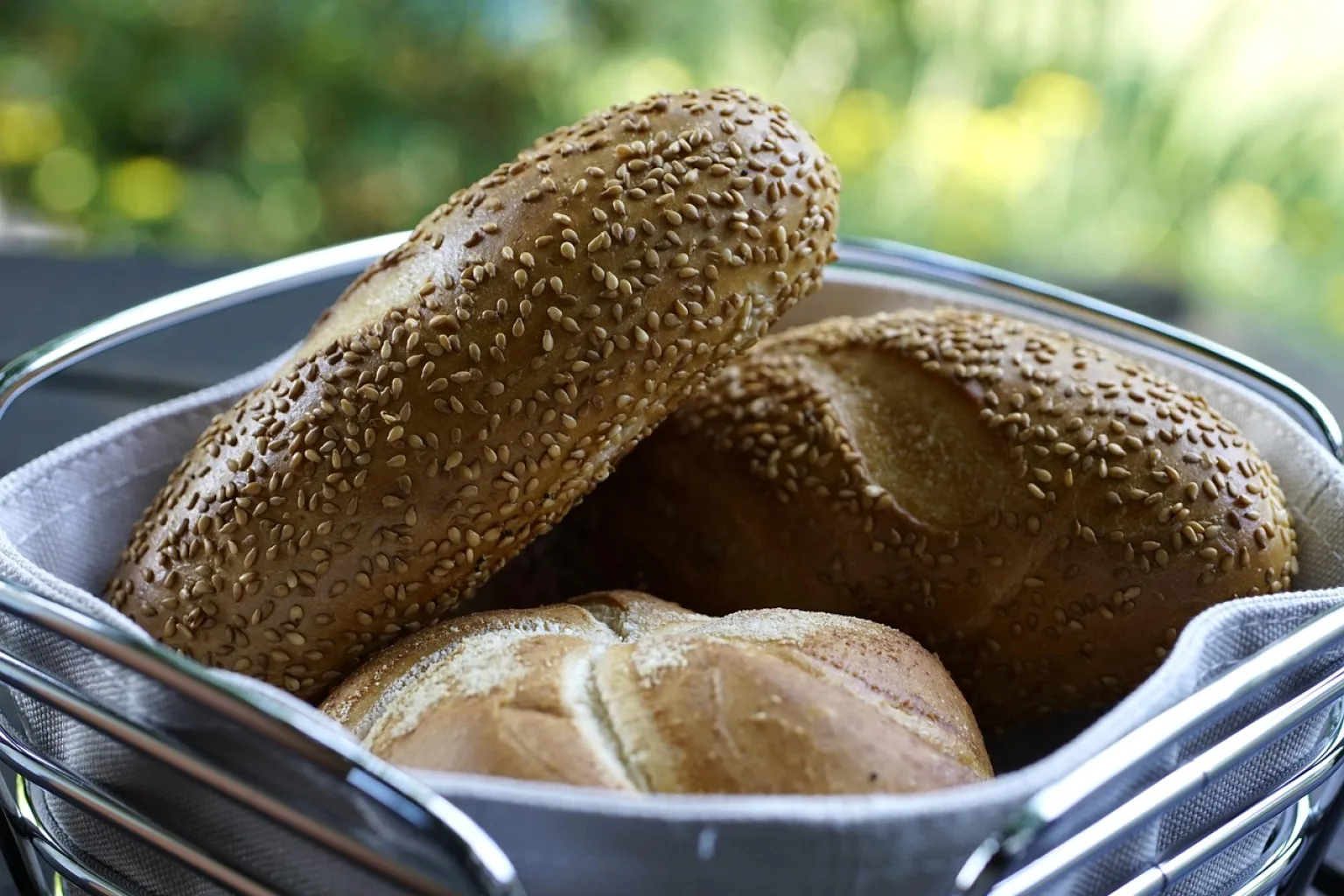
Sesame seeds, also known as benne or sesame, are edible seeds from the Sesamum indicum plant. They are sold in colors such as white, golden and black, and may be raw or toasted, hulled or unhulled. In dough, they can be mixed in whole or sprinkled over the surface before baking. Whole seeds add distinct little bites of texture and flavor; ground seeds blend more evenly into a mixture. Toasting deepens their aroma, while untoasted seeds have a milder profile. Check the package to find out which form you have, since toasted and untoasted seeds may not always be easy to distinguish by name alone.
When to use it
Use sesame when you want a crunchy finish and a characteristic flavor in bread, biscuits, rolls, crackers and other doughs. Pale seeds give a subtle finish, while black seeds offer stronger visual contrast and a more pronounced flavor. Mix them into the dough for an even distribution or save some for the surface. If you want a toasted note, first check whether the seeds are already toasted: some products are ready to use as sold.
How to use it
To add sesame to dough, stir whole seeds in with the dry ingredients or knead them in near the end so they are distributed without being crushed. You can also scatter them over the surface before baking; a wash such as egg or milk, if it is already part of your recipe, can help them adhere. For a deeper flavor, toast the seeds gently in a dry pan, stirring frequently and watching closely because they can burn and turn bitter. Let them cool before mixing them into dough. If a recipe calls for ground seeds, grind them shortly before use and adjust the liquid only if the dough's consistency calls for it.
Flavour and texture
Untoasted sesame has a delicate flavor and a moderately crunchy texture. Toasting intensifies its aroma and brings out deeper, nut-like notes. Black seeds often have a more pronounced profile than pale ones. Whole seeds create distinct crunchy bites in dough; ground seeds blend in more readily and are less noticeable as separate pieces.
How to choose it
Choose dry, loose seeds that look clean, and check the package to see whether they are raw or toasted and whether they are hulled. White, golden and black sesame can differ in appearance and flavor. For a mild result, choose a variety with a delicate flavor; for a more pronounced aroma, use seeds sold toasted or toast them carefully yourself. Avoid packages with signs of moisture or clumped seeds.
Storage
Keep dry sesame seeds in a tightly closed container in a cool place, away from light and moisture. Keep the container clean and dry, and seal it after each use. Check the aroma before adding the seeds to dough; discard them if they smell rancid or show signs of dampness or mold. For specific shelf-life guidance, follow the product label, since storage conditions and degree of toasting can vary.
Substitutions
Sunflower, pumpkin or poppy seeds can replace sesame when you mainly want a crunchy or decorative finish. The change affects the flavor, seed size and appearance of the dough, so it is not an exact swap. If a recipe relies on ground sesame or its distinctive flavor, a substitute will change the result more noticeably. Do not use an alternative that is unsuitable for someone with allergies.
Common mistakes
Do not assume the seeds in the package are raw: some are already toasted, and toasting them again can make them bitter. If toasting at home, stir and watch them closely so they do not burn. Do not add damp or clumped seeds to dough. Remember that sesame is an allergen and may also be present in packaged products or through cross-contact.
Safety and allergens
Sesame is a food allergen. If cooking for someone with a sesame allergy, do not use it and prevent cross-contact with seeds, utensils, surfaces and products containing sesame. Check packaged-ingredient labels and follow applicable food-safety guidance.
Culinary uses
- Aporta sabor y textura crujiente a panes y masas
- Funciona como cobertura decorativa y sabrosa
- Añade un matiz tostado a preparaciones dulces y saladas
Recommended techniques
- Incorporar las semillas enteras a la masa o espolvorearlas por encima
- Tostar suavemente las semillas cuando se busque un aroma más intenso
- Moler las semillas para integrarlas de forma más uniforme
Pairs well with
- Pan, galletas y otras masas horneadas
- Miel y chocolate
- Ensaladas y verduras salteadas
Frequently asked questions
Can I add sesame seeds directly to dough?
Yes. Mix them in whole with the dry ingredients or add them near the end of kneading. You can also reserve some to sprinkle on top.
Do sesame seeds need to be toasted before use?
No. Raw seeds can be used as they are. Toasting intensifies their aroma; check the package first so you do not toast seeds that are already toasted.
What can I use instead of sesame seeds?
Sunflower, pumpkin or poppy seeds can add crunch or work as a topping, although they will change the flavor and appearance.
Ingredient allergens
Allergen listThere are no verified associations for these ingredients yet.
Sources and review
Automatically researched, cross-checked and validated content. Sources consulted:
- REGLAMENTO (UE) No 1169/2011 DEL PARLAMENTO ... eletiquetadocuentamucho.aesan.gob.es/media/reglamento-11692011.pdf
- Empleo de semillas como ingrediente saciante: chía y sésamo | Anales de Veterinaria de Murcia doi.org/10.6018/analesvet.411681
- Tahini, la pasta de sésamo | The Gourmet Journal www.thegourmetjournal.com/a-fondo/tahini-la-pasta-de-sesamo/
- Conocé las propiedades culinarias del sésamo | Recetas Nestlé www.recetasnestle.com.ar/escuela-de-sabor/ingredientes/sesamo
- Semillas de Sésamo - Javi Recetas www.javirecetas.com/semillas-de-sesamo/
- Sésamo: qué son estas semillas, propiedades y beneficios para la salud bonviveur.com/es/noticias/sesamo
- El sésamo en la cocina japonesa - Muy Japones www.muyjapones.com/el-sesamo-en-la-cocina-japonesa/
- Para la ciudadanía www.aesan.gob.es/para-la-ciudadania
- Estudio de la actividad antioxidante de diversas plantas ... upcommons.upc.edu/bitstreams/2ba9295d-50ba-4beb-8513-47ed2974095a/download
- lemmas.txt downloads.cs.stanford.edu/nlp/data/CoNLL17_Parser_Models/Spanish/Spanish-Parser/lemmas.txt
- Itâs Showtime! 50 tÃtulos esenciales del cine musical openaccess.uoc.edu/server/api/core/bitstreams/f0cd70b2-aabb-447f-9f32-05e2c4fc6ac8/content
- Graines de sésame : bienfaits, variétés et utilisations en cuisine – nutandme www.nutandme.com/blogs/blog/semillas-de-sesamo-beneficios-tipos-y-usos-en-la-cocina?srsltid=…
- ¿Es lo mismo el ajonjolí que el sésamo? Diferencias, usos y mejores opciones para tus dulces aliciascake.es/es-lo-mismo-el-ajonjoli-que-el-sesamo/
- Beneficios de las semillas de sésamo en el organismo www.hsnstore.com/blog/nutricion/plantas/semillas-de-sesamo/?srsltid=AYCX9vKGSZjZm8ACHY_gPI_3…
- Food allergen labelling and information requirements technical guidance - GOV.UK www.gov.uk/government/publications/food-allergen-labelling-and-information-requirements-tech…